The shale sector in North America has been the driver of energy supply growth over the last 20 years, reshaping the global energy landscape. This sector is now entering a new era; one that, despite geological uncertainty and macroeconomic volatility, is characterized by new levels of scale and a pace of innovation potentially more vigorous than seen during the early days of shale.1
However, the reality at the center of this shift cannot be ignored: Tier 1 drilling locations—those with the best geology—are running out. Yet a vast Tier 2-plus inventory remains and could potentially sustain operations for more than 15 years across most basins, if operators can successfully enhance the economics of these locations.2
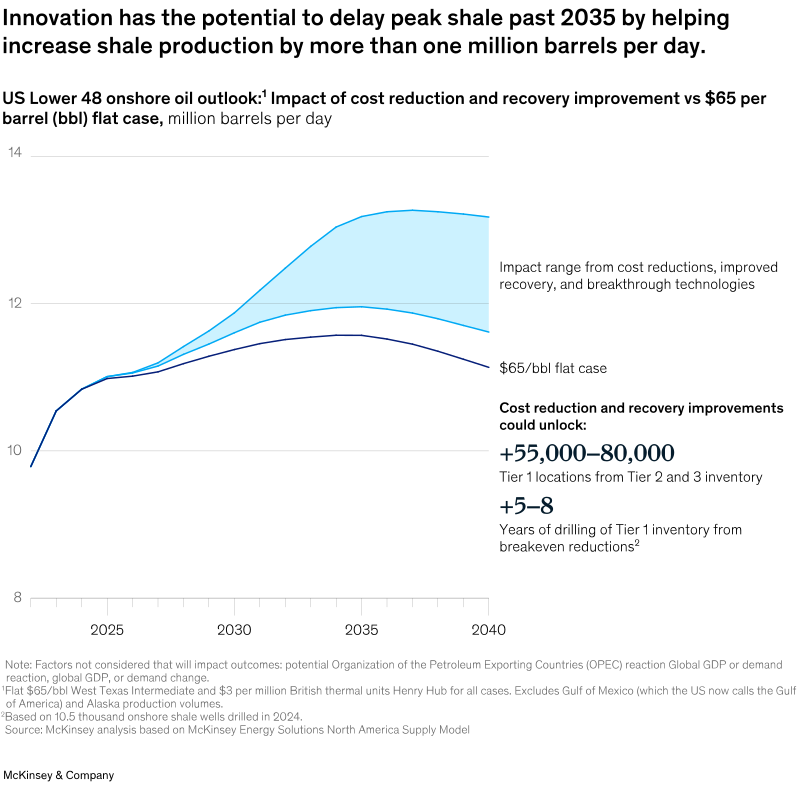
Shale’s next era will be shaped not by geology alone, but by the pace at which operators can scale and industrialize new innovations. We have identified 27 emerging innovations that could reduce both capital and operating costs, and even unlock higher recovery factors, reducing breakevens by between $7 and $13 per barrel of oil equivalent (BOE). These innovations could elevate between 55,000 and 80,000 Tier 2 drilling sites to Tier 1 status, potentially extending shale’s peak by up to three years and increasing US onshore oil production to as many as 13 million barrels of oil per day (MMBOPD), based on McKinsey analysis. To realize this upside, operators will need to pursue disciplined capital allocation, build consolidation-driven scale, and rapidly adopt and industrialize emerging technologies.
In this article, we explore the possible outlooks for shale and how the US sector may continue to evolve over the next five to ten years. Our analysis is based on modeling from the McKinsey Energy Solutions North America Supply Model and informed by our experience with clients at the frontlines of technology deployment, surveys of technical literature, and expert input from industry and academia (see sidebar, “Our methodology”).
The current state of shale
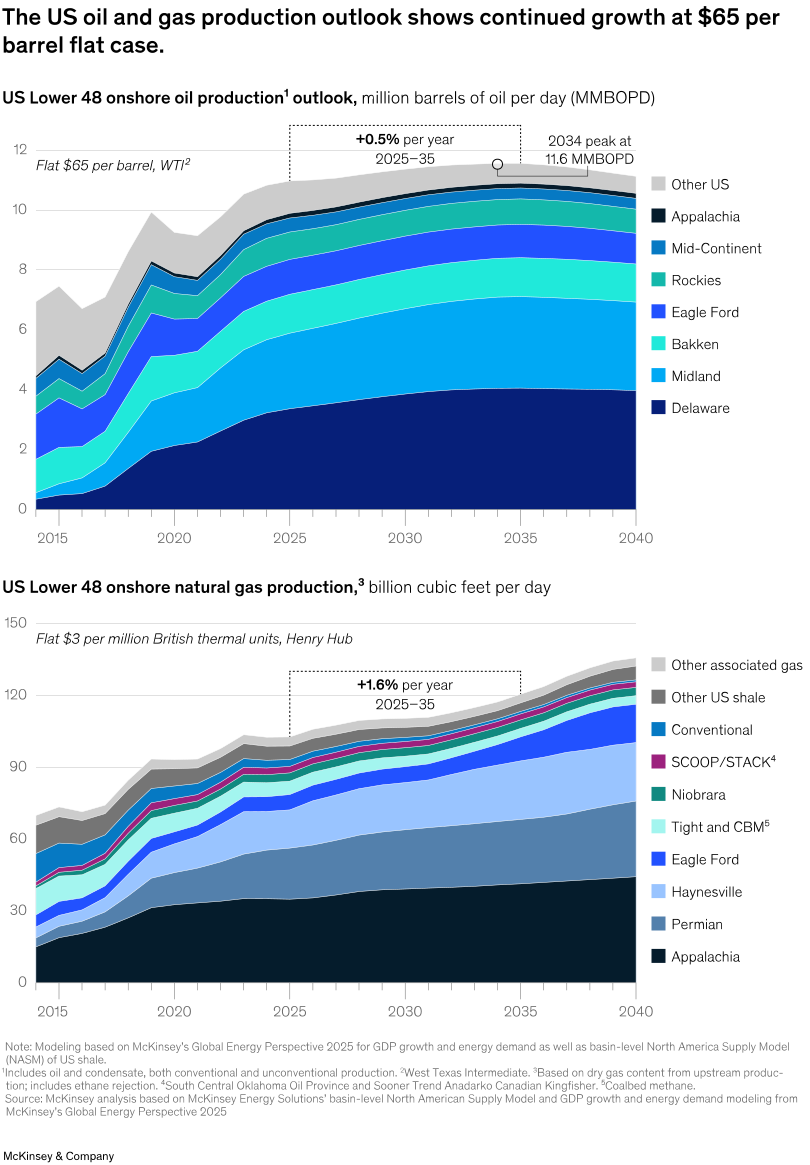
With Tier 1 drilling locations depleting, some experts believe that “peak shale” is imminent, with the industry set to reach its maximum output in the next few years (or possibly already having peaked at prices below $65 per barrel [bbl]).3 On the other hand, McKinsey’s Global Energy Perspective 2025 projects that peak shale will occur only in the 2030s, with oil output from shale reaching approximately 11.6 MMBOPD and gas production continuing to grow over the next decade (Exhibit 1). Such conflicting forecasts highlight the uncertainty of this moment in the US shale sector.
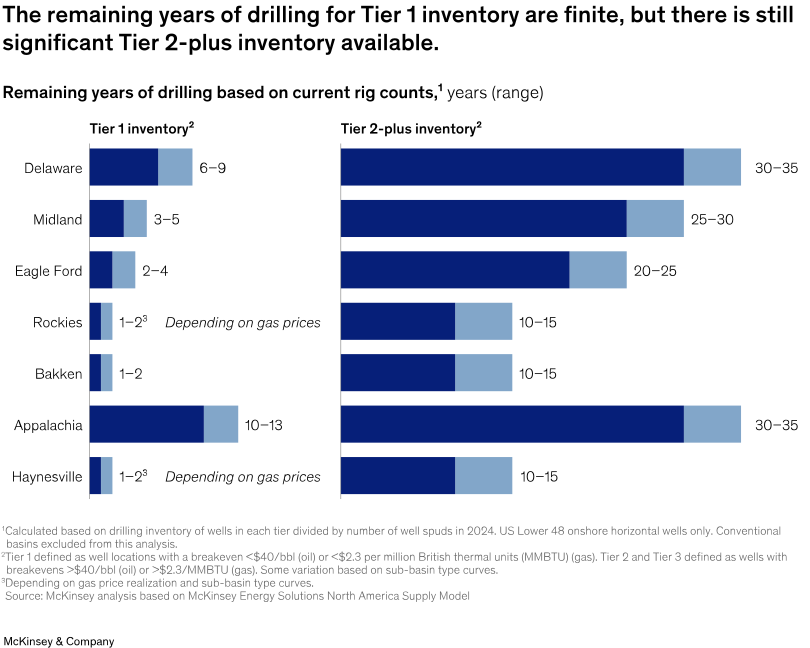
In both viewpoints, the fact remains that Tier 1 inventories are declining rapidly.4 Outside of the Appalachian and Permian Basins, most other basins have less than four years of Tier 1 inventory remaining, which leads to the question: What can be done to improve the economics of Tier 2 locations (Exhibit 2)?
The innovations that could transform shale
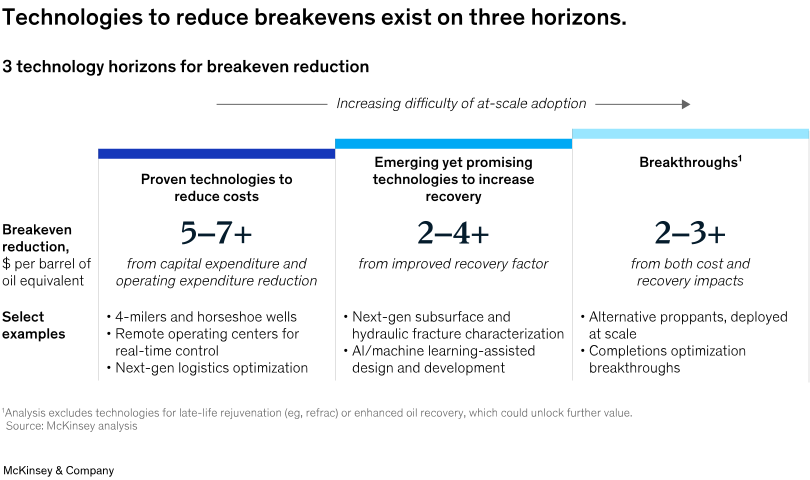
The answer lies in innovation, which is accelerating at a rapid pace. The 27 emerging technologies and oilfield practices that we have identified could unlock a new level of operational scale in unconventional basins—spanning field development, drilling, completions, production optimization, facilities, and logistics and maintenance (Exhibit 3).
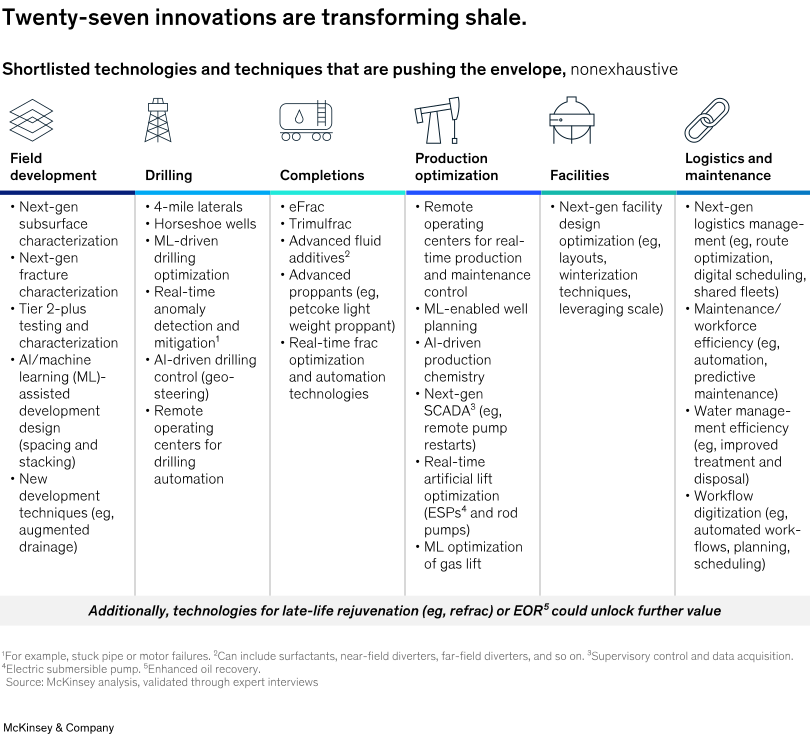
Many of these innovations focus on expanding the boundaries of current methods. Lateral lengths, for example, have risen from two to three miles on average, to four miles—setting a new standard when lease boundary constraints allow, and with horseshoe wells and other creative designs becoming increasingly common.5 Other innovations involve emergent technologies and approaches, such as next-generation characterization and logistics management which, if successfully scaled across basins, hold enormous potential.
Then there are the potential “moonshot” innovations—those that could meaningfully enhance recovery factors—such as advanced lightweight proppants. If proven effective and scalable, these have the potential to extend shale’s peak and redefine the boundaries of what is possible in the industry.
AI and digital technologies play a pivotal role, too, with applications such as AI-assisted completion optimization, machine learning for spacing design, and AI-driven drilling optimization making operations smarter and more efficient. Remote operations centers (ROCs) are reshaping how companies monitor and manage their assets, with optimization potential often limited only by the ability to deploy these technologies across thousands of legacy wells and the feasibility of retrofitting them. Overall, the cycle time it takes to identify opportunities and execute them is dropping rapidly.
Our analysis indicates that the innovations most able to reduce costs have the greatest potential impact on breakevens and the highest feasibility, based on the ability to adopt emerging innovations and leverage scale in the new era (Exhibit 4).6 Recovery improvement technologies also show large promise, although with higher uncertainty. Historically, the shale industry’s emphasis on cash flow, favoring value-over-volume design approaches, has limited the focus on recovery factors. However, if recovery optimization can be achieved at scale, the potential improvement could be transformative.
How far could breakevens fall?
Based on a bottom-up analysis across technologies and operational approaches, breakevens could fall by $7 to $13 per BOE—a 17 to 32 percent drop—over the next five to ten years across most basins (Exhibit 5).
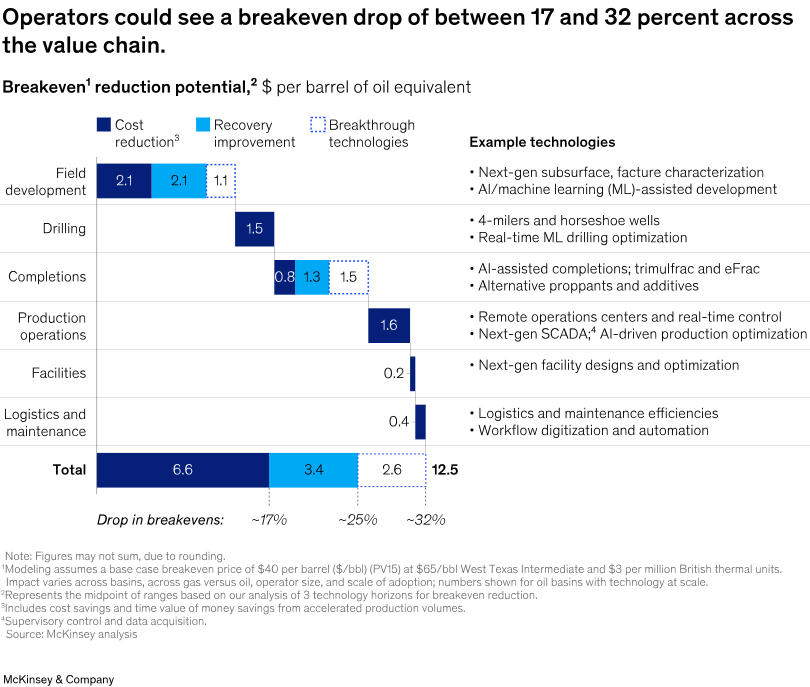
While these figures may seem ambitious, breakevens from 2014 to 2017 dropped by 30 to 40 percent across shale, demonstrating what can be achieved.7 These production gains reflect not only higher well productivity but also additional drilling activity and improved economics.
These improvements could ultimately shift between 55,000 and 80,000 locations from Tier 2 to Tier 1 status, extending the drilling runway by five to eight years, and potentially increasing peak oil from 11.6 MMBOPD to more than 13.0 MMBOPD (Exhibit 6).8
The impact on capital deployment in the United States could be substantial. More than 700 additional wells could be drilled per year compared to our current outlook, despite total capital expenditure dropping as costs come down. The distribution of additional activity across basins would vary widely. The Permian Basin, with its already extensive Tier 1 inventory, would likely see the smallest proportional impact over the next ten years. Other basins show potential increases of 10 to 20 percent in well counts as their large Tier 2 banks become more economical.9
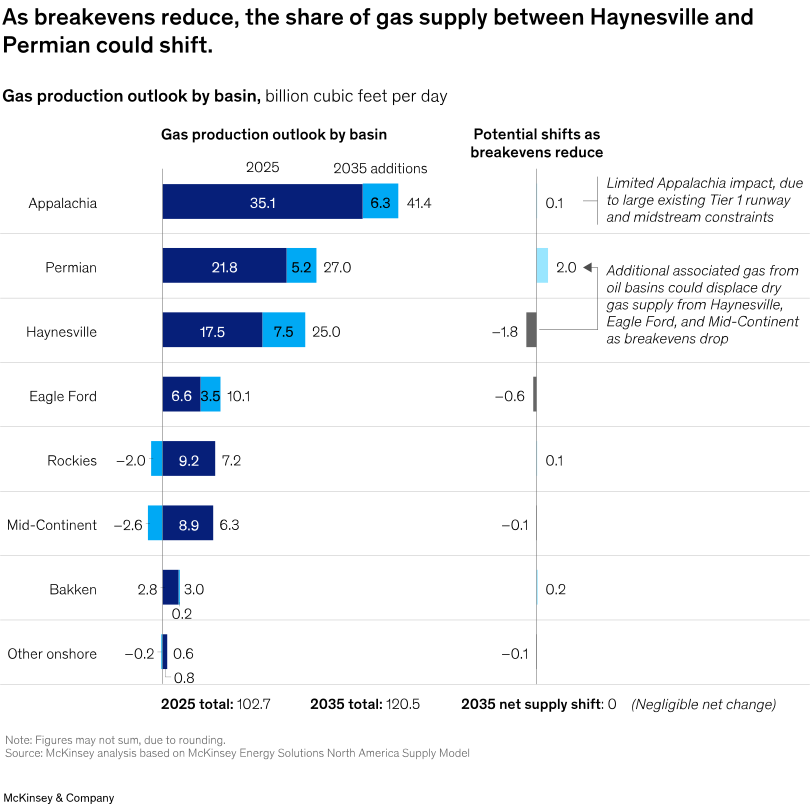
The potential for associated gas from oil production to displace supply from dry gas basins will continue or even accelerate. If breakevens do drop significantly, associated gas would increase alongside oil production, potentially displacing drilling in dry gas basins, assuming aggregate gas demand is not impacted (Exhibit 7).
From a returns perspective, these efficiency gains present a significant opportunity for operators who can quickly adapt and scale, and for their shareholders or owners. Our analysis suggests that, across basins, the Tier 1 profitability index for new wells could increase by over 20 percent, from an average of 1.8 to 2.3 as breakevens reduce.10 These returns would be amplified in large, consolidated oil basins, with Permian leading the way. While Appalachia could see cost reduction benefits, the returns impact would be lower than other basins due to continuing midstream constraints that would limit new drilling over the next decade.
Collectively, these gains could generate $40 billion to $70 billion of incremental free cashflow across the sector over the next ten years—representing a 25 to 40 percent increase. This cashflow could be deployed in multiple ways: as returns to investors, additional capital expenditure to drive growth, or be split across operators, oilfield services and equipment (OFSE), and midstream players.
However, increased production levels are never static—they require additional breakthroughs and activity to sustain them, putting an ever-increasing premium on R&D, underpinned by rigorous execution in the field. Cash returns to shareholders therefore must be balanced against R&D and technology investment to drive productivity gains.
The knock-on effect of shale’s next era
How the next era of shale plays out could bring cascading impacts across the energy value chain, reshaping OFSE service demand, infrastructure needs, and downstream competitiveness.
A new equilibrium for oilfield services and equipment
As drilling and completions (D&C) operations become more efficient, and base production continues to grow for operators, the current trend of fewer rigs and frac spreads in the field could continue, with important implications for the OFSE sector.
A peak shale scenario in the short term would worsen this situation for OFSE providers, as Tier 1 inventory is depleted. However, if the 27 innovations achieve their potential of reducing breakevens, this could partially offset these OFSE trends, with additional Tier 2 drilling (an average 700 additional wells per year versus the base case outlook) requiring more rigs, frac spreads, and other equipment and services.
That said, the OFSE sector, as a whole, may be entering a new equilibrium, with less D&C equipment in the field, but with remaining equipment having more advanced technology and higher performance expectations from operators.
In this potentially hypercompetitive environment, successful OFSEs could adapt in four main ways:
- Evolve commercial models to share performance gains with operators as value creation partners, with win-win contract arrangements.
- Diversify portfolios, either within upstream—for example, increasing production and mature well services offerings, a segment that is expected to grow in any scenario—or in adjacent sectors such as power, or internationally.
- Consolidate across OFSE to drive further cost and revenue synergies.
- Continue to drive innovation to remain the right long-term partner for operators.
Potential impacts in other related sectors
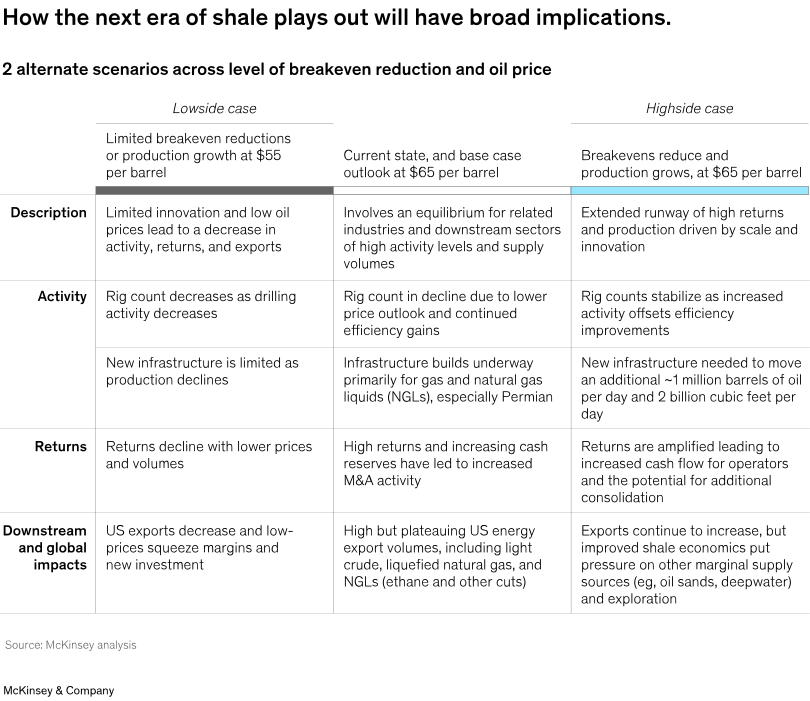
Extending high shale production would allow the efficiencies already unlocked to continue, with implications for a range of related sectors (Exhibit 8):
- Midstream: If the shale production peak does extend, the need for infrastructure would grow even faster, calling for additional pipelines and facilities to handle incremental volumes and export demands. This could require the construction of new pipelines to transport an additional one MMBOPD and 20 billion cubic feet per day (BCFD) of gas, especially from the Permian Basin, and an accelerated development of US export capacity.
- Refining and chemicals: Continued availability of low-cost feedstocks (light crude, natural gas liquids, and ethane) would allow US refiners and petrochemical suppliers to maintain their lower-cost advantages, while export markets could continue to absorb excess volumes. The market for ethane, in particular, will be very sensitive to the pace of development; in the base outlook, a large portion of incremental ethane will be rejected into gas streams, but later exported as international demand grows and export infrastructure is developed.
- Offshore and exploration: Marginal sources of oil production around the world, such as offshore, conventional, and oil sands, would be scrutinized as shale production increases, with roughly one MMBOPD worth of future projects from these sources displaced by shale. Exploration could also be pressured to find resources that can compete with shale’s low breakevens.
With the right innovation and scale, US shale could unlock additional value, potentially for decades to come, as a cornerstone of the US energy system.
Yet this future is not guaranteed. As Tier 1 inventory declines, innovation becomes the critical lever to meet demand. Businesses that combine capital discipline with the agility to adapt at speed will be best positioned to define the new shale era.