For decades, oil and gas exploration drove industry growth with enormous implications for countries and regions where resources were discovered. After low investment in the late 1980s and early 1990s, the industry ramped up exploration spending through the late 1990s and early 2000s to restore depleted reserves and balance supply and demand. Over the last ten years, however, exploration and production have decoupled—production has continued to grow as exploration spending has declined. Capital spending on exploration has never been so low relative to production (Exhibit 1).
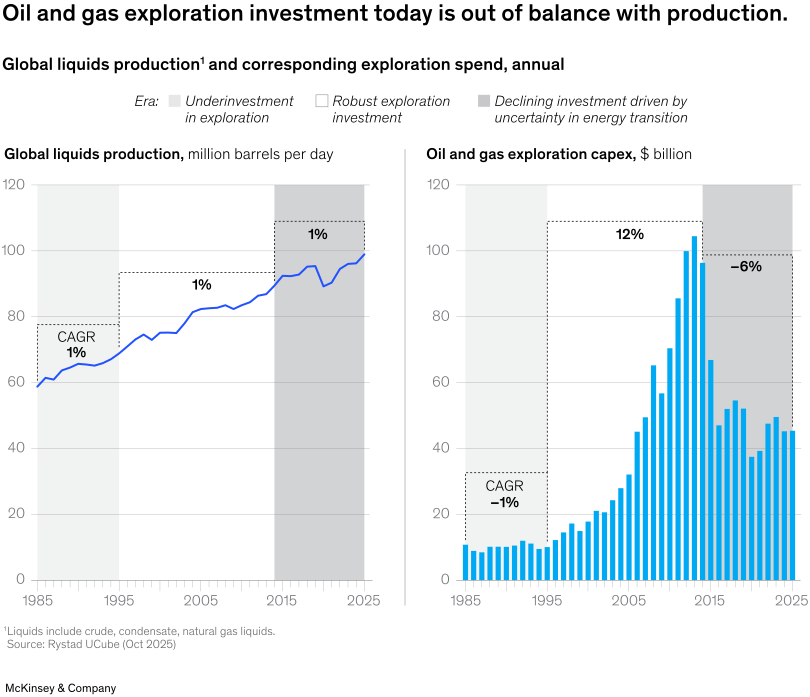
During this period, capital migrated to short-cycle projects such as onshore shale and offshore tiebacks. Further, uncertainty about the pace of the energy transition and investor demands for returns shifted companies’ focus toward immediate cash generation and away from many of the strategic and operational capabilities needed for exploration. Many companies now face hollowed-out exploration teams, long cycle times, increased unit exploration costs, and low success rates. With demand still rising and well production decline rates accelerating, reserves cannot be rebuilt without renewed exploration.
In this article, we examine the widening supply-and-demand gap facing the oil and gas industry and outline the strategic, operational, and capability shifts required to rebuild reserves and meet projected demand.
Limited exploration is widening the oil and gas supply gap
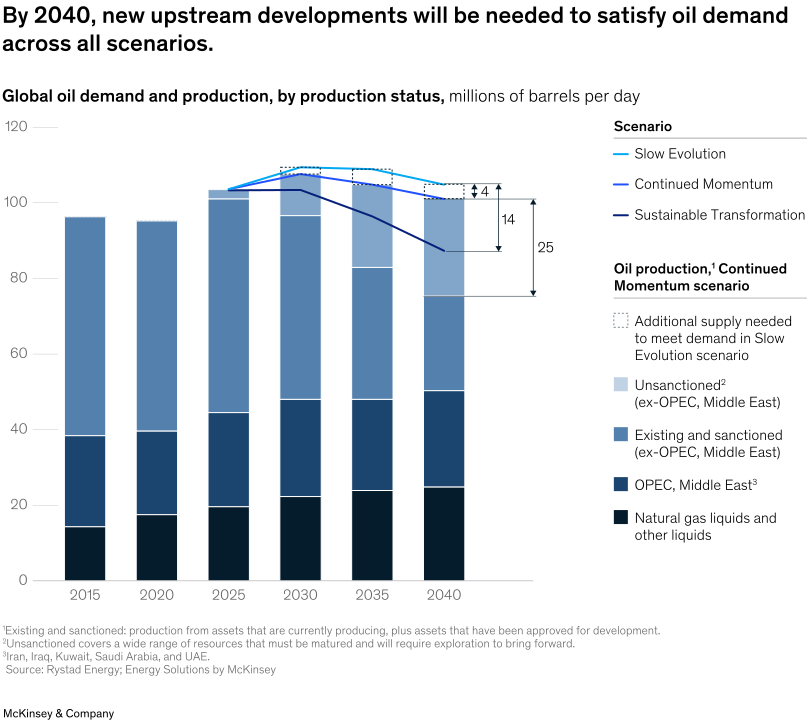
The transition to a decarbonized energy system will need to balance affordability, energy security, reliability, and competitiveness. A range of possible pathways could achieve this transition, each of which carries uncertainties. Yet in two of the three energy transition scenarios outlined in McKinsey’s Global Energy Perspective (GEP), oil and gas demand grows by several percent by 2030. As production from existing wells declines faster each year, new discoveries will be needed to meet demand in any of the scenarios. GEP projects a shortfall of approximately 25 million barrels of oil equivalent per day by 2040, under the Continued Momentum scenario (Exhibit 2), relative to existing and fully invested supply sources.1
Even as this gap has widened, exploration success rates have plateaued, and total discovered resources in the last decade have fallen by more than 50 percent, from 331 to 156 billion barrels of oil equivalent.2 Apart from the Guyana breakthrough, no sizeable basin has emerged in the last decade. Most other finds are infrastructure-led, meaning that they are adjacent and incremental to existing production areas. While such sites have attractive net present values (NPVs) owing to limited additional infrastructure needs, which helps with both cash flow and timing, they typically do little to shift the reserve base.
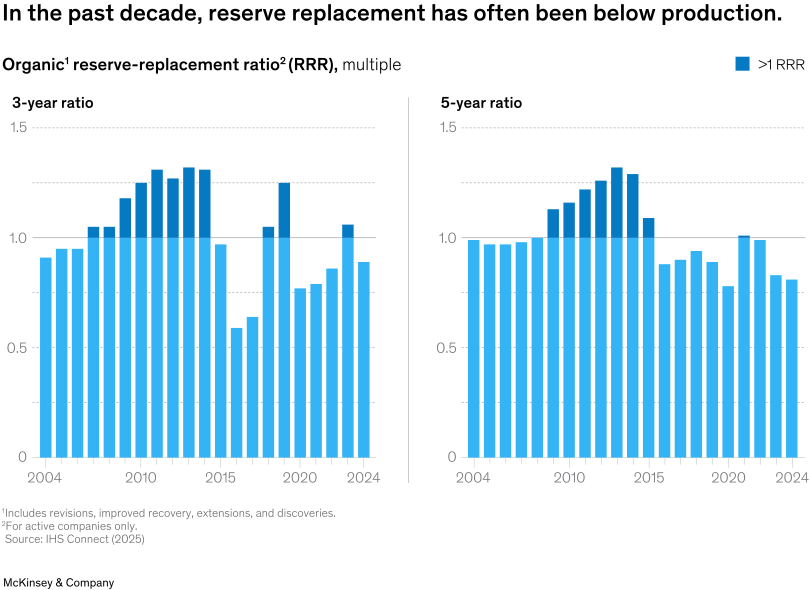
As a result, reserve-replacement ratios have fallen to historic lows across the sector (Exhibit 3). Many companies are producing far more oil and gas than they are discovering, which shrinks future portfolios, compresses future earnings potential, and reduces investor confidence. Some companies have increased their reserves through M&A, but such transactions do not add barrels to the global oil and gas supply.
Exploration portfolios lack more than capital
Capital retreat is a major reason why exploration has declined, but it isn’t the only one. It is one of six headwinds that have depressed outcomes and eroded exploration portfolio value.
Reduced capital investment
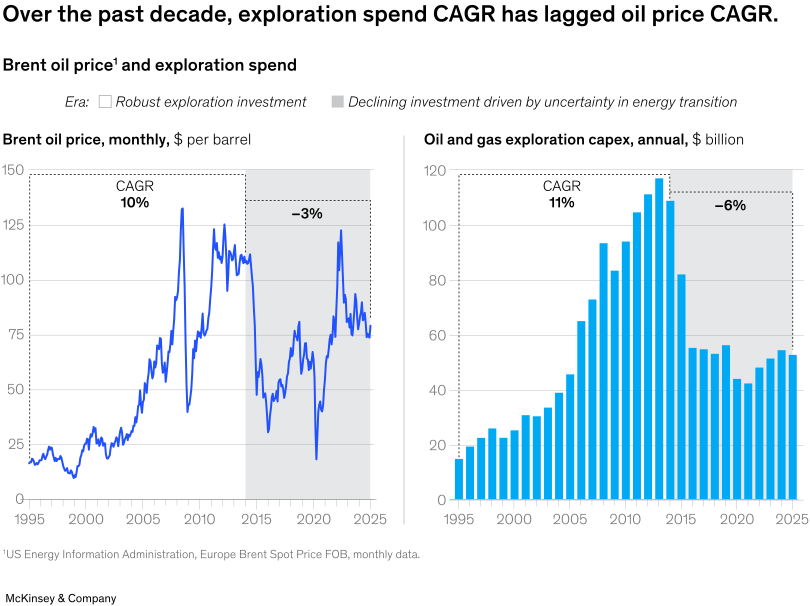
Capital investment in exploration was robust in the late 1990s and early 2000s, with exploration capital expenditure growing approximately 11 percent annually, often outpacing the approximately 10 percent annual oil-price gains (Exhibit 4). Since the 2014–15 price crash, however, exploration spend has fallen approximately 6 percent per year.
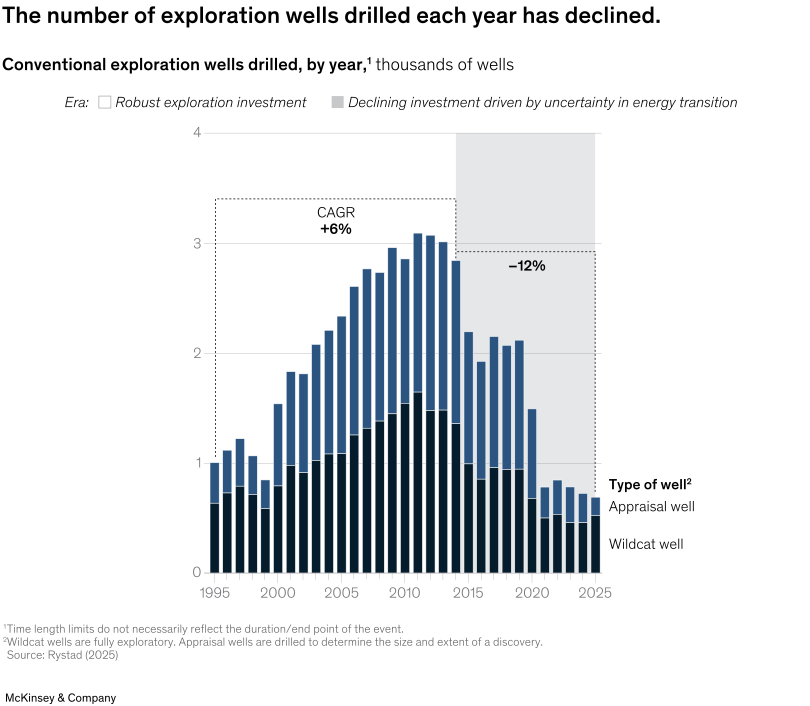
Exploration activity has mirrored the trend: From 1995–2014, the number of exploration wells drilled grew approximately 6 percent per year, but over the past decade they have declined by an average of approximately 12 percent per year (Exhibit 5). If the current pattern of limited exploration continues, operators may be forced to rely on higher-cost, more carbon-intensive barrels.
Rising costs and lengthy timelines
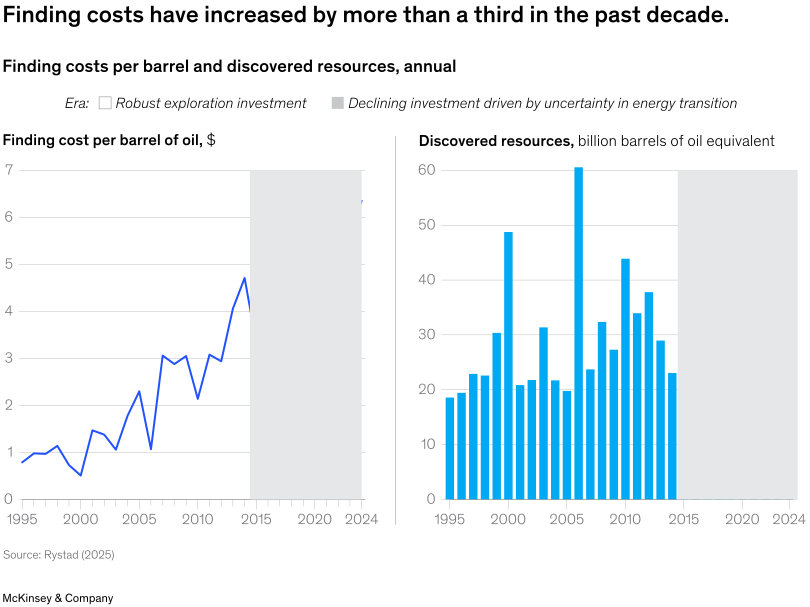
On the production side, core operations have progressed rapidly down the learning curve, shortening cycle times and significantly reducing supply chain costs as output has continued to grow. On the exploration side, however, a combination of reduced management focus, depressed levels of activity, and depletion of easier-to-find barrels has resulted in relatively fewer improvements in cycle time and costs. Finding costs per barrel—a measure of how much exploration adds to the cost of each barrel—continue to climb, as discovered resources decline (Exhibit 6). End-to-end cycle times, from the first seismic explorations of an area to the first oil from a well, average approximately 20 years, making exploration of new areas less attractive relative to incremental step-outs.3
Immediate cash generation crowding out long-term value creation
Over the last decade, equity analysts (and hence the industry) have focused on immediate cash generation, heavily discounting future earning potential. Given an uncertain energy transition pathway, investors have tended to be risk averse about oil and gas returns. This pushed companies to optimize near-term cashflow and allocate more capital to short-cycle opportunities. Long-dated options that could build large future reserves were frequently deprioritized.
Suboptimal risk frameworks impacting exploration portfolio decisions
Preference for safer, smaller near-term opportunities has diluted portfolio optionality. Risk frameworks remain anchored to rigid return thresholds that can undervalue the creation of strategic options. This issue is typically more pronounced in organizations that make exploration decisions at the regional level, because many “high risk, high return” opportunities that would offer diversification within a centralized portfolio are too risky for any single region to pursue alone.
Talent and experience erosion
A decade of underinvestment in exploration left roles vacated by retirements unfilled, while mergers thinned teams and eroded institutional memory. Beyond headcount, there is a loss of expertise from lived experience: Prior generations built skills across many more basins and play types, giving them a deep catalogue of analogs to draw on. Many companies now lack the geoscience and project-delivery depth to execute ambitious programs.
Higher technical uncertainty and constrained seismic access
Few remaining prospects have clear seismic or geophysical signatures, increasing uncertainty in technical assessments and making portfolio outcomes less reliable. At the same time, a retrenched seismic industry, with minimal multiclient activity and limited new basin imaging, raises the cost and difficulty of unlocking new basins and plays, further limiting access to promising opportunities.
Resetting approaches to exploration could help close the supply gap
Bridging the supply-demand gap in oil and gas exploration will require companies to make integrated shifts in strategy, operations, and capabilities, encompassing the following components:
- Strategy—build an advantaged, risk-savvy portfolio:
- Develop an exploration target that aligns with the long-term energy outlook, including the expected supply gap, and support it with long-term capital commitment.
- Optimize portfolios for risk-return at the central (rather than regional) level, which will allow for better risk management. Balance capital allocation between basins with step-change future potential and near-field opportunities that allow immediate cash flow.
- Use partnerships, farmouts, and alignment with national oil companies and host governments to manage portfolio-level risk and secure advantaged acreage and access.
- Embed risk-based decision-making into the strategic process instead of looking to eliminate all risk. Shift from rigid return-rate thresholds to probabilistic, portfolio-based decisions to enable bold bets at the portfolio level.
- Operations—prioritize speed and commercial discipline:
- Replace slow, siloed governance, often at the regional level, with empowered accountable teams and rapid stage gates. Compress cycle times—moving from seismic exploration to first drill in months, not years—with simplified approvals that reward speed, learning, and disciplined iteration.
- Normalize quick fails through setting upfront decision criteria and exit thresholds.
- Instill end-to-end accountability that prioritizes commercial value over the number of barrels. Shape opportunities early, considering cost, mode of production, route to market, and carbon intensity so that finds are financeable and fast to monetize.
- Identify the key competitive drivers for exploration—whether cycle time, finding costs, access to acreage, or availability of key partners—and embed them within operations to enable cross-functional collaboration and agility.
- Capabilities—build a tech-enabled capability edge:
- Adopt an explorer’s mindset that includes making commercial-first choices: Prioritize speed to revenue, manage risk at the portfolio level (not prospect-by-prospect), apply rapid learning loops, use data-led judgment, and execute as an integrated team.
- Apply AI and machine learning to accelerate seismic interpretation, reduce bias, improve risk evaluation, and rank prospects more accurately. Integrate data sources to compress cycle times.
- Invest to rebuild capabilities by training the next generation of geoscientists, reservoir engineers, and data scientists, and institutionalizing mentorship and knowledge transfer.
- Broaden the talent base by recruiting from adjacent fields, including data science and machine learning, and form cross-functional squads to inject fresh thinking into exploration workflows.
Closing the gap between projected supply and demand will likely require a step change in oil and gas exploration. This would involve prioritizing commercial barrels, moving faster with agile governance, modernizing risk frameworks to back more and bigger bets, and deploying digital capabilities and AI to compress cycle times and improve hit rates—all while delivering strong risk-adjusted returns and lower environmental intensity to meet investors’ expectations. With renewed talent, strategic partnerships, and a focus on advantaged resources at scale, exploration can play a decisive role in securing future oil and gas supply.