As global mobility, industry, and building systems electrify, demand for efficient, reliable power conversion technologies is rapidly increasing—and it won’t be possible to meet this demand without inverters, rectifiers, and other power conversion technologies. These components convert direct current (DC) to alternating current (AC) and vice versa and are essential for integrating renewable-energy sources into the grid, ensuring efficient energy storage and motor usage, and maintaining uninterrupted power supply.
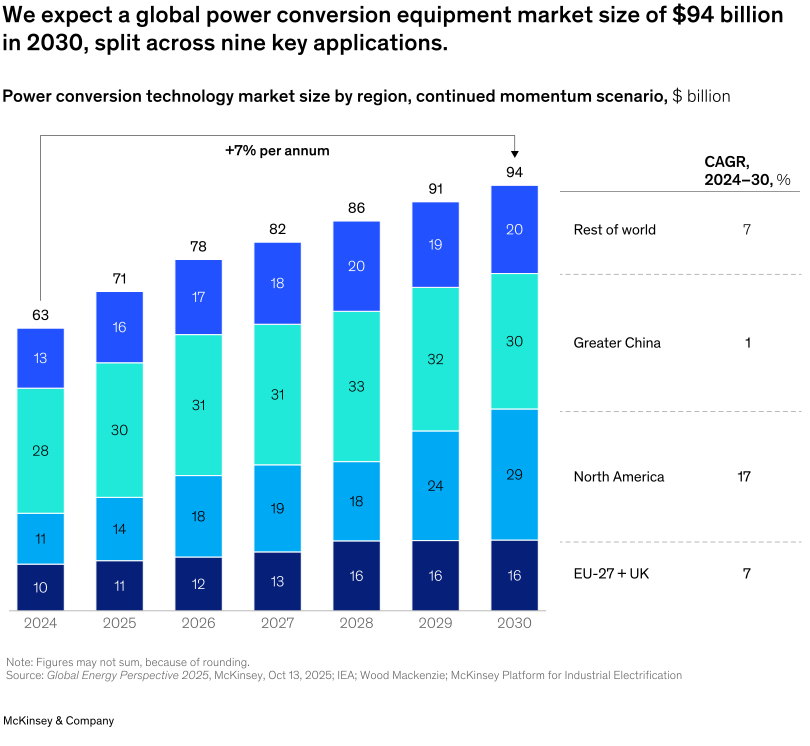
The global market for power conversion technologies is projected to reach about $95 billion in 2030 with a CAGR of 7 percent from 2024 to 2030. Key applications include space and water heat pumps, utility-scale solar photovoltaic (PV) technology, data centers, high-voltage DC (HVDC) equipment, and more.
This article maps the power conversion landscape, providing a primer on these technologies, key applications, and strategies for market entry. With greater insight into power conversion technologies, management executives, private equity firms, existing OEMs, and disruptors can move forward with an informed perspective.
Power conversion technologies: A primer
As electricity flows around the world, it often needs to be converted between AC and DC. Electric grids typically run on AC power, and most large-scale power generators (for example, coal-powered or gas-powered plants) produce AC current. On the other hand, many categories of electric devices—such as computers, LEDs, and electric vehicles (EVs)—rely on DC power. These devices therefore require AC–DC conversion of grid power, either for direct use or to charge batteries that store and provide DC power.
Today, electrification has created a growing need for converting DC power into AC power (DC–AC conversion). Renewables typically produce DC power, which needs to be converted into AC for grid use. In addition, power companies are increasingly investing in DC–DC architecture, such as HVDC transmission lines that carry energy from remote renewable sources to load centers; these lines lose less power over long distances than high-voltage alternating current lines and are therefore more efficient.
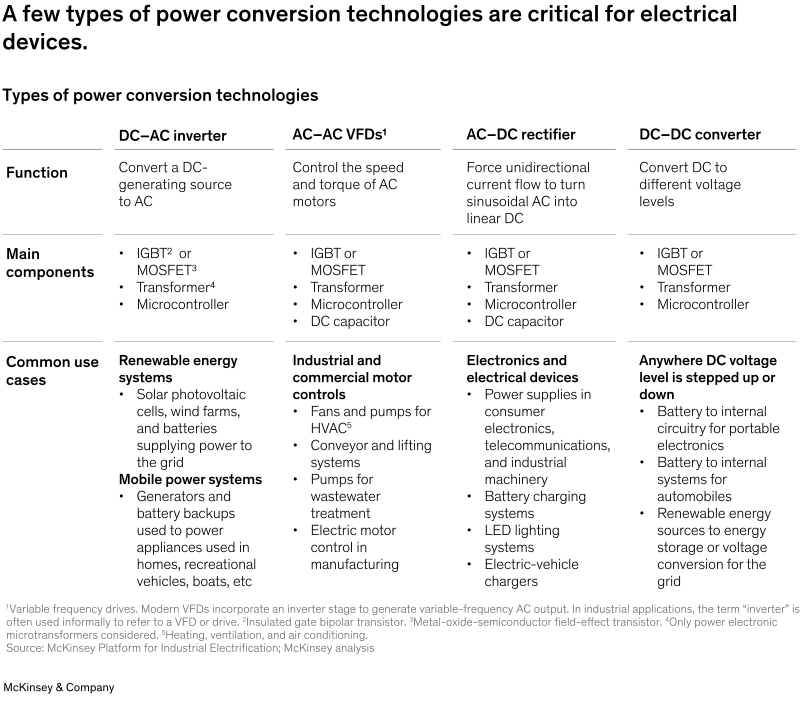
Several power conversion technologies convert electrical current from one form to another (Exhibit 1):
- DC–AC inverters. These components are commonly used to convert DC from sources such as solar PV cells and batteries into AC for grid use or by some electric devices.
- AC–AC variable frequency drives (VFDs). VFDs control the voltage level and the frequency of AC motors by rectifying incoming AC to DC and inverting it back to controlled AC output. They are widely used to control the speed and torque of industrial AC motors.
- AC–DC rectifiers. Rectifiers are essential for a range of consumer electronic devices, including smartphones, computers, and EV chargers.
- DC–DC converters. DC–DC converters regulate output voltage, allowing a single input source to feed circuits with varying voltage requirements.
In addition, electronic components from these power conversion technologies vary significantly in terms of how much electricity they are built to handle—from kilowatts up to gigawatts (GW), depending on the application. The highest capacities are applied in HVDC technology, such as grids and power lines. Electronic components also vary in their structure and require completely different materials for different applications. For low-power and consumer-grade inverters, conventional silicon-based semiconductor devices are typically used. For higher-power or high-efficiency applications, silicon carbide (SiC) or gallium nitride (GaN) devices enable faster switching speeds and better efficiency.
Key applications for power conversion technologies
With more electric devices and technologies being created every year, power conversion technologies offer manufacturers a multitude of opportunities. Global growth is primarily driven by China, Europe, and North America, which are leading the adoption of clean-energy technologies and infrastructure upgrades (Exhibit 2).1
To identify the most promising applications, we focused our analysis on technologies expected to be critical for the energy transition until 2030, following emerging trends related to decarbonization, electrification, and general demand growth (Exhibit 3). These can be clustered into demand-side applications (electricity-consuming), supply-side applications (electricity-producing), and transmission system operator (TSO) grid applications.
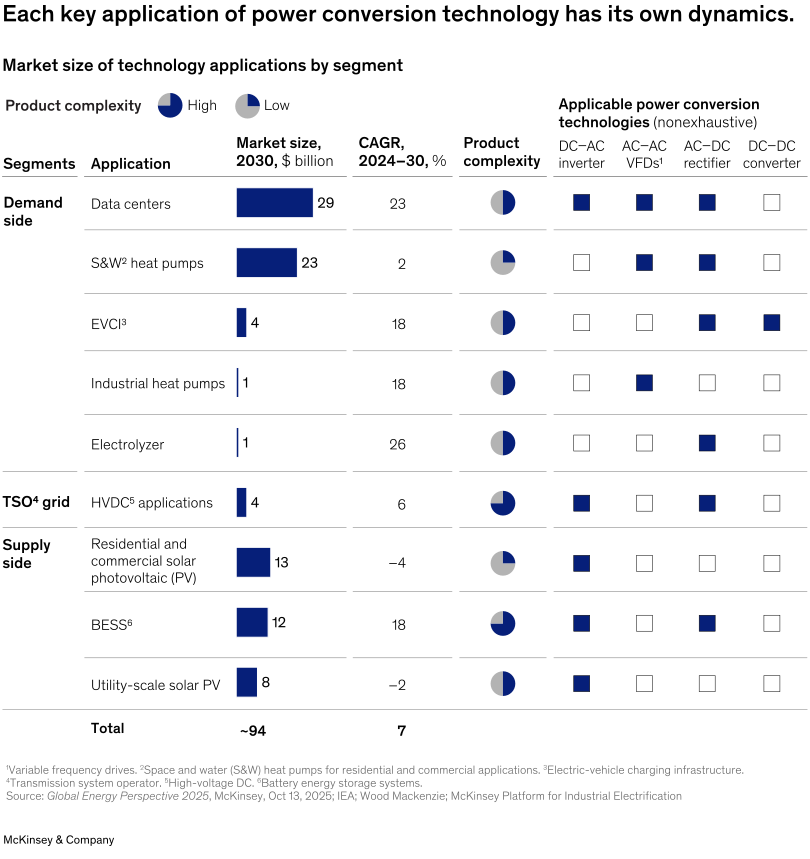
Overall, growth in supply-side applications (such as renewable-energy sources) is slowing down—for example, CAGR for solar PV is expected to decline by 2 percent from 2024 to 2030—while demand-side applications (such as data centers and EVs) are consistently growing at about 10 percent or more. This is because the supply-side market has matured over the past few decades, while more recent trends in gen AI and electrification have spiked demand for power conversion technologies. We found that the largest markets are for data centers ($29 billion) and space and water heat pumps ($23 billion), with a range of opportunities across other applications. We explore these applications below.
Data centers
Power conversion technologies are critical for data centers, particularly those with uninterruptible power supply (UPS) systems. Data centers use power conversion technologies in three ways: to convert AC to DC power to charge batteries and maintain power during grid disruptions; to convert DC power back into stable AC for UPS systems or into different DC voltage levels for server components; and to regulate the speed of cooling fans and pumps by adjusting motor frequency and voltage. The rising demand for cloud computing, AI use, edge computing, and digital services is fueling data center growth. From 2025 to 2030, global data center capacity demand is expected to increase by 2.7 times (from 82 GW to about 220 GW),2 and power consumption is expected to grow at a CAGR of approximately 40 percent from 2024 to 2028, or four times.
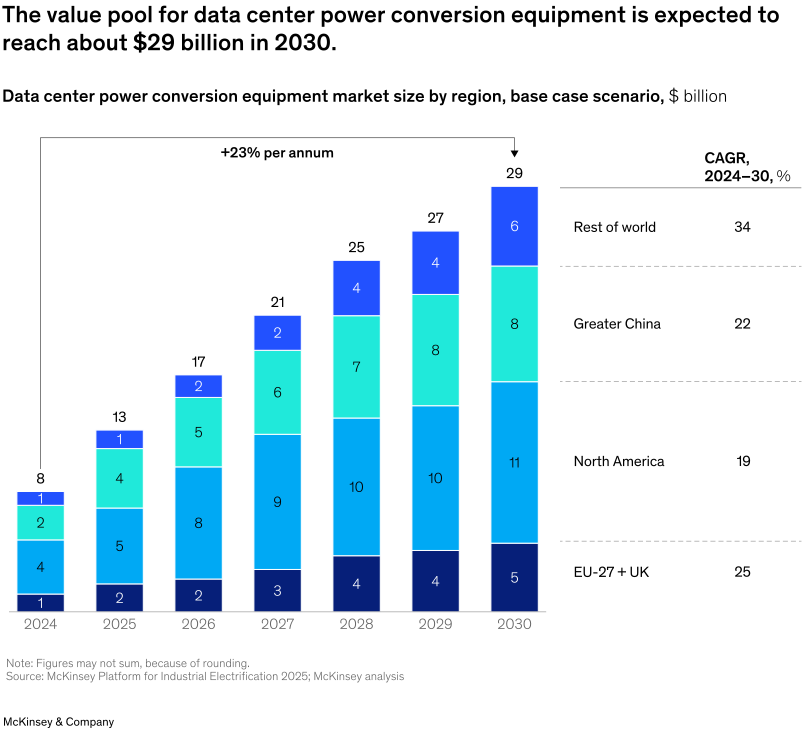
As data center infrastructure is built out, it is expected to be one of the fastest-growing markets for power conversion technology. The global market for data center power conversion technologies is estimated to rise from $8 billion in 2024 to $29 billion by 2030, a CAGR of 23 percent. This is driven by increasing power densities; growth in high-efficiency, modular UPS systems; and rising inverter adoption across cooling infrastructure and data center power supply system units. Markets are expected to expand into new geographies for data centers—remote areas with readily available energy, such as the rural United States3 and areas in Europe with abundant low-carbon energy and lower temperatures that reduce cooling demands.4
Space and water heat pumps (residential and commercial)
Residential and commercial heat pumps rely primarily on inverter-driven compressor systems (VFDs) to enable precise control of compressor speed and improve system efficiency under variable loads. As heating electrification accelerates and efficiency standards tighten, these technologies will be increasingly critical for delivering grid-interactive, low-carbon solutions at scale.
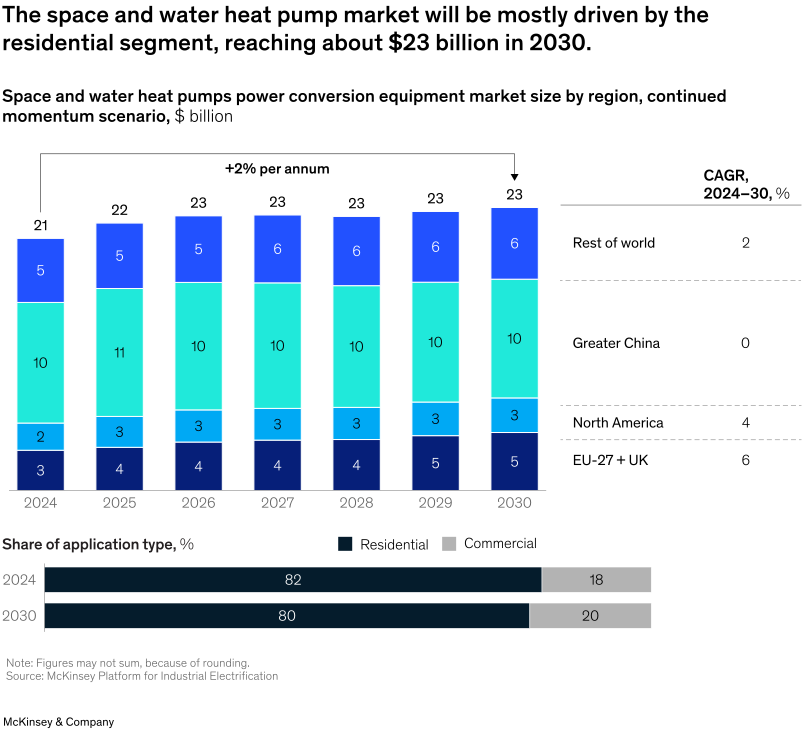
The market for power conversion technologies in residential and commercial heat pumps is expected to grow at about 2 percent annually, reaching approximately $23 billion by 2030, accounting for 10 to 15 percent of the total space and water heat pump market. Demand is dominated by the residential segment (about 80 percent), with growth led by Europe (EU-27 plus the United Kingdom) at roughly 4 to 6 percent annually, while other regions remain closer to flat to low-single-digit growth. Competition focuses on cost-efficient, reliable inverter-driven compressor systems and scaling supply chains to meet residential demand.
EV charging infrastructure
For EV charging infrastructure (EVCI), high-power-density rectifiers convert AC grid power to charge DC batteries, and DC–DC converters adjust voltage levels down or up as required. One key EVCI feature is vehicle-to-grid (V2G) functionality that transforms EVs into bidirectional, grid-interactive energy storage assets—that is, EVs with V2G technology can both be charged by the grid and send excess energy back into the grid, depending on the need. As V2G standards mature and bidirectional charging hardware becomes commercially viable, investment is accelerating to build the infrastructure needed to enable real-time load balancing and peak shaving.
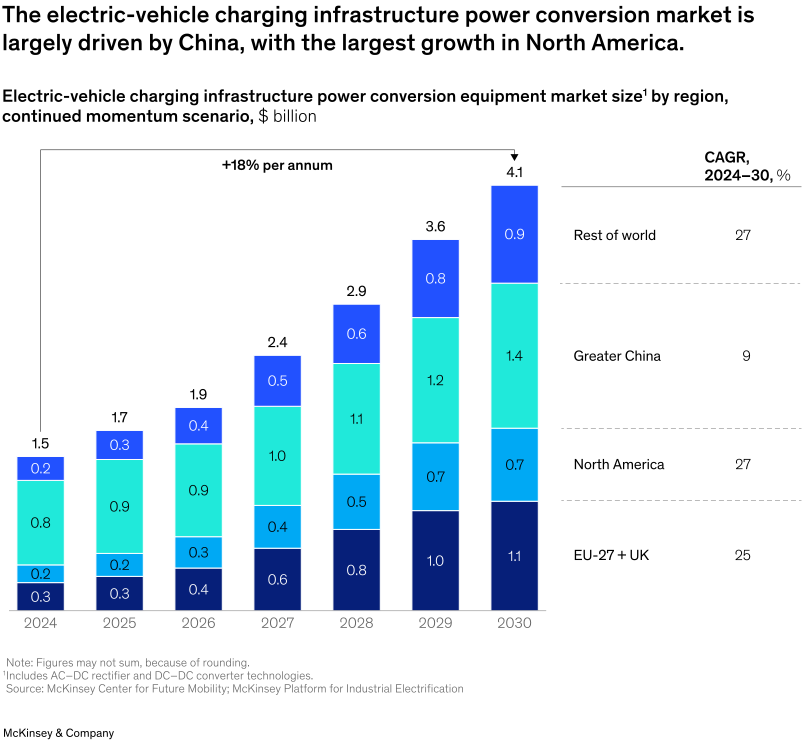
The global EVCI market is forecast to grow from about $1.5 billion in 2024 to $4.1 billion by 2030. Contributing factors include accelerating EV adoption, the expansion of public- and fleet-charging networks, and the build-out of high-power charging. Globally, more than 1.3 million DC chargers are expected to be deployed by 2030, at a CAGR of 20 percent, with China accounting for nearly 70 percent of installations.5 The market has achieved consistently high growth and is currently led by European equipment players. As emerging Chinese companies gain global traction, competitive market dynamics are expected to intensify.
Industrial heat pumps
In industrial applications, VFDs play a critical role in enabling high-capacity, high-temperature heat pumps by dynamically adjusting their motor speeds and optimizing performance under varying load conditions. Industrial heat pump systems require advanced control, high efficiency, and integration with digital industrial environments to meet demanding operational requirements.
The global market for power conversion technologies in industrial heat pumps is expected to reach about $1 billion by 2030. North America leads with growth of roughly 25 percent, followed by Europe and China at about 16 percent. Despite these growth rates, overall market size remains relatively small, reflecting the limited size of the underlying industrial heat pump market, as well as long asset life cycles and slow replacement cycles in heavy industry.

Electrolyzers
In hydrogen production, electrolyzers split water molecules into hydrogen and oxygen using high-power rectifiers that convert AC grid electricity into stable DC current. These systems must deliver high current with low ripple, precise control, and robust thermal management, making power electronics critical to enabling electrolyzers to scale to megawatt and GW levels. As such, modular and transformer-coupled designs with advanced harmonic filtering are increasingly required to meet grid and performance standards.
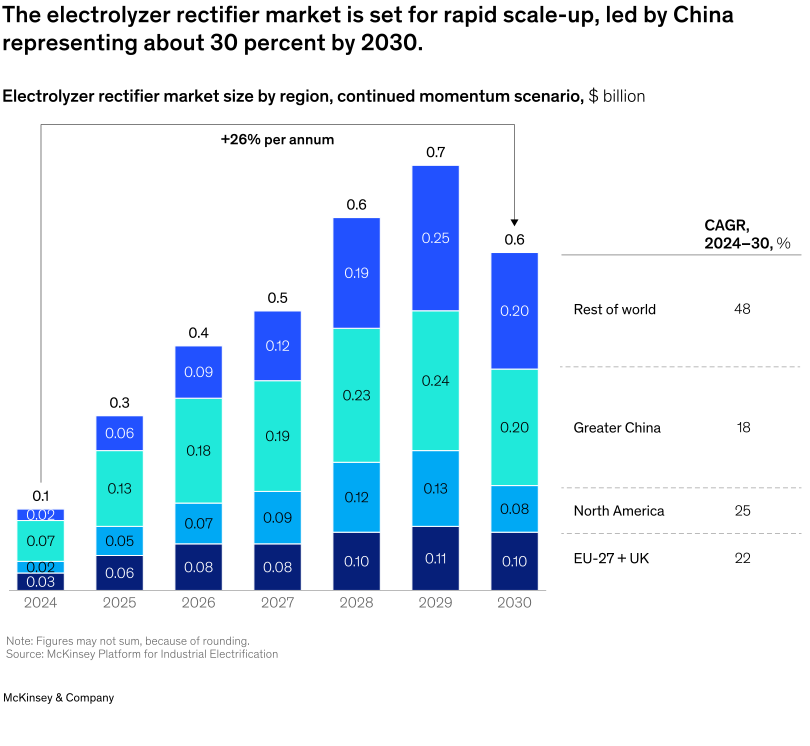
The market for rectifiers in electrolyzer applications is set for rapid scale-up, expected to grow at about 26 percent annually to reach roughly $0.6 billion by 2030. However, recent years have seen expectations moderated, with project delays and cancellations slowing progress relative to earlier deployment announcements. China is expected to account for about 30 percent of the market by 2030, with the rest of the world representing a similarly sized share and Europe and North America making up smaller portions (roughly 20 and 15 percent, respectively). Competition centers on compact, high-efficiency rectifiers with plug-and-play compatibility, enabling faster deployment and cost reduction.
HVDC
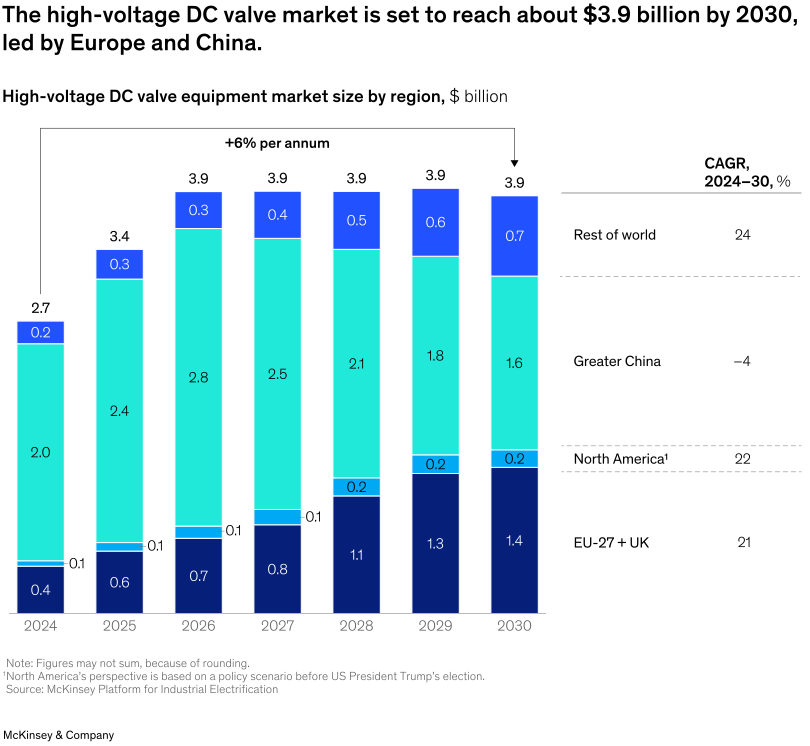
HVDC valves are components within an HVDC converter station, and they are critical in modern transmission networks. HVDC converter stations perform the key task of converting between AC and DC, either with AC–DC rectifiers or DC–AC inverters. This helps increase the efficiency and control that TSOs have over high-power transmission; reduces network losses; and supports voltage regulation, reactive power management, and interconnecting asynchronous grids.
The global power transmission market, valued at about $165 billion in 2025, is projected to grow at a CAGR of 4 percent, edging past $200 billion by 2030. Within this broader landscape, the HVDC valves market is forecast to increase from approximately $2.7 billion in 2024 to nearly $3.9 billion by 2030, a CAGR of 6 percent. Growth is driven by the accelerating deployment of HVDC systems for offshore wind and urban grid connections, the upgrade of ultrahigh-voltage DC systems in China with advanced valve technology above 800 kilovolts,6 and the industry-wide transition from thyristor-based valves to valves using insulated-gate bipolar transistor technology, which offer improved control and modularity.
The market is currently led by a few global players headquartered in the United States and Europe, but Chinese manufacturers are becoming increasingly active, supplying cost-competitive, ultrahigh-voltage DC valve technologies to domestic markets and selectively expanding into international projects.
Solar PV (residential and commercial)
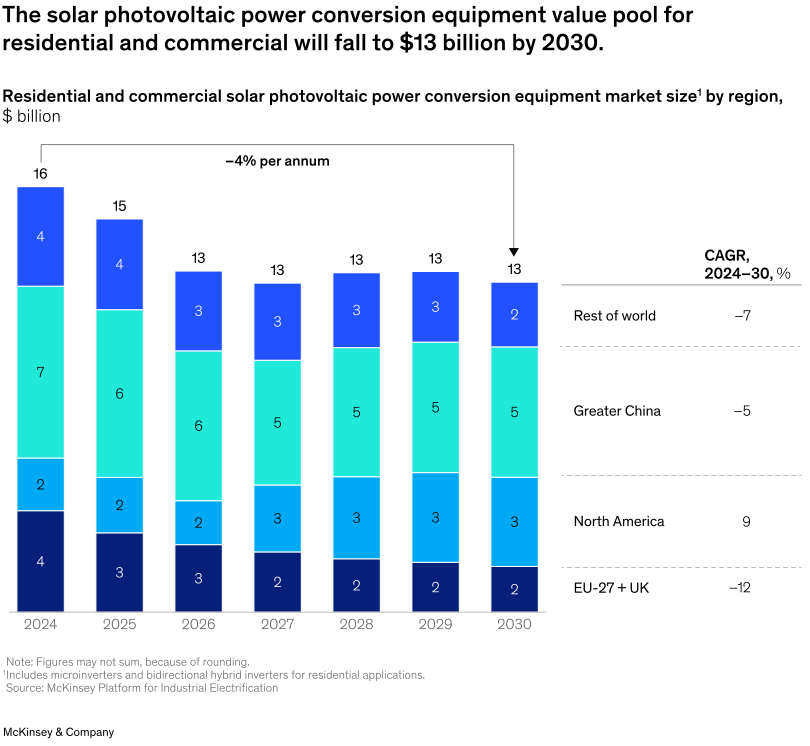
Residential and commercial solar PV systems rely on inverters to convert DC electricity generated by solar modules into AC power for on-site consumption or grid injection. As these systems become more widespread, they increasingly incorporate hybrid inverters that integrate storage and enable bidirectional power flows, which supports self-consumption (where people power their own home with their solar PV panels), backup power, and participation in distributed energy systems. As installation models evolve toward more-modular and digitally enabled solutions, inverters will enable different functionalities—particularly in areas such as monitoring, safety, and grid interaction—that could differentiate innovative solar solutions.
The market for power conversion technologies in residential and commercial solar PV is expected to reach approximately $13 billion by 2030, but it is projected to decline at about 4 percent annually. This contraction reflects pricing pressure, market saturation in mature regions such as Europe, and normalization following earlier periods of rapid deployment. Regionally, as of 2025, Europe and China account for the largest shares of the market (20 and 40 percent, respectively), while North America (13 percent) represents a smaller but growing portion of the market. Despite declining value pools, competition remains intense, with players focusing on cost optimization, product differentiation through hybrid and smart-inverter capabilities, and expansion into adjacent services such as energy management and storage integration.
Battery energy storage systems
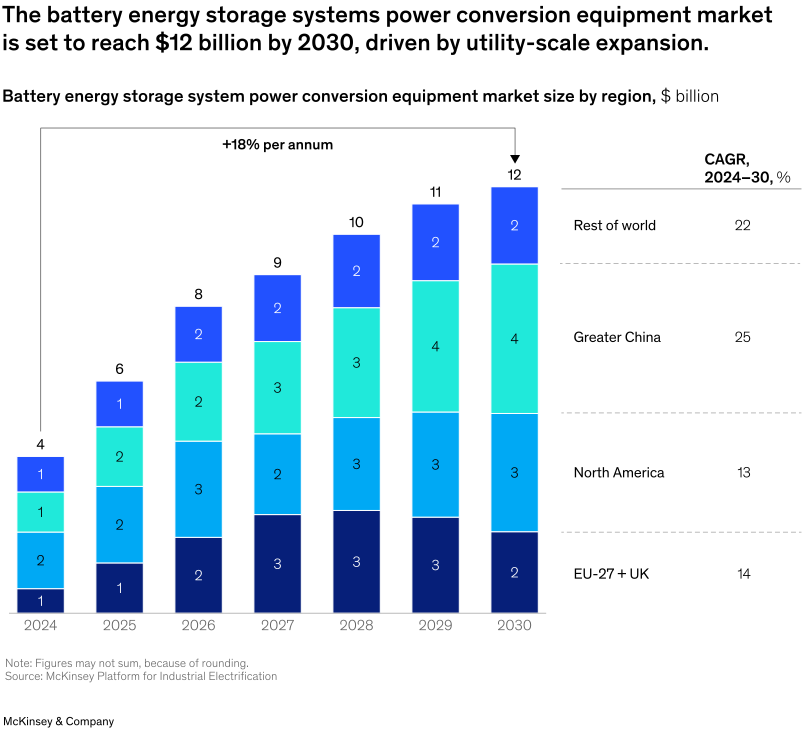
Battery energy storage system (BESS) technology converts DC power from batteries into AC power (and vice versa) to support grid-wide activities such as peak shaving, frequency regulation, and renewable-energy integration. To enable further use cases such as energy trading and virtual power-plant networks, OEMs are developing novel inverters that embed advanced control, energy management systems, and grid-forming capabilities.
The global BESS power conversion equipment market is expected to triple by 2030 (18 percent CAGR from 2024 to 2030), reaching approximately $12 billion as all major regions deploy utility-scale, grid-connected storage. As intermittent power sources (such as solar and wind) take up a larger share of the energy supply, greater energy-storage capacity can help regions address the increased need for grid stability, improved capacity utilization, flexible dispatch, and monetization of hybrid assets. Accordingly, the BESS market is expected to experience significant growth in Europe and the United States as well as in other regions working toward renewable-energy targets (see sidebar, “Key purchasing criteria for solar PV and BESS customers”).
Solar PV (utility)
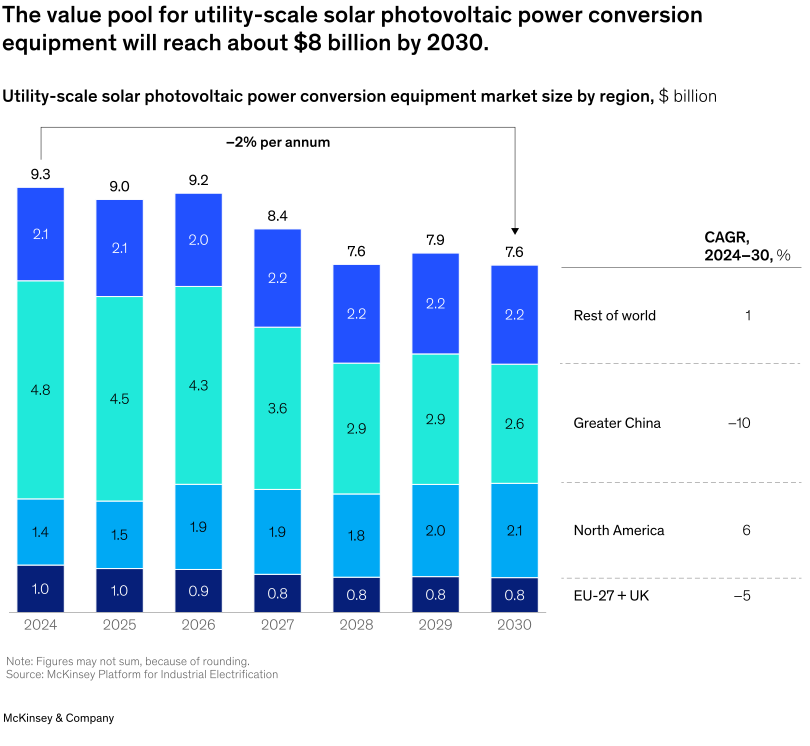
Solar PV inverters, which convert DC to AC, are crucial for connecting solar plants to the grid. This application has gained attention due to the spring 2025 blackouts in Spain and Portugal, which increased scrutiny on grid stability and data security. Utility-scale solar PV inverters come in two main types:
- Central inverters are high-capacity units ideal for large, uniform solar farms that are commonly used in North America, the Middle East, and Greater China.7
- String inverters are distributed units that optimize power at the string level—that is, a long series of panels wired together in a chain.8 They are favored in Europe and Japan for their improved performance and are typically deployed in smaller solar farms with high shares of low-tech equipment.
The global market for power conversion technologies for utility-scale solar PV is projected to decline by 2 percent through 2030 to approximately $7.6 billion. This market contraction is largely driven by price compression and increased competition. The combination of pricing competition and solar PV–related regulatory requirements means that compliance with grid codes and grid-stabilizing features will be increasingly important.
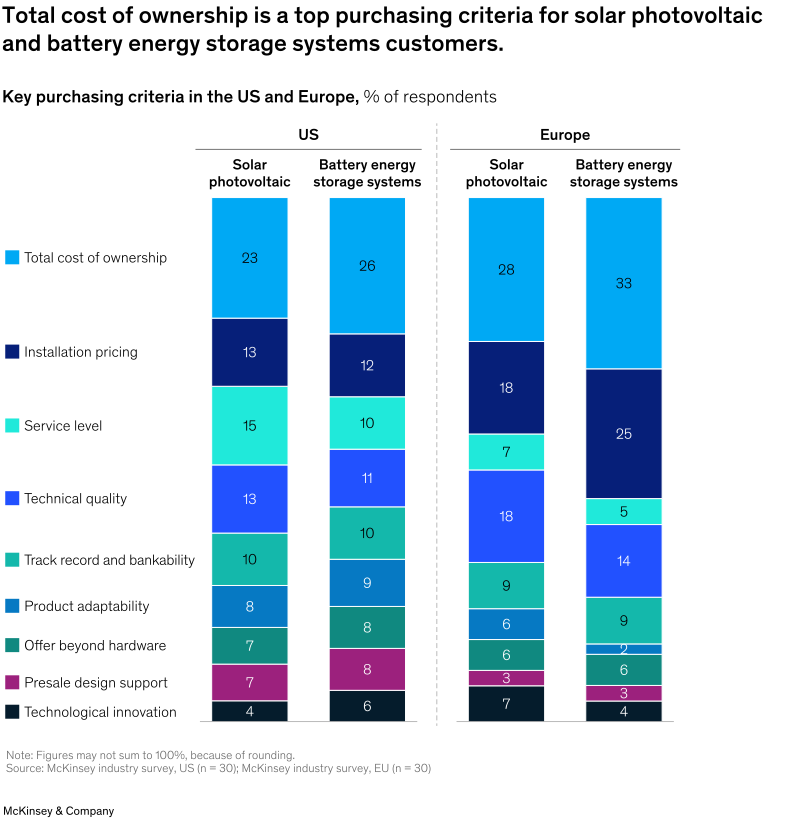
Key purchasing criteria for solar PV and BESS customers
We conducted a survey of about 60 industry participants across Europe and the United States who purchased inverters for solar photovoltaic and battery energy storage systems (exhibit). The survey identified total cost of ownership, service level, installation pricing, and technical quality as key purchasing criteria. The fact that total cost of ownership in both markets is the most relevant key purchasing criterion indicates there is price pressure—and that pressure is compressing market size.
Strategies for market entry
With many attractive options to consider, OEMs and investors can build strategic plans to enter the high-priority power conversion categories outlined above.
Implications for equipment players
The rapid growth and diversification of power conversion applications from grid-scale renewables to consumer-driven electrification demands strategic portfolio expansion. Players that can innovate in areas such as grid connection capabilities, integrated energy management systems, and modular architectures will gain competitive advantages. However, not all growth is equally attractive: high-complexity segments such as data centers, HVDC, and BESS reward players that can deliver end-to-end solutions (for example, integrating cooling, UPS, and converter systems in data centers) or embed software-driven capabilities such as grid-forming control and energy management directly into hardware. In contrast, lower-complexity segments, such as solar PV and space and water heat pumps, face price compression and commoditization, where competition shifts primarily to cost optimization and supply chain scale.
Additional value pools could emerge through asset flexibility and energy trading—capabilities that are rare among equipment players today.
Importantly, the power conversion market is structurally fragmented by application. Power conversion equipment manufacturing is closely linked to overall application manufacturing; power electronics players tend to specialize in one end market rather than serving multiple applications with similar equipment. While large conglomerates span a few high-complexity segments such as HVDC and electrolyzers, most competitors remain application-specific. This means that cross-segment expansion requires not only product adaptation but also deep domain expertise in the target application’s technical requirements, customer relationships, and go-to-market model.
Implications for investors
The power conversion market is poised for sustained growth, underpinned by increasing electrification of key sectors in industry, the building environment, and mobility. Several high-growth segments such as data centers and BESS already present compelling opportunities. At the same time, price pressures and consolidation may challenge certain segments such as utility-scale solar PV.
Given the application-specific structure of the market, investors should note that pure-play power electronics companies are rare; most targets are vertically integrated within their end application, with power conversion technologies tightly bundled into the broader system offering. This limits traditional roll-up strategies across segments because technical requirements, customer relationships, and go-to-market models differ substantially between applications even when the underlying power electronics are similar. Instead, investors could look for players with defensible depth in a high-growth vertical, particularly those embedding software and services—such as energy management or grid-forming capabilities—that create recurring revenue streams beyond hardware.
The energy transition, as well as AI, has helped to fuel rapid growth in the power conversion technologies market. These dynamics could create valuable opportunities for stakeholders who understand where to play.