Many countries throughout the world have set ambitious net-zero commitments for their power sectors, resulting in large-scale efforts to deploy renewable-energy sources. Although this trend is expected to continue, the transition to clean energy, coupled with the electrification of various sectors, has created complex challenges related to energy management and operational efficiencies.
Energy management systems (EMS), which allow users to monitor and optimize energy use in buildings and industrial processes, are critical to managing supply and demand for a wide range of assets at the residential, commercial, and industrial levels, including solar photovoltaics (PVs), heat pumps, and electric-vehicle (EV) charging infrastructure in a building or industrial site. Because these systems help manage energy supply volatility, they can also support the increasing share of volatile renewable-energy sources in the grid.
Our projections show the global market for EMS across industrial, commercial, and residential applications (excluding grid applications) could reach approximately $116 billion by 2030. As energy demand increases the world over and climate targets continue to evolve, the energy management software market is also poised to grow significantly. This article provides an overview of this rapidly changing landscape and also illustrates how the energy system management market could change in the years to come.
A rapidly changing energy landscape
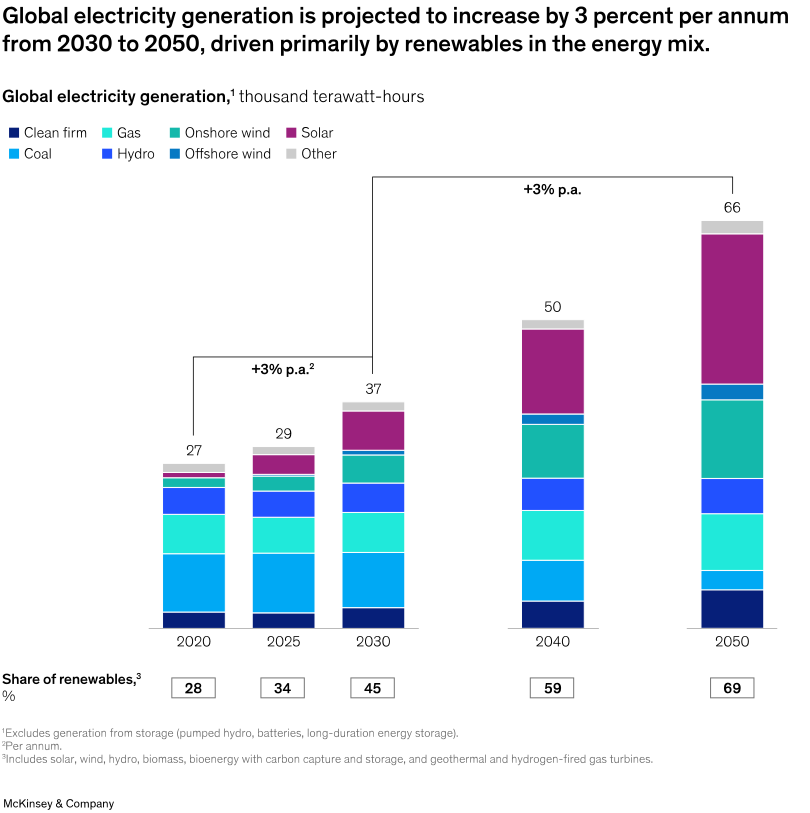
By 2040, renewable energy is expected to account for approximately 60 percent of global electricity generation, with wind and solar contributing approximately 20 percent and almost 30 percent of the energy mix (Exhibit 1). Regions such as Europe have set aggressive interim targets, aiming to achieve significant emissions reductions by 2030. In Denmark, wind and solar already cover more than two-thirds of electricity production. Furthermore, distributed energy resources, which includes residential solar panels and community wind projects, are becoming increasingly prevalent.
As industry, commercial and residential buildings, and mobility sectors seek effective carbon-neutral solutions, demand for renewables extends beyond the power sector. For many applications, transitioning from fossil fuels to electricity is the preferred approach to meet regulatory requirements and sustainability goals. In particular, decarbonizing heat, which primarily uses coal, natural gas, and oil, requires increased electrification.
In 2024, electricity fulfilled roughly 22 percent of energy demand across industry, buildings, and mobility (Exhibit 2). By 2050, this share is expected to rise to approximately 30 percent, driven by the adoption of technologies such as EVs, heat pumps, and electrified industrial processes. In turn, emissions could be reduced by almost 20 percent from 2024 to 2030 (decreasing from 58 billion metric tons of CO2 to 47 billion metric tons), primarily driven by electrification.1
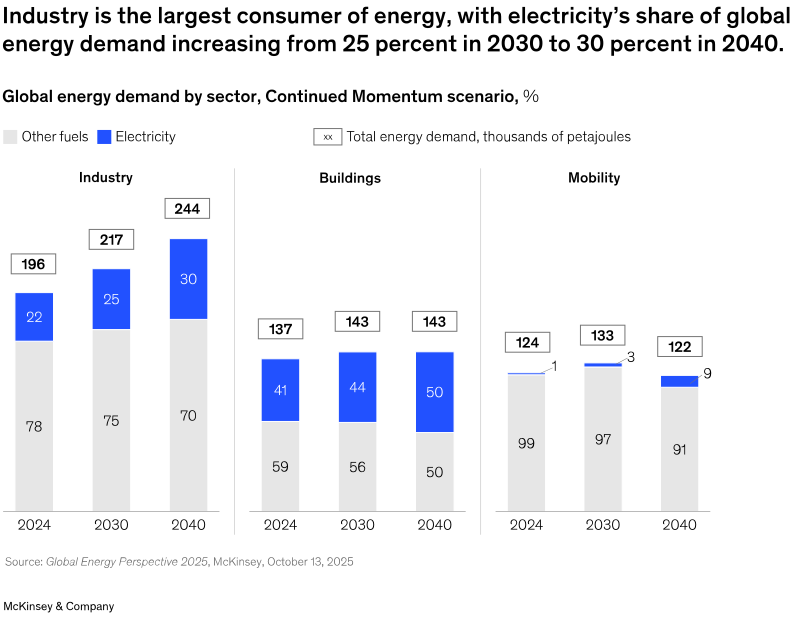
Considering its significant need for energy, the industrial sector is often seen as the core driver of the need to decarbonize, rather than as a crucial part of the solution. However, the sector has the potential to help balance and stabilize grids by providing flexibility to account for the increasing share of renewable-energy production. There are already a number of economically viable examples in which investments in flexibility are coupled with a positive business case—for example, generating heat during periods of low electricity prices and then storing the energy thermally.
In other words, although renewable energy can introduce complexities related to grid management, it can also enhance energy resilience and democratize access to clean energy. This in turn requires robust software solutions to coordinate energy flows.
EMS architecture: An overview
EMS enable users to monitor, control, and optimize energy use, including the integration of renewable-electricity generation. Key technologies within electrification include EV charging infrastructure, wind, solar PV, battery electric storage systems (BESS), and electric heat generation (for example, heat pumps and electric boilers). Modern architecture for EMS should ideally allow the integration of different energy producers and consumers, as well as applications from different players (Exhibit 3).
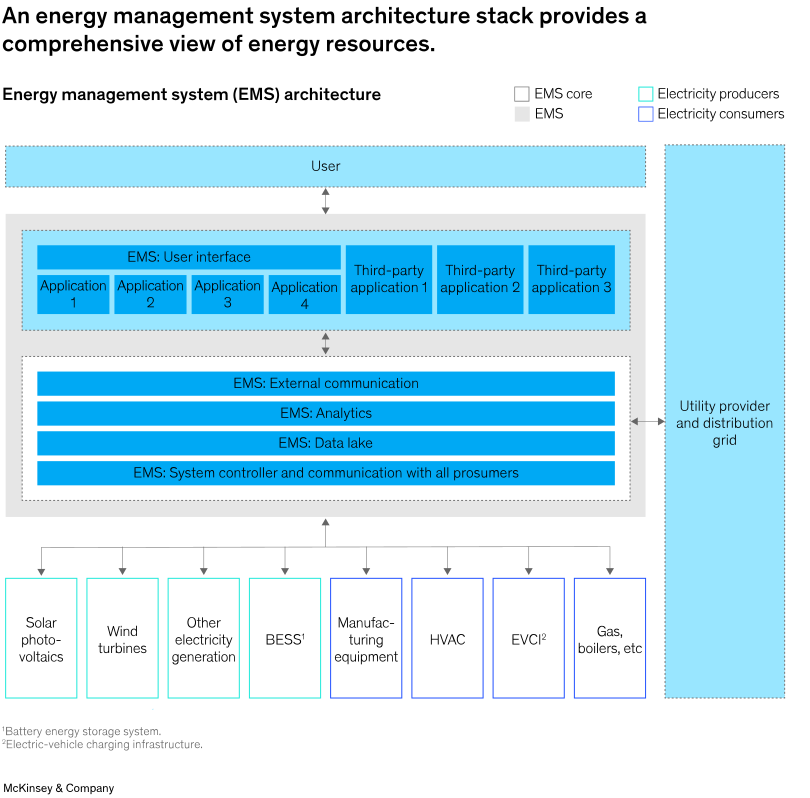
Modern energy cells (such as industrial sites, office buildings, and residential homes) typically no longer simply consume or produce energy but rather function as “prosumers”—that is, entities that consume and produce energy at the same time. Take residential homes as an example: Historically, homes consumed electricity and fossil fuels to operate gas boilers and air conditioners for heating and cooling, respectively. Going forward, modern energy cells can produce and consume electricity directly. For example, a home might have rooftop solar cells used to power battery electric vehicles (BEVs) and heat pumps for heat production. Economic benefits for property owners—such as incentives to optimize the self-usage of PV electricity and flexible electricity tariffs to minimize energy costs—are expected to drive this transition. Not only is this beneficial for homeowners but also it can help stabilize the grid and balance supply and demand. That said, a paradigm shift is needed to lower maximum peak demand and supply and subsequently reduce grid requirements.
EMS essentially serve as the brain of the energy cell, managing energy-consuming and energy-producing devices as well as the grid interface. In turn, the complexity of the EMS increases according to the complexity and scale of the respective cell. The core of the EMS consists of four key modules: system controllers, data lakes, analytics engines, and external communication. The system controller manages the communication with the cell’s prosumers. All data is collected and stored in the data lake, which is the basis for the analytics engine. Finally, the external communication module is responsible for the interaction with the distribution system, which is operated by the utility provider. On this point, core EMS are typically offered by providers of building and manufacturing control solutions.
Applications are built on top of the core EMS to enable user interaction. This helps to make energy use more transparent (for example, via monitoring applications), optimize energy savings (for instance, by turning off the lights when people leave buildings), optimize energy costs (via flexible tariffs), manage maximum peak loads, and maximize electricity use. It also allows for arbitrage. Additional use cases include helping ensure compliance with preventive or predictive maintenance standards and managing service of equipment. Dedicated players and start-ups can also offer specialized applications (for example, AI-based optimization algorithms) for selected use cases. The possibility of integrating third-party solutions ensures that EMS provide cutting-edge technology to the end user and increases versatility.
Communication and data collection are a necessary part of managing core machinery, and AI can be used to review and optimize systems. For greenfield installations, data availability is often provided by design, and EMS are natively installed. However, the majority of the EMS market is driven by brownfield applications, such as retrofitting industrial plants, as more sites are developed and updated rather than new ones built. Although brownfield installation of EMS can come with a significant one-time effort to install the core system, including the data lake and connection to the majority of assets in the cell, this effort can be combined with core applications to realize economic use cases.
Installing an EMS is complex, requiring central energy management software and connections to all relevant devices. In many cases, software and algorithms need to be tailored and adapted to reflect the specific real-world devices they control. For instance, digital twins may be required for production processes to enable energy use optimization. With these points in mind, EMS can be tailored to optimize energy use within specific settings for residential homes, commercial buildings, and industrial sites.
Residential EMS
Residential EMS (REMS) help manage energy consumption for devices and home automation systems, enabling homeowners to reduce electricity costs through load shifting, peak shaving, and integration with renewable-energy sources. Software solutions for REMS are often not sold as stand-alone solutions but rather offered together with hardware. Many devices, such as PV inverters, provide energy management functionality, and in many cases, this is enough for residential homeowners. At the same time, some smart home systems are packaged with energy management options. However, there is no standardized communication and integration of all systems, which can pose a challenge for homeowners who want to fully optimize energy production and demand.
Commercial EMS
Commercial EMS (CEMS) help optimize energy consumption within commercial buildings, ensuring efficient lighting, heating, cooling, and equipment operations. By centralizing energy data, CEMS enable building operators to monitor and control energy use, contributing to sustainability goals and reducing costs. EMS can also be integrated into asset management systems, allowing for remote optimization.
Industrial EMS
Industrial EMS (IEMS) provide real-time data on energy use, enabling companies to identify inefficiencies, cut waste, and lower operational costs. They also facilitate the integration of renewable energy and energy storage systems, both of which are essential for industries working toward sustainability and carbon-emission-reduction goals.
IEMS can be divided into two groups: passive and active EMS. Passive EMS collect data from all assets within the cell, create transparency, and provide recommendations to the operators, yet they are unable to actively steer production or other devices. By contrast, active IEMS rely on detailed models (digital twins), which include all key drivers for the production-specific energy demand. These drivers often consider weather data, production throughput, and the product mix, as well as a detailed model of the machinery with all physical boundaries and specifications—for example, boilers have a minimum load and compressors and heat exchangers have volume-dependent performance curves. Only after all core drivers are identified and considered in the simulation can active IEMS manage and optimize production.
The EMS market
EMS integrate software solutions (about 35 percent of the overall market in 2030 for EMS), service fees, and hardware components such as controllers, sensors, and gateways. By 2030, IEMS could make up approximately 70 percent of the total global value pool, totaling $85 billion out of $116 billion (Exhibit 4). This value is projected to grow by more than 20 percent per annum from 2024 to 2030 as industries prioritize efficiency and compliance with stricter environmental standards.
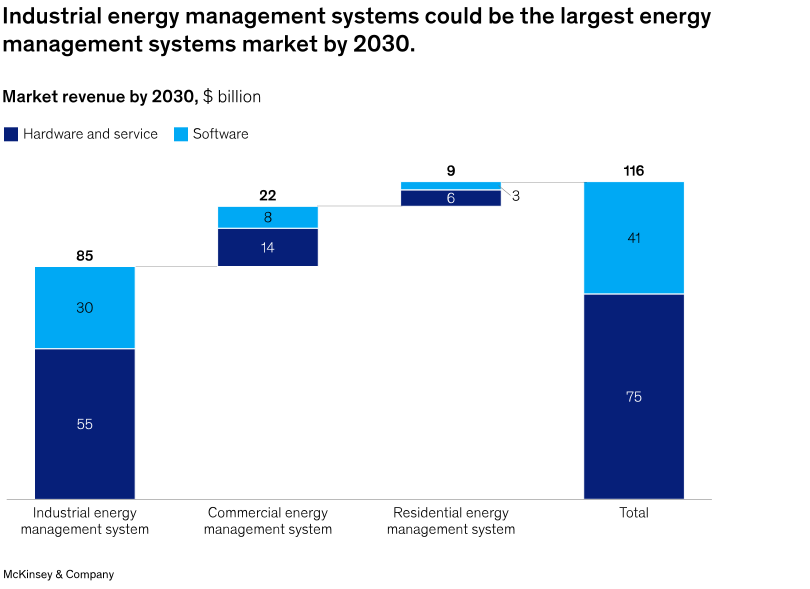
Hardware and service will make up the largest part of the overall IEMS value pool. At the same time, software’s share of the total EMS value pool is expected to grow from 27 percent in 2024 to 35 percent in 2030, given that it results in reduced needs for hardware and services. Brownfield applications are expected to be the primary driver of overall IEMS demand. Within greenfield EMS applications, however, data centers2 and semiconductor fabrication plants3 both show evidence of strong traction and large capital expenditure investments.
In particular, companies with high energy consumption can start to leverage active EMS to steer production processes and optimize overall energy costs based on innovative digital solutions. Many of these players already have passive EMS in place but do not yet harvest the full potential of energy optimization.
Larger shares of renewables in energy production can help drive the adoption of EMS because they can lead to increasingly volatile energy prices. Putting EMS in place, however, can enable commercially viable use cases for renewables and maximize energy consumption flexibility. For example, when electricity prices are low, EMS can prioritize more-energy-intensive activities such as charging EVs and producing and storing industrial heat.
In the future, two different types of EMS may be of critical importance. For small applications (for example, residential applications), provided systems may need to become “plug and play,” given that minimal installation effort and maximum compatibility with different devices is desirable. Up until now, no leading standard plug-and-play communication protocol has been established. For complex applications (such as high-energy production processes), systems will need algorithms to optimize the full business case within the entire ecosystem. To accomplish this, today’s algorithms will need to be further optimized using the latest technological developments.
The shift toward decarbonized energy systems and electrified sectors is accelerating the demand for sophisticated software solutions—and EMS will play a crucial role in enabling this transition. With markets set to reach approximately $41 billion by 2030, the software industry is poised to become an integral part of the global decarbonization agenda, driving efficiency, innovation, and sustainability across sectors.