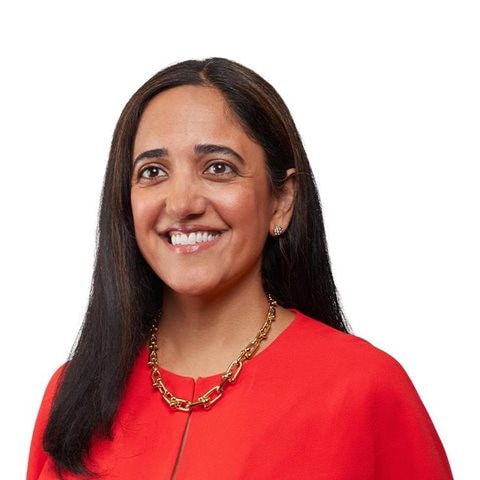
Drew Ungerman and Pooja Kumar are global leaders of the McKinsey Health Institute (MHI), an enduring, non-profit-generating institute within McKinsey. MHI was founded on the conviction that, over the next decade, humanity could add as much as 45 billion extra years of higher-quality life. MHI’s mission is to catalyze the actions and investment needed across continents, sectors, and communities to realize this possibility.
People are living longer than ever. By 2050, the average life expectancy for individuals globally is 78 years—11 years longer than in 2000.1 Technology is supporting longer life with more sophisticated treatments, better data, and targeted interventions. At the same time, the number of years humans spend in good health is decreasing. The population is getting older, and the rise of noncommunicable diseases (NCDs), such as cardiovascular and respiratory diseases, diabetes, and cancer, means people are living with more longer-term chronic illnesses.
These conditions directly affect people’s lives, but they also have a significant impact on the global economy, straining healthcare systems and causing losses in productivity across industries. The healthcare industry now has an opportunity to push advancements further to flip the script and set a new trajectory. Over the past century, life expectancy in the United States has been extended by two decades,2 thanks to interventions such as vaccines that help improve quality of life earlier and longer for individuals. Now, as the population ages, the stakes are higher: MHI analysis finds that by 2050, the right interventions and a focus on prevention could add nearly a decade to global healthy life expectancy and an additional $12.5 trillion in annual GDP to the global economy.3
In this episode of the McKinsey on Healthcare podcast, Drew Ungerman and Pooja Kumar, senior partners and global leaders of MHI, discuss the conditions that have led the industry to this inflection point, the main areas of opportunity that have historically been underinvested, and the potential for AI and other technologies to move the needle further.
An edited version of their conversation follows.
The urgency to address the burden of disease
Pooja Kumar: Let’s start by talking about how demographics have changed and what that means for health and healthcare. The world is growing in population, but much of the population is aging. Looking forward, the number of deaths caused by NCDs each year is expected to double between now and 2050, which will surge demand for works in all areas of healthcare. So the need for disease prevention will go up, but the chronic disease burden will also deepen.
These trends have two big implications. The first is the effect on the productivity of our workforce. Health is the biggest driver of our economies. If we don’t figure out a way to make populations healthier, productivity loss will drag down the global economy. Second, there are also implications for healthcare workers. The demands on healthcare workers are already high: We’re seeing huge levels of burnout, for example. That will keep getting worse. How we address both of those productivity needs is a critical part of the conversation ahead.
Another big challenge we’re facing is the cost of care. Care costs a lot for economies and for individuals. What are you seeing in this space, and how can we address it?
Drew Ungerman: We’re expecting some challenging decades ahead if we don’t act now. MHI is focusing on the need to scale up prevention to tackle the root cause of much of this chronic disease burden. This is also a priority for McKinsey’s global Healthcare Practice. The statistics are staggering. For instance, the NCD burden could cause a $36 trillion drag on the global GDP by 2050.4 To close this gap, we’ll need a convergence of private sector efforts, government efforts, and philanthropic funding.
The good news is there are some silver linings on the horizon. We are seeing governments begin to take this seriously. Many actions focus on empowering individuals to take control of their personal health long before they enter any kind of healthcare system formally. These efforts are early in some cases, but the level of scaled investment behind them is encouraging.
Similarly, we’re seeing some private sector companies step up, partially because they care about their employees and want them to be healthy, and partially because of the economic reality of these macro forces. For employers, the burden of disease can be costly, especially when they’re paying for healthcare, so they have to tackle it. Efforts including smoking cessation programs and a focus on health and wellness—not just of the physical nature but also mental and spiritual—are extraordinarily prevalent and have a huge impact.
Three health interventions to improve quality of life
Drew Ungerman: Some of the statistics we cited around these trends are fairly scary, but there is an opportunity to see health as not just a cost but an opportunity for countries and employers to invest in their own populations and employees. How should we think about this?
Pooja Kumar: Over the past several decades, we’ve talked about health as a cost or as a line item, and societies and systems don’t intervene until costs rise. When MHI was founded a few years ago, it was on the premise that if we were to scale all the known interventions today, we could add 45 billion extra years of healthy life to the global population. That’s a massive number, and it has an intrinsic value. We all want to be healthy for our kids and spouses and enjoy life to our full potential. It’s also a huge number for economies. Imagine if every American could live or work productively for even one year longer. That could transform industries.
So we’re thinking about how we can reframe the conversation to treat health as an investment, not a line item cost. If we are smart about where we invest, and if we think about the highest-ROI places to invest, we will not just change people’s lives; we’ll change economies. We should think about the areas where we have historically underinvested, or where the biggest pockets of need are that we aren’t going after. Focusing on these areas could yield disproportionate benefits.
Drew Ungerman: What are the known interventions today that we should be investing in further?
Pooja Kumar: One is women’s health. We’ve researched this space for years now, and it’s finally starting to see the level of attention that it deserves. We decided to look across all disease areas, not just the ones that have been traditionally classified as “women’s diseases,” such as OB/GYN or reproductive health. If we address women’s health equally, in the way we’ve addressed many other parts of healthcare, we’re looking at a $1 trillion boost to the global economy by 2040.5 Everyone has a friend or family member who has a disease condition that has prevented them from living fully to their potential, so the opportunity here is huge.
Another is rural health. Some areas of the world have been steeped in this access issue because of the demographics and spread of the population. We are starting to wake up to the needs in America: The Centers for Medicare & Medicaid Services announced a transformative rural health transformation program, for example.6 Almost every state has an access issue in rural areas. As a society and as an industry, how do we rethink access and what that entails? How do we harness the technologies that are available to us? And how can we rethink who we consider a healthcare worker to address the needs in these communities?
Drew Ungerman: What are the next big moves when it comes to investing in health?
Pooja Kumar: Brain health is another big opportunity. The burden of disease in brain health is larger than all cancers combined—it’s not a statistic a lot of people know, but you can see the toll on families and communities. So this is another area where I see a lot of innovation happening.
If we directed funding and innovation in the private and public sector to women’s health, rural health, and brain health, imagine what we could unlock.
How AI can help extend and enhance healthcare interventions
Pooja Kumar: AI can also be used to help address these underinvested areas. Where do you think the true potential lies, and what’s not addressable?
Drew Ungerman: We’ve been in a technology revolution for decades. The advent of AI is accelerating that revolution and expanding what’s possible. The need now is to capitalize on those advancements. Technology has improved healthcare delivery significantly in terms of drug discovery, the practice of medicine, and access. For example, today, there are many different ambulatory sites of care, which are more convenient and accessible to patients—you can get in and out of them quicker, and the outcomes are great. They’re also more affordable for the entire system. But there’s more we can do.
At McKinsey, we’re looking at how to improve interoperability and data accessibility for consumers. This means streamlining tests, such as blood tests or radiology scans, and making medical records easier to transfer and access for patients and health systems. Better data can help individuals manage their own care if they know the chronic and acute markers they need to manage. Similarly, systems, countries, and employers can better understand the big drivers of cost and productivity loss. So that interoperability, that portability, that integrated picture, is important. We’re not there yet, but there’s been some exciting progress in using AI to improve the data infrastructure.
MHI reported that investing an additional 24 cents per patient per year in digital health could prevent more than two million deaths from chronic disease.7] The private sector is seizing the opportunity to accelerate digital capabilities to create value across all sectors, including healthcare. MHI found that global private investment in digital health totaled $25 billion in 2024. This investment is growing about 5 percent annually, which could create massive public–private pathways to scale tools that will result in significant outcomes.8
All types of health, whether physical or mental, can benefit from advancements in this technology. For example, there is a shortage of psychiatrists and other therapists around the world, and technology can offer proven tools and therapies to more people, even where we have those shortages. The same is true for complex specialties on the physical side, such as cardiology, orthopedics, and neurology. For example, AI can help radiologists identify diagnoses more effectively and accurately to help them practice at the top of their license and address access issues and shortages.
However, you have to be purposeful in where you’re deploying the technology and clear on which problem you’re trying to solve. Once you have a data backbone, you can focus on certain disease states and types of populations and then align incentives to encourage folks to use the available technologies. Finally, invest in change management, because technology is a tool, and ultimately, healthcare is still about people taking care of people.
We have to rewire our brains to use AI and other technologies to take care of ourselves and each other.9 That means integrating those lessons into health education and the practice of medicine.
Empowering patients with personalized health solutions
Pooja Kumar: In addition to the ways health systems can use AI to improve care delivery, how do you think AI will engage patients and connect them more to their own care? How do you envision the role of the patient or consumer changing?
Drew Ungerman: Individuals are beginning to focus more on their own health. Achieving a healthcare system instead of a “sick care” system requires governments, payers, and employers to provide incentives and individuals to take control of their health. The increasing focus on self-care means the tools to take care of ourselves have become available at a pace we’ve never seen.
Patient empowerment relies on individuals having access to their own data and using that data to monitor and manage their health.
We’ve added 20 years of life expectancy over the past many decades, but now we need to extend quality of life beyond the younger years.10 As populations age, dementia and other mental health conditions are more prevalent than ever, as is the chronic disease burden.
Pooja Kumar: This is an opportunity to deliver on the promise of personalized medicine by putting it back into the consumer’s hands to control their own health. This may be a responsibility rather than a choice. Our research on the healthcare worker shortage suggests that we could have a ten-million-person shortage in just a few years.11 So how do we rethink what it means to be, in part, your own doctor? And how do we support consumers and patients to do that effectively? It’s a great road ahead.
Drew Ungerman: Now we have the tools to do it well. For example, many of us have wearables that can get real-time data, and they can change our behaviors for the better if we pay attention to them. It’s very exciting.
Learn more about MHI at www.mckinsey.com/mhi/overview.

Related Articles


The health of nations: Stronger health, stronger economies