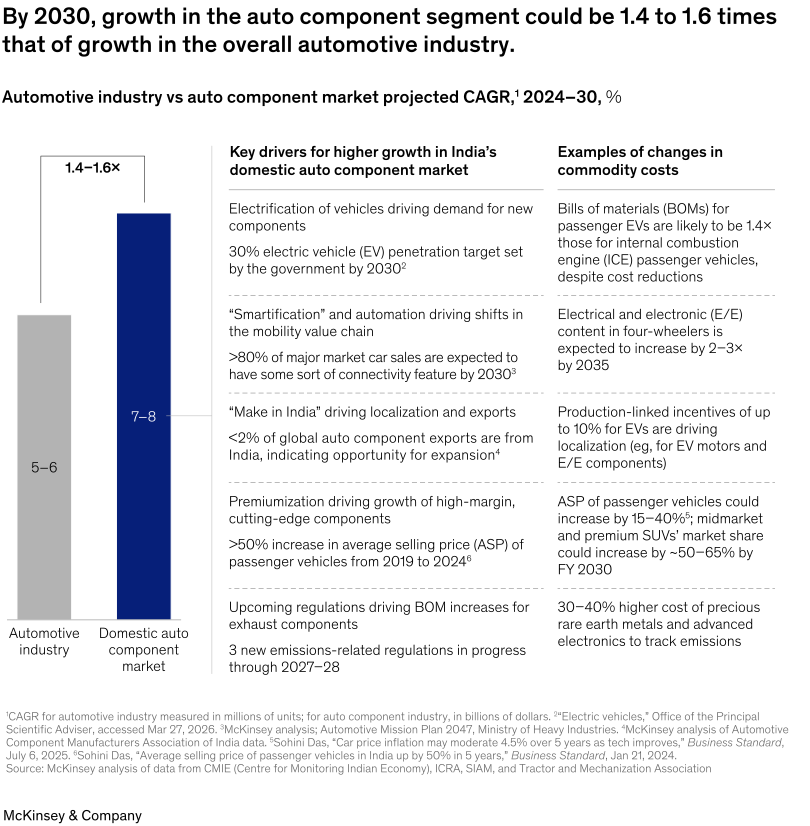
India’s auto component sector stands on the cusp of accelerated growth. Recovered from pandemic lows and facing rising domestic demand and strong export momentum, the sector could grow 7 to 8 percent annually between fiscal years 2025 and 2030—1.4 to 1.6 times faster than the broader automotive market.1 Exports may expand even faster during this time frame, growing at more than 20 percent annually2 and underscoring India’s rising competitiveness as a global sourcing hub.
Policy reforms are supporting this trajectory, including Goods and Services Tax 2.0 reforms, which have helped streamline supply chains, enhance efficiency, and strengthen India’s position as a manufacturing and export base.3 In addition, several automotive-focused policies—the Production Linked Incentive (PLI) auto scheme,4 Faster Adoption and Manufacturing of Electric Vehicles,5 and PM Electric Drive Revolution in Innovative Vehicle Enhancement6—are accelerating technology advances for manufacturers and consumers, enabling adoption of newer powertrains, and substantially altering the bill of materials (BOMs) of vehicles.
At this transformative moment, industry dynamics are shifting and BOM structures are evolving. Propelled by the government’s goal to achieve 30 percent electric vehicle (EV) market penetration by 2030,7 electrification is increasing demand for specialized EV components, which carry BOMs that are 1.4 times higher than BOMs for equivalent internal combustion engine (ICE) vehicle components.8 Rising rates of automation and “smartification” (the use of smart, interconnected systems) are revolutionizing the mobility value chain: Electrical and electronic (E/E) content in four-wheelers is expected to triple over the next decade.9 Localization, which is supported by the Indian government’s “Make in India” vision for global exports and by PLIs of up to 10 percent for EVs, is boosting local production of EV motors and components.10
Changes propelled by these four major trends—electrification, smartification, evolving policies and regulations, and premiumization—could usher in a completely different, recomposed market: a competitive scenario in which new companies may try to carve out a presence while traditional players defend their market share by adapting, innovating, or diversifying to stay ahead. The resulting state of flux could present new opportunities for suppliers and for Indian and global investors.
Outperforming the market: India’s auto component sector
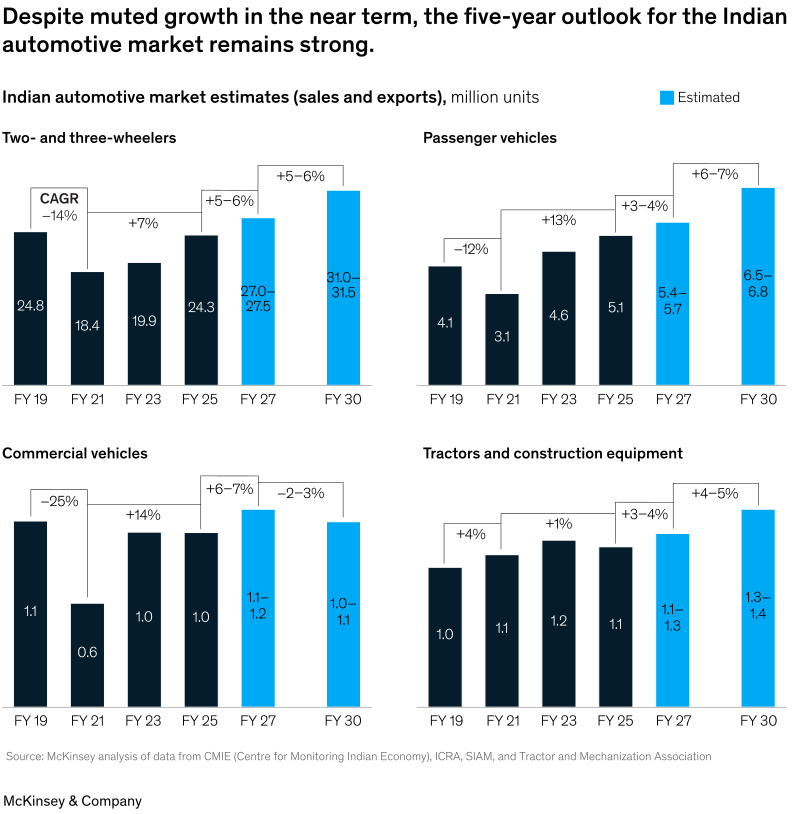
Sales volumes in most segments of the Indian automotive market have returned to or surpassed prepandemic levels.11 Growth will likely be slow in the near term. In 2025, however, base sales volumes in most segments were high and consumer sentiment was low.12 Further, the shift to new government-mandated safety and emission norms has raised vehicle prices,13 and rupee volatility14 is reflected in the fluctuating prices of raw materials.
In the longer term, multiple factors could fuel demand and growth in the automotive sector. By 2030, the number of Indian households earning more than $25,000 per annum is expected to triple,15 and coverage and quality improvements are expected in the national highways network, which has grown approximately 60 percent over the past decade.16 Additionally, growth will likely pick up across all vehicle segments—two- and three-wheelers, passenger vehicles, commercial vehicles, and tractors and construction equipment (Exhibit 1).17
As the markets for two- and three-wheelers, passenger vehicles, and commercial vehicles continue on their upward trajectory, growth in domestic demand for auto components (OEM sales and aftermarket sales) is expected to outpace growth in India’s overall automotive market by 1.4 to 1.6 times (Exhibit 2).18 While electrification, smartification, and premiumization trends, alongside evolving regulations, may promote growth in the auto component sector, the supplier base is unlikely to grow uniformly; these dynamics may alter the sector’s market composition.
The domestic aftermarket, a sizable subsegment of the auto component market, could grow steadily, bolstered by an aging fleet and expansion in the vehicle parc, which could grow from about 333 million vehicles today to approximately 430 million by 2030, according to McKinsey analysis. Growth in the aftermarket could be 6 to 7 percent annually, reaching about $16 billion by 2030.19
All major vehicle segments (passenger, commercial, and two- and three-wheelers) will contribute to this growth. The intensifying trend of electrification is a contributor: As EV adoption accelerates, demand ticks up sharply for EV components such as batteries, e-motors, and power electronics. Market penetration for many high-tech or premium features (such as parking sensors, telematics devices, and LED lighting) in the current vehicle base is still low, leaving ample room for smartification as well as retrofit upgrades and related services. Ongoing premiumization in consumer preferences is also evident. Buyers are seeking higher-quality and personalized parts and services, spurring growth in organized service networks and OEM-branded spare parts offerings. Government incentives for localization, alongside industry initiatives, are reinforcing the development and self-reliance of the aftermarket and supply chains, which are in turn helping strengthen the domestic supply base.
How four major trends could boost domestic demand for auto components
Electrification, smartification, evolving regulations, and premiumization are reshaping the demand curve for auto components, expanding opportunities in emerging categories and contracting market share in legacy categories. Combined, these dynamics could generate a positive outlook for the auto component sector.
Vehicle electrification
By 2030, EV-related demand for new components—battery systems, electric powertrains, and power electronics—is set to rise, while ICE vehicle component demand is set to fall (Exhibit 3).20
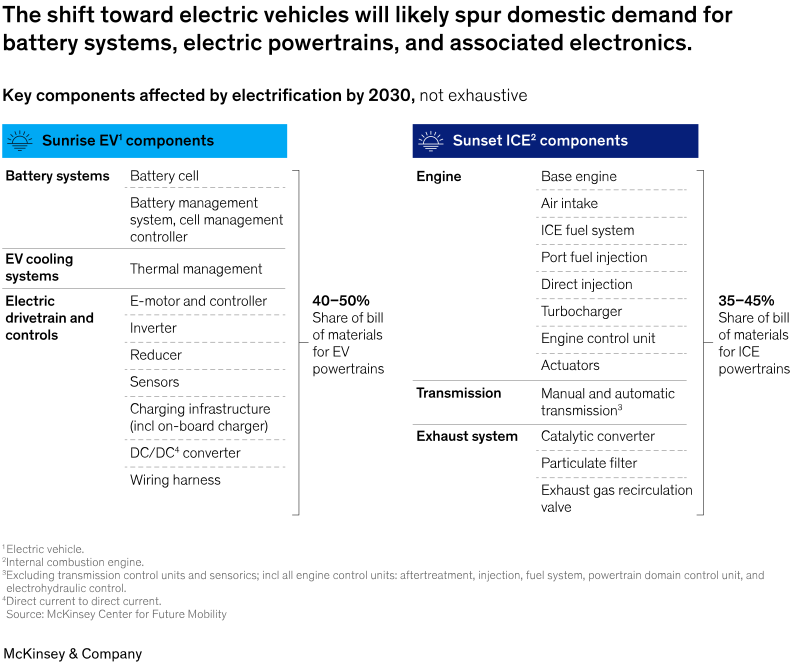
Despite potential cost reductions from the increasing scale of operations and improving technology for EV-related components, the increase in BOMs for passenger EVs is expected to be 1.4 times that of ICE passenger vehicles.21 The need for advanced battery technologies, electric motors, and sophisticated power electronics could prompt this rise. EV powertrain components—such as lithium-ion battery cells, e-motors, power electronics, and EV cooling systems critical for performance and efficiency—account for 60 to 70 percent of EV BOMs, according to McKinsey analysis, with batteries alone accounting for approximately 40 percent.22 Demand for these components could grow as much as 50 percent CAGR through fiscal year 2030, given rising adoption of electric two-wheelers.23 Demand for premium components for differentiation in EVs, such as advanced infotainment systems, may also increase.
Smartification and automation
The adoption of smart features and automation is reshaping the mobility value chain (Exhibit 4). During their purchase journey, passenger vehicle consumers are prioritizing tech-enabled safety features such as advanced driver assistance systems, electronic support programs, and electronic parking brakes. As of 2024, 82 percent of Indian drivers invested in advanced driver assistance systems, and OEMs are increasingly adding infotainment features in new models.24
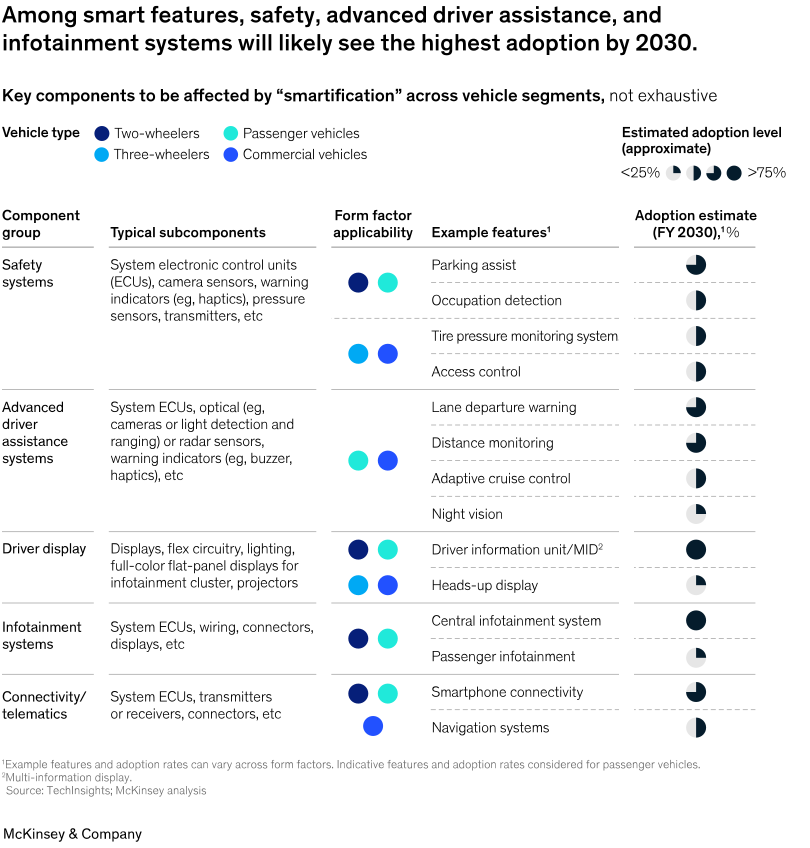
According to McKinsey analysis, E/E content in passenger vehicles could double or triple over the next decade, driven by rising demand for E/E components such as wiring harnesses, infotainment displays, lamps, switches, and connectivity and telematics. Demand for each component is tied to different key elements, such as the need for advanced connectivity solutions, enhanced safety features, and improved user experience. For example, the wiring for harnesses for electric two-wheelers could cost approximately 30 to 40 percent more than harnesses for ICE vehicles, resulting in a significantly higher growth outlook for the commodity.25 The rising demand for smart and connected two-wheelers could also create a pull for sophisticated E/E components.
Other high-ranking considerations include smart features such as connectivity, in-vehicle navigation, and infotainment systems.26 According to McKinsey analysis, by 2030, the preference for thin-film transistor (TFT) screens could drive higher adoption of infotainment clusters, primarily linked to continuous damping control systems. Greater awareness of safety ratings contributed to the market share of OEMs with five-star New Car Assessment Program ratings more than doubling between fiscal years 2020 and 2024.27
The integration of these technologies could prompt a new generation of components—advanced electronic control units, camera and radar modules, and sensors and display systems.
India’s PLI scheme
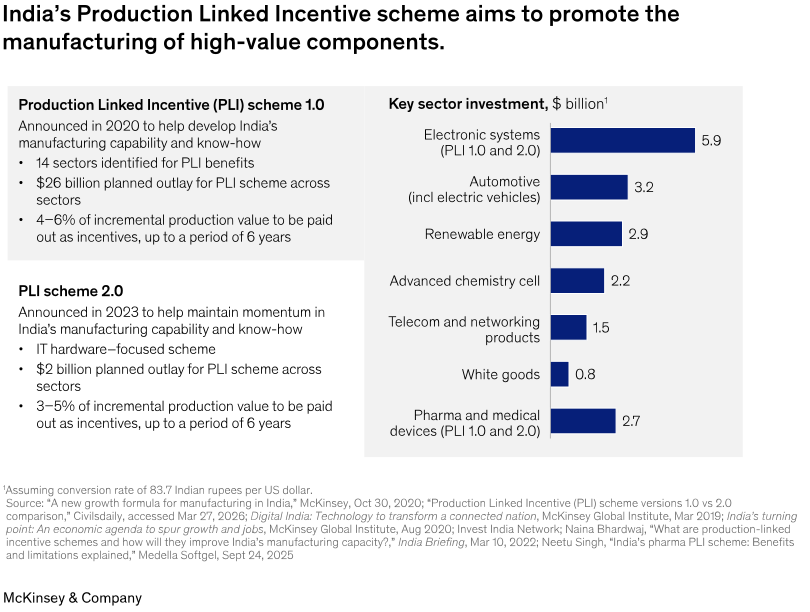
Make in India, the Indian government’s PLI scheme, includes a $3.2 billion outlay for the automotive sector (Exhibit 5). This could promote the localized manufacturing of high-value components,28 aided by India’s skilled labor force and competitive labor and utilities costs. This emphasis could help boost exports and position India as a global hub for auto components.
ICE components could remain resilient (despite the shift toward EVs), driven by inherent demand for ICE vehicles and changing regulations. According to McKinsey analysis, the implementation of Bharat Stage 7 emission standards could raise the price of exhaust systems by 30 to 40 percent. Demand will continue for chassis components for ICE and electric two-wheelers, such as suspension systems and wheels.
Premiumization
The share of midmarket and premium SUVs is expected to rise from about 50 percent in fiscal year 2025 to 65 percent by fiscal year 2030, and the average selling price of passenger vehicles is expected to increase 15 to 40 percent.29 The shift toward higher-end vehicles is driving demand for advanced, high-margin, and cutting‑edge components such as high-performance brakes, sophisticated suspension systems, and premium interior features (Exhibit 6).
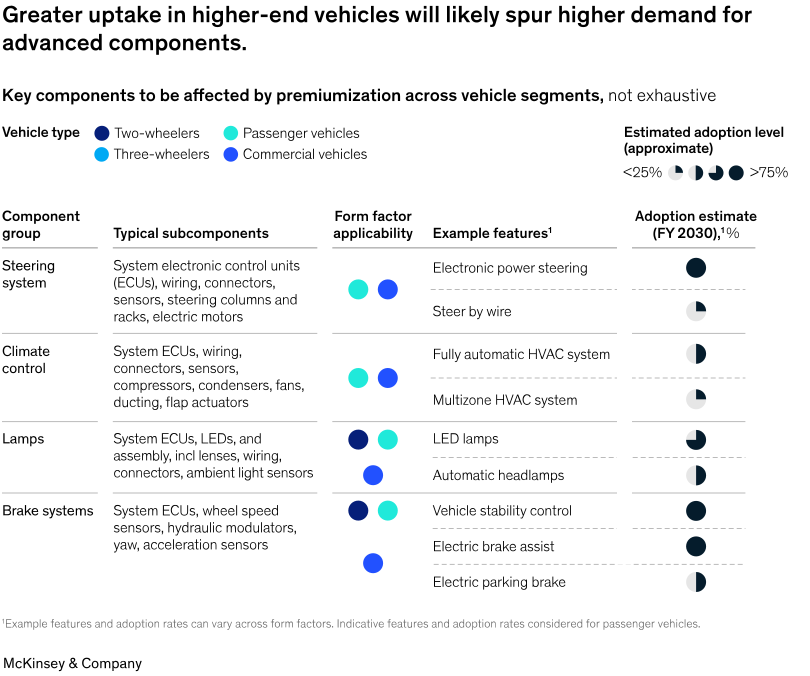
Premium features enhance the driving experience, adding to safety and attractiveness for vehicle buyers. For example, brake systems with active stability control stabilize rides on curvy, uneven roads; rear-axle steering reduces turning circles and enhances agility; variable sport steering lowers steering effort; and adaptive suspension systems support different driving modes.
The combined effects of electrification, smartification, and premiumization are reshaping component demand (Exhibit 7).
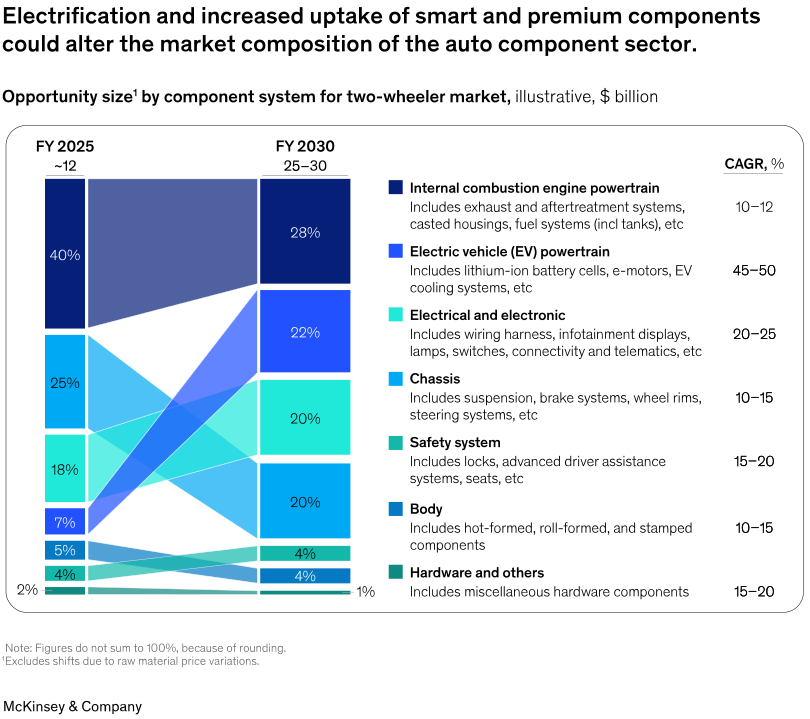
Several key developments, all of which could increase BOM value, are driving these shifts in market composition. For example, according to McKinsey analysis, shifts in the two-wheeler vehicle market could entail the following:
- Growing electrification. By fiscal year 2030, electrification could reach 40 to 45 percent, prompting the need for new components for battery systems, e-powertrains, and other electric systems and leading to a 2.0 to 2.5 times higher BOM compared with ICE vehicles.
- Rising adoption of premium components. For example, touch screen TFT displays cost $10 to $20 more than conventional TFT displays.
- Technology upgrades. For example, higher-performing LED lamps cost around $10 more than projectors or halogens.
- Regulatory changes. For example, Bharat Stage 7 emission standards could lead to more rare earth materials in exhaust systems, which could increase BOMs by $8 to $12.
- Localization of critical parts and aggregates. For example, connectors and valves could be supplied locally.
Implications: A reshaped landscape for suppliers and investors
Shifting demand patterns, dynamic BOMs, and evolving customer preferences are redrawing the competitive map of India’s auto component sector. These present both challenges and opportunities for suppliers and investors.
Implications for suppliers
With divergence in growth across component categories, the sector is increasingly split between stable, “sunrise” categories and “sunset” categories. Responding to this split calls for plays at both ends of the spectrum that are differentiated by and anchored in capability building. Suppliers will need to not only invest capital but also invest in the capabilities that enable them to navigate, and benefit from, changes in market composition.
Suppliers in stable and sunrise categories can focus on accelerating innovation and rethinking engagement with OEMs. Suppliers that engage in early codevelopment and design partnerships, especially in emerging white spaces where specifications are still evolving, will be best positioned for success. In addition, building digital engineering tool chains, predictive quality systems, and modular product architectures can help bolster attach rates and global competitiveness. Marketplace shifts can also open new avenues for strategic pivots and partnerships, particularly for midtier players seeking to diversify into higher-growth, higher-value modules.
Suppliers exposed to sunset categories, on the other hand, may face rising consolidation pressure. Still, suppliers can extract significant value through scale efficiencies, export-oriented growth, and disciplined “last person standing” strategies. Best-cost footprints, resilient supply chains, and global compliance readiness could determine which will sustain profitability and which will exit. Even in these segments, capability enhancement remains essential to unlock cash, extend product life cycles, and fund redeployment into sunrise opportunities.
Within both archetypes, six capabilities will define the next wave of outperformers:
- A distinctive B2B growth tool kit. This tool kit can enable solution-led selling and deep codevelopment with OEMs and tier-one companies, moving beyond transactional supply toward collaborative design and engineering partnerships in new-age components.
- A strong growth-diversification muscle. Developing this muscle includes identifying attractive adjacencies and forging strategic partnerships or joint ventures that accelerate entry into high-growth segments within sunrise and stable portfolios.
- Globally competitive processes and cost structures. Such processes and structures can be built on digital manufacturing, design-to-cost disciplines, and certification-led excellence to capture international growth or consolidate advantage in mature categories.
- A structured aftermarket playbook. This playbook can aim to move beyond OEM dependence by capturing the expanding replacement and retrofit opportunity through branded spares, upgrade kits, and service-led offerings. Building a service mindset is critical, because aftermarket success increasingly depends on responsiveness, reliability, and customer experience.
- Access to new trade corridors. India’s recent trade agreements with the European Union and with the United States provide enhanced access to Western markets for labor-intensive components, potentially helping increase India’s exports by two to three times. In addition, these agreements enable stronger supply chain integration by offering immediate access to engineering-intensive components at reduced tariffs while opening avenues to modernize machinery, open a five-year strategic window for the EV transition, and enhance global talent mobility.
- Pervasive AI integration across the value chain. This capability involves embedding AI and machine learning in all relevant areas, from R&D and procurement to manufacturing and customer service. By using AI for predictive analytics, demand forecasting, and intelligent automation, suppliers can enhance decision-making, preempt quality issues, and optimize resource allocation. This not only creates significant cost efficiencies but also enables hyperpersonalized solutions and service-led offerings, creating a sustainable, data-driven competitive advantage.
Together, these capabilities can help reshape India’s auto component suppliers into globally credible, capability-rich partners for the next mobility cycle, setting the stage for active ownership and patient capital to accelerate the market transformation.
Opportunities for private equity investors
The past few years have seen a surge in private equity investment in the Indian auto component sector, driven by the sector’s strong growth trajectory and ongoing transformation. Regulations have stabilized, market shifts have created new gaps, and earnings have improved, all of which is reflected in a return to prepandemic levels of investment activity (Exhibit 8).
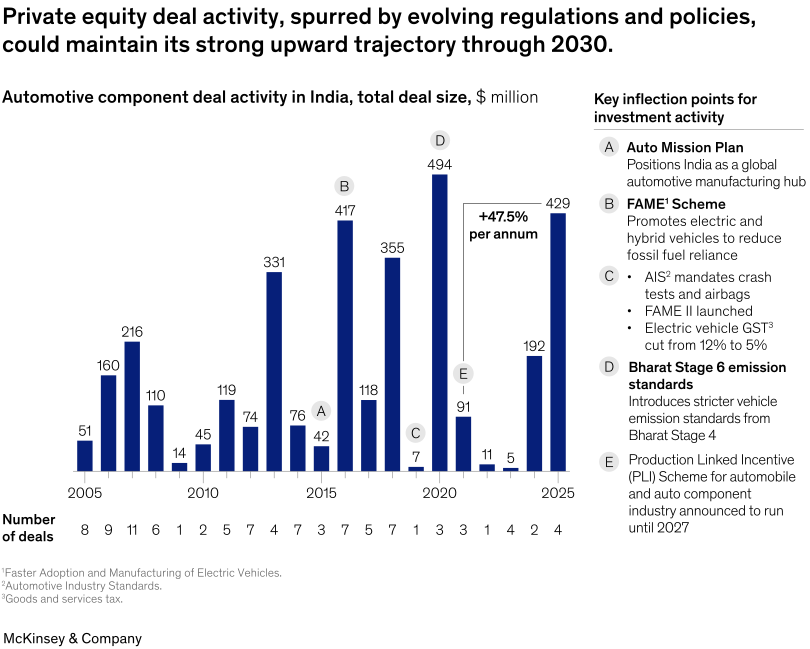
Several recent headline deals underline how investors are reacting to structural opportunities. For example, in late 2024, a major private equity vehicle acquired a controlling stake in a transmission component business, valued at about $1 billion, aiming to support global expansion and electrification capabilities. Around the same time, an investment in a geared component manufacturer was completed, aimed at accelerating organic growth and pursuing M&A opportunities. And in 2025, a controlling-stake investment in a platform that combines powertrain and steering systems marked further private equity investor confidence in India’s auto component value chain.
To seize the auto component opportunity, investors and private equity firms could set out to identify high-potential companies, invest in innovative technologies, and support the growth and expansion of portfolio companies.
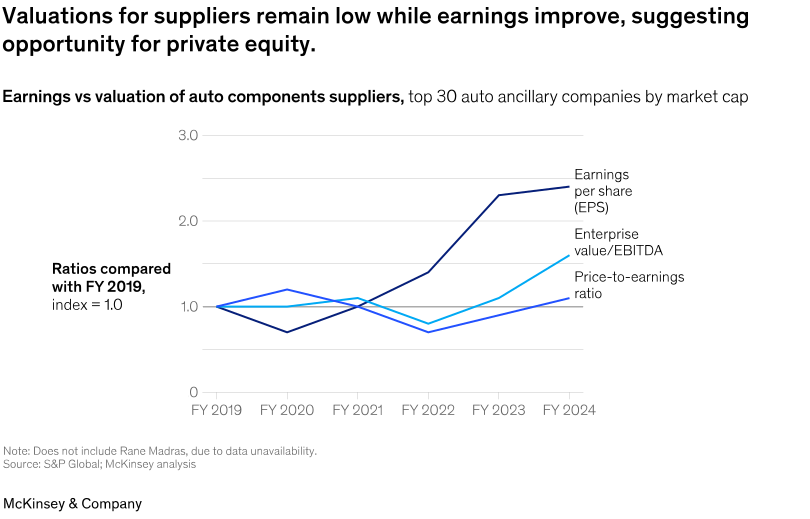
Valuations have remained low since their peak in fiscal year 2021 despite a significant 2.5 times growth in earnings per share between 2017 and 2024, representing a core investment opportunity.30 Key valuation metrics, such as price-to-earnings ratios and enterprise value/EBITDA multiples, have grown at a slower pace than earnings, signaling untapped potential for value creation. Combined with the sector’s robust growth trajectory, this potential could prove to be an attractive option for long-term investors (Exhibit 9).
The Indian auto component sector remains largely promoter driven, with owners having a majority stake in 92 percent of companies.31 Notably, 38 percent of these promoters are older than 55, according to McKinsey analysis, signaling potential opportunities linked to succession planning and professionalization. This could open the door for private equity firms to invest in growth capital, governance, and professional management to help Indian suppliers scale globally.
Three major investment themes emerge for private equity companies seeking to invest across the sector:
- A platform play could unlock synergies across value chains. Backing platform plays through roll-ups across fragmented supplier markets could be a compelling opportunity. Because they are facing increasing demand for premium and technologically advanced components, many auto component manufacturers need capital to accelerate investments in R&D, adopt advanced manufacturing technologies, and move up the value chain into subassemblies and integrated solutions. Private equity firms could enable this transformation by providing the resources for suppliers to strengthen OEM relationships and expand their strategic role in the ecosystem.
- A turnaround play offers potential benefits for the last person standing in sunset segments. Even in perceived sunset segments, opportunities persist. Suppliers of mature or sunset components can capture value through consolidation while pivoting to newer product lines. The last-person-standing strategy, in which scaled players continue supplying globally despite tapering demand or tariff headwinds, could remain viable. These assets can generate steady cash flows over time while acting as transitional bets that underpin portfolios shifting toward higher-growth categories. As powertrains shift toward electrification globally, private equity firms could potentially benefit from the last-person-standing trend by leveraging India as an exports hub for key ICE components. Such a dynamic could help the country’s auto component exports grow by as much as 20 percent over the line-of-sight scenario, according to McKinsey analysis.
- Technology bridges could support global OEMs focused on localization in India. A third important investment theme is the increasing localization of global OEMs in India. Bolstered by competitive manufacturing costs, enhanced infrastructure, and supportive government policies, stakeholders in India are ramping up rapidly to meet domestic demand as well as fulfill production for exports. As previously mentioned, new trade agreements between India and the European Union and between India and the United States have amplified the trend toward localized production. These agreements serve as two-way growth corridors, opening lucrative Western markets to Indian suppliers while reducing costs for Indian players to import advanced, engineering-intensive components and machinery. Private equity investors could identify companies that are strategically positioned to use enhanced market access to drive export growth while simultaneously modernizing their capabilities with lower-cost technology. These companies are the most likely to deliver accelerated and sustainable growth as established players in the global automotive value chain.
India’s auto component sector—at the intersection of manufacturing, technology, and mobility and ripe for reshaping—offers private equity investors opportunities beyond traditional investments. Those that bridge India’s engineering base with global demand, back the platform-scale champions of next-generation mobility solutions, and move early will be best positioned to emerge as winners.
India’s auto component sector is poised for transformative growth, driven by rising demand, export momentum, and policy reforms. Projected to grow 7 to 8 percent annually through fiscal year 2030 and with exports at more than 20 percent, the sector is evolving rapidly.32 Shifting dynamics and BOM changes signal scope for innovation, investment, and competitive reinvention. The suppliers and investors that spot the opportunities and make bold, decisive moves could be at the forefront of this transformation and its related growth outcomes.