The North American automotive industry is a major driver of the region’s economies. In the United States alone, the industry contributes 5 percent of GDP (equivalent to about $1.2 trillion), generates $151 billion in exports, and employs about ten million people, which is 5 percent of the entire US workforce.1 Every dollar invested in vehicle manufacturing creates more than four times the value for the wider economy.
Globally, the automotive industry is under pressure from growing competition from new entrants, rapid technological changes, and unprecedented economic and geopolitical volatility. To retain their global position and manage risk in the long term, North American OEMs can strengthen their partnerships with stakeholders across the value chain and reaffirm their positions in the broader automotive ecosystem.
This article describes the challenges automotive OEMs are contending with and the ways they can extend their reach while becoming more resilient and competitive. In a follow-on article, “Shaping the next ‘ARC’ of the North American automotive industry,” we outline a comprehensive action plan for OEMs to move toward a sustainable future.
The challenges facing the North American automotive industry
The North American automotive industry has long been a global leader, holding advantages in brand heritage, expertise, and sheer scale. Yet as new auto manufacturers emerge and foreign brands gain a stronger foothold globally and locally, North American brands are under more pressure to secure their stake in the game. And as consumer preferences continue to become more diverse, the need for optionality will only deepen this pressure.
Increasing competition and new entrants. Over the past two decades, incumbent North American automakers2 have seen their global market share decline sharply, dropping from about 28 percent in 2000 to about 12 percent in 2024, which equates to a decline of more than 0.5 percentage points per year in market share (Exhibit 1).
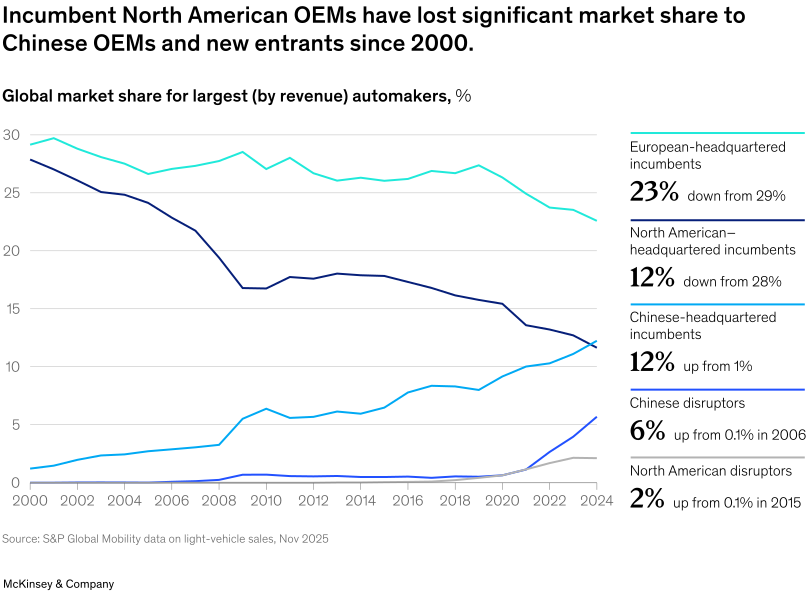
Within the United States, established incumbents have lost market share to foreign OEMs (namely, Japanese and South Korean OEMs) with strong brand reputations for quality and reliability, as well as a perceived superior value. As tech-native disruptors (including Tesla and Rivian) reached meaningful scale, they also exerted growing pressure on incumbents. Although US trade protections help insulate domestic companies to some extent, North American OEMs continue to lose share overseas, particularly to Chinese OEMs.
Divergent consumer preferences. Consumer demand in North America is largely heterogenous, driven by regional and demographic differences in purchasing priorities. According to the 2025 McKinsey Mobility Consumer Pulse Survey, both urban and rural car buyers rank price as their top criterion for purchase, but urban buyers’ average budgets are 1.5 times those of rural buyers, and they place a greater emphasis on technology and sustainability. At the same time, across the United States, younger consumers are nearly three times more likely to consider new US electric vehicle (EV) brands, underscoring that age is a critical determiner of preference and further emphasizing differences in consumer preferences across profiles.3
Uncertain pace of the powertrain transition. While regulation has accelerated electrification in Europe, EV skepticism in North America has led auto manufacturers to maintain flexibility across internal combustion engine (ICE) vehicles, hybrid vehicles, and battery electric vehicles (BEVs). Moreover, the long-term outlook for EV adoption has shifted: Projections for BEV penetration in 2030 fell from 43 percent in in the first quarter of 2024 to 37 percent in the second half of 2024.4 This variability hinders OEMs’ ability to align vehicle production with evolving demand expectations.
In the face of these challenges, North American automotive companies must take steps to reenforce their partnerships, mitigate risk, and optimize their manufacturing capabilities.
Compete as an ecosystem to strengthen the North American value chain
To remain competitive, North American OEMs can move beyond stand-alone operations deeply focused on siloed automotive R&D and instead collaborate with each other, suppliers, software pioneers, and other industry leaders. Building an ecosystem like this will help disseminate operational, commercial, and technical know-how and strengthen the value chain.
Partner to drive innovation across four critical technologies
The technology industry’s open-source movement demonstrates how competitors can collaborate to accelerate innovation, reduce costs, and create shared value. Using open-source ecosystems such as Kubernetes, Linux, and TensorFlow, competitors including Google, IBM, and Microsoft codeveloped foundational software that now powers global AI, cloud, and computing infrastructure. This collaboration created an estimated $8.8 trillion in economic value and helped firms save more than three times the development costs they would incur if they were building software independently.5 By pooling resources together and developing common platforms, tech leaders accelerated the innovation cycle and freed up capital to focus on differentiation opportunities higher in the stack.
North American OEMs have the same opportunity. To lead globally, North American OEMs can compete through collaboration rather than avoiding it. In the race to lead in autonomous vehicles and advanced driver-assistance systems, software-defined vehicles, e-powertrains, and semiconductors—four critical technologies shaping the next era of mobility—shared software architectures and open data standards could eliminate redundant R&D, shorten time to market, and build resilience against global disruptors. By codeveloping foundational technologies, OEMs can focus on differentiation, layering proprietary IP, design, and user experience on top of shared platforms. This model is already emerging: One European incumbent OEM recently partnered with a US disruptor to create an open, software-defined vehicle platform compatible with any EV.
Form cross-industry alliances
As mobility becomes more digital, participating in a broader ecosystem where technology, data, and consumer experience are codeveloped with cross-sector leaders is becoming critical. Beyond partnering within the auto sector to maximize returns on R&D, leading international disruptors also form targeted partnerships and make strategic investments across industries to differentiate their products, consumer experience, and operating models.
For example, in the past decade, the top five automakers in China, which hold a similar share of regional volume as incumbent North American OEMs, have announced more than 300 external investments—1.5 times more than the volume of their North American peers. These investments include more than $350 million in joint investments, compared with $33 million in joint investments from North American OEMs. Notably, compared with North American OEMs, Chinese OEMs allocate a four-times share of capital to nonautomotive sectors to achieve operational and commercial synergies (Exhibit 2).6
For example, one Chinese OEM colaunched retail stores with an appliance brand to drive cross-selling, while another expanded consumer credit access and enhanced aftermarket bundles through consumer finance investments. One backed an AI-powered mobility reward platform to boost engagement by embedding itself into a cross-industry loyalty ecosystem.7
Although these examples are broad, Chinese OEMs’ cross-sector investments are strategic, reflecting each company’s core priorities and its long-term operational strategies (see sidebar, “Investments that reimagine the role of automotive OEMs”).
North American OEMs are beginning to explore similar partnerships: In October 2025, an incumbent OEM announced the integration of Google’s Gemini AI assistant into its vehicles by 2026. However, collaboration remains limited. Over the past ten years, only 3 percent of patents from major North American technology players have been mobility-related,8 highlighting an opportunity for automotive and automotive-adjacent industries to drive joint technology development and pull more nonautomotive innovation into the mobility space. To regain competitiveness, North American OEMs can shift from pilot partnerships to consistent cross-sector collaboration and innovation.
Manage volatility
The automotive industry has experienced volatility as disruptions from geopolitical tensions, socioeconomic shocks, and environmental and health crises have affected its operations and overall performance. To build resilience, companies can better anticipate and mitigate risks while designing operations with flexibility and optionality in mind.
Invest in digital supply chain intelligence
The potential economic and operational upsides of investments in digital supply chain intelligence are significant. Digital supply chain intelligence enables organizations to better align supply with demand by using predictive analytics to link consumer needs with real-time manufacturing. They also enable companies to anticipate and manage uncertainty by understanding the origin and nature of disruptions—including, for example, the global chip shortage in 2021, which reduced light-vehicle production by more than 9.5 million units and decreased earnings by as much as $2.5 billion for a single OEM.
The process of implementing digital supply chains typically includes three stages:
- ingesting supply, demand, and market data into a predictive model that is continuously refined through feedback from past decisions and outcomes
- conducting “what if” analyses to identify vulnerable suppliers and components and surface pertinent risks
- testing scenarios to support well-informed and timely decisions; resilience metrics (such as supply security, redundancy, or uptime) are tracked and fed back into the system to improve decision-making
Leading OEMs are already realizing the benefits. For instance, a European OEM deployed an early-warning system that ingested nine external and internal data sources to generate insights on financial risks (such as supplier bankruptcies leading to supply outages), reducing risk by 5 to 10 percent.9 In addition, by establishing a foundation for digital supplier collaboration, a global OEM improved profits by $500 million by increasing visibility into parts and rapidly replanning production scheduling.10 Last, a tier-one supplier leveraged machine learning to boost forecast accuracy by ten percentage points.11
By improving forecasting for demand and supply through digital supply chain intelligence, automotive OEMs can better align their production and operations with expected market dynamics, optimizing their capacity while reducing volatility.
Commonize and standardize nondifferentiating vehicle content
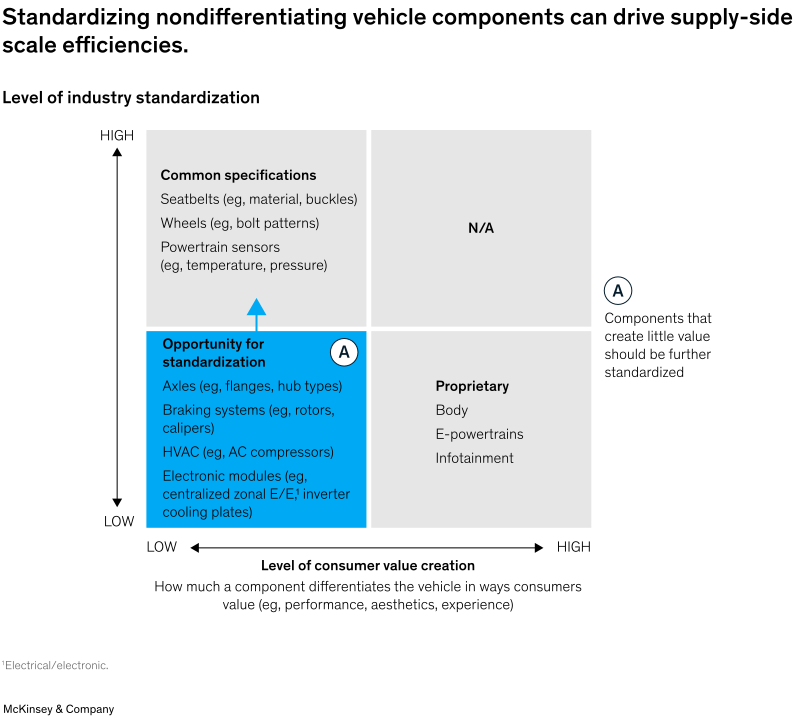
Many vehicle components create little consumer value but vary widely across OEMs, driving unnecessary costs and supplier complexity. To manage supplier volatility, OEMs can standardize nondifferentiating parts (Exhibit 3). For example, axles, harnesses, and certain power electronics don’t materially influence consumer purchasing decisions, presenting a clear opportunity for shared specifications. In contrast, components that drive differentiation in aesthetics or performance (such as the body, e-powertrains, and infotainment) should remain proprietary.
A useful analogy for standardization in another industry is the O-RAN ALLIANCE in telecommunications. Historically, mobile network equipment was highly customized to each operator, with each vendor’s hardware and software tightly coupled and proprietary. In 2018, major mobile operators formed the O-RAN ALLIANCE to define open interface specifications that enabled equipment from different suppliers (such as radios, baseband units, and control software) to operate together within the same network. By standardizing interfaces for nondifferentiating layers of the radio access network, the industry improved economies of scale, reduced dependence on proprietary systems, and minimized vendor lock-in, which lowered the total cost of ownership by about 25 percent.12 The O-RAN ALLIANCE fostered a more competitive and resilient telecom ecosystem, with lower deployment costs, greater sourcing flexibility, stronger supply chain resilience, and focused innovation in differentiating, higher-value domains, including network intelligence and orchestration.
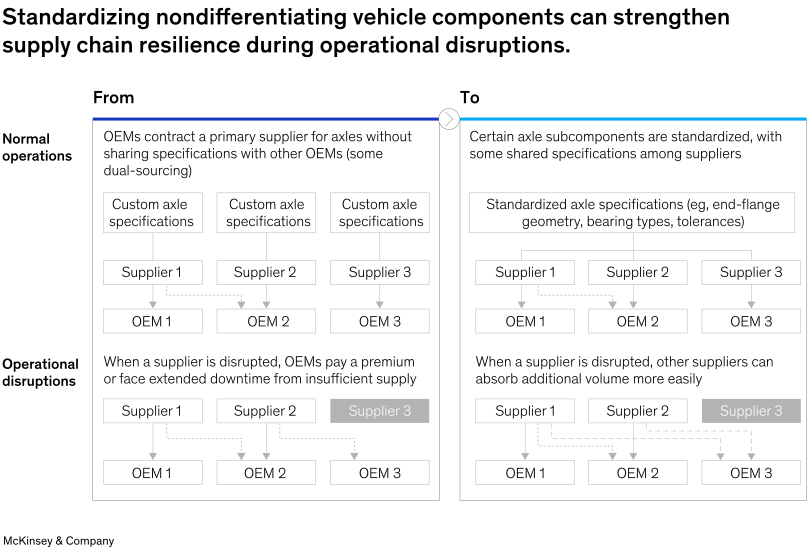
Similarly, the automotive industry can apply these principles for standardization to stabilize supply chains and reduce costs. By establishing common specifications and interfaces within component families, OEMs can achieve greater interchangeability across vehicle platforms and suppliers, which would enable them to pivot sources during disruptions without bearing the full cost burden of dual-sourcing bespoke parts (Exhibit 4). This flexibility supports scale efficiencies, strengthens resilience, and helps OEMs manage volatility without compromising production.
Create flexible manufacturing
North American OEMs operate in a uniquely uncertain environment, in which consumer preferences and regulations diverge from those in other regions. While regulation in Europe is accelerating the shift toward EVs, North American demand has slowed, and hybrids and ICE vehicles are seeing a rebound. To manage volatility in both what vehicles to build and how many to build, OEMs can develop multipowertrain lines and modularize production to rapidly reconfigure across models and technologies.
Develop flexible production lines. By investing in production lines that can build multiple powertrain styles, OEMs can maximize the utilization of plants, minimize costly retooling, and align supply with demand. In North America, where manufacturing costs are especially high, plant utilization is closely tied to profitability, yet many plants operate below the 70 percent break-even threshold.13 Low utilization not only erodes margins but also leaves little buffer for model changeovers, which can incur substantial costs (between $200 million and $400 million) and delays (typically between nine and 15 months14). Advanced robotics powered by AI and automation can further increase manufacturing flexibility by facilitating quick reconfiguration of production lines for different models, allowing OEMs to respond quickly to shifting market dynamics and reducing the financial risks of supply–demand mismatches.
Modularize production systems. Rather than defaulting to fully bespoke BEV-native architectures or overly generic platforms, leading companies are deploying modular systems that support multiple powertrains while preserving core performance attributes. Modular design allows OEMs to address emerging and diverse consumer preferences at scale without sacrificing capability, turning what was historically a trade-off between flexibility, performance, and scale into a complementary advantage. It also enables OEMs to boost efficiency, flexibility, and automation potential. By structuring assembly around standardized vehicle modules (such as front, rear, floor, and side sections), OEMs can shorten and simplify their production lines while decoupling major subassemblies to process them in parallel.
Modular production is especially effective for new vehicle platforms and low-volume models,15 for which efficiency gains significantly impact margins. For example, Tesla’s “unboxed” manufacturing concept, which uses gigacasting and structural batteries for modular assembly, reduced operator walking distance by more than 30 percent and reduced the number of final assembly stations by about 40 percent, from about 60 to about 36 stations.16 Incorporating modularized production systems can reduce costs for one-off capital expenditures (such as R&D costs to develop platforms) by 20 percent, development times by 30 percent, and per-unit costs by as much as 20 percent.17
North American OEMs face no shortage of challenges, but within these headwinds lies a rare opportunity to rebuild the industry. Taking advantage of external stakeholders to build strategic partnerships and solidify OEMs’ position in a broader ecosystem can help strengthen the value chain, manage risk, and shore up supply chains.
This is a great starting point. But to safeguard their stake globally, automotive companies must become more productive, responsive, and differentiated. In a follow-on article, “Shaping the next ‘ARC’ of the North American automotive industry,” we detail a comprehensive action plan for North American automotive OEMs to revamp their operations internally to do just that.