The rules of the road are changing fast for Europe’s truck industry. The transition to new zero-emission (ZE) powertrain technologies is rewriting the market and challenging the established playing field. At the same time, new value pools with opportunities in autonomous trucking require investments, while new levels of speed and productivity are accessible through AI and the rewiring of business processes. The disruptions will affect more than established truck manufacturers and fleet operators; the industry’s future is more than ever defined by an entire ecosystem consisting of energy and infrastructure providers, technology players, financial-services firms, and regulatory bodies—and joined by new, non-European competitors. This report examines the tectonic shifts and how companies can respond, including articles on the following:
Accelerating Europe’s ZE truck transition
Europe’s ZE transition is unfolding at an uneven rate. Although domestic OEMs already offer a range of advanced ZE vehicles with a total cost of ownership (TCO) lower than that of diesel powertrains for about 30 percent of truck use cases, ZE trucks make up just under 5 percent of new registrations in the European Union.1 A primary barrier delaying greater adoption is charging infrastructure: Our analysis shows 15,000 to 20,000 truck-specific public charging points and 200,000 fleet hub or depot charging points are needed by 2030 to unlock the continent’s ZE transition. Closing the gap requires unlocking private investment of €12 billion through systematic derisking, simplified grid access, and faster permitting. Without it, truck investment decisions made today could lock in emission levels well into the next decade—and expose the European industry to penalties and increasing global competition.
Competing against Chinese innovation speed in European trucking
At first glance, Europe’s truck market seems steady, with domestic OEMs commanding more than 90 percent of market share.2 Yet change may be coming. Our analysis finds that in the past five years, Chinese OEMs have doubled their market share in regions across the world, adding anywhere from 14 to 24 percentage points. And while Chinese OEMs today hold less than 1 percent of the truck market in Europe overall, their share of specific commercial vehicle segments is rising rapidly.3 For example, Chinese OEMs hold about 40 percent of the forklift market across Europe, the Middle East, and Africa (EMEA), while their share of the EMEA electric-bus market has grown to almost 30 percent.4 While service networks especially are posing an entry barrier, partnerships with independent dealers or aftermarket players are providing new entrants with access to customers and service networks, and localized assembly is reducing potential tariff exposure. Our analyses indicate that Chinese OEMs can take advantage of an estimated 25 to 40 percent structural cost advantage—enabled by access to own battery value chains, by development cycles that are twice as fast, and especially by significant scale.5 China’s truck market, alone, is 1.5 times larger than those of Europe and North America combined.6 Our projections suggest that Chinese OEMs could reach double-digit market shares by 2035, assuming the successful introduction of service networks, reliability in an European application landscape, and sustained customer interest. According to a recent McKinsey survey, half to two-thirds of European truck buyers would at least consider purchasing a truck from a Chinese brand. European OEMs will need to shift strategy if they are to defend against disruption and secure their dominant market position.
Mastering autonomous truck technology in Europe
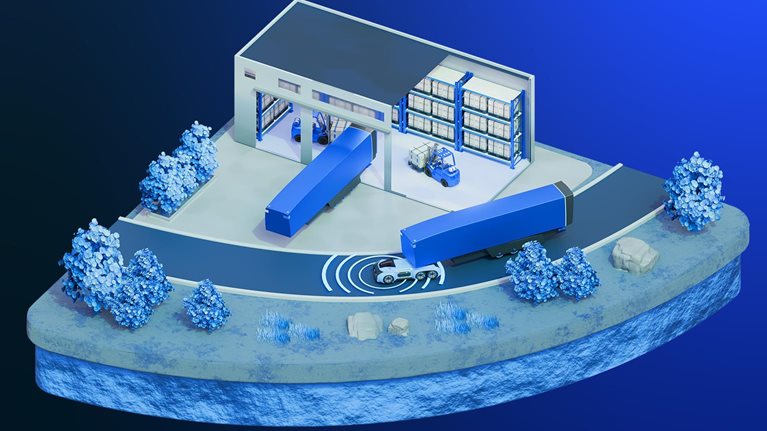
Autonomous vehicles could fundamentally change the road freight and urban mobility sectors, as well as the truck and bus industries. According to McKinsey analysis, in Europe alone, autonomous road freight is set to become a €100 billion value pool by 2035, shifting value from hardware sales to software, remote teleoperations, and predictive maintenance. For truck and bus operators, autonomous driving will be a welcome response to an acute driver shortage (Germany alone faces a shortfall of more than 100,000 truck and bus drivers by 2030).7 For city buses, autonomous driving will also trigger a shift toward smaller, more flexible vehicle form factors. Yet while the opportunity is significant, current innovations are mainly driven by American and Chinese technology players. While the upcoming harmonization of standards should help European players achieve scale after 2030,8 the industry may not be able to afford to wait.
Ensuring competitiveness for the European truck industry
All of these factors are challenging the European truck industry’s historical global leadership. Yet they also hold opportunity. Acting on three dimensions could help European players maintain competitiveness in this new era:
1. Developing best-in-class ZE trucks and go-to-market models
European OEMs and suppliers have put a wide range of ZE trucks on the market during the past three years. But it remains critical to double down on this ZE technology leadership at highly competitive costs—with significantly faster time to market—including by embracing the potential of agentic and physical AI as new sources of productivity. Through the redesign and automation of the major, cross-functional business processes, European truck OEMs and suppliers can shorten development cycles, significantly strengthen sales and aftersales performance, and achieve major cost optimizations in planning, production, and procurement. Based on recent transformations with our clients, we have observed EBIT improvements of two to three percentage points within just 24 months.
Yet optimizing the truck offering alone may not be enough for future economic success. The higher cost of ZE trucks and accompanying uncertainty around residual values and more complex operations calls for new go-to-market models, such as integrated financing, uptime guarantees, and infrastructure services (for example, energy capture, storage, management, and charging for depots). Such integrated offerings present an increasingly attractive opportunity for value creation for OEMs and service providers, with an estimated total profit pool of more than €17.5 billion by 2035.9
2. Laying a solid foundation for the truck transition
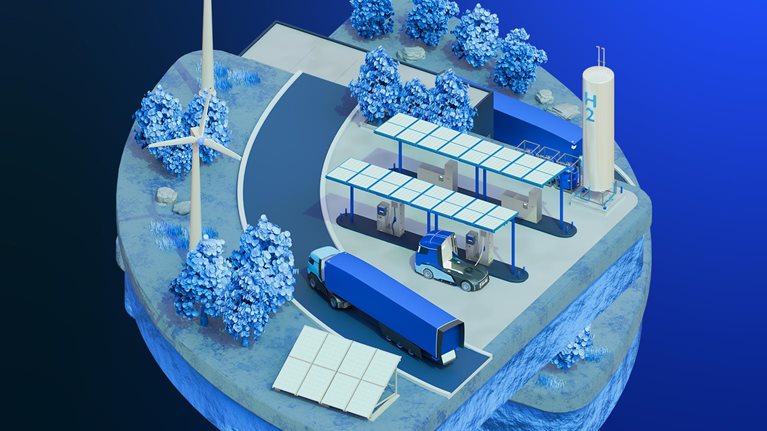
With OEMs striving for best-in-class performance in the face of heavy penalties, it is essential to lay the groundwork to accelerate the uptake of ZE trucks. That includes rolling out public and private charging infrastructure as well as hydrogen refueling infrastructure: Our analysis finds that a tenfold increase of truck-ready stations is required by 2030.10 Europe can also consider improving the standardization of road tolls, as more homogenous TCO is likely to support uptake of ZE trucks in the decisive long-haul road transport segment. Finally, a Europe-led battery value chain and a road map toward the use of hydrogen may be critical enablers for maintaining long-term competitiveness. The continent accounts for less than 10 percent of global battery-cell production capacity and even less in upstream activities.11 Changing this could strengthen strategic independence and help regain technology leadership for key components.
None of these challenges can be solved by individual players alone. It requires a combination of infrastructure operators, battery industry players, technology providers, regulatory bodies, and policymakers to create such foundations, together with manufacturers and customers.
3. Establishing conditions to enable the industry to thrive
In the face of disruption and uncertainty, other measures may help the industry both navigate this period and maintain global competitiveness in the longer term. That includes a transparent and predictable regulatory environment to help provide the stability and certainty required to make multiyear investments, greater cooperation across the trucking ecosystem, and offtake guarantees or backstops for initial investments. Because ZE trucks and infrastructure offer attractive economics, growth is likely to become self-sustaining once it is established.12 As is true for many other industries, improving location factors, including energy costs, labor costs, education, and access to capital, will also be essential to maintaining industrial competitiveness.
The situation is challenging for stakeholders across the European truck industry as major investment needs contend with the current market downcycle, economic and geopolitical uncertainty, and the rise of new competitors. This report details how the domestic industry can emerge as the winner from this multifaceted transition.