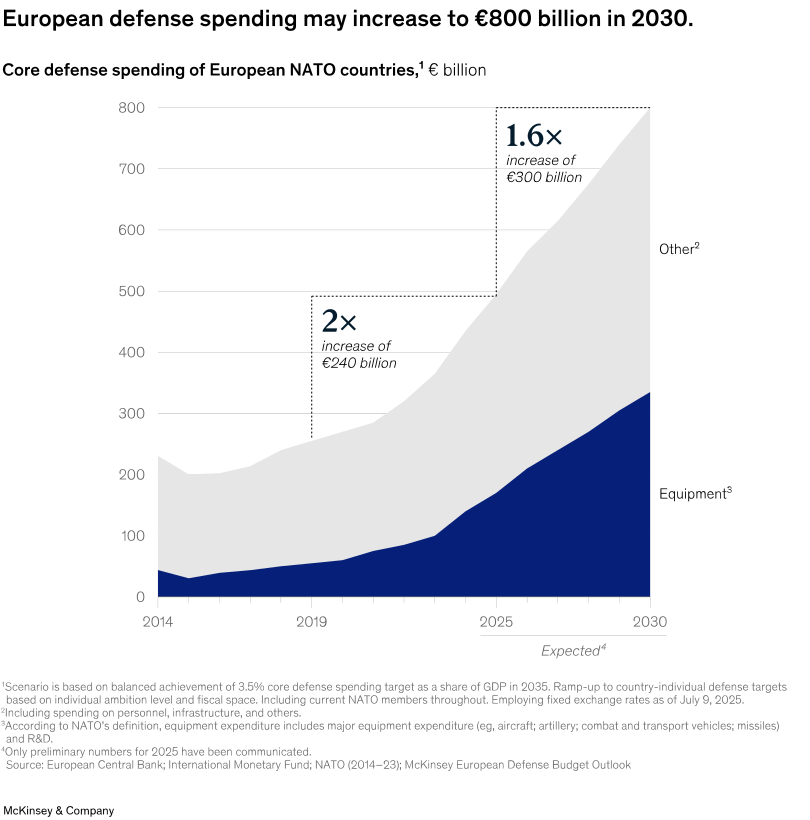
European NATO countries are entering a decisive phase of acceleration in defense. Driven by the objectives of military readiness and strategic sovereignty, allies agreed at the NATO Summit in The Hague on a new benchmark of at least 3.5 percent of GDP for core defense spending.1 Accounting for fiscal capacity, this could lift European defense spending toward €800 billion by the end of the decade.
Markets have reacted quickly to this shift. Defense equity valuations have increased markedly, and venture capital funding for European defense start-ups is rising. Other parts of the defense ecosystem are taking more time to adjust. Order backlogs are expanding, a substantial share of equipment continues to be sourced outside Europe, and equipment stocks—reduced by recent donations—remain below their 2021 levels.
The McKinsey European Defense Dashboard provides a quantitative baseline for Europe’s transition. We introduce 17 indicators that capture the state of European defense in numbers (Exhibit 1). Together, they offer a fact-based view of where Europe is today, where momentum is built, and where structural constraints could slow the path from spending to military capabilities.
European defense spending is surging. Core defense spending has doubled since 2019 and, under NATO’s new 3.5 percent benchmark for 2035, could reach about €800 billion by 2030—roughly 2.9 percent of GDP (Exhibit 2). Much of this increase is expected to flow into equipment, supporting a broad build-up of military capability. Beneath the aggregate picture, spending growth remains uneven, with the Baltics, Germany, and the Nordics moving faster than much of Southern Europe, implying that capability gains will emerge at different speeds across the continent. Higher defense outlays are also adding to debt pressures, leaving longer-term funding less certain—especially as EU fiscal rules return after 2028.
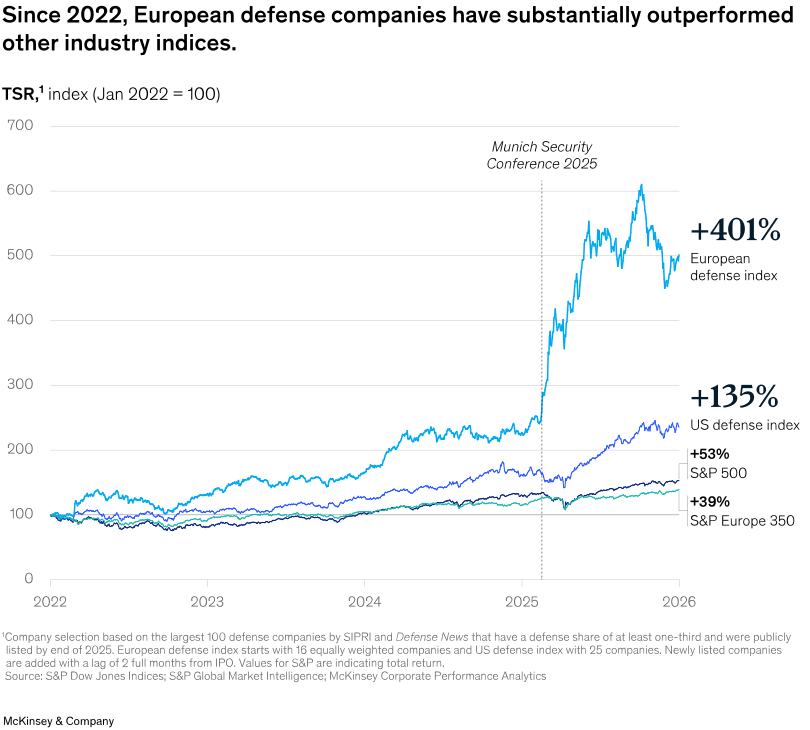
As expectations around defense spending have shifted toward sustained growth, financial markets have responded quickly. Since 2022, European defense companies have substantially outperformed broader equity indices and United States’ peers (Exhibit 3). An equally weighted index of large, publicly listed European defense companies—each with at least one-third of revenues from defense—has delivered a total shareholder return of 401 percent since 2022. Much of this outperformance has occurred since the 2025 Munich Security Conference, in line with a growing emphasis on European defense autonomy and military readiness.
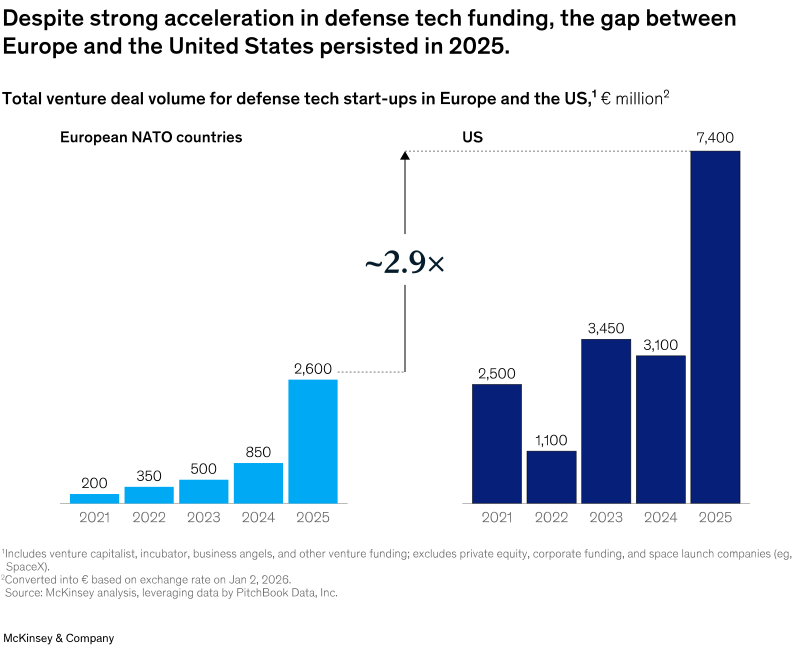
Alongside strong public market performance, venture capital investment in defense technology accelerated sharply in 2025 in both Europe and the United States, with deal volumes rising by a factor of two to three year on year (Exhibit 4). Over recent years, European defense tech funding has increased sharply, rising from around €200 million in 2021 to €2.6 billion in 2025. Despite this acceleration, the funding gap remains pronounced: US defense tech investment is still close to three times higher than in European NATO countries.
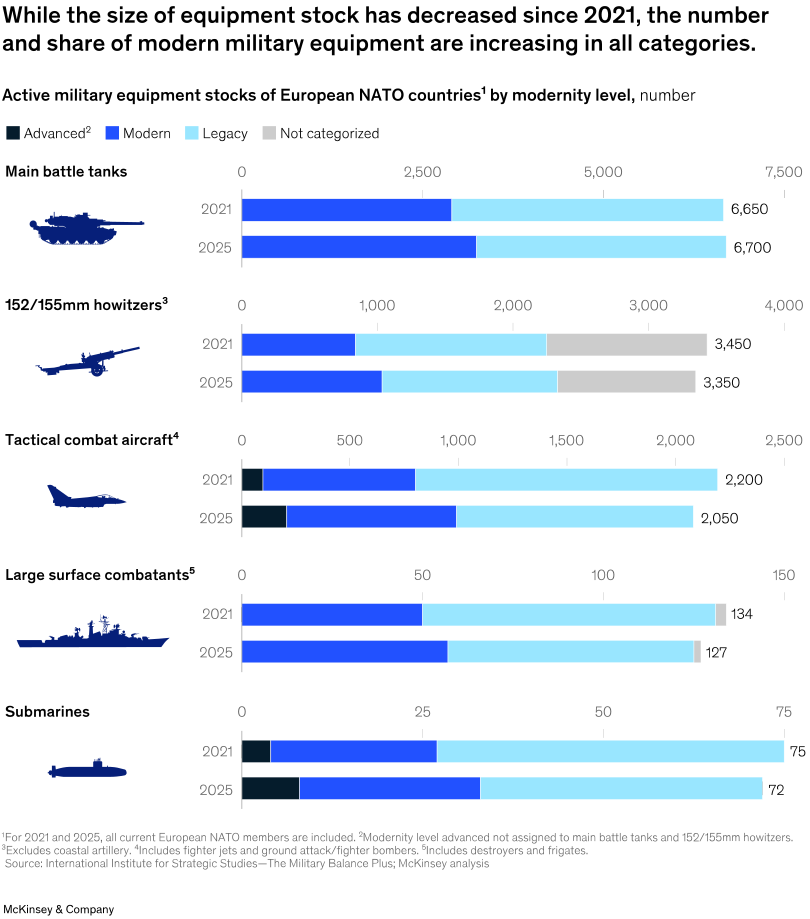
Even though investment has increased sharply, total equipment stocks in European NATO countries remain below their 2021 levels, reflecting military donations to Ukraine, the retirement of legacy systems, and long delivery timelines for new equipment (Exhibit 5). At the same time, equipment is becoming more modern, with both the share and number of platforms from recent generations rising across all major equipment categories. Looking ahead, equipment availability and military capabilities are expected to improve more visibly, as deliveries from recent orders are anticipated to accelerate in 2026 and 2027.
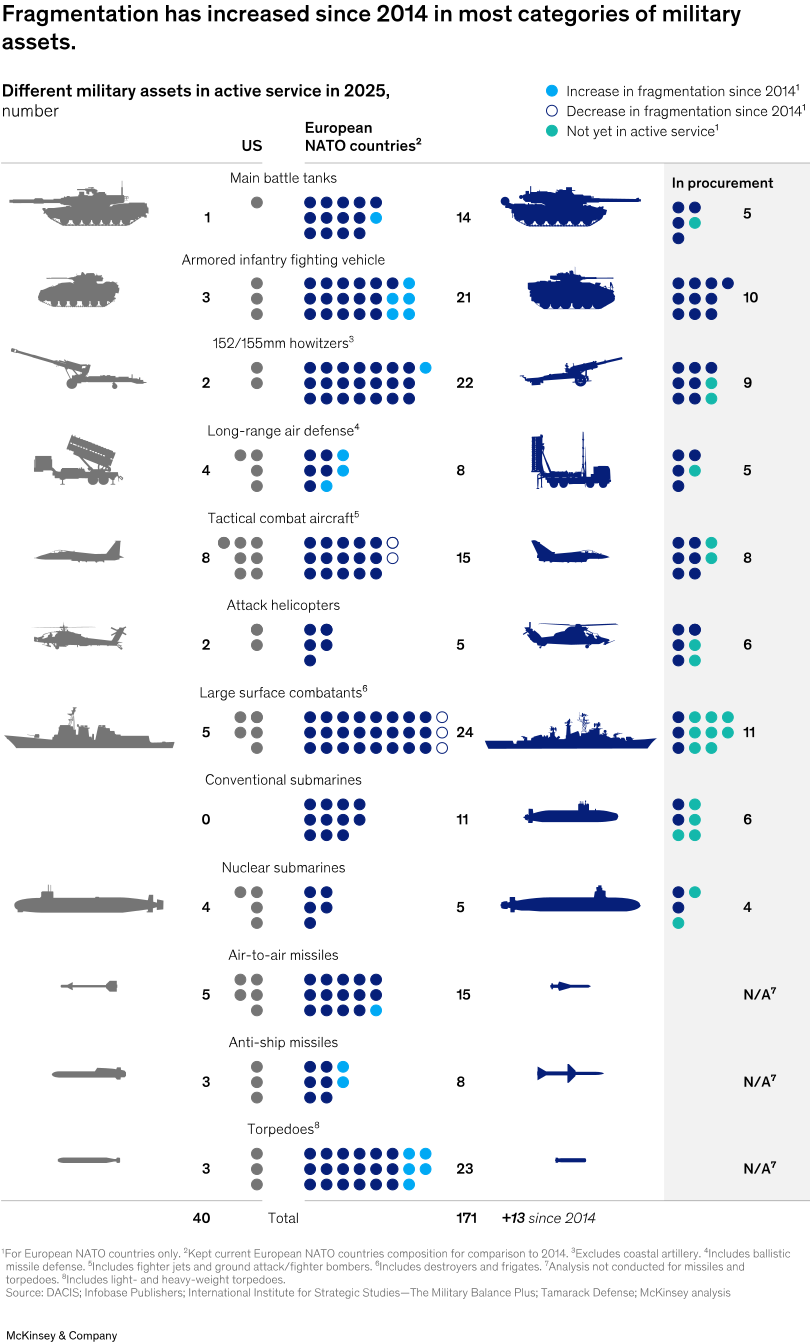
Even as spending and modernization progress, European NATO forces continue to operate a highly fragmented set of platforms, with fragmentation levels more than four times higher than in the United States (Exhibit 6). Fragmentation has increased by close to 10 percent since 2014, driven mainly by land systems and missiles. In addition, many naval platforms currently under procurement have not yet been fielded, pointing to further fragmentation as they enter service. As a result, equipment inventories are likely to remain diverse in the near term, with implications for interoperability, logistics, and industrial scale.
Europe’s defense effort is entering a decisive phase, marked by higher spending and renewed strategic commitment. Beneath the headline expansion, uneven national trajectories, delivery lags, and persistent fragmentation continue to limit how investment translates into military capabilities. Industrial ramp-up, execution capability, and collaboration across national defense ecosystems will determine the impact of the recent acceleration in European defense.