The world is not yet on track to meet 2030 or 2050 decarbonization goals, as global CO2 emissions have increased by 9 percent since the 2015 Paris Agreement. This overall figure masks different trajectories across regions, however. McKinsey’s Adam Barth, Diego Hernandez Diaz, Humayun Tai, Thomas Hundertmark, and Michiel Nivard note that although Europe and the United States have reduced their emissions by 18 percent and 8 percent, respectively, these cuts have been more than offset by increases elsewhere. Emissions from China rose by 21 percent, and emissions from the rest of the world grew by 11 percent during the same period.
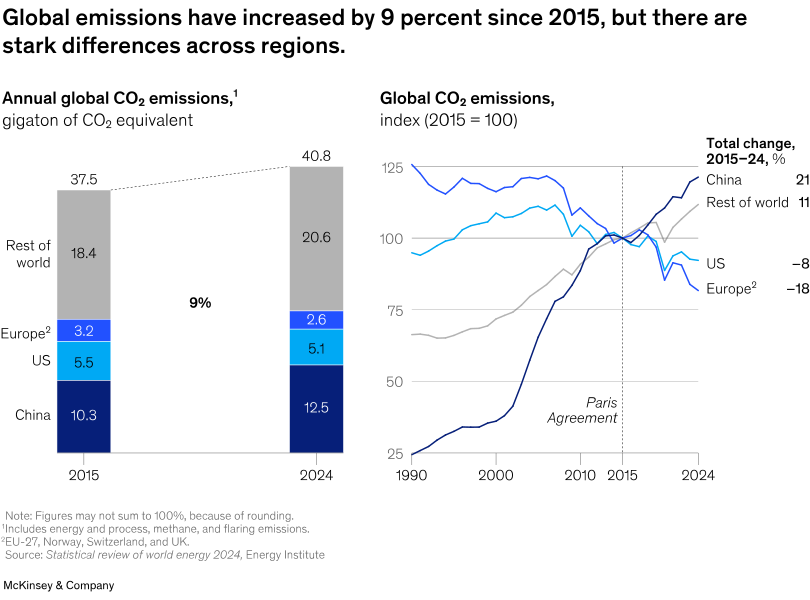
Image description:
This dual-panel exhibit features a stacked bar chart on the left and a multiline trend graph on the right to illustrate regional differences in global CO₂ emissions from 2015 to 2024. The left panel shows annual global CO₂ emissions in gigatons of CO₂ equivalent, rising from 37.5 gigatons in 2015 to 40.8 gigatons in 2024—an overall increase of 9%. The breakdown highlights that China’s emissions grew from 10.3 to 12.5 gigatons, the US fell from 5.5 to 5.1, Europe dropped from 3.2 to 2.6, and the “rest of world” segment (EU-27, Norway, Switzerland, and the UK) increased from 18.4 to 20.6 gigatons. The right panel tracks indexed emissions (2015 = 100) for each region since 1990, with a vertical line marking the 2015 Paris Agreement. Since 2015, China’s emissions have risen by 21%, and the rest of the world’s emissions are up 11%. In contrast, the US and Europe show declines of 8% and 18%, respectively. The overall visualization underscores the uneven regional progress on emissions since the Paris Agreement, with China and the rest of the world driving global increases while the US and Europe have reduced their emissions.
Note: This image description was completed with the assistance of Writer, a gen AI tool.
Source: Source: Statistical review of world energy 2024, Energy Institute.
End of image description.
To read the article, see “Tracking the energy transition: Where are we now?,” January 14, 2026.