As the United States marks its 250th birthday, we explore the foundations of its economic competitiveness—and the opportunities ahead. All this week, we examine how America’s sources of strength have evolved over time, from manufacturing and energy to technology and supply chains, and what it will take to sustain its competitive edge in a changing world.
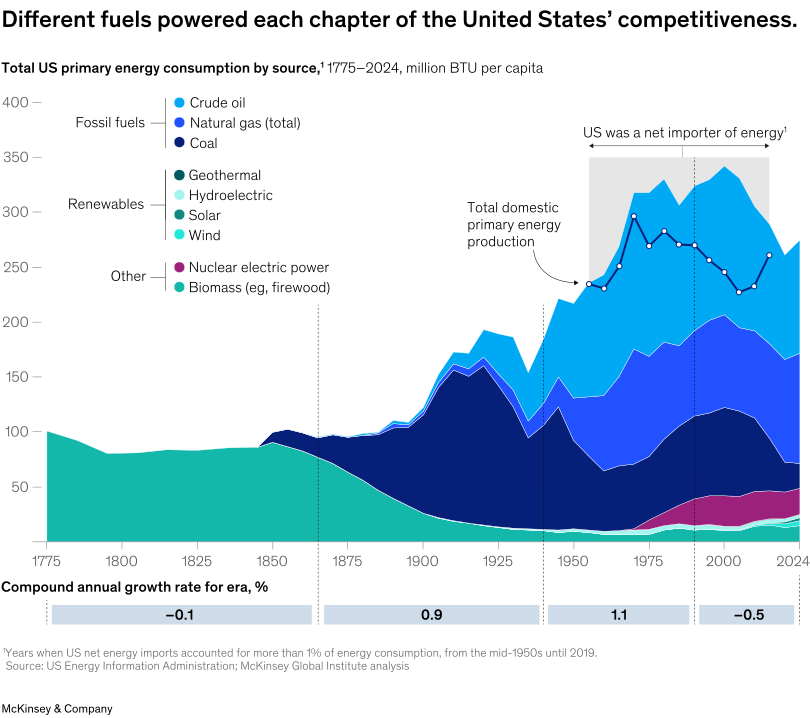
At 250 years old, the United States is the world’s most competitive economy. While the nature of this competitiveness has shifted over time, natural abundance has been an important foundation. Reliable and affordable energy has been an enduring source of strategic advantage for the United States, note McKinsey’s Rebecca J. Anderson, Olivia White, Eric Kutcher, Kweilin Ellingrud, Shubham Singhal, Scott Blackburn, Arvind Govindarajan, Aly Spencer, TJ Radigan, and Mark Staples. Ready access to coal ignited the American industrial revolution. Later, the United States became a net energy importer, but regained energy independence with the shale revolution beginning in the mid-2000s. In 2019, energy imports dropped below exports for the first time in half a century, ultimately helping shield the United States from major energy price fluctuations in 2022.
Image description.
Stacked area chart showing US primary energy consumption per capita by source from 1775 to 2024, measured in million BTU per capita. Biomass, primarily firewood, dominates energy use through the 1800s before declining as coal becomes the primary fuel in the late nineteenth and early twentieth centuries. Oil and natural gas rise rapidly after World War II, overtaking coal and driving overall energy consumption to a peak of more than 300 million BTU per capita around the early 2000s. Nuclear power emerges in the 1970s and remains a modest contributor, while wind, solar, geothermal, and hydroelectric power grow gradually in recent decades but remain smaller shares of total consumption. A line showing domestic primary energy production indicates that the United States was a net importer of energy from the mid-1950s until 2019, after which domestic production exceeded consumption. The chart highlights distinct eras dominated by biomass, coal, oil, and natural gas, illustrating how different fuels powered successive chapters of US economic development over the past 250 years.
Source: US Energy Information Administration; McKinsey Global Institute analysis
This image description was completed with the assistance of Writer, a gen AI tool.
End of image description.