Recent headlines might suggest that clean technology is in retreat. Capital has tightened, several high-profile companies have stumbled, and market dynamics in many regions have shifted. But is that the full picture?
To move beyond perception and ground this question in evidence, we analyzed data from the market intelligence firm Net Zero Insights, covering more than 11,000 cleantech companies across industries, including renewable energy, batteries and energy storage, built environment, mobility, and more (see sidebar “Our methodology”). We examined investment and company outcomes over three eras: the preboom era of 2015–20, characterized by steady growth in cleantech investment; the cleantech boom era from 2021–22, during which funding, policy support, and interest in cleantech accelerated rapidly; and the postboom era from 2023–25, when affordability, geopolitics, and supply chain resilience grew in importance alongside decarbonization as driving forces in decision-making. In this article, we present our findings along with qualitative insights drawn from case studies in the sector.
Cleantech is maturing, and the real challenge is scaling
What emerges from this analysis is a far more nuanced—and ultimately more encouraging—picture than the headlines suggest. Since 2015, cleantech start-ups and scale-ups have raised more than $480 billion in total funding—spanning equity, debt, grants, and other instruments. In the postboom era, from 2023 to 2025, average annual funding totaled approximately $70 billion, roughly 3.8 times the preboom average between 2015 and 2020 (Exhibit 1). Far from collapsing after the peak between 2021 and 2022, average annual funding in the postboom era decreased by approximately 10 percent relative to the average annual funding in the boom era, indicating that momentum has held. Today, against a more volatile geopolitical backdrop—exacerbated by the ongoing energy crisis in the Middle East—rising energy prices and concerns over the reliability of hydrocarbons are reinforcing the strategic case for renewables and circular solutions, potentially sustaining and even accelerating the investment momentum.
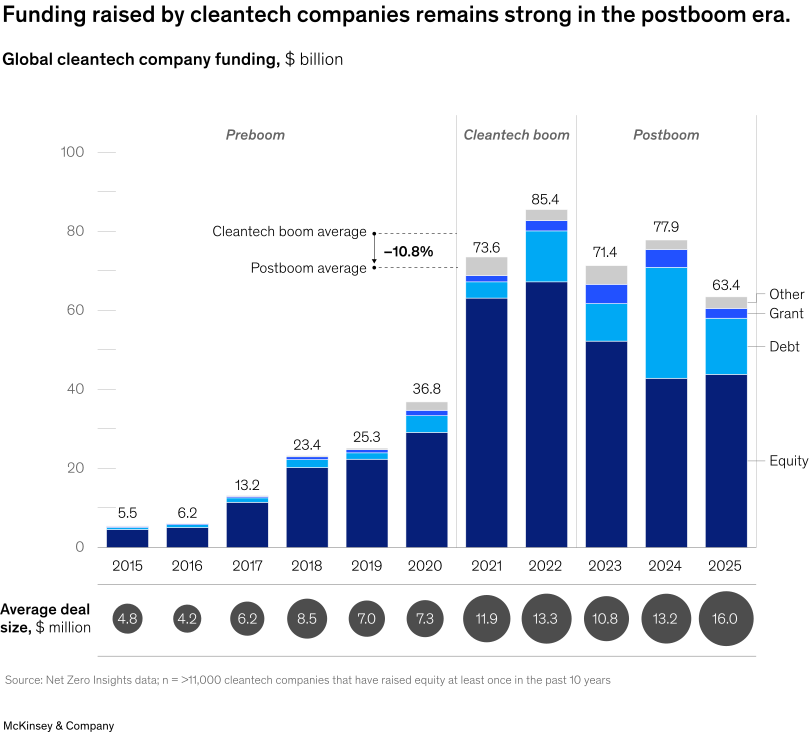
Several structural shifts define the postboom era we are in today. Average cleantech investment deal sizes have continued to climb, reaching $16 million in 2025, from less than $5 million in 2015. This shift reflects an investor pivot from early-stage experimentation toward fewer, larger later-stage investments in companies ready to deploy at scale. The financing mix has also evolved significantly, defying the expectation that cleantech is largely unbankable. Debt—typically the lowest-cost and most risk-averse form of capital—accounts for roughly 25 percent of postboom funding, up from approximately 10 percent in the years before. In total, approximately $80 billion in debt has been deployed since 2015, with two-thirds raised in just the past three years, highlighting growing lender confidence in the cleantech sector as technology models are proven and mature.
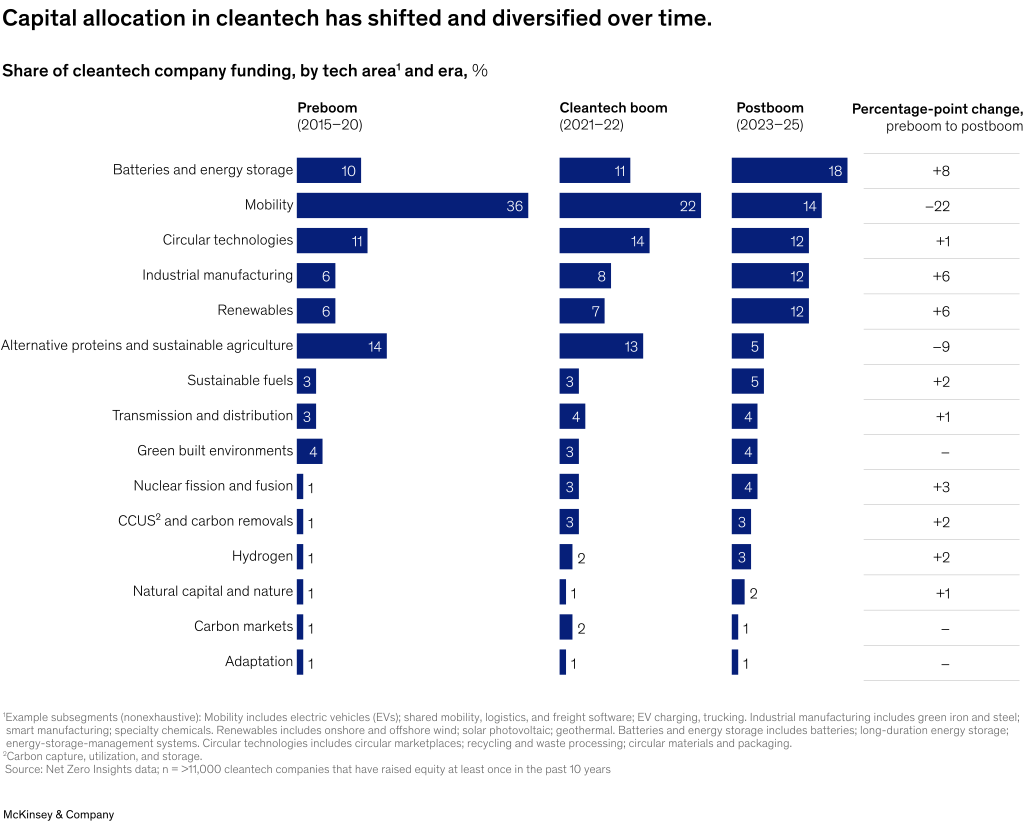
Where is the capital going? Allocation has shifted across eras. Mobility—including subsegments such as electric vehicles, shared mobility, and logistics software—dominated in the early years but has given way to a more diversified portfolio with increased investment in batteries and energy storage, renewables, and industrial decarbonization (Exhibit 2).
North American and European companies have captured roughly 80 percent of global cleantech funding throughout the eras studied. North America’s average share has remained notably resilient at more than 40 percent in the postboom era (compared with about 55 percent in the preboom and boom eras), countering the general perception of a sharp regional slowdown. In contrast, European companies experienced a nearly 50 percent decline in funding raised between 2024 and 2025. This drop likely reflects a regional shift in priorities from sustainability toward security and resource resilience. This shift is particularly acute because start-ups and scale-ups in Europe rely more heavily on public funding than their US peers (30 percent of venture capital funding in the European Union comes from public sources, versus 4 percent in the United States).1
Perhaps the most telling indicator of the cleantech sector’s health is that 90 percent of the more than 270 largest equity raisers since 2015 remain operational, and almost all have matured out of the lab to become significant revenue-generating companies. Collectively, these 250 companies have raised approximately $166 billion in equity, representing 45 percent of all cleantech equity raised since 2015 by more than 11,000 companies considered in our analysis. These 250 companies also employ roughly 180,000 people, close to a quarter of all cleantech jobs in our analysis.
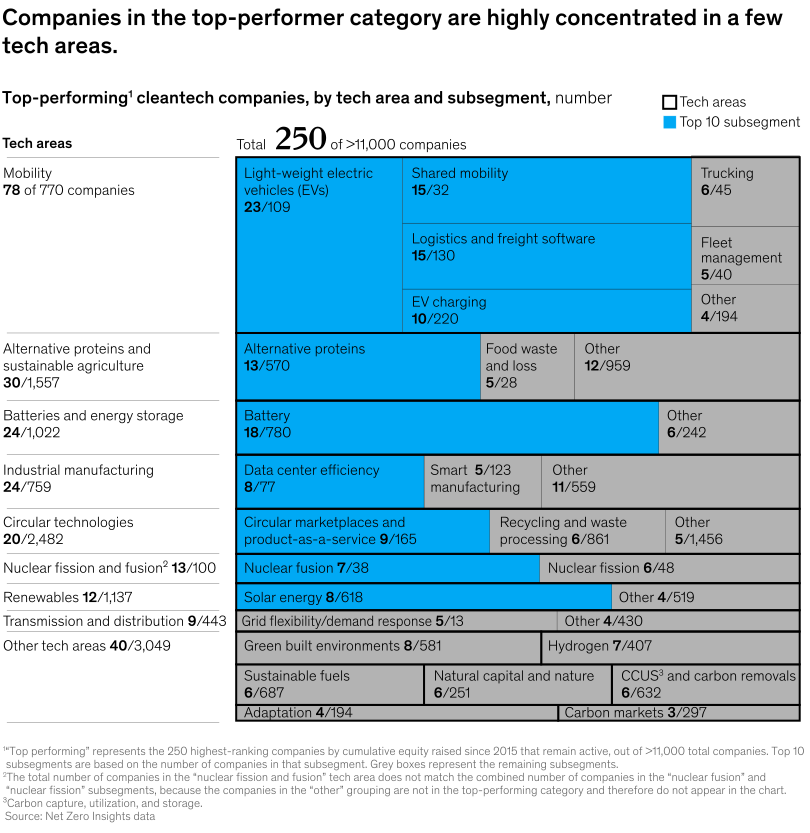
While the overall geographic and technology mix remains broadly consistent, a few nuances stand out when we focus on these 250 top performers. North American and Asian companies hold a considerably larger share of equity raised among top-tier companies than in the total cleantech market. Top-performer cumulative equity raised since 2015 is also more concentrated in cleantech areas such as mobility, nuclear, and transmission and distribution. Notably, roughly half of the top performers operate in just ten cleantech subsegments out of more than 60 (Exhibit 3), pointing to increasing concentration in areas with scalability potential.
As the cleantech sector has moved through its three eras to the current moment of disciplined, at-scale deployment, the central challenge for many companies has shifted from proving the science to proving the business model. In this more selective environment, capital and customers are no longer evenly distributed—they increasingly concentrate around a subset of clear high-performers. The companies that are succeeding share a remarkably consistent set of qualities, which can help explain why some scale rapidly while others stall.
Top performers are cheaper, faster, and better
What separates the companies that attract capital, secure customers, and become self-sustaining from those that do not? Our analysis of the top performers—the 250 operational cleantech companies that raised the most equity funding over the past ten years—reveals a clear pattern. These companies thrive on the same fundamentals that define great businesses across sectors. They include the following:
- cheaper than the conventional alternatives, delivering equivalent or superior performance at a lower cost
- faster than peers to market, reaching customers early and attracting a broad base of investors through shorter ROI horizons
- better than others in combining superior product quality and customer experience with a stronger business model, including a better operating model and high-performing teams, to improve environmental impact and drive growth
Cheaper: Winning on economics, not ideology
Equity invested in the top 250 cleantech companies is twice as concentrated in particular technology areas—including electric vehicles, green buildings, renewable energy, and sustainable fertilizers—where the technologies are already cheaper than the conventional solution they replace (Exhibit 4). This concentration is about five percentage points higher than across the broader cleantech population of more than 11,000 companies, underscoring that in today’s more selective market, capital is increasingly directed toward companies that can demonstrate a clear value proposition beyond climate impact.
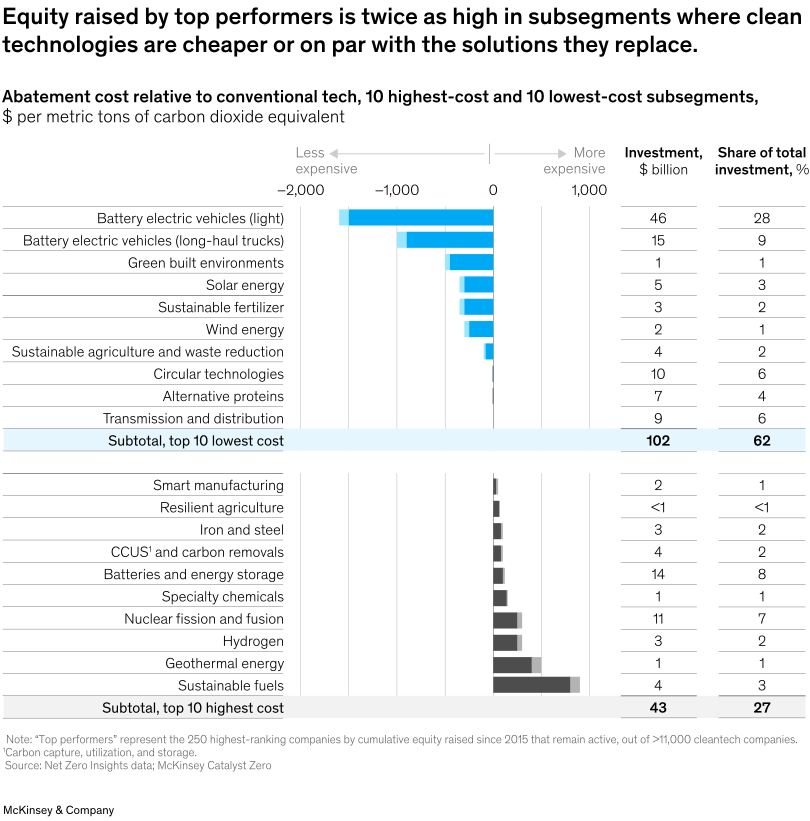
While consumer research often indicates a higher willingness to pay for green products, this rarely translates into purchasing behavior. This holds particularly in B2B markets, which make up the majority of cleantech demand, making favorable economics critical to achieving a durable advantage.
Several companies provide examples of how to build cheaper products and operating models (see sidebar “Companies delivering on ‘cheaper’”).
What the top tier does differently: Competing on cost requires deliberate choices about where to engage and how to scale. Top-tier players embed discipline across strategy, product development, and financing. They take the following actions:
- Target large value pools with structural cost advantage. Top-tier players focus on markets or geographies where the cleantech solution economics are fundamentally better, not just marginally cheaper. They achieve this by lowering or eliminating up-front costs for customers, reducing material intensity, or using scale and vertical integration to support lower costs.
- Design for lower costs from day one. Leaders focus on a minimum viable product with only the essential features, scaling their product quickly and driving costs down before adding complexity.
- Expand across the capital stack as risks decline. As technologies and business models mature and become more predictable, top companies aim to access lower-cost capital, such as debt, signaling bankability and lowering the cost of financing.
Faster: Scaling fundraising and technologies at the right time
Speed in cleantech matters most along two dimensions: how efficiently a company matures its technology and how quickly it progresses through funding stages to reduce the cost of capital and attract at-scale investors. The data show that top performers excel at both—but with an important nuance (Exhibit 5).
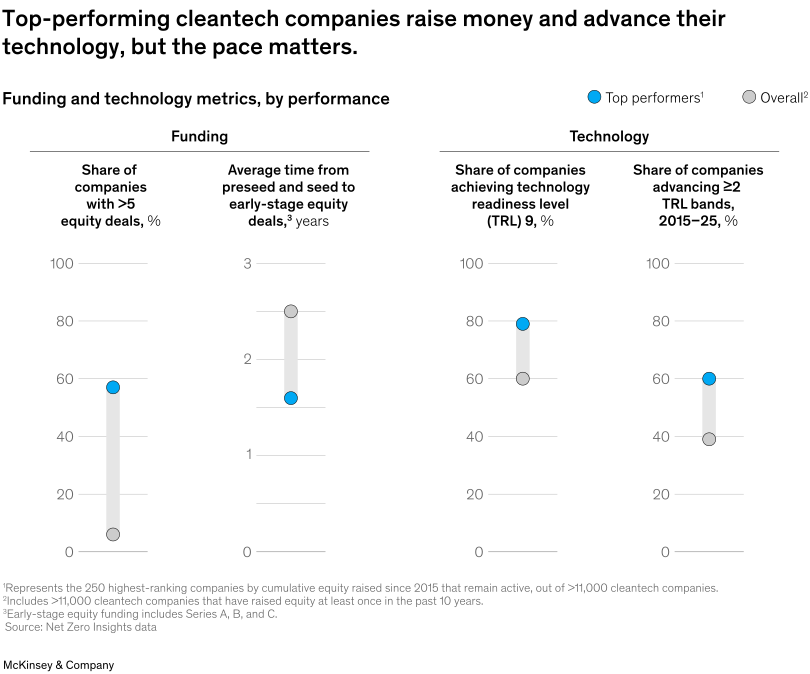
The top tier of companies tends to start at slightly higher technology readiness levels (TRLs) than the rest, suggesting value can sometimes lie in scaling an existing technology rather than developing new solutions. Successful companies with products at earlier TRLs progress quickly or risk stalling. Around 60 percent of top-tier companies advanced through more than two TRL stages from 2015 to 2025, and around 80 percent achieved full maturity at TRL 9 in that period. However, speed alone isn’t enough. Top performers advance slightly more slowly than lower-performing peers, yet with consistent steadiness, derisking both their technology and business model as they scale.
Several companies illustrate how top performers combine balanced technology iteration with accelerated access to capital (see sidebar “Companies delivering on ‘faster’”).
What the top tier does differently: Competing on speed requires careful choices about fundraising pace and how to mature underlying technologies effectively. Top performers do the following:
- Start with existing technology and get it to customers. Top performers focus on rapid market entry—getting products into customers’ hands early, iterating based on real demand, and proving commercial viability—while prioritizing scaling and cost reduction rather than prolonged first-principles innovation.
- Take deliberate time to advance new technology. Successful companies recognize that the quality of milestones matters more than the speed of technology maturity. Top companies move quickly overall, but pace technical milestones deliberately, ensuring their operational model advances as well.
- Build fundraising muscles early and train them often. The majority of top performers secure their first external equity investment within two to three years of founding and then sustain that momentum, using each round to validate their products and services with the investor universe continually.
Better: The ultimate competitive moat
The third characteristic of top performers is perhaps the most underappreciated. Successful cleantech companies outperform peers not only on sustainability but across multiple criteria. Leaders pair sustainability credentials with other product dimensions such as performance, advanced features and technology, business model innovation, and more (Exhibit 6).
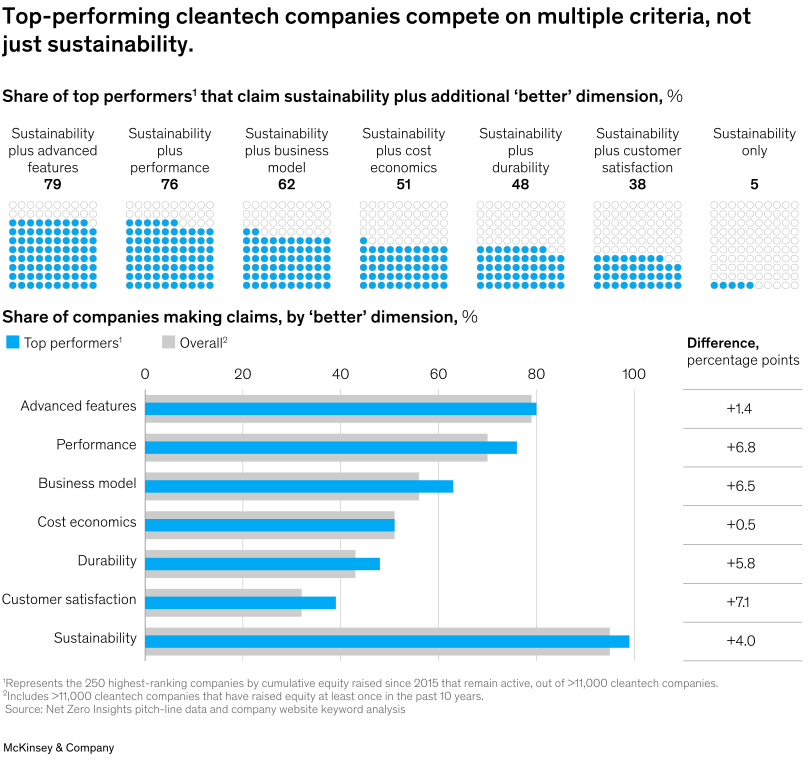
Roughly 80 percent of top performers claim to compete on advanced features, and just over half emphasize cost economics. In total, leaders report competing across an average of 4.6 dimensions, compared with just 3.3 for the broader set of companies, highlighting the importance of building a broad, differentiated market position.
This multidimensional advantage is not accidental. It rests on two reinforcing factors: superior products and services and strong operating models. Together, these increase customer relevance, reduce execution risk, and unlock profitability. On the product side, leaders go beyond simply replacing a product with a cleaner version to deliver differentiated value, address market needs, and minimize friction for customers. Equally, top performers build better operating models, ensuring a strong technology–market fit, investing in talent to assemble experienced, execution-focused teams, and adopting capital-efficient approaches, such as platform plays to accelerate time to market.
Several companies provide examples of how top-notch products, services, and operating models can lead to standout performance and profitability (see sidebar “Companies delivering on ‘better’”).
What the top tier does differently: Competing by being better requires sophistication across operations, with a focus on customer experience, market fit, execution, and collaboration. To achieve this, top performers do the following:
- Invest in seamless customer process integration. Leading companies build drop-in solutions that integrate seamlessly into existing systems and minimize the need for customers to change processes or infrastructure, encouraging demand and building loyalty.
- Ensure strong technology–market fit. Top performers align solutions with the most relevant geographies, infrastructure, and customer demand from the outset to gain a competitive advantage and secure supply chain access.
- Build execution-focused teams. Strong leadership and operational capability reduce risk and enable consistent delivery at scale. Leaders also ensure the right expertise is available, align talent with priorities, close capability gaps quickly, and foster a culture of accountability and continuous improvement.
- Build ecosystem partnerships. Successful companies collaborate across value chains—engaging companies as offtakers, co-investors, and supply chain partners, alongside investors—to accelerate scale-up.
The pitfalls: What separates successes from those who almost made it
For every success story, there are cautionary tales. Companies that stumbled often had many fundamentals right: They were in the right technology areas with positive cost dynamics, raised funding quickly, and matured their technology at a reasonable pace. Our analysis of the more than 20 top equity raisers that ceased operations reveals a pattern of potentially avoidable missteps.
Raising too fast, building too slow
The most common pitfall is fundraising outpacing operational readiness. Companies that were unsuccessful progressed through funding rounds even faster than top-tier companies, reaching late-stage equity funding deal types such as Series D-H more quickly—particularly in asset-intensive businesses, where scaling requires building strong execution capabilities alongside capital deployment.
For example, Northvolt raised capital at extraordinary speed, totaling approximately $1 billion across eight rounds between 2017 and 2019. But while capital kept accelerating, operations did not mature at the same pace: Northvolt faced challenges in ramping up production, but the challenges became public when the first key customer, BMW, canceled a €2 billion battery order after delays.2 Once market conditions tightened, the mismatch between funding and stable production became much harder to sustain, and the company filed for bankruptcy in 2025.
Taking on technology risk without commercial validation
Some of the biggest setbacks involved deploying significant capital before the technology had been validated at commercial scale. Science and investor enthusiasm ran ahead of proof points that the technology could deliver what was promised beyond a successful pilot.
Lilium aimed to bring electric regional air travel to market with its eVTOL (electric vertical take-off and landing) aircraft, but the business was still heavily dependent on external funding to complete development, testing, first flight, and type certification before the model had been proven commercially. That reliance became clear in October 2024, when Lilium announced its principal German subsidiaries would apply for self-administration proceedings after the Budget Committee of the German parliament did not approve a KfW-backed loan, which was a closing condition to already committed private funding.3 In essence, the company’s technical ambition had moved ahead of a fully validated and financeable commercial model.
Neglecting the path to competitive unit economics
Several high-profile, unsuccessful endeavors had an ambitious vision and significant capital but no clear path to positive unit economics. Nikola aimed to transform heavy trucking with battery-electric and hydrogen-powered trucks, yet volumes remained too low to absorb the cost base: In 2024, the company delivered fewer than 400 trucks, far below the scale needed for a capital-heavy truck manufacturer.4 Against this backdrop, a major battery recall in 2023, affecting about 209 battery-electric vehicles and costing roughly $65 million, further strained the business, effectively becoming the final blow to an already fragile scaling trajectory.5
The cleantech sector is entering its most consequential era. The exuberance of the boom period has given way to a sharper, more disciplined market where capital flows to companies that can demonstrate real-world performance. Three forces will likely shape the next chapter:
Artificial intelligence is transforming every stage of the cleantech value chain: materials discovery, process optimization, predictive maintenance, customer acquisition, and more.
The industrialization of green business building is accelerating. The “hyperscaling formula” for scaling cleantech is becoming more codified, combining exponential commercial scaling, systematic capital expenditure reduction, and structured financing.
A new competitive paradigm is taking hold. The most successful companies are not those that meet regulatory requirements or pursue net-zero at any cost. They are the ones for whom sustainability and productivity go hand in hand.
Our analysis shows that investments in the cleantech sector continue. The companies that will define the next decade are those that deliver solutions that are cheaper, faster, and better than alternatives. The most exciting times for green business building are yet ahead.