The pace of change that AI brings is making many leaders feel significant pressure to adapt faster than they are accustomed to. And for many, the stakes feel very high.
In our latest McKinsey Global Survey of more than 1,200 executives and managers, 40 percent of respondents expect their current business model to require significant change within the next three years just to remain economically viable.1 Yet there is significant optimism. Nearly 40 percent of respondents expect their organization to be a first mover when it comes to AI, and 60 percent believe they will successfully differentiate themselves from their peers through these moves.
But there is a gap between ambition and experience. Fewer than half of those respondents who aspire to be AI first movers say their organizations are currently first movers in general. This means companies are attempting to act more quickly than they have before, in a landscape that is less familiar due to the AI disruption, and with high stakes.
While the value of being a true first mover is unclear, there is value in understanding how companies that respondents describe as first movers can act quickly when the path forward is unclear.
These companies are not necessarily superior at predicting the future. Rather, our survey data show they are more able than others to secure commitment within the organization to execute the moves despite uncertainty and reallocate resources based on performance (as opposed to internal politics or fear).

Strategy and value in turbulent times: The four foundations that drive long-term performance
November 12, 2026, 8:30 a.m. ET / 2:30 p.m. CET Join McKinsey experts Andy West and Whitney Zimmerman for a discussion on what it takes to create and sustain value in an increasingly turbulent environment. They’ll explore four timeless foundations of strategy and how leaders can apply them to today’s hardest decisions.
Executives have big aspirations to move first on AI
We see a high level of optimism about companies’ ability to deploy AI more swiftly than their peers can.
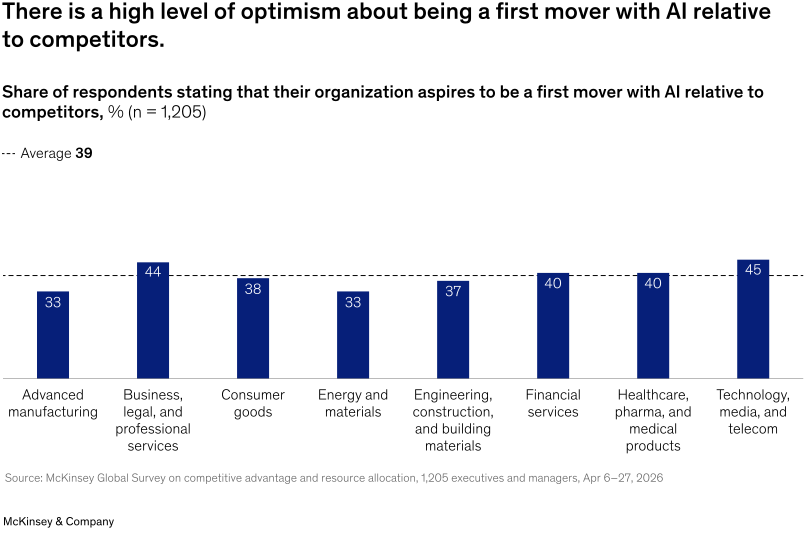
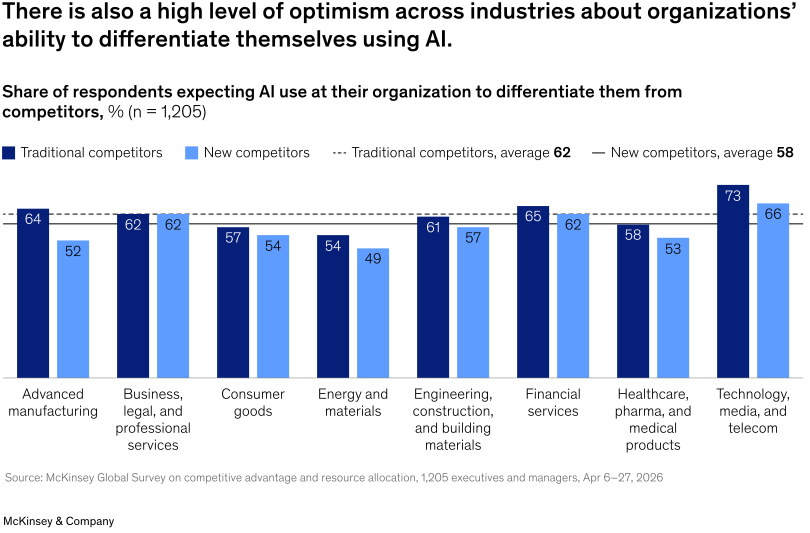
Past disruptions would suggest that this overall level of optimism might be unrealistic, but it’s understandable: The AI disruption is moving quickly, and the path forward—and the sense of which bets will and won’t pay out—is not yet fully defined. Under these conditions, many executives likely feel like they are first movers on AI.
As we mentioned, most respondents who expect to be AI first movers don’t describe their organizations as current first movers more broadly. And those with a track record of moving first report resource allocation practices that differ significantly from those who simply aspire to do so.
Whether being first with AI ultimately creates advantages for companies remains to be seen. But leaders can still learn from companies that have demonstrated an ability to move decisively when the path forward is unclear.
First movers handle uncertainty better than others
First movers successfully fund what matters, across both capital and people (Exhibit 2). And, as first movers’ specific behaviors and mindsets demonstrate, they are highly aligned on strategic priorities and what is required to deliver on them.
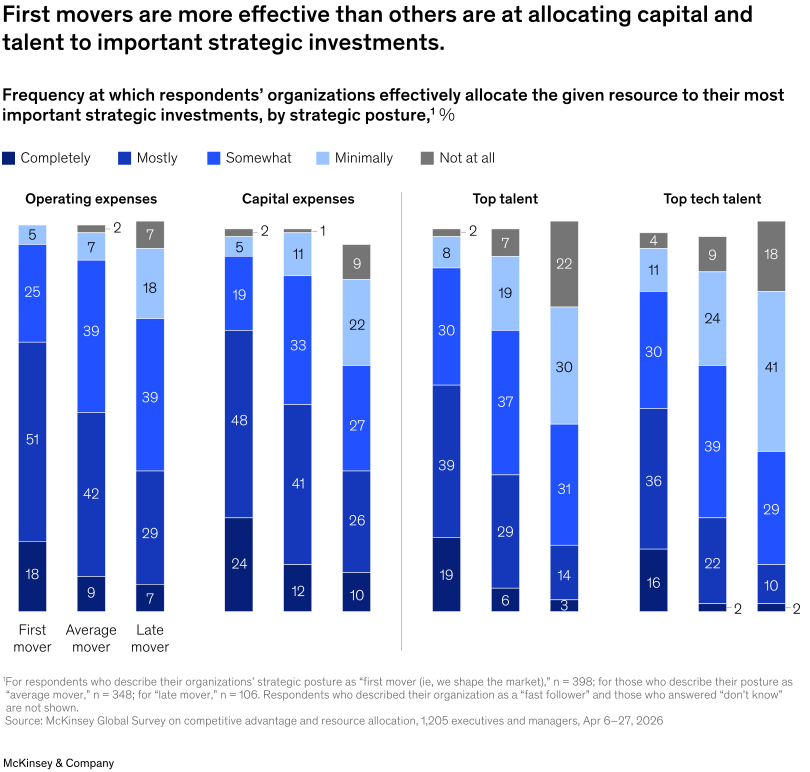
Spending on AI is one real cost that can be categorized as both operating expenses and capital expenses and can influence talent costs and strategy. As companies’ spending on AI tokens expands, it will require the same level of scrutiny and discipline as with other resources to ensure meaningful returns.
Being a first mover means actually moving things
When thinking about “first movers,” individuals often focus entirely on the “first” aspect. However, the “moving” part is arguably the more critical part. Concepts can’t create value if resources aren’t allocated to them. For example, Apple did not invent the MP3 player—but, unlike others, it was willing to reorganize and create an ecosystem around “digital music consumption” before the market fully matured.
Indeed, first movers are significantly more decisive about shifting their resources to enable a new opportunity. Respondents who describe their organizations as first movers—whom we refer to as “first movers” in these findings—are more than three times more likely to reallocate at least 20 percent of resources year over year as late movers are (Exhibit 3).
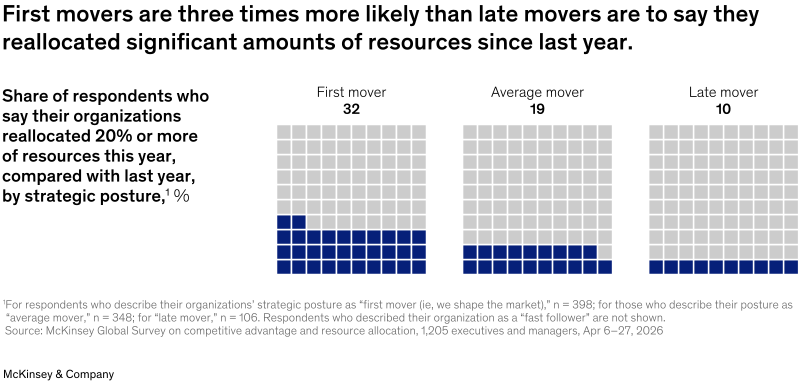
Ideas alone rarely create advantage; that comes from moving enough capital, talent, and management attention behind the idea for it to matter. While making bold bets can be a risk, so is moving hesitantly, which can sometimes signal to a more decisive competitor that an opportunity exists.
First movers stay committed to long-term growth
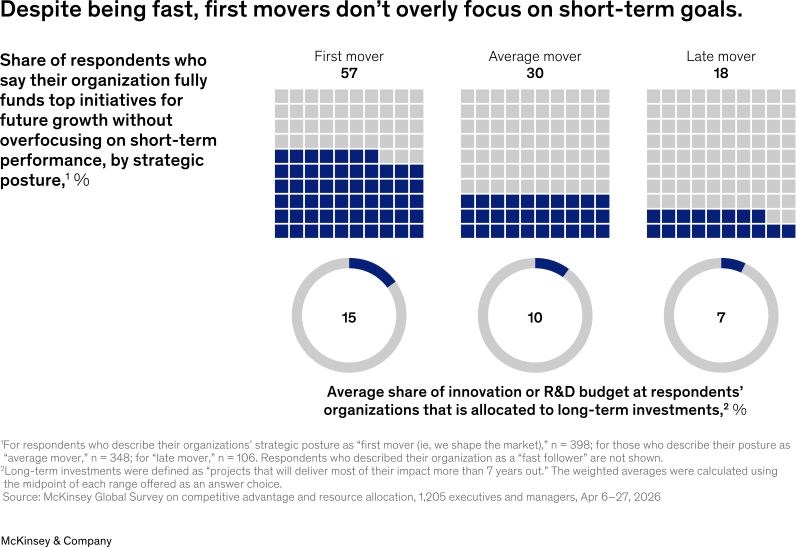
The idea of being nimble is often unfairly associated with prioritizing short-term gains over long-term value. First movers are not shortsighted. In fact, the survey results show they are about three times as likely as late movers are to avoid being overly focused on short-term goals, and they devote more than twice as much of their innovation or R&D spend as late movers do to longer-term investments (Exhibit 4).
They are also nearly four times as likely as the slowest movers are to take a through-cycle approach to growth, investing in growth initiatives even in times of economic uncertainty (Exhibit 5).
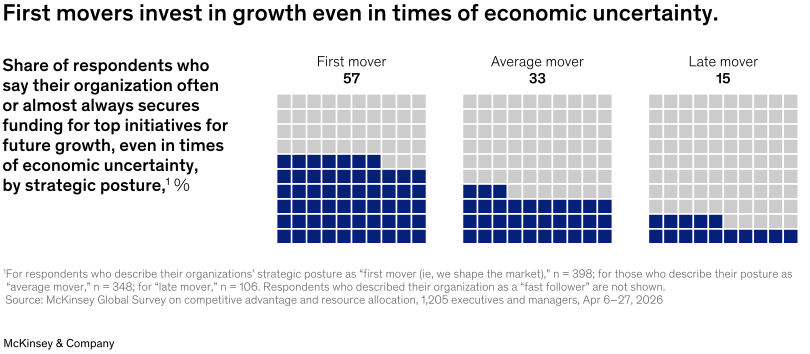
The importance of continuing to invest in growth during downturns or disruptions has been shown to be a key differentiator not just for long-term growth but also for survival. So how do first movers manage this, and what can companies learn from them about how to commit despite uncertainty?
How first movers get the organization to actually move
First movers can, of course, get things wrong. But waiting to invest in a sure bet can also be dangerous, particularly during times of disruption. Our research shows that first movers tend to take a few critical steps to derisk their bold moves.
They align on what matters
Resource allocation breaks down when business functions row in different directions. First movers create alignment not just on strategy but also on what trade-offs the organization is actually willing to make. If just one group fails to free up the right talent to work on an initiative, the entire effort can grind to a halt, and ROI may be negative.
First movers ensure that everyone is moving in the right direction by having a clear strategy that executives across the organization believe in and commit to, as well as a shared understanding of the specific factors that can win (and lose) the customers they have (Exhibit 6).
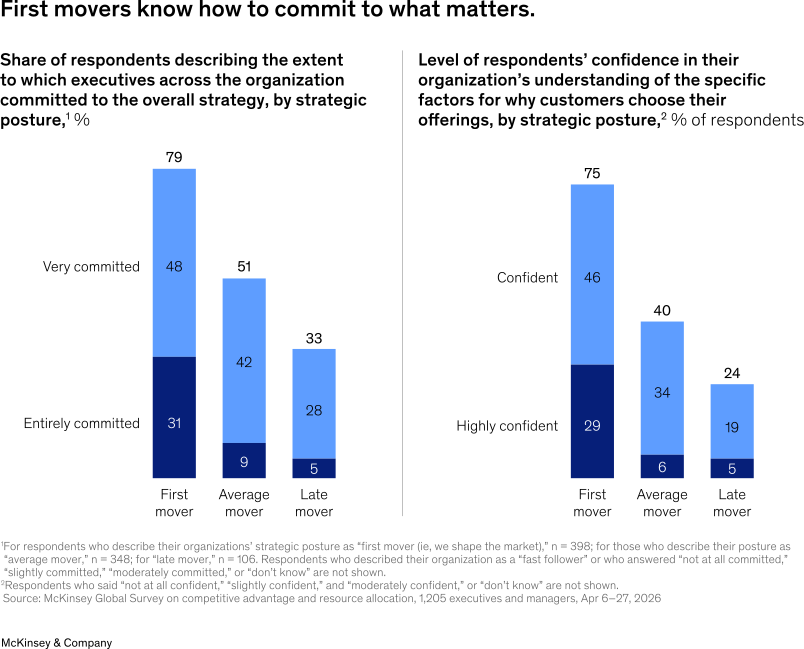
Without this alignment, it is harder to pull resources from existing initiatives or businesses that might be someone’s pet project or require more effort than maintaining the status quo. Inertia isn’t just a force in physics, and it requires something greater to set the organization in motion.
They make decisions based on performance, not politics or fear
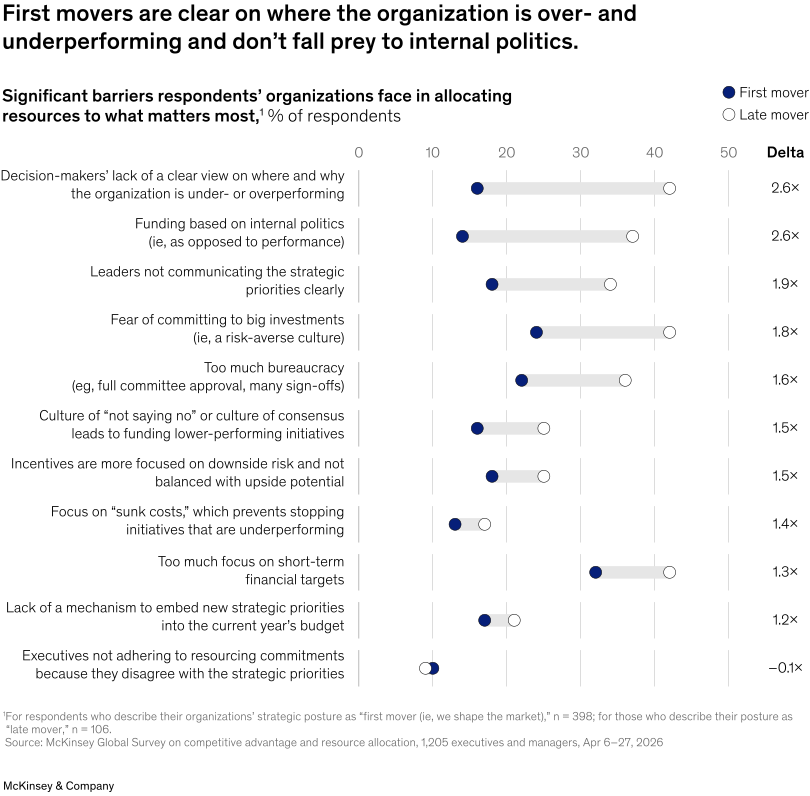
Most organizations do not suffer from a lack of ideas. They suffer from an inability to stop funding yesterday’s priorities. A desire to keep funding someone’s pet project is just one of the things that can get in the way of making good allocation decisions. When first movers decide what to fund and how to proceed, they are less likely than slower movers are to be hindered by common obstacles—such as a lack of transparency on where and why projects are under- or overperforming, projects falling prey to internal politics, and fear of making big bets (Exhibit 7). The survey findings show that leaders in first-mover companies tend to have better access than their slower-moving peers to up-to-date performance data to help inform resourcing decisions.
They can compare apples to oranges
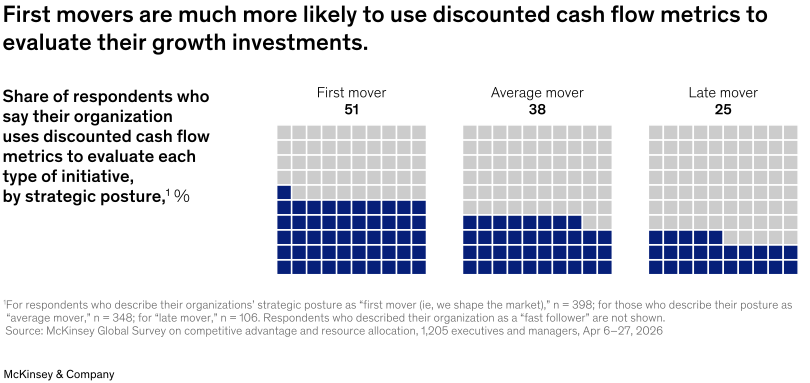
In past research, we found that organizations often struggle to compare initiatives across different time horizons or risk profiles when deciding how to allocate their innovation budgets. The latest data show that first movers take a more disciplined approach to evaluating investments. Respondents from first movers are significantly more likely to report using discounted cash flow metrics like present value over investment or internal rate of return to evaluate their growth initiatives (Exhibit 8).
They correct course more quickly
First movers also reallocate resources at a much faster rate—though speed naturally varies by industry. Respondents from first movers report more frequent adjustments than slower movers do (Exhibit 9).
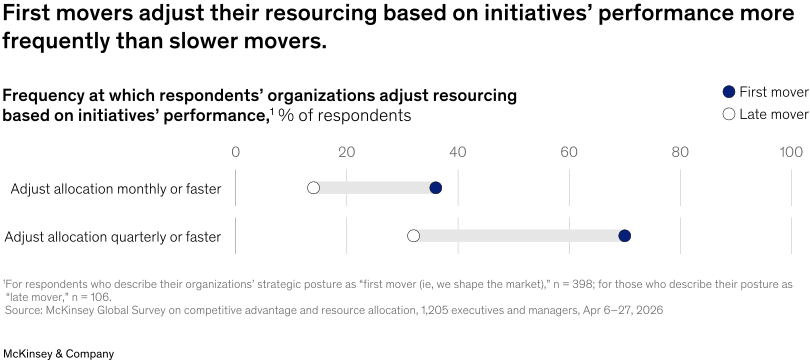
Different types of initiatives will have different timelines for revisiting their performance, of course. While some require a review and decision every month, others might have a six-month timeline—and sometimes the milestones must be unique to each project. In our experience, what’s important is that leaders set points at which they will revisit the project’s performance, keeping in mind both the specifics of that project and updated details about its performance.
Making material changes during times of uncertainty can feel like added risk. But making more frequent, smaller moves actually reduces it. We see this in the data: Nearly 40 percent of respondents expect their current business model to require significant change within the next three years just to remain economically viable. Among the slowest movers, that figure rises to nearly 60 percent. In times of disruption, moving slowly carries more risk than moving quickly because the world isn’t standing still around you. Geologists have long observed that a series of small earthquakes can be less destructive than pressure building until it is released all at once.
Organizations face a similar dynamic. Companies that regularly place small bets, learn quickly, and reallocate resources release strategic pressure continuously. Those that delay difficult decisions often find themselves forced into a much larger transformation later, when they have fewer options and less time to respond.
First movers are also first with AI
Naturally, companies with a first-mover strategic posture are the first to make changes, and they are unsurprisingly making headway with AI more quickly than their peers are. They are more than three times as likely as the slowest movers are to report using AI to assist with their resource allocation processes (Exhibit 10).2 They are also more than five times more likely to have AI tools monitor external trends and disruptions to factor into the allocation process.
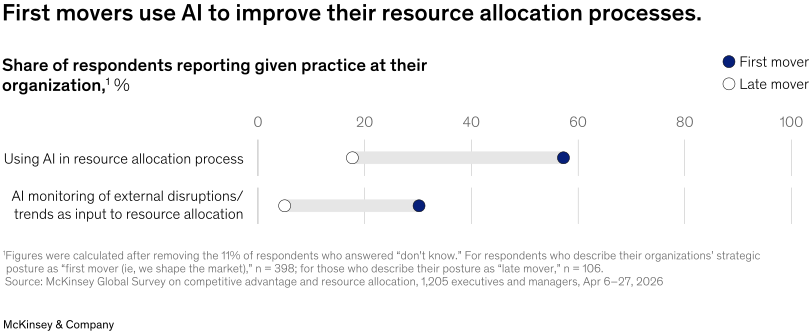
For example, AI can help organizations normalize fragmented operational data, compare dissimilar initiatives, identify emerging demand shifts, and draw attention to underperforming investments earlier than traditional planning processes would allow.
Use of AI does not eliminate the need for judgment, but it dramatically increases the speed at which organizations can detect where judgment should be applied.
The lesson from first movers is not that every company should try to be first; it is that companies must become better at moving. As AI accelerates the pace of change, competitive advantage will increasingly come from an organization’s ability to effectively reallocate resources, test assumptions, and adapt faster than its competitors. Five actions can help organizations move more quickly than their competitors when the path forward is uncertain:
- Align on what matters. Ensure leaders agree not only on the strategy but also on the trade-offs the organization is willing to make.
- Commit real resources. Ideas create no value until capital, talent, and management attention move behind them.
- Make decisions based on performance, not politics. Create transparency on where initiatives are winning and losing, and be willing to stop funding yesterday’s priorities.
- Place more small bets. Frequent, lower-risk reallocations reduce the need for large-scale transformations later.
- Learn and correct course quickly. The goal is not to be right the first time. It is to shorten the cycle between action, feedback, and adjustment.