As AI transformations accelerate, the gap between the skills that workforces possess and the skills they will need is widening faster than organizations’ ability to adapt.
The World Economic Forum (WEF) projects that while overall job numbers are expected to grow by 170 million globally by 2030, roughly 90 million workers will be displaced based on the difference between existing and emerging skills. To put that in perspective, WEF notes that if the world’s workforce were made up of 100 people, 59 would need to be retrained by 2030. 1
This rapidly shifting landscape requires organizations to change how they think about talent, learning, and career development, as well as how they match capability building to business strategy. While many employers acknowledge the upcoming challenge—63 percent identify skills gaps as the biggest barrier to business transformation between now and 2030—they still lack a clear plan for how to address the problem. In fact, OECD research shows that in five European countries, less than a quarter of companies regularly assess their skill needs.2
Europe is particularly vulnerable to a skills shortfall because of several factors, including its aging population and slower workforce renewal than North America and sub-Saharan Africa,3 and slower technology adoption compared with the United States and China, particularly regarding AI. This skills deficit will continue to create firm-level mismatches,4 threatening European competitiveness, growth, and labor market efficiency.
To better understand the state of skill building and talent deployment at European organizations, McKinsey surveyed roughly 8,000 employees and 1,000 employers in seven European countries and North America (see sidebar, “Our research”). The Next Era of Work Survey found that the skills organizations need are evolving quickly, driven by technological innovation, and that many organizations are not equipped to keep pace. In this article, we discuss core areas where organizations should focus and three actions leaders can take to craft a competitive skills strategy.
How employees and leaders view the skills transition
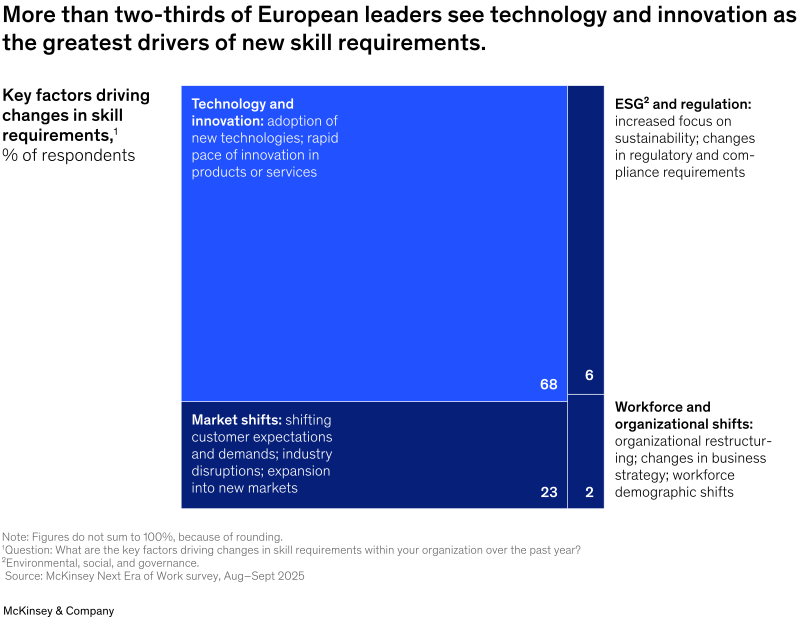
Employer expectations of skill disruptions remain high. Our survey shows that 68 percent of leaders identified the adoption of new technologies and the rapid pace of innovation in products or services as the top drivers of new skill needs over the past year (Exhibit 1).
The survey found that proficiency gaps are widening across skill categories. We asked respondents to assess their ability in the four skills they identify as most important to perform their role relative to top-performing peers in similar roles. Among critical reskilling priorities, technological capabilities such as advanced IT skills and programming, advanced data analysis, technology design and engineering, and scientific research and development showed the widest expected proficiency gap. In these four areas, between 11 and 16 percent of employees we surveyed cited a gap between themselves and top-performing peers (Exhibit 2).
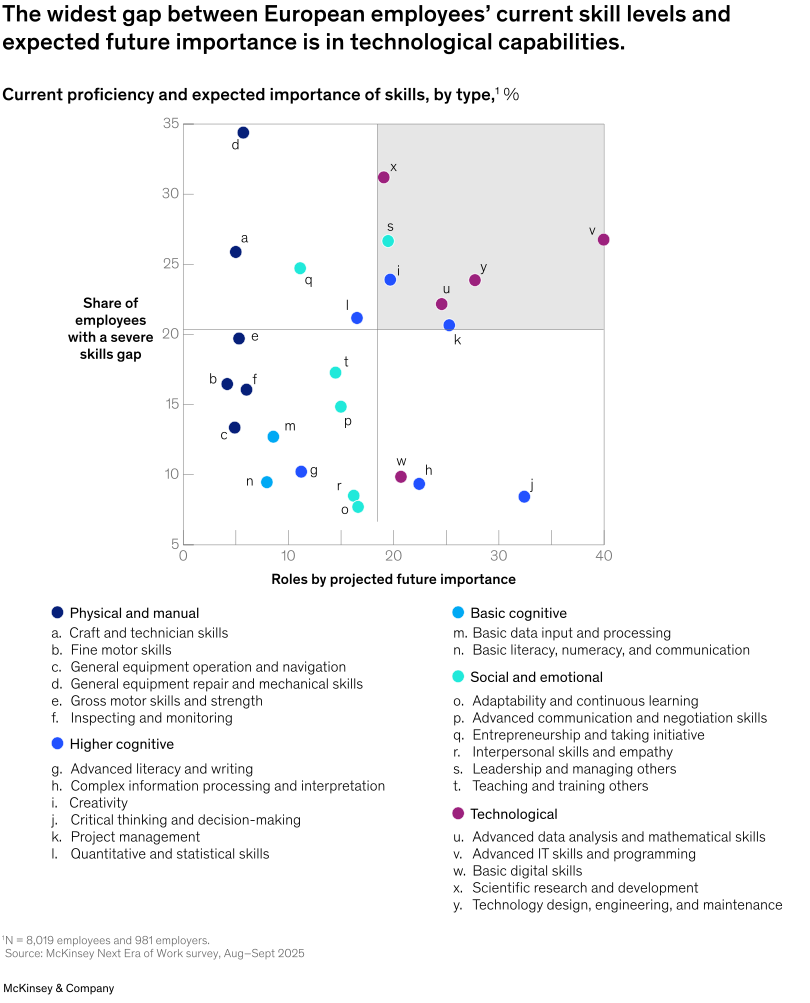
Socioemotional skills (such as leadership, entrepreneurship, and communication) and higher cognitive skills (including advanced literacy, critical thinking, and creativity) also show proficiency gaps. Without investment in these human-centric skills, organizations risk losing capabilities that will be essential for navigating an AI transformation. While the lowest reported proficiency is in physical and manual skills, leaders see these skills as having the lowest future priority, creating a transition risk. Organizations may face short-term productivity bottlenecks if investment in these skills declines ahead of automation’s ability to replace them at scale.
There is a perception gap within the skills gap
The survey also revealed a divergence between leaders’ and employees’ perceptions of future skills. While leaders emphasize the importance of technological skills, employees see socioemotional skills as more important, along with physical and manual skills (Exhibit 3).
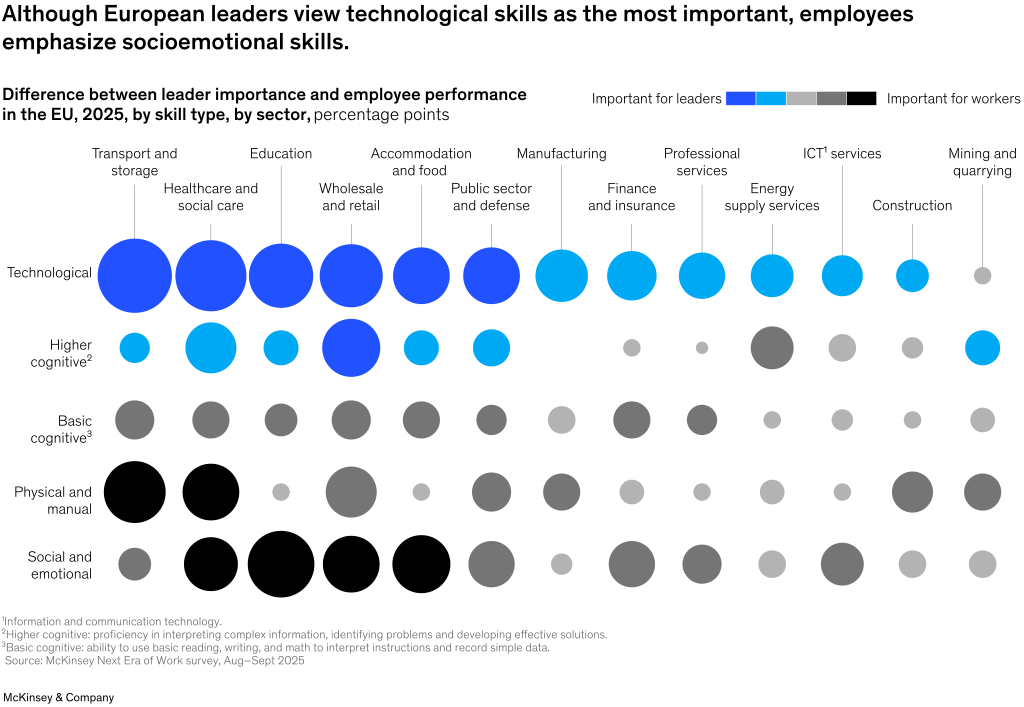
Across all sectors, leaders place more value on technological skills than employees do as they look toward the future. This is especially prevalent in nondigital sectors (for instance, in education and accommodations and food), where the integration of new technology in daily work may be slower than in other sectors. Employees are less likely to proactively build these capabilities without encouragement from leadership.
Employees appear to underestimate the rising importance of higher-order cognitive skills (creativity, critical thinking and decision-making, complex information processing), which will be essential as technology automates basic cognitive tasks (including literacy, numeracy, data input, and processing).
Leaders should be mindful of the value that employees place on socioemotional skills and how necessary they continue to be in day-to-day work. Employees continue to regard these human-centric skills as central for work, most significantly in people-focused sectors such as healthcare and education. Research shows that tasks requiring empathy, creativity, leadership, and curiosity face only a 13 percent likelihood of AI-driven transformation,5 suggesting that they are still important to practice, develop, and invest in to avoid erosion.
Respondents underestimate the speed of skills disruption
Compared with their North American counterparts, European leaders and employees are roughly ten percentage points less likely to expect that their current role will meaningfully change in the next one to two years, the survey showed. Of those in Europe who do expect their roles to change, only 11 percent believe the biggest driver of change will be skills, compared with 17 percent in North America. This was the biggest discrepancy in drivers of change between Europe and North America.
Other areas of change, such as who they work with, where they work, the tools used, and how they are managed, do not show as sharp a difference between the two continents. This suggests that European employees underestimate the changes to come from skills compared with the other factors we measured.
While many organizations are turning to strategic workforce planning (aligning future talent needs with their business strategy), such planning remains largely short term, leaving organizations reactive rather than proactively building the skills they need. McKinsey’s 2025 HR Monitor Survey found that while 73 percent of HR leaders claim to plan strategically, relatively few are taking a long-term approach. For example, the survey found that only 12 percent of European organizations are looking ahead three years or beyond.
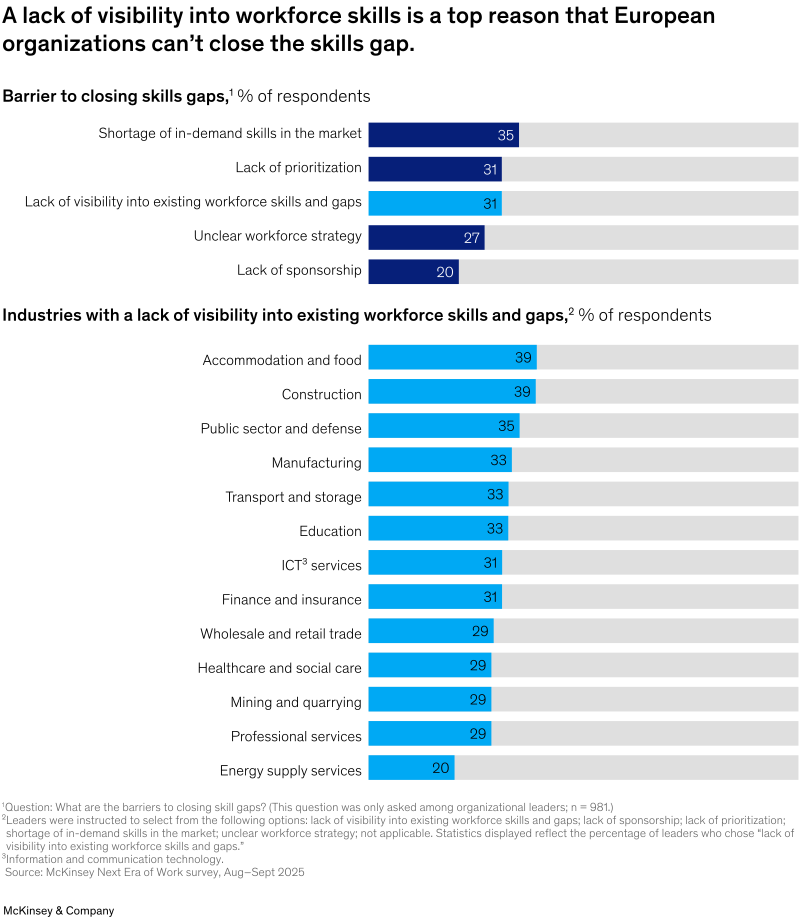
A shortage of in-demand skills and a lack of prioritization also hinder organizations from better planning. The survey found that 31 percent of European leaders cite limited visibility into current skills as an issue, with the largest gaps in sectors such as accommodation and food, construction, and public sector and defense (Exhibit 4).
Furthermore, skills taxonomies are not being used consistently across Europe to provide an enterprise-wide view of the skills needed now and in the future. For example, the HR Monitor Survey found that while 90 percent of UK-based HR respondents state that their company uses a comprehensive skills taxonomy, that number falls to 69 percent in Germany and 61 percent in France. Fragmented skill assessment tools make it difficult to diagnose needs and target interventions at the enterprise level.
Capability building should get more attention
Our survey found that 17 percent of European organizations are investing in AI tools but not in the capability building required to use them effectively. To fix that misalignment, organizations can develop a holistic plan that creates the right behaviors for new or changing roles. This approach includes creating a culture of continuous learning and embedding new skills within processes and systems.
However, across Europe, capability building is not happening at scale, as limited human and financial resources hinder most stakeholders. A 2024 European Commission report on workforce skills6 found that capability building was less of a priority for organizations than immediate operational pressures.
In McKinsey’s 2023 State of Organizations survey, which included data from four major European economies, 90 percent of leaders expressed the belief that capability building is urgent, but only 5 percent felt that their organization’s internal capabilities were adequate. Nearly half of leaders pointed to lack of time as the biggest challenge to in-house capability development, citing lack of resources and support from senior leadership as other major causes.
Efforts to establish capability development at scale are often limited by the lack of an ecosystem-style approach that links training to business outcomes. Challenges include programs that don’t address specific institutional or individual skill gaps effectively and that aren’t integrated into employees’ on-the-job experiences. Our survey showed that only 49 percent of European employees believe that their company is investing in developing their skills for the next role, compared with 62 percent of employees in North America.
Furthermore, learning infrastructure has not kept pace with these demands, making it difficult to scale. With advances in AI and other technologies, there are opportunities to deliver individualized, role-relevant learning pathways and experiences to employees, and embed continuous development into everyday work.
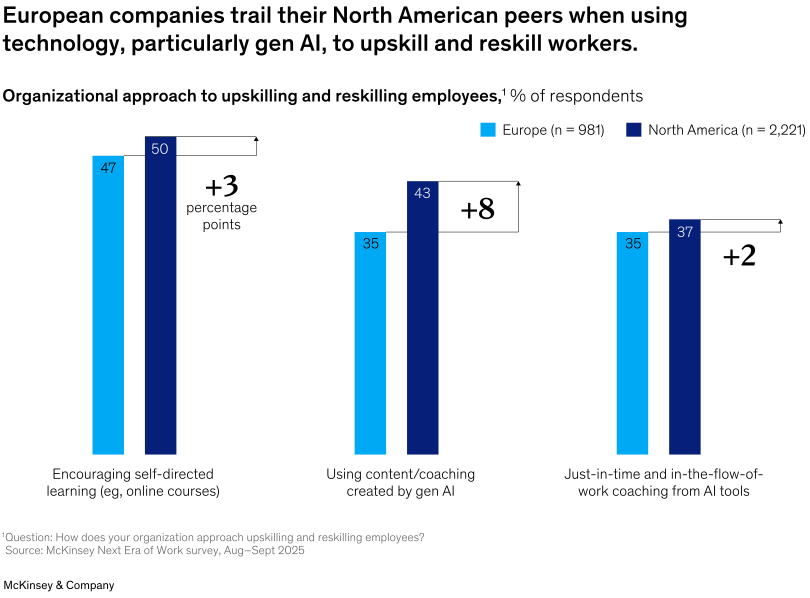
However, European organizations are not fully leveraging modern learning technology to deliver personalized learning at scale, limiting effectiveness. Indeed, Europe trails North America in the adoption of gen AI content and coaching, with 35 percent of European organizations adopting these tools compared with 43 percent in North America (Exhibit 5).
Demonstrating a clear return on investment in skilling initiatives has become more critical than ever, particularly as budget limitations remain the most significant barrier to upskilling and reskilling efforts. Our survey showed that 39 percent of leaders cite budgets as the biggest constraints to implementing upskilling and reskilling programs.
At the same time, 34 percent of leaders reported having difficulty measuring and communicating the impact of their skilling programs, making it more difficult to attract the necessary investment for sustained capability-building initiatives and the technologies needed to support them.
Three actions to better manage skills and talent deployment
To be more competitive in the skills race, leaders at European organizations can move beyond short-term fixes and take a more strategic, system-level approach to skills and capability building. This means planning over a multiyear time frame, focusing on holistic capability building, and creating clear metrics for skill progression and impact.
Extend the horizon for skills planning
Leaders can develop a clearer view of the skills required to drive their strategy both now and in the future. This process starts with re-anchoring the organization on a set of data-driven skill priorities that align leaders and employees. Without this foundation, efforts to close the skills gap are likely to remain fragmented and reactive.
Adopting a consistent skills taxonomy across the organization and integrating it with assessment tools can help organizations gain visibility into existing skills, identify gaps, and track how demand is evolving.
This approach can be further integrated with AI-enabled tools to anticipate how technology, automation, and business strategy will reshape skill needs over different time horizons, as well as to explore different future scenarios. AI can also be used to create a baseline of existing skills within the organization. For example, machine learning and data integration can identify employee skills and skill gaps, then algorithmically match employees to roles, projects, or learning paths.
A strategic workforce planning exercise can create a comprehensive outlook on skills that emphasizes transparency across roles, functions, and geographies, and enables more informed decisions about talent, development, and deployment.
For instance, leaders at a European utility realized that there was no link between the company’s talent strategy and its strategic priorities. It didn’t have clarity on critical roles and skills, nor did it know what the potential impact of automation would be on its workforce. It created a model to forecast future role supply based on hiring, attrition, and other factors, and to forecast future role demand based on business-as-usual growth, strategic changes, and productivity effects. This unified taxonomy gave it a qualitative view of current and future skill needs.
Create a holistic approach to capability building
After identifying skill needs, organizations can systematically build the capabilities required to address them and any emerging skills. This requires a shift from short-term firefighting toward planning on a three-year or longer horizon.
Additionally, cultural and infrastructure changes, such as prioritizing internal mobility, will be needed in the way organizations approach learning and development. McKinsey analysis shows that internal mobility through reskilling is faster and less expensive than external recruitment, but only 28 percent of global companies believe their internal mobility programs are effective at achieving their strategic aims.
To embed learning and skill development, leaders can invest in development pathways that combine learning, experience, and role-based application, whether in employees’ current roles or emerging roles elsewhere in the organization.
After it identified skill mismatches in over 30 percent of its workforce, a European technology company’s services and support business unit created a global reskilling plan. Over two years, the company filled 80 percent of the gap by having 6,000 employees transition into new roles and having another 20,000 workers build additional skills in their current roles.
For a more strategic approach, organizations will need to modernize their learning infrastructure, including using AI-enabled platforms. These platforms can help deliver personalized learning journeys tailored to individual roles and skill gaps, embedding development into daily work rather than relying on one-off training programs.
A European telecommunications company put customized reskilling into practice by deploying AI-powered training and coaching tools that assessed employees’ skills and recommended personalized development pathways. The system helped employees upskill on new digital tools faster and gave leaders a dynamic view of workforce capabilities, enabling smarter deployment of talent.
Align the organization around skills, and keep investing
Organizations can create clear metrics for skill progression and monitor evidence of impact, with higher productivity and better financial performance as the goals. Lost productivity is expensive, so avoiding costs through reduced external hiring or faster time to proficiency can be quantified and included in investment calculations.
For example, a European media company was able to achieve $18 million in savings through a reskilling program for full-time employees, and its growth targets rose 33 percent over five years by closing critical talent gaps.
Finally, just as important as quantifying the value of an effective skills strategy is communicating its value to the organization. Leaders can explain and demonstrate the potential of future-ready skills and capability building to all employees. When that happens, the whole organization is better positioned to embrace new skills and maintain that momentum in the years to come.
To be more competitive in the skills race, leaders at European organizations can move beyond short-term fixes and take a more strategic, system-level approach to skills and capability building. This means planning over a multiyear time frame, identifying data-driven skill priorities, and creating clear metrics that show impact. Those that wait risk being left behind amid fast-paced market and technological change.