At a glance
- B2B sales and marketing have reached a decisive moment. Insights from McKinsey’s 2026 Global B2B Pulse Survey—drawing on responses from nearly 4,000 decision-makers across 13 countries—show that the baseline for competing in B2B markets has shifted.
- Omnichannel is no longer a differentiator—it is assumed. Buyers now use an average of ten channels across the purchasing journey and expect seamless movement among them; inconsistent information and lack of knowledgeable support are now leading drivers of supplier switching.
- E-commerce powers the commercial core. Seventy-one percent of B2B companies now offer e-commerce; among those, roughly one-third of revenue now flows through digital channels, making it the most important sales channel for many companies.
- A widening performance gap is emerging—driven by three reinforcing engines. Market leaders are four times more likely to deploy true one-to-one personalization. They are also significantly further ahead in deploying AI into commercial workflows and in using sales-led, account-based marketing governance.
- Together, hyperpersonalization, scaled AI, and disciplined commercial governance form a new self-reinforcing operating system for sales—one that enables market leaders to compound advantage while others struggle to keep pace.
Introduction: The new B2B growth reckoning
The ground is shifting under B2B sales and marketing. What once separated market leaders from the rest of the field—digital tools, omnichannel engagement, and e-commerce capabilities—has become the threshold for survival. Those who seek to thrive in this new environment must adapt to deliver an entirely different level of execution—one that consistently delights customers through deep personalization driven by AI systems that know the customer at every step of the journey and disciplined sales management of account-based marketing (ABM) to drive sustained growth.
This is not the first time B2B organizations have faced a decisive shift in buyer expectations. More than a decade ago, McKinsey research highlighted a major change in how business customers behave: B2B buyers were beginning to act more like consumers, expecting greater transparency, faster responses, and the ability to research and compare suppliers. A second inflection point came during the COVID-19 pandemic, when travel restrictions and remote work forced organizations to adopt new digital and self-service channels at unprecedented speed. Each of these moments reshaped the B2B landscape.
Today, a similar moment is unfolding—one that cannot be explained by industry or geography but instead is defined by a set of new behaviors that are required if sales organizations are to grow. We’ve dubbed this moment “the great expectations of B2B buyers.” It is an age in which customers are more demanding than ever—and increasingly willing to switch suppliers if their expectations are not met. In this moment, advantage accrues only to sellers capable of delivering outstanding e-commerce capabilities and orchestrating the customer experience across all channels—serving and delighting customers wherever they happen to be.
These findings emerge clearly from McKinsey’s 2026 Global B2B Pulse report, which gathers insights from nearly 4,000 B2B decision-makers across 13 countries and multiple industries. A decade into tracking buyer behavior and commercial response, this year’s data signals a decisive inflection point. Omnichannel presence and e-commerce enablement—once sources of differentiation—have become minimum requirements. Nearly every buyer now engages across in-person, remote, and digital channels, using an average of ten touchpoints along the purchasing journey. Today’s buyers expect seamless transitions, consistent information, and immediate access to expertise. When those expectations are not met, our research shows, they move on.
At the same time, a measurable performance divide is widening. Sixty percent of market leaders (those whose market share has grown by more than 10 percent compared with last year) report double-digit revenue growth, compared with just 21 percent of laggards (whose market share has declined by more than 5 percent over the same period). Ninety percent of leaders report improved sales effectiveness, versus barely half of their peers.
The organizations pulling ahead are those that have moved beyond simply tinkering with their sales models. Instead, they are redesigning their commercial systems around three reinforcing engines of growth: hyperpersonalization that delivers highly customized experiences to each customer, scaled deployment of gen AI tools, and disciplined account-based governance of sales activities. Together, these capabilities provide a flywheel effect that can enable companies not just to meet rising customer expectations but also to turn them into a lasting advantage that builds and accelerates.
In this report, we dig into our survey insights, examining the characteristics that increasingly define the survival threshold in B2B sales and exploring the three engines that are widening the performance gap between leaders and laggards. We look at the three different archetypes of B2B buyers, offering strategic advice on how best to meet them where they are. This is no longer a moment for pilot programs or incremental improvement. For B2B organizations, the commercial baseline has shifted—and the path to sustained growth now runs through a fundamentally redesigned operating system capable of propelling sales growth in the years to come.
The three buyer personas shaping today’s B2B market
To navigate this new competitive moment, it helps to begin with a clear understanding of who—and where—your customers are. In last year’s report, we identified three distinct buyer archetypes based on how they prefer to research, evaluate, and purchase from suppliers. This year’s survey confirms that despite rapid technological change, B2B buyers continue to cluster into these three recurring archetypes, which appear across industries and geographies. Most organizations serve a mix of all three, which means commercial strategies must be flexible enough to meet different expectations within the same market (Exhibit 1).
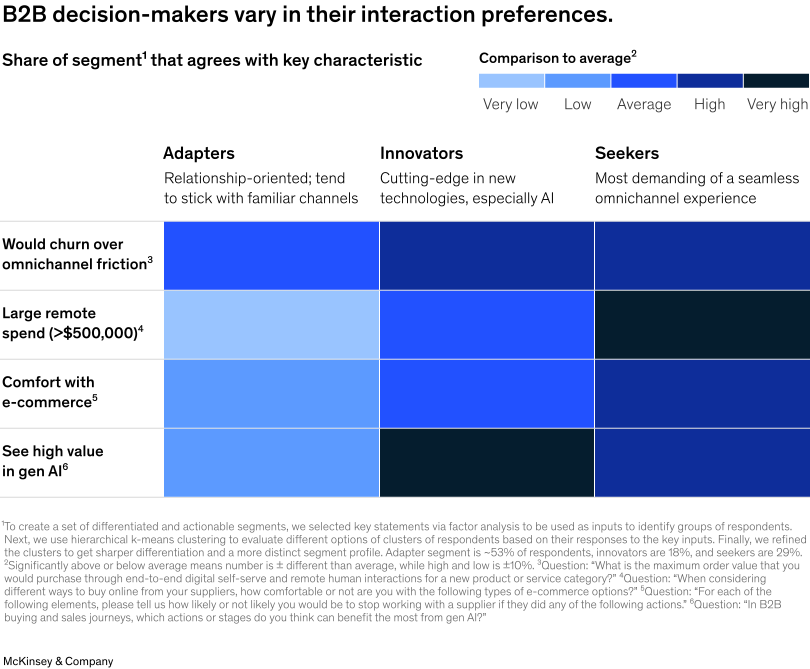
Below, we describe the three buyer personas—and the implications of their characteristics and habits for sellers:
-
Adapters (53 percent of respondents). Adapters are relationship-oriented buyers who value trust, familiarity, and proven ways of working. They increasingly engage across digital and remote channels but often default to known suppliers and established processes—even when the experience is less than optimal. The share of adapters has increased notably since our last survey (from 44 percent in 2024), suggesting that the rapid pace of technological change may be reinforcing the importance of trusted relationships for many buyers.
Implication for sellers: Even as digital channels expand, strong account management and trusted expertise remain essential for retaining and expanding the largest share of B2B customers.
-
Seekers (29 percent). Seekers prioritize seamless omnichannel experiences and expect interactions across digital, remote, and in-person channels to be tightly integrated. They are comfortable making significant purchases online and place high value on tailored recommendations and frictionless buying journeys. When these expectations are not met, seekers are among the most likely to switch suppliers.
Implication for sellers: Delivering a fully integrated omnichannel experience is increasingly critical to winning and retaining these customers; e-commerce, in particular, is not an option but a requirement.
-
Innovators (18 percent). Innovators actively experiment with new tools and technologies and tend to be early adopters of emerging capabilities, including gen AI. They expect suppliers to match their digital sophistication and place a premium on speed, transparency, and advanced self-service capabilities. Innovators often help define the leading edge of B2B buying behavior.
Implication for sellers: To reach these buyers, leading organizations must demonstrate digital and analytical sophistication to remain credible partners.
Despite these differences, one pattern holds across all three archetypes: Buyers increasingly expect to interact with suppliers across multiple channels and to move among them without friction. Across segments, respondents follow the “rule of thirds”—a pattern we first identified six years ago—dividing their interactions roughly evenly among in-person, remote, and digital channels (Exhibit 2). They also report using an average of ten channels throughout the buying journey.
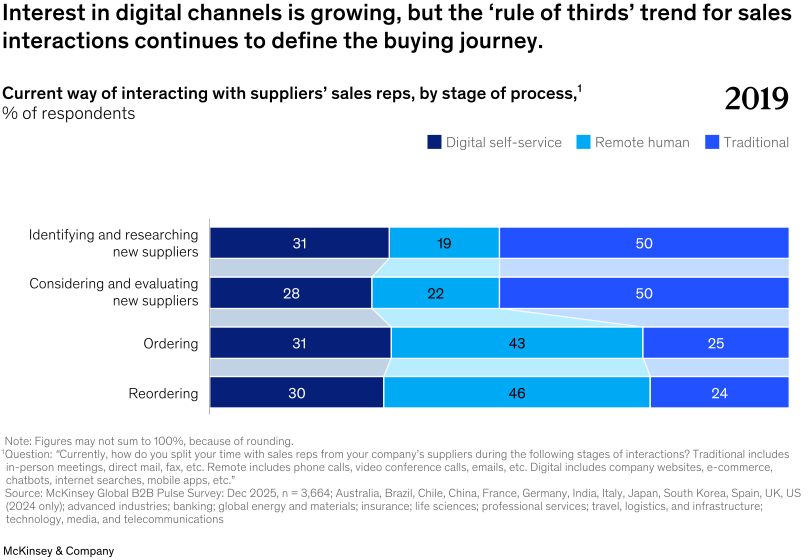
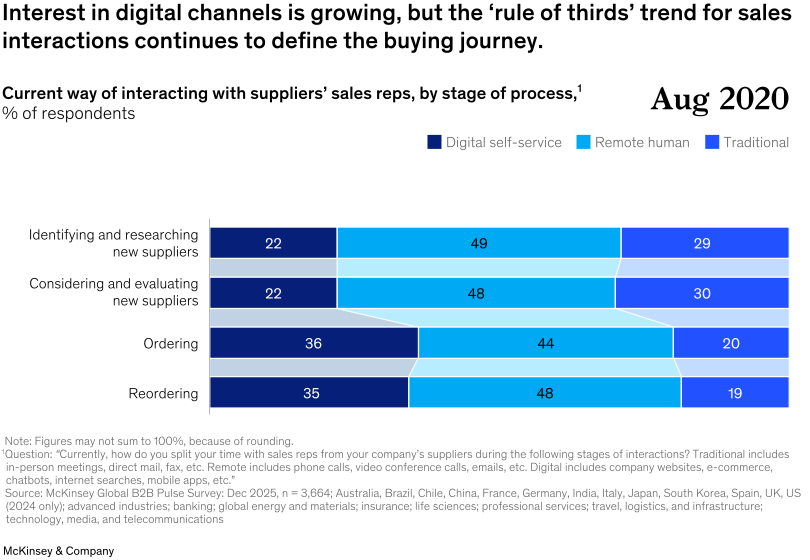
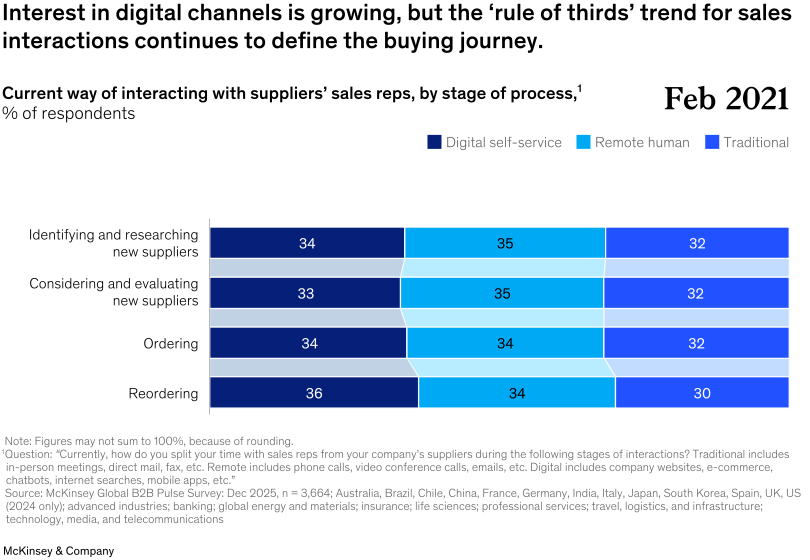
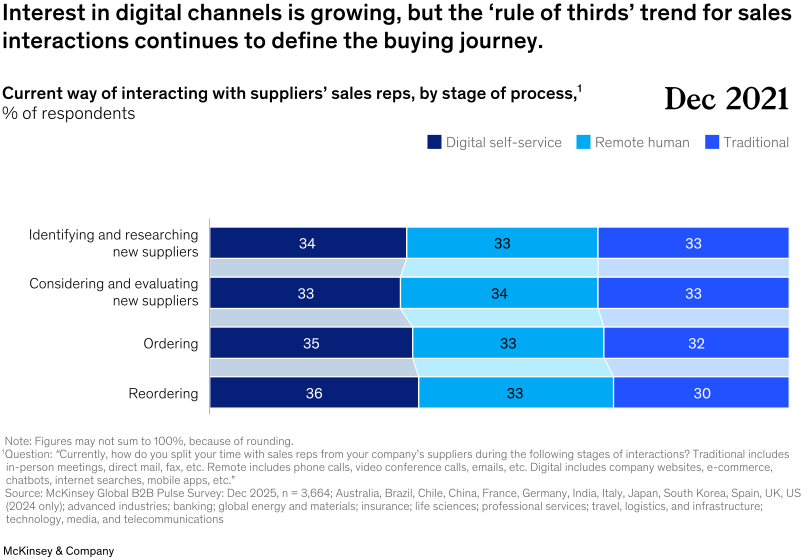
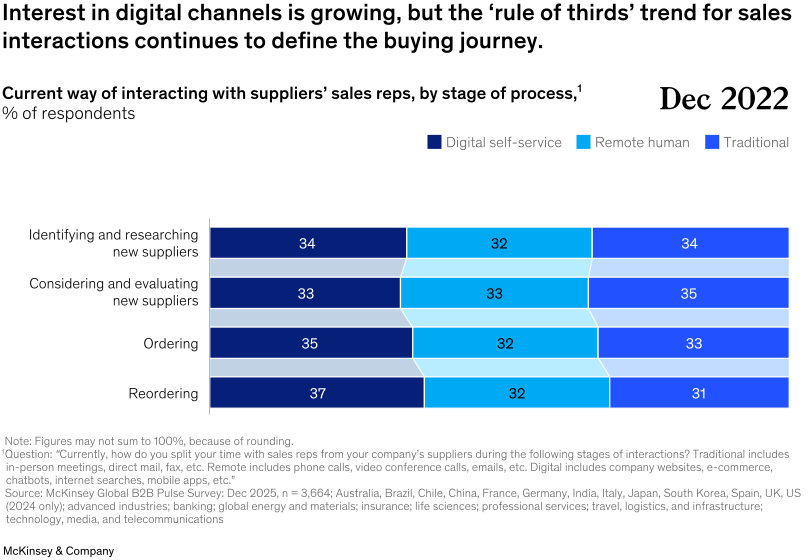
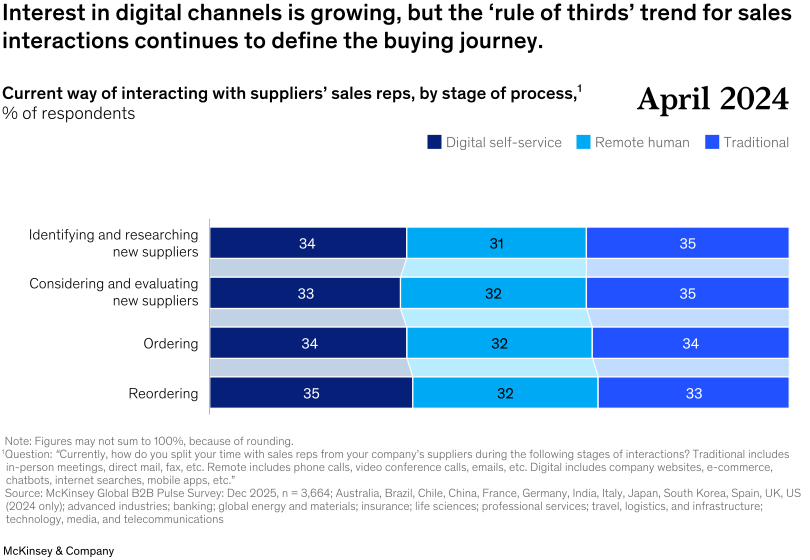
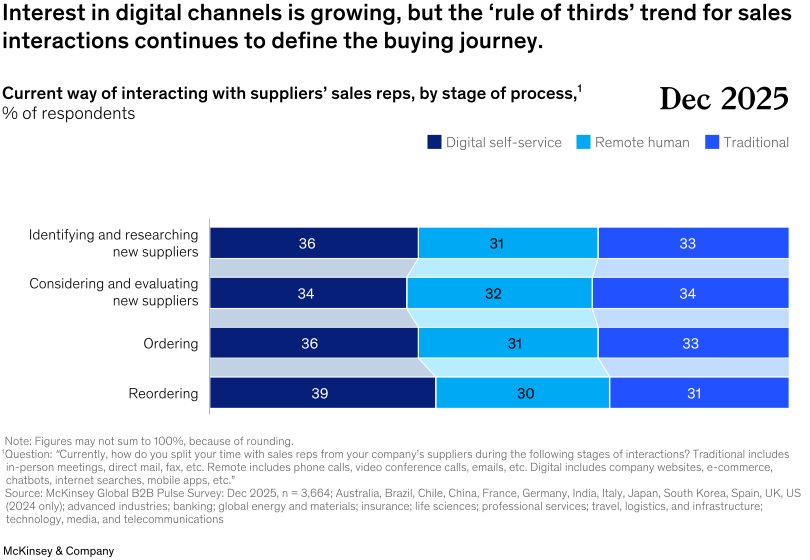
Pro tip: While the rule-of-thirds trend has proven remarkably stable over time, interest in digital self-service is edging upward, while interest in remote human interactions continues to decrease. With AI becoming increasingly important to automating follow-ups and non-order-related interactions, we expect digital channels to grow in importance.
The implication for B2B organizations is clear: Sales strategies can no longer be designed around a single-buyer archetype. Companies must simultaneously support relationship-driven interactions, digital engagement, and seamless omnichannel orchestration. As noted above, meeting these kinds of expectations is no longer a differentiating factor—it is the new baseline for competing in B2B markets. Organizations that cannot meet them risk losing relevance with all three buyer groups. Those that can have cleared what is now the survival threshold for B2B sales and marketing.
The new survival threshold: What it takes to compete
The 2026 B2B Pulse Survey makes one point unmistakably clear: What once looked like digital leadership is now simply selling leadership. To compete effectively today, B2B organizations must engage customers seamlessly across in-person, remote, and digital channels—and treat e-commerce and omnichannel execution as core elements of the commercial engine. In other words, customer-centric commercial capabilities that for more than a decade differentiated leaders—namely, e-commerce and omnichannel—have morphed into what we term “the survival threshold.”
Moreover, the rapid rise of gen AI into the top five channels for supplier discovery and evaluation (the others being supplier websites, in-person interaction, web search, and videoconferencing) underscores how quickly digital behaviors are evolving. Advanced tools are influencing supplier consideration earlier and raising expectations for speed, transparency, and expertise before a sales conversation even begins. Fragmentation—misaligned pricing, conflicting messages, incomplete customer histories—is increasingly visible to customers and increasingly costly to sellers. As new tools raise the bar earlier in the journey, companies that have underinvested in their go-to-market capabilities are increasingly exposed—disappointing customers on the very dimensions they continue to say matter most.
At the same time, e-commerce has moved to the center of the revenue engine. Seventy-one percent of respondents report that their organizations offer e-commerce, and among those that do, roughly one-third of total revenue now flows through digital channels, making it the top revenue-generating channel. Buyers continue to demonstrate meaningful comfort with large digital transactions, even as year-over-year fluctuations reflect broader economic caution.
That caution is evident in our survey results. Overall, respondents reported a five-percentage-point decline in willingness to spend $500,000 or more on new products online compared with 2024. Broken out by the buyer personas described above, our survey found that 61 percent of seekers, 29 percent of innovators, and 18 percent of adapters were willing to spend $500,000 or more online (down 8 percent, 8 percent, and 1 percent, respectively, compared with last year). That said, e-commerce remains indispensable: Even amid this caution, buyers remain more comfortable with digital purchases than they were in previous years (2022 and earlier). In the 2022 survey, for example, 59 percent of respondents were comfortable placing orders of more than $50,000 online. This year, that number has jumped to 73 percent.
It’s also important to understand that digital commerce is about much more than simply enabling online orders. Instead, it encompasses a fully optimized purchasing experience—one that integrates data, enables transparency, and streamlines ordering. Organizations that fail to provide such capabilities continue to find themselves at a structural disadvantage.
In last year’s survey, for example, buyers cited poor-quality digital experiences and gaps in cross-channel tracking as the top two reasons they switched suppliers, followed by difficulty accessing knowledgeable representatives. This year, the focus has moved upstream, with buyers citing inconsistent information across teams as the top reason for switching, followed by the inability to access knowledgeable representatives (cross-channel tracking gaps were still present at number three) (Exhibit 3). The implication is clear: Buyers are now judging suppliers based on their ability to operate as one integrated commercial system, orchestrating and engaging customers across all channels.
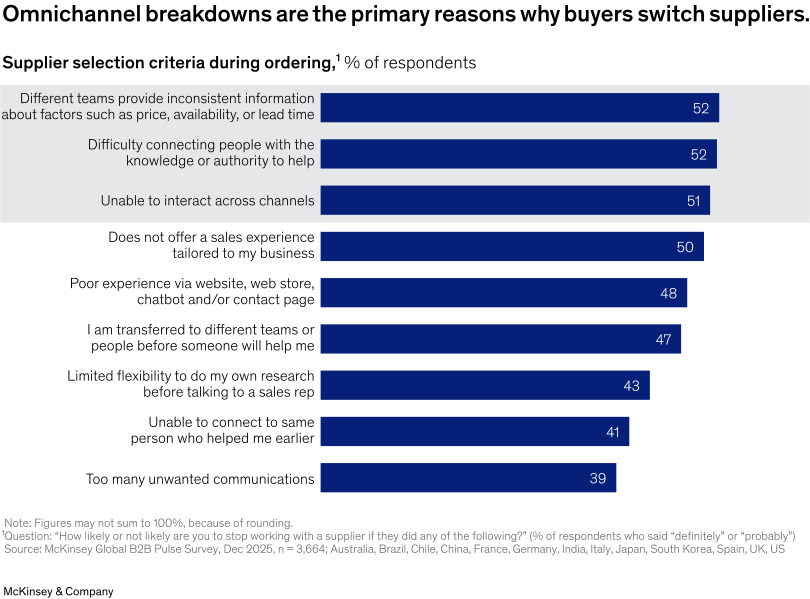
Taken together, these findings define today’s survival threshold. To compete effectively, B2B organizations must deliver seamless omnichannel experiences, ensure consistency and expertise across touchpoints, and embed e-commerce into the commercial core. Falling short does not merely limit upside; it invites churn.
But clearing this threshold does not guarantee growth. As the survey data show, the real separation between leaders and laggards is emerging above this baseline—in how organizations scale personalization, deploy AI, and enforce commercial accountability. In the sections that follow, we examine these three reinforcing engines of growth in detail and explore how, when integrated, they compound advantage for market leaders.
Pro tip: When the number of transactions is high, buyers are more likely to prefer digital self-service platforms; when large orders are less frequent, even in the case of reorders, buyers tend to heavily prefer human interactions—underscoring the idea that “business moves at the speed of trust.”
The widening performance divide
If the survival threshold defines what it takes to remain competitive, our 2026 survey also reveals something more consequential: a clear and widening gap between organizations that have merely met the baseline and those that are translating those baseline capabilities into sustained growth.
The divergence is significant. Sixty percent of self-identified market leaders report double-digit revenue growth in 2025, compared with just 21 percent of laggards. Ninety percent of leaders report improved sales effectiveness, versus 55 percent of their lower-performing peers. These differences persist across industries and geographies, suggesting that performance is not driven primarily by market conditions, but by structural choices in commercial strategy and execution.
As we explained earlier, omnichannel engagement and e-commerce adoption are now widespread. Many laggards have access to the same channels and technologies as leaders. What separates the two is how coherently those capabilities are operationalized.
Three reinforcing capabilities emerge from our survey data as the primary engines that separate leaders from laggards:
- Leaders are four times more likely than their peers to deploy one-to-one personalization (20 percent versus 5 percent).
- They are twice as likely to report adopting gen AI (44 percent versus 22 percent) and significantly more likely to have increased AI investment by double digits year over year (71 percent versus 25 percent).
- They are more likely to achieve top revenue bands by implementing sales-led ownership across ABM activities (43 percent versus 31 percent).
Independently, each of these is a potentially powerful sales lever. But when integrated, they form a self-reinforcing system: AI enables more precise personalization, personalization increases engagement and conversion, clear sales governance ensures accountability and speed, and measurable impact justifies reinvestment. The result: a new B2B operating system that compounds advantage and drives sustained growth.
Below, we look at each of these three growth engines, exploring how leaders behave to differentiate themselves from their peers.
Engine one: Hyperpersonalization as a performance multiplier
Personalization is no longer novel in B2B. Our survey finds that more than 90 percent of organizations report personalizing content across email, websites, social media, e-commerce platforms, and other touchpoints (Exhibit 4). In other words, baseline personalization has become standard practice. The performance gap emerges in the degree and precision of that personalization.
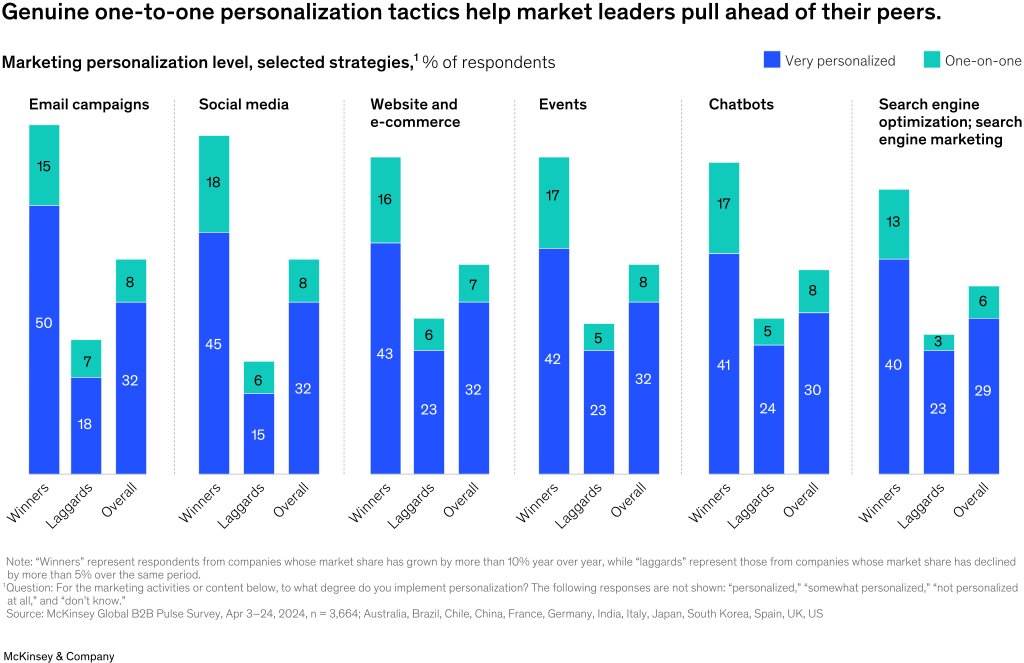
Market leaders distinguish themselves not through classic needs-based segmentation, but through individualized engagement that reflects account context, buying history, behavioral signals, and next-best-action insights. The largest differences appear in high-impact commercial moments—social media engagement, chatbot interactions, and events—where tailored messaging can materially influence consideration and conversion.
Pro tip: Personalization leaders are amplifying their advantages through higher rates of gen AI implementation, prioritization of revenue intelligence use cases, and continued growth in e-commerce.
This distinction matters because personalization at scale requires more than creative messaging. It demands integrated data, advanced analytics, and operational coordination across marketing, sales, and digital teams. Leaders treat personalization not as a campaign tactic but as a system capability—embedded into the commercial workflow, with a high degree of data democratization.
Here is what leading organizations do differently:
- Build a unified, dynamic customer data foundation. Leading organizations integrate customer relationship management, behavioral, and transactional data into continuously updated profiles.
- Embed next-best-action insights directly into frontline tools. They ensure recommendations surface within sales and marketing workflows.
- Tie personalization to revenue outcomes. Leading organizations track impact on conversion velocity, deal size, and retention.
- Establish governance guardrails. They clarify data ownership and accountability to scale personalization consistently.
The key challenge is to embed hyperpersonalization directly into the customer experience, including dynamic landing pages, persona-driven product sequencing, contextual nudges, abandoned-journey recovery, and tailored promotional banners that adapt in real time to customer behavior. Leaders should treat every touchpoint as programmable, integrating analytics and AI to ensure that messaging content, cadence, urgency, and context are personalized.
B2B decision-makers must also understand that each of the three buyer personas requires its own personalized approach. Reaching relationship-centered adapters, for example, means arming sales teams with integrated account insights and next-best actions that deepen loyalty and reinforce consistency. Innovators, who value speed and digital sophistication, should be met with AI-enabled one-to-one personalization that visibly demonstrates advanced capability across channels. And seekers, who prioritize seamless omnichannel experiences and switch quickly when friction arises, require personalization that is consistent across the end-to-end buying and selling processes.
Personalization at this level cannot scale without automation and advanced analytics. That brings us to the second engine of separation emerging from the survey data: the rapid maturation and operational embedding of gen AI.
Engine two: AI as the amplification engine
If hyperpersonalization defines the precision layer of competitive advantage, gen AI is emerging as its amplifier.
Our survey shows that gen AI has moved decisively beyond experimentation, and the same is increasingly true for agentic AI. Enthusiasm remains high—approximately three-quarters of respondents rate their excitement about using AI in B2B buying and selling between eight and ten, consistent with 2024 levels. More important, implementation is accelerating. Twenty-two percent of organizations report that they have fully implemented gen AI capabilities, up from 19 percent last year, and an additional 31 percent are actively adopting the technology. Only a small minority report no plans to pursue gen AI (Exhibit 5).
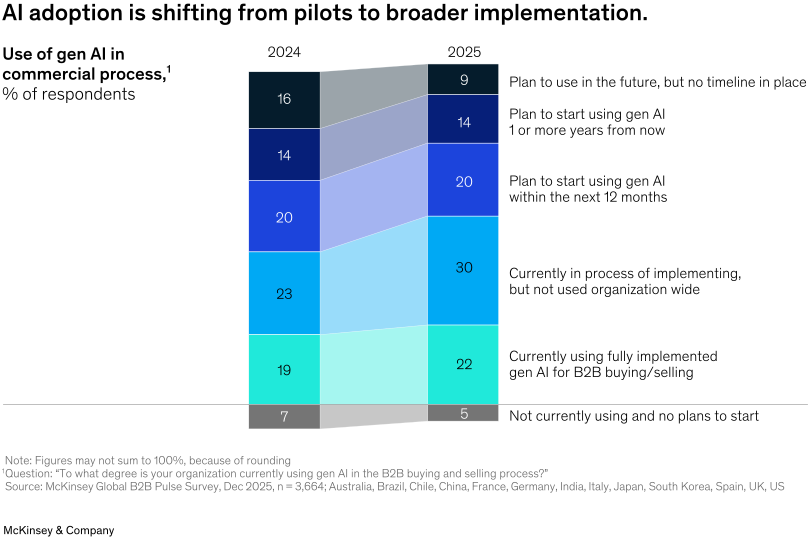
But as with personalization, the performance divide lies not in interest but in operational depth.
Market leaders are embedding AI directly into core workflows and cite gen AI’s primary benefits as efficiency (59 percent), customer experience (53 percent), and innovation (48 percent). They are also working to embed AI directly into core workflows, rather than confining it to isolated pilots, and are more likely to increase AI budgets year over year, reinforcing a long-term commitment to scale.
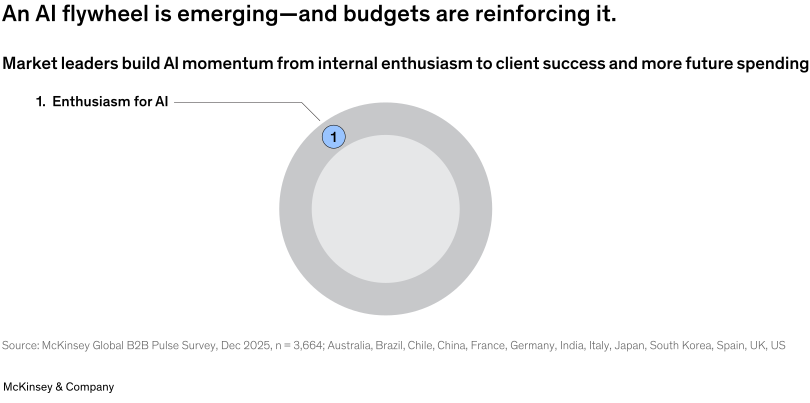
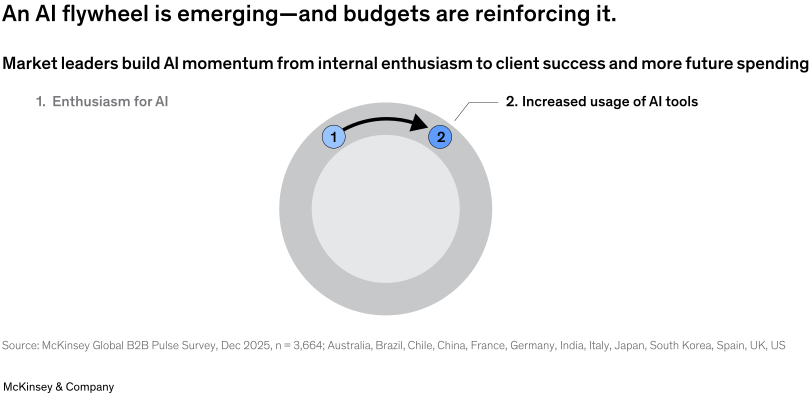
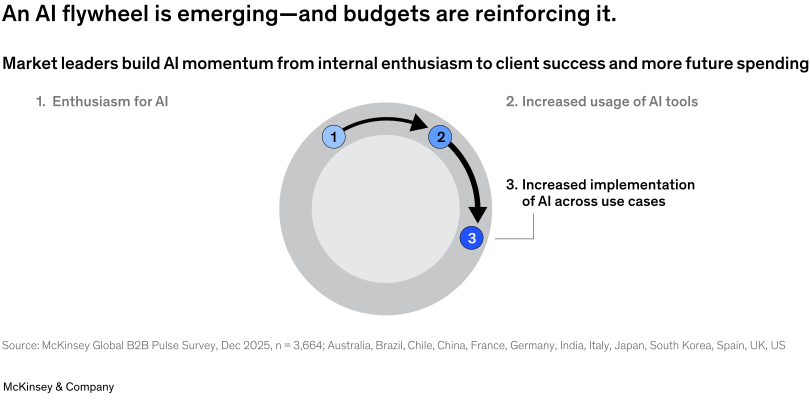
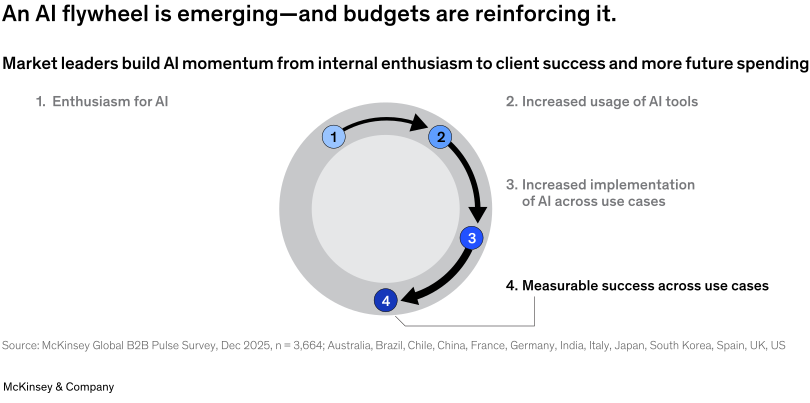
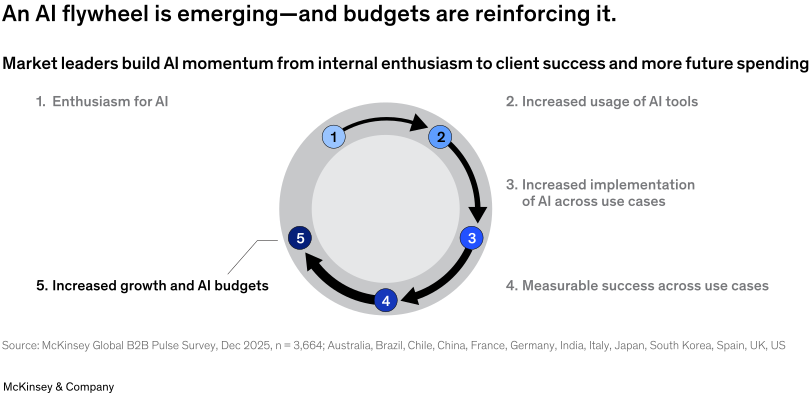
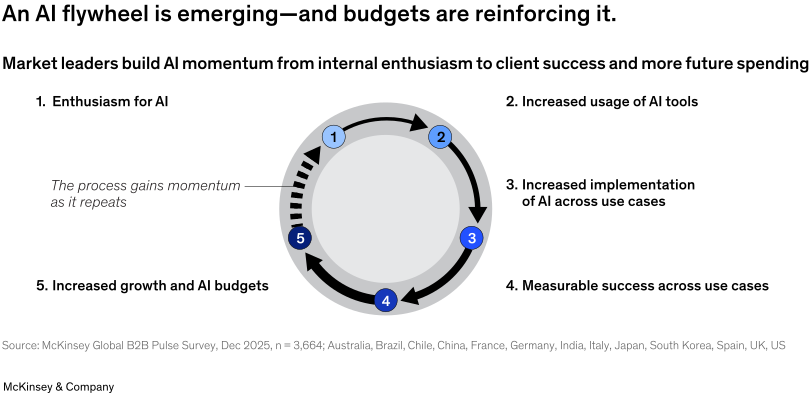
While laggards remain constrained by foundational barriers—fragmented data, legacy technology stacks, and employee hesitation—leaders are more likely to cite risk and legal considerations as their primary constraint, an indicator of greater implementation maturity. The survey data suggest that a reinforcing dynamic is beginning to take shape. Organizations that generate internal enthusiasm for AI see higher levels of usage. Greater usage accelerates implementation across functions. Implementation, when tied to measurable efficiency and revenue outcomes, strengthens executive confidence and justifies further investment. That reinvestment, in turn, expands capability and impact. Think of it as the AI flywheel effect (Exhibit 6).
Here is what leading organizations do differently:
- Build consensus and enthusiasm to initiate organizational change. Leading organizations begin by articulating a clear executive narrative that links AI to strategic priorities while visibly role modeling adoption at the leadership level to build credibility and reduce skepticism.
- Prioritize revenue-linked use cases. They focus on high-impact applications that directly affect growth and efficiency, with clear ownership and KPIs, supported by strong governance and data foundations.
- Embed AI into daily workflows. They make AI use habitual rather than optional through role-specific enablement and by showcasing quick wins that demonstrate tangible value in daily work.
- Align cross-functional stakeholders early. Leading organizations ensure tight alignment across business, technology, and leadership teams around shared outcome metrics, with disciplined tracking of results across efficiency, revenue, and customer experience.
- Reinvest gains to compound advantage. They systematically reinvest productivity gains in advanced capabilities and talent, embedding continuous improvement to sustain momentum and widen the performance gap.
As with personalization, AI alone does not create advantage. Advantage accrues to organizations that operationalize AI at scale, integrating it with personalization and revenue processes and governing it with discipline. At the same time, even the most advanced AI deployment cannot compensate for unclear accountability in the revenue engine. The third engine of separation identified in the survey data speaks directly to this structural issue: governance and ownership in account-based marketing.
Engine three: ABM governance as the control layer
If hyperpersonalization provides precision and gen AI provides amplification, governance provides control. Without clear accountability in the revenue engine, even advanced capabilities struggle to translate into consistent performance.
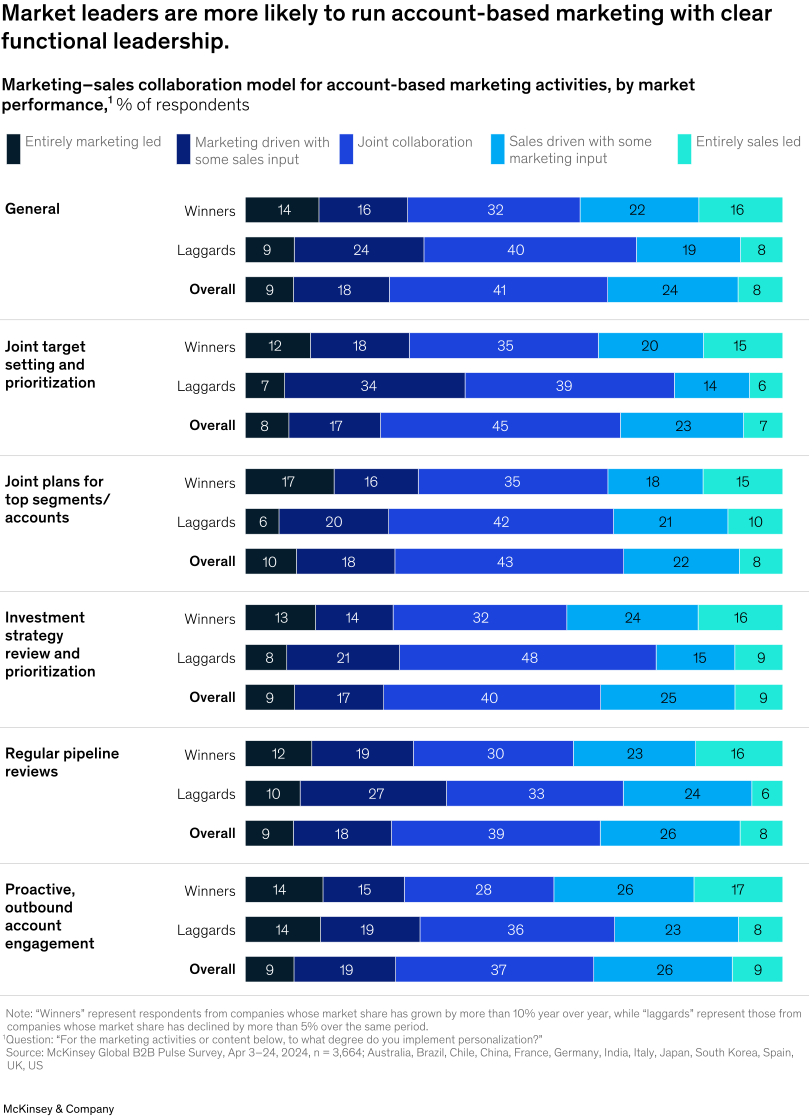
Our survey highlights this dynamic most clearly in account-based marketing. While ABM is now widely institutionalized across B2B organizations, the data reveal meaningful differences in how it is governed—and those differences correlate with revenue outcomes. Organizations that anchor ABM ownership in the sales process are between five and ten percentage points more likely to report higher representation in the top revenue growth bands than those using shared or marketing-led models (Exhibit 7). By contrast, 40 percent of laggards rely on joint governance structures, compared with 32 percent of market leaders. The appeal of shared ownership is understandable; collaboration across sales and marketing is essential. But when accountability is diffused, decision-making slows, priorities blur, and execution loses focus.
Here is what leading organizations do differently:
- Assign clear commercial ownership for priority accounts. Designate a single accountable leader.
- Align incentives and metrics across functions. Create shared revenue accountability.
- Integrate AI and personalization into structured processes. Avoid parallel initiatives.
- Measure performance at the account level. Create visibility and accelerate course correction.
Governance, in this context, is not bureaucratic overhead. It is the stabilizing force that allows personalization and AI to scale without fragmentation.
Together, hyperpersonalization, scaled AI, and disciplined commercial governance form a reinforcing system. The final section examines how these engines interact—and why integration, rather than individual capability, is emerging as the defining advantage of this new era of B2B growth.
From capabilities to commercial architecture: A new operating system for B2B sales
Taken individually, hyperpersonalization, scaled AI, and disciplined ABM each correlate with stronger performance, our findings show. Taken together, they point to something larger: a shift from isolated capability building to a new, continuously self-reinforcing operating system. The widening gap between leaders and laggards suggests that advantage no longer comes from investing in any one of these areas in isolation. It comes from integrating them.
Hyperpersonalization, after all, requires unified customer data, advanced analytics, and the ability to translate insights into coordinated outreach across channels. AI accelerates that process—automating content generation, surfacing next-best actions, identifying pricing opportunities, and scaling engagement across accounts. Governance ensures that these tools and insights are deployed against the right priorities, with clear ownership and measurable outcomes.
When these elements operate in concert, they create reinforcing effects. More precise personalization improves engagement and conversion. Higher conversion generates clearer performance data. AI models learn from that data and improve targeting and messaging. Clear governance accelerates decision-making and reallocates resources toward the highest-impact accounts. Gains are measured, reinvested, and scaled.
This is how a compounding system emerges.
The survey’s performance data—particularly the 60 percent versus 21 percent gap in double-digit revenue growth—suggest that this compounding effect is already underway. Leaders are not ahead because they have adopted a single new tool. They are ahead because they have redesigned their commercial architecture to connect data, technology, and accountability into a coherent revenue engine.
A decisive moment for B2B growth
A decade ago, in 2016, McKinsey’s B2B Pulse Survey found that early adopters of B2B e-commerce significantly outperformed peers, achieving five times faster growth, 30 percent higher acquisition efficiency, and 13.5 percent EBIT growth (compared with 1.9 percent for less digitally able organizations). Leading organizations recognized where the market was heading and invested decisively to capture advantage.
We observe a similar shift happening today.
Organizations that invested early in omnichannel engagement, e-commerce, and data-driven marketing gained an edge. Today, those capabilities are widespread. Omnichannel execution and digital commerce have become the survival threshold—the minimum required to compete. The differentiating factor now is integration.
The widening performance gap documented in this year’s survey—most visible in revenue growth and sales effectiveness—is not the result of incremental optimization. It reflects a deeper redesign of the commercial engine. Leaders are connecting hyperpersonalization, scaled AI, and disciplined account-based sales governance into reinforcing systems that learn, adapt, and compound advantage over time.
This shift raises the stakes for B2B executives. The question is no longer whether to invest in AI, personalization, or account-based marketing. Most organizations already have. The question is whether those investments are integrated into a coherent commercial architecture capable of sustained growth.
In an environment defined by macroeconomic uncertainty, rising buyer expectations, and accelerating technological change, incremental improvements will not close the gap. The companies pulling ahead are redesigning how revenue is generated, managed, and scaled. They are embedding intelligence into workflows, clarifying accountability, and treating the commercial system itself as a source of competitive advantage.
The market has entered a new phase. For B2B leaders, the path forward—while demanding—is increasingly well defined. Clearing the baseline keeps organizations in the game. Building an integrated, data-driven revenue engine determines who sets the pace.