Stronger after the storm: Supporting Jamaica’s recovery and resilience
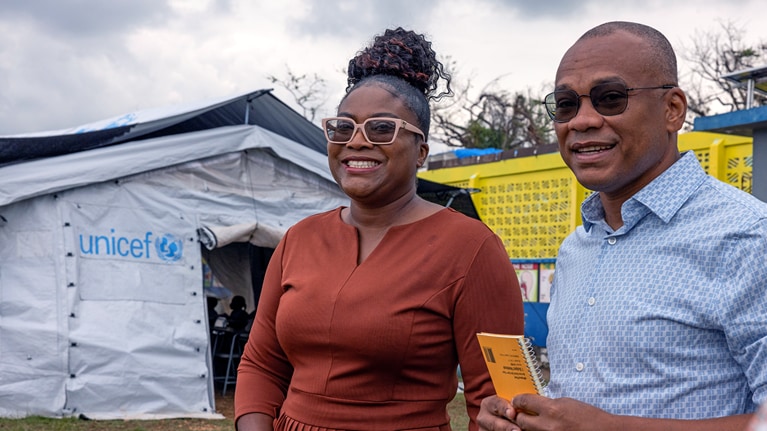
A tour of Black River, Jamaica, where Hurricane Melissa made initial landfall, including McKinsey's Sheldon Lyn and Victoria Osborne (center and center left), and AFJ President Wendy Hart (center right)
The last message McKinsey Partner Sheldon Lyn received from his family came just before Hurricane Melissa made landfall: “It’s really bad. The roof is lifting.” Based in Washington, DC, he waited through 48 hours of deafening silence as communication was knocked out in Jamaica, not knowing how his family had fared. He decided he had to act and booked a flight to Kingston on the first day commercial travel to the island resumed.
After gathering supplies in Kingston—food, water, tarpaulins, generators—he and a friend set off to Saint Elizabeth, the parish where Sheldon is from and where about 40 close family members live. They navigated flooded and blocked roads in a 4x4 pickup truck to find as many people as they could.
Thankfully, Sheldon’s family had all survived, but the devastation was indescribable. Everywhere there were fallen trees, roofless homes, and downed power lines crisscrossing the road. The scale of the disaster was unprecedented. Hurricane Melissa caused more than $12 billion in damage—over half of Jamaica’s GDP—and disrupted nearly every aspect of daily life.
In the immediate aftermath, support poured into the island. The American Friends of Jamaica (AFJ), a not for profit supporting charitable organizations and social initiatives on the island, saw donations surge nearly tenfold over its annual average.
But the core challenge quickly came into focus: Needs were vast, resources limited, and the path from relief to recovery unclear.
“The question is how to use limited resources in a way that truly changes outcomes,” Sheldon says, drawing on McKinsey research into disaster response. “We worked with AFJ to support its rapid deployment of funds—addressing urgent needs first then shifting to recovery priorities.”
Listening to shape the response
When AFJ partnered with McKinsey, the first step was clarifying where it could have the greatest impact.
“The opportunity for AFJ wasn’t just to fund recovery, but to think about how each dollar could unlock broader, more durable impact across communities,” says Alberto Chaia, McKinsey senior partner.
After funding nearly $2 million in immediate relief, AFJ turned to the next phases: recovery and resilience, directing resources toward rebuilding—not just stabilizing—communities.
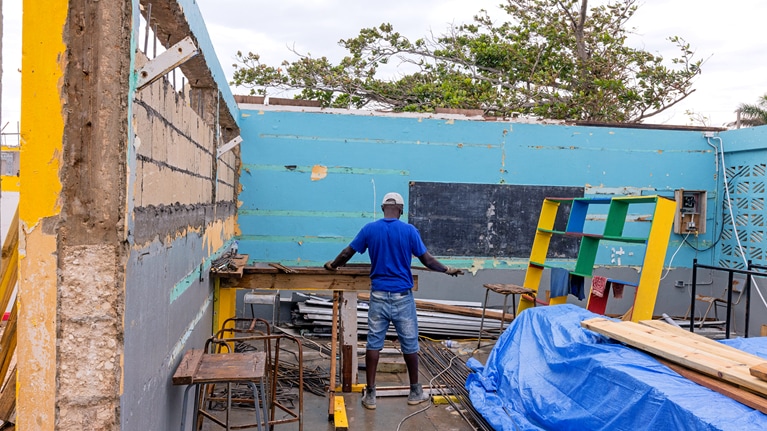
Through a listening tour across affected communities, the team saw that many communities were still struggling with basic needs: In Hanover, students at Cove Primary attended classes in tents and in a church while repairs were underway; in Westmoreland, families remained in temporary, congregate shelters with no clear timeline for permanent housing; and in Saint Elizabeth, critical public facilities were still out of service.
Victoria Osborne, McKinsey engagement manager, reflects on her conversations with locals: “What struck me most was how people whose own homes were destroyed were working to help the larger community, emphasizing the need to address recovery and long-term resilience together.”
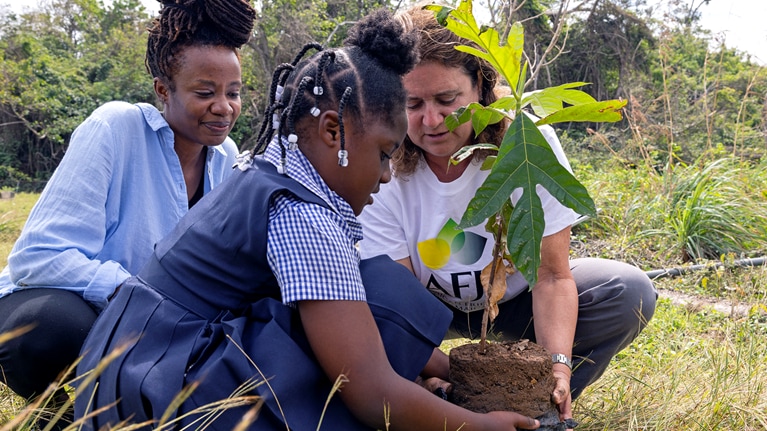
For AFJ, the listening tour raised several on-the-ground issues it hadn’t previously identified, such as a lack of clean water access in Darliston and ongoing community-led roof repair efforts in Maggotty that needed support.
This led AFJ to build new connections and expand its plans to support the right people in the right places.
“McKinsey’s listening tour helped us form a clear and honest picture of communities’ needs,” says Wendy Hart, president of AFJ. “We could now target our work to these hyperlocal findings, and in the process, build relationships with community leaders that ensure we’d stay on top of what communities need to be resilient to future shocks.”
A ‘surgical’ strategy
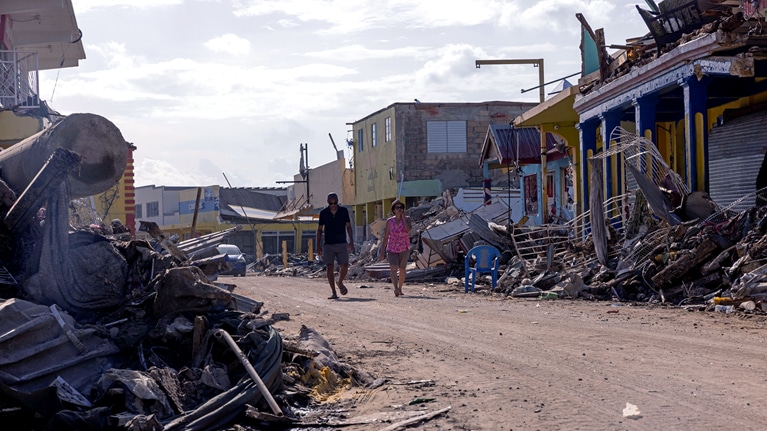
With total funding covering only a fraction of the need, AFJ faced a second critical decision: how to allocate resources.
Rather than distributing funds broadly across the island, the organization chose to concentrate efforts in five of the hardest-hit communities. This enabled a more holistic approach within each community, addressing housing, education, infrastructure, and livelihoods together.
“Being surgical allowed AFJ to go deep in selected places and demonstrate what effective recovery looks like,” Sheldon says.
Local leaders played an essential role, but often without sufficient resources or access to larger systems—for example, a church leader in Maggotty who coordinated aid and rebuilding efforts with little support for an area of more than 1,000 people.
In some areas, aid arrived faster than it could be distributed. In others, critical needs remained unmet despite available resources. AFJ responded by strengthening coordination across partners, and aligning public, private, and not-for-profit actors around shared priorities.
For example, McKinsey supported AFJ in convening a cross-sector partner workshop with leading NGOs to align recovery priorities and coordination gaps. The workshop helped clarify roles across partners, connect local leaders to bigger systems, solidify initiative ideas, and establish a path toward more regular convening and shared planning.
“Recovery is driven locally,” says Caron Chung, executive director of AFJ. “But it requires coordination to ensure that support translates into sustained impact.”
Recovery in bloom—and growing

Recovery across Jamaica is ongoing, but AFJ’s integrated approach is already delivering results: Schools are reopening in safer conditions; families are returning to repaired homes; farmers are replanting, restoring both income and food supply. In Black River, farmers who lost greenhouses have already begun harvesting new crops, evidence of both urgency and resilience.
Beyond immediate recovery, AFJ’s work is helping build capabilities that will endure beyond the current crisis.
The result is an organizational shift from reactive response toward a more structured model of recovery—one that integrates local capacity, cross-sector alignment, and long-term planning.
For Sheldon, the work reflects both a professional and personal commitment.
“This is about more than rebuilding what was lost,” he says. “It’s about creating a system that can respond better next time—and strengthening the economic and institutional foundations that make communities more resilient.”
This collaboration is part of McKinsey’s Action 9 commitment to organizations that are growing opportunity among Black communities globally. Learn more about Action 9 here.