Editor’s note: This document provides an emerging perspective on rebuilding accelerators after wildfires. While the Los Angeles wildfires were first and foremost a human tragedy and the recovery process remains in its early stages, this article offers considerations for stakeholders seeking to expedite rebuilding. The approaches and considerations included in this document are preliminary and do not constitute legal advice. This document and the analysis therein exclusively incorporate publicly available data and build on the reports made available by other organizations, including, but not limited to, the Urban Land Institute, the Belfer Center for Science and International Affairs at Harvard Kennedy School, the Southern California Leadership Council (SCLC), the Los Angeles County Economic Development Corporation (LAEDC), and UCLA.
A year ago, in January 2025, the Eaton and Palisades wildfires burned more than 38,000 acres, claimed at least 31 lives, and destroyed more than 16,000 structures, including approximately 11,000 homes.1 These fires now rank as the second- and third-most destructive in California’s recorded history.2
As of November 2025, the state had made significant progress in its recovery efforts.3 It completed the fastest waste and debris removal effort in US history and allocated $2.5 billion to bolster emergency response, accelerate reconstruction, and support wildfire preparedness initiatives.4 However, rebuilding remains a protracted challenge, and the longer it takes, the greater the delay in communities and local economies reaching their pre-wildfire vitality. Shortening the rebuilding timeline is thus a top priority.
The experiences of other communities in recovering from wildfires offer valuable benchmarks. Our analysis of the aftermaths of the Paradise, Tubbs, and Shasta wildfires in California as well as the Marshall Fire in Boulder County, Colorado, suggests that rebuilding 50 percent of destroyed homes typically takes five years. Reaching the 70 percent mark could take more than ten years.
To meet or improve upon these targets, it could be beneficial for the people of Los Angeles to understand lessons from other wildfire recoveries. We identified core accelerators across permitting and rebuilding that could enable Los Angeles to increase its pace of recovery. While speed is critical, effective residential rebuilding must also promote safety, regulatory compliance, and long-term resilience.
The comprehensive journey to disaster recovery
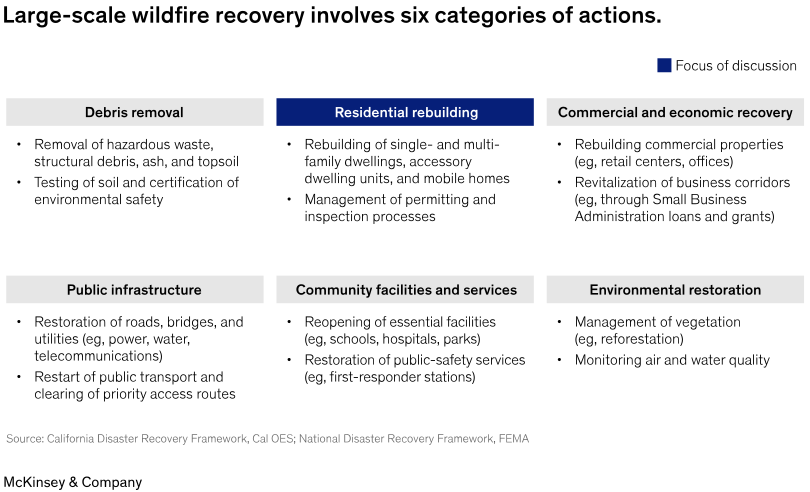
A city’s recovery from wildfires is a multifaceted process that encompasses housing, commerce, and public infrastructure such as schools, roads, and community facilities (Exhibit 1). While each of these areas is critical to the overall recovery, this article focuses on the residential sector because this sector addresses the most urgent needs of thousands of displaced Californians.
Recovery begins with debris removal, which involves two clean-up phases5—first, clearing hazardous household waste to tackle immediate safety threats, and then cleaning up ash, contaminated soil, and structural remains to make sites safe and eligible for rebuilding. The next step is to test soil and water for contaminants (Exhibit 2). As of January 6, 2026, Los Angeles has completed debris removal,6 and FEMA and the US Army Corps of Engineers waived soil testing. This report focuses on the next steps in residential rebuilding: permitting and rebuilding.
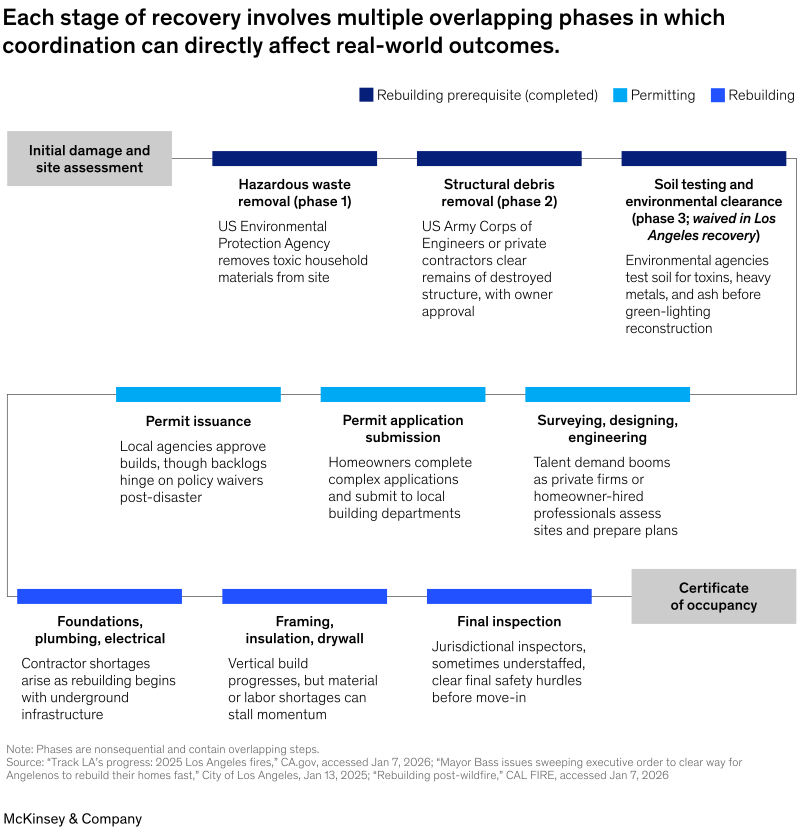
Permitting includes home design and planning and the subsequent submission and approval of related applications to ensure compliance with updated building codes, fire-safety standards, and zoning regulations. For the City of Los Angeles, the central authority is the One-Stop Rebuilding Center, which handles applications for the Palisades. Los Angeles County has established One-Stop Permit Centers for the Palisades and Altadena (region of Eaton fire). As of December 2025, Los Angeles7 has issued permits for approximately 12 to 13 percent of destroyed homes across both the Palisades (604 addresses) and Altadena (931 addresses).8
Once permits are obtained, residential rebuilding depends on the timing of insurance payouts, availability of materials and labor, and homeowner readiness, among other drivers. These tasks are overseen by the City of Los Angeles Department of Building and Safety and Los Angeles County Building and Safety. As of November 2025, less than 0.1 percent of homes9 have been completed across the Palisades and Altadena.
Learning from other wildfire recoveries
About the research
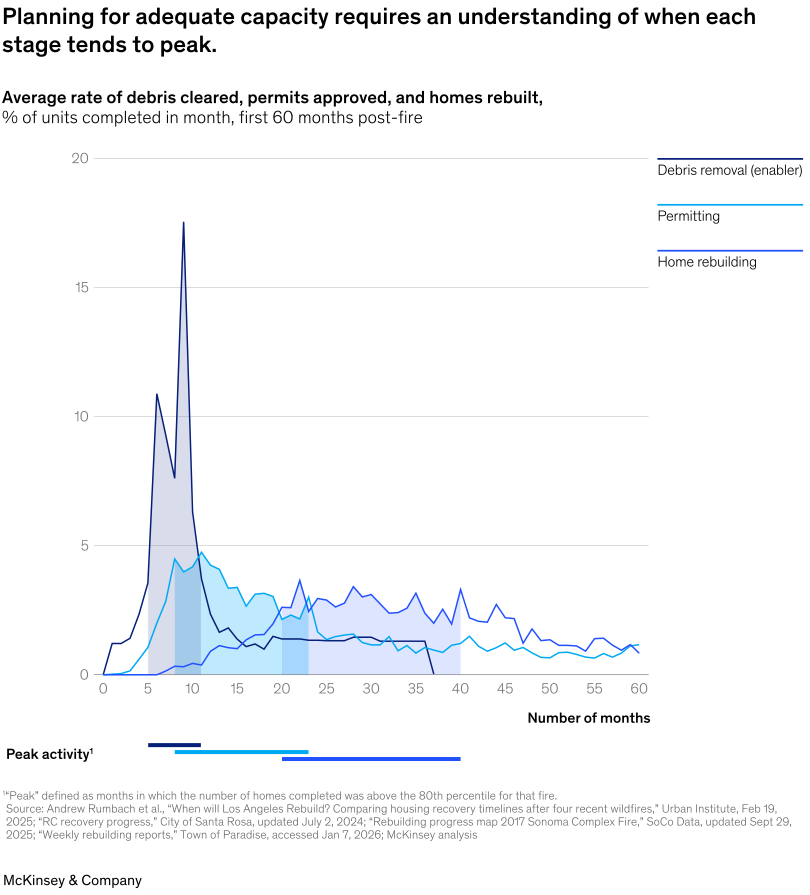
To calculate rebuilding timelines, we analyzed publicly available data for four selected communities.1 This exercise helped us pinpoint when each stage peaks (exhibit). For instance, permitting rates are highest in months 7 to 23, when approximately 57 percent of permits are issued. Meanwhile, residential rebuilding peaks at 20 to 40 months, when about 58 percent of homebuilding is completed. Such insights could help Los Angeles stakeholders ensure sufficient capacity prior to demand surges.
We then interviewed key recovery leaders and experts2 to identify the practices that accelerated recovery in their communities.
To assess LA’s reconstruction timeline and the practices that may accelerate it, we examined four other communities that have experienced destructive wildfires—Paradise, Shasta, and Tubbs10 in California and Boulder County in Colorado (see sidebar “About the research”). Across these communities, rebuilding progressed at different speeds,11 reflecting each community’s unique mix of capital availability, household income, topography, and other localized conditions (Exhibit 3). Tubbs recorded the highest peak rebuild rate, averaging 107 homes a month, and sustained this peak rate for 21 months. Paradise rebuilt at a peak of 73 homes a month and maintained this rate intermittently for 15 months. Boulder and Shasta topped out at 27 and 18 homes a month, respectively.
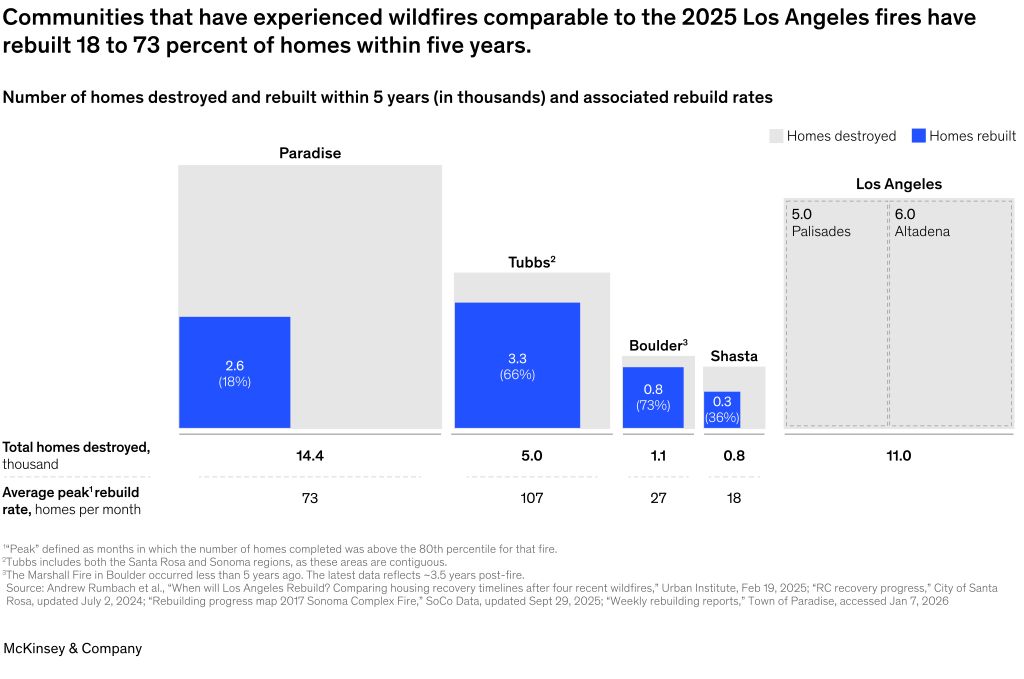
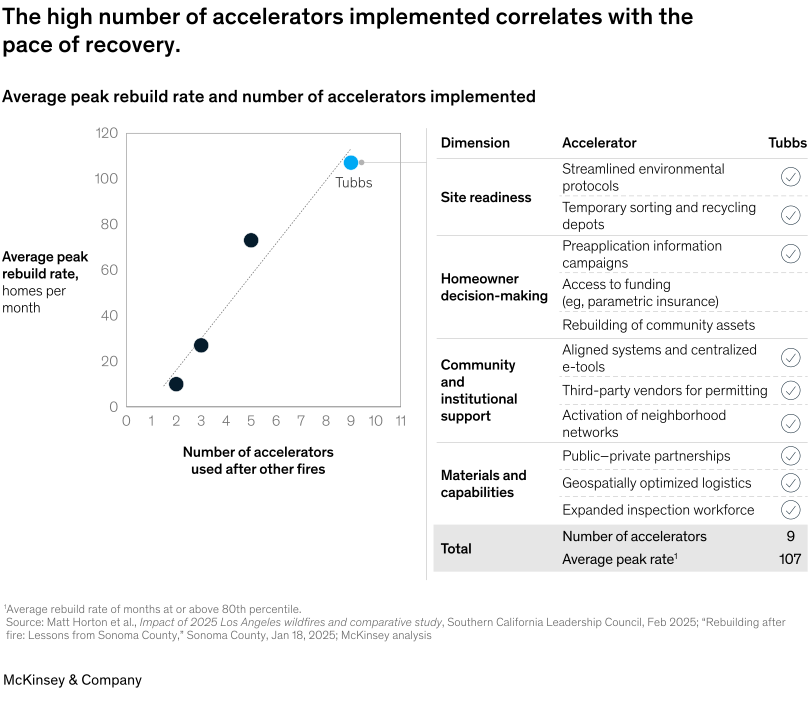
While the Eaton and Palisades fires are characterized by distinct sets of challenges, past wildfire recoveries offer a baseline for anticipating the pace of rebuilding—providing lessons for Los Angeles to emulate as well as pitfalls to avoid. Rebuilding outcomes depend on several considerations, including: magnitude of destruction, homeowner economics, and the use of rebuilding accelerators. In smaller fires, rebuilding has at times progressed without the additional need for extensive accelerators. However, as the scale of loss increases and homeowner economics becomes constrained (e.g., underinsured population, gap between insurance payouts and rebuilding costs)—both characteristics of Los Angeles—accelerators become increasingly useful to sustain momentum and achieve timely recovery (Exhibit 4).
Exploring LA’s potential recovery trajectory
As Los Angeles continues to make strides in its recovery efforts, our analysis provides a point of reference on what could be achieved, based on the actual performance of past disaster recovery efforts (see sidebar “About the methodology”). For Los Angeles to rebuild half of the destroyed homes within five years (Exhibit 5) it would need to maintain an average peak rate of 160 homes completed per month for about two years across the Palisades and Altadena. To meet this target, the city and county would need to issue permits for a total of 3,000 to 3,500 residences by fourth quarter 2026. Residential building activity would peak shortly thereafter, lasting until approximately first quarter 2028.
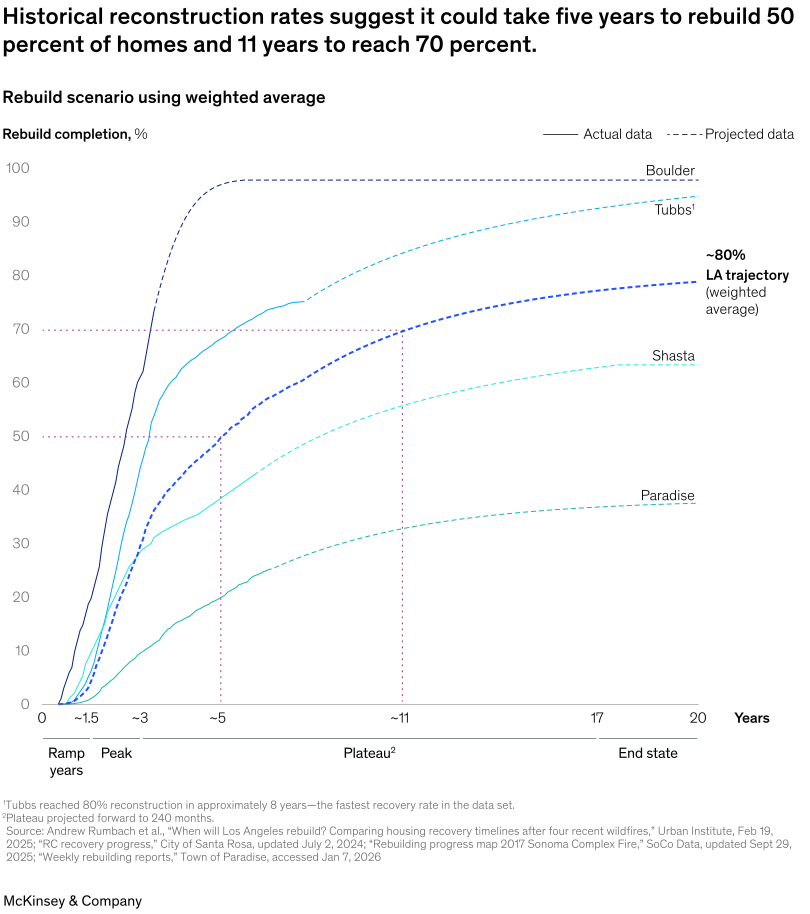
To meet or exceed the projected timeline, Los Angeles could deploy a set of rebuilding accelerators—high-impact interventions spanning people, processes, and technology. Through interviews with recovery leaders from the peer set of historical wildfire events and subject matter experts, we identified the following obstacles and accelerators across three dimensions (Exhibit 6).12
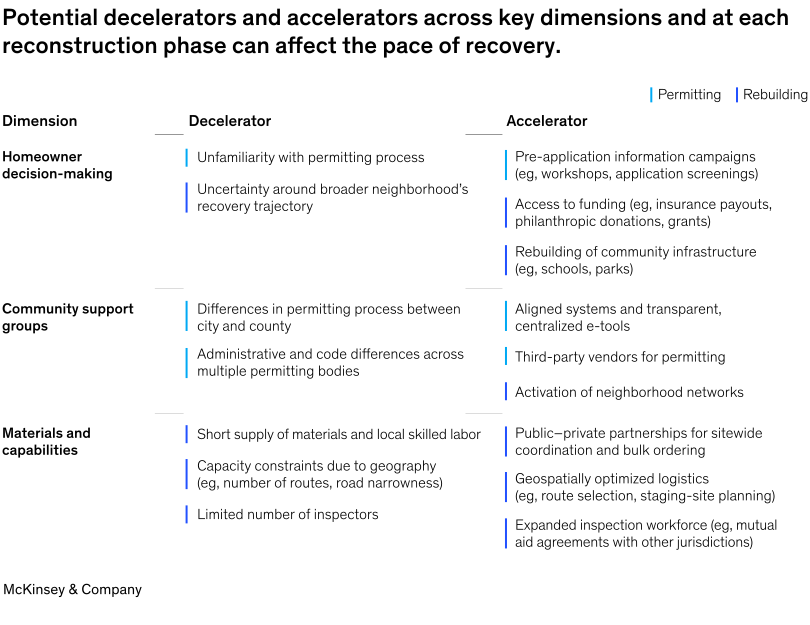
At the homeowner decision-making stage, uncertainty about permitting, insurance, and neighborhood recovery often delays rebuilding. Gaps between insurance payouts and rebuilding costs are significant challenges.13 Claim denials, delays, and underpayment can force homeowners to make difficult choices—covering the difference out of pocket, delaying rebuilding, or forgoing it altogether. Additionally, homeowners cited community infrastructure such as schools and grocery stores as an important factor when deciding to rebuild.
Grassroots community support groups (for example, neighborhood-based chat groups) enable neighbors to share critical information. These platforms can help facilitate the dissemination of timely, actionable updates, such as which adjusters expedite payouts and which planners approve permits more efficiently.
In materials and capabilities, municipalities can optimize logistics and leverage technology to improve the overall efficiency of the rebuilding process. For example, cities can alter traffic patterns or allocate parking areas to enhance transportation for residents and workers. Other actions include deploying online platforms (for example, remote inspection tools) to expedite regular processes.
Our analysis further indicates a relationship between the number of accelerators implemented and the peak rebuild rate achieved: Communities that adopted more accelerators rebuilt faster and ultimately had shorter overall recovery timelines. For example, Tubbs implemented nine of the identified accelerators and had an average peak rebuilding rate of 107 homes per month, whereas Paradise implemented only five accelerators14 and had an average peak rebuilding rate of just 73 homes per month.15 This reinforces the case for Los Angeles to adopt as many accelerators as possible.
Accelerators for permitting
Los Angeles has built momentum in permitting through early adoption of accelerators that were field-tested in the Tubbs rebuild. These include deferring or waiving permitting fees, enabling self-certification, fast-tracking like-for-like rebuilds, and opening one-stop centers and centralized e-permitting portals. To further accelerate the permitting process, Los Angeles has begun using AI tools to support early design checks and generate standardized plan sets.16 These tools can improve efficiency but still require human oversight and appropriate safeguards.
Our interviews with key recovery leaders and experts highlighted several additional approaches that communities have used to fast-track permitting. First, expanding capacity through third-party vendors has proved effective in reducing backlogs in building plan reviews and on-site inspection in other recovery efforts. Second, aligning city and county permitting systems can further streamline approvals and lower rebuild costs. Last, developing a coordinated, seamless response helps affected homeowners better understand the stages of the recovery process, particularly in permitting.
After the Tubbs Fire, Santa Rosa reduced average permit processing times from 120 days to just 45 through two actions. First, the city coordinated the actions of the planning, building, public works, and assessor-recorder departments. Next, in tandem with county staff, it engaged a third party to establish and operate a stand-alone permitting center focused on fire rebuilding to review plans, offer inspections, and provide in-person application guidance.17 Permitting fee waivers and reductions lowered costs by up to 80 percent for rebuild projects, further minimizing finance-related delays.
Santa Rosa also supported homeowners with pre-application information campaigns. This initiative included public workshops and screenings to increase community understanding and guidance on contractor bids, insurance, and financing. These strategies helped the community reach the 90 percent threshold for completed or underway projects within five years.
Although prioritizing speed can jump-start progress in the short term, it is important to balance adoption with the associated risks. For example, reducing oversight of safety and code compliance could increase risks of permitting errors, construction defects, and noncompliant builds. Meanwhile, outsourcing reviews can expedite approvals, but care must be taken not to lower quality and consistency, which could result in missed violations or improper approvals. Communities that strike this balance typically maintain core safety checks, use clear escalation pathways for complex cases, and conduct periodic audits of third-party reviews.
Accelerators for rebuilding
As of November 2025, only one home had been rebuilt in Altadena and the Palisades, far fewer than the projected 29 homes in our analysis. Other wildfire recovery efforts offer valuable lessons. For example, in the aftermath of the Marshall Fire, Boulder established grassroots community networks and enabled residents to form neighborhood-based group chats that shared resources and learnings across jurisdictions.18 It also launched an integrated digital recovery platform that reduced coordination delays by 65 percent and improved resource allocation efficiency by 40 percent.19 A pilot involving parametric insurance was able to resolve claims 60 percent faster by providing rapid payouts based on triggers such as wind speed, fire perimeter, and direction.20 Last, the city assigned dedicated rebuilding coordinators to help homeowners with permitting, insurance, and construction. Along with other accelerators, this strategy enabled the city to rebuild 70 percent of homes within three years, the highest among the peer set of historical wildfires.
While these accelerators enabled swift rebuilding, measures that require more time to implement could help reduce the long-term risk of future fires. For example, Los Angeles could encourage practices such as home hardening, defensible space, updated fire-space codes, and land-use choices.
In the aftermath of the 2025 wildfires, Los Angeles is in a position to redefine large-scale post-disaster rebuilding by incorporating proven accelerators across people, processes, and technology. It is critical to implement as many rebuild accelerators as possible, as each additional accelerator compounds progress and shortens overall recovery timelines. The more accelerators incorporated, the faster communities can rebuild and return home. However, to ensure long-term community health and resilience, speed must be balanced with safety, compliance, and sustainability. In an era of increasingly frequent and severe climate change–driven disasters, Los Angeles has an opportunity to become a model for recovery.