Success in the media industry has long been defined by quantity, or how many hours people spend consuming content. Yet not all consumption is created equal. An additional critical element that today determines media success and the ability to turn consumption into revenue is the quality of a consumer’s attention.
Earlier this year, we studied the pivotal role attention plays in monetising consumption globally.1 And winning the battle for true consumer attention, defined by focus and intent, is also critical in the United Kingdom, where monetisation varies widely across media formats. Streamed, free, and paid TV play the most important role in the everyday life of UK consumers,2 and there’s value to be captured for content creators and distributors, advertisers, and retail media networks able to command higher-quality attention.
This article examines the state of attention and monetisation in the UK media industry, supported by the latest findings on consumer sentiment. For the country’s media stakeholders, the implications are clear: Consumer focus and intent are levers to optimise marketing mix, drive resonance, and learn from underserved arenas. In today’s increasingly fragmented media environment, it’s not enough to simply find consumers—you need to understand how to capture their attention across mediums.
Introducing the attention equation: Not all attention is created equal
While the sheer volume and diversity of content vying for our attention continue to increase,3 the amount of time we spend consuming content has slowed: Since peaking at an average of approximately ten to 11 hours per day in 2020, media consumption in the United Kingdom has plateaued.4 This imbalance between content supply and time-limited demand makes the battle to monetise consumption fierce and complex. And while the simplest measurement is how long consumers spend with specific content and where, that misses the full story on consumer attention. For example, how should we think about the relative value of an hour spent at a sporting event, at an amusement park, or watching content on a social video platform, and what explains this difference?
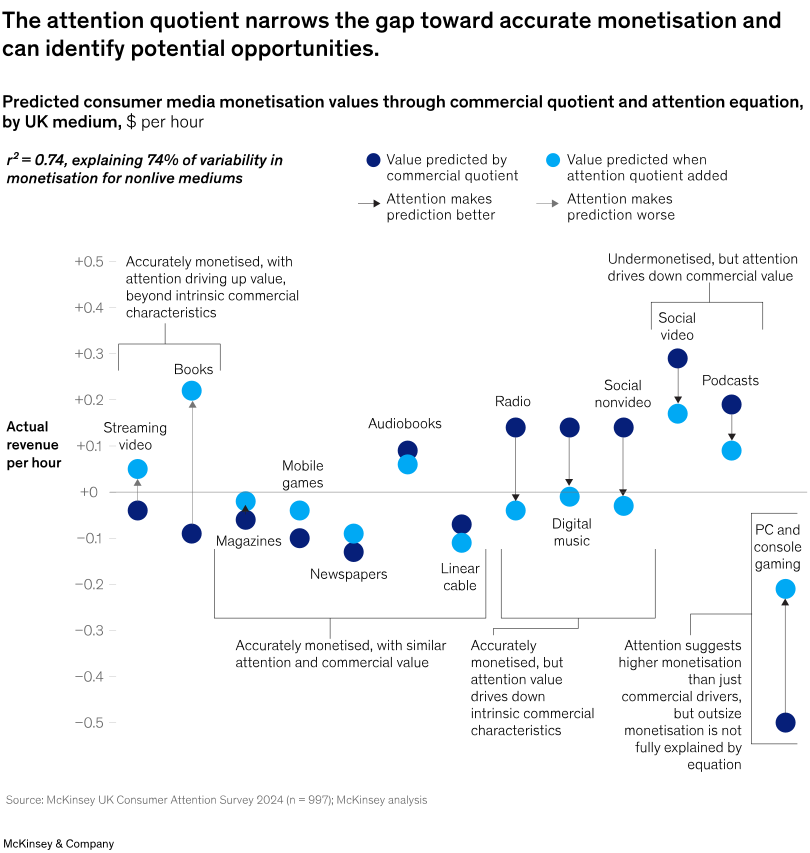
That’s what we sought to determine through an in-depth survey of 7,000 consumers worldwide, including a representative sample of 997 in the United Kingdom. Our research found that only two-thirds of the variance in monetisation across mediums is explained by traditional commercial factors such as consumer value, platform sophistication, and industry structure (collectively, the commercial quotient). The other third is driven by the quality of consumers’ attention, or the attention quotient, measured by their focus and intent (Exhibit 1). The relationship is captured in what we call the “attention equation” (for more on the survey, see sidebar “About the research”).
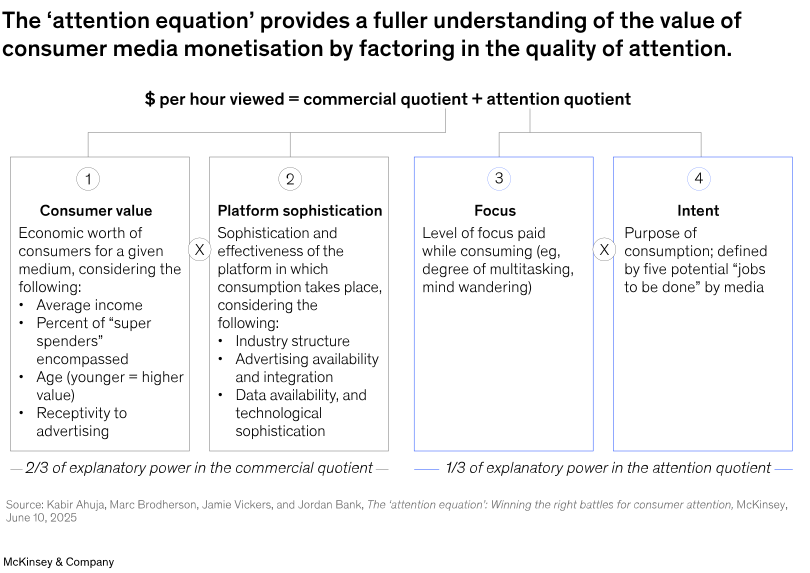
The attention quotient consists of two primary components: consumers’ level of focus, and their intent (the “job to be done,” or why they are consuming the content).
Consumer focus, or how actively consumers engage with content, varies across media types. In-person experiences generate the highest level of focus, similar to books (both digital and physical) and console and PC gaming. Our research found that the more focused consumers are, the more likely they are to spend.
Consumer intent—what consumers hope to get from the content they consume—typically falls into one of five categories, listed here from most to least valuable5:
- “To enjoy something that I love.” In-person experiences such as live concerts and sporting events dominate this category, which also includes physical books and digital music.
- “For education and information.” This is the primary intent of consuming newspapers, magazines, and podcasts.
- “For social connection.” Unsurprisingly, social media sites dominate here.
- “For light entertainment and relaxation.” Consumers turn to cable television, video streaming, social video, and mobile and console gaming to meet this need.
- “For background ambience.” This is the primary role of radio.
Together, the components of the commercial and attention quotients have significant predictive power on total monetisation, both in advertising and in nonadvertising. In particular, the attention equation can provide a more accurate understanding of the value of consumer media monetisation—explaining variations in success of different areas based on focus and intent—and, in turn, help identify white space for advertisers, investors, and content creators and distributors.
The fragmented state of consumer attention in the United Kingdom
What are UK consumers focused on? And how is the media industry monetising their attention? We found that total media consumption in the United Kingdom is plateauing, the volume and diversity of content are at an all-time high, and there are increasing ways to consume content. But we also found that consumption does not necessarily drive proportional revenue or profits, and there are vast differences in the ability of mediums to monetise consumer attention.
Total media consumption in the United Kingdom is plateauing
Media consumption in the United Kingdom grew steadily from 2011 to 2020, peaking at an average of 634 minutes per day in 2020 at the height of the COVID-19 pandemic.6 But it has since plateaued and is even forecast to marginally decline, driven by return-to-office mandates for consumers and a reduction in time spent with traditional media. With finite hours in a day, this suggests that consumers are approaching time limits to content consumption. Interestingly, the overall level at which UK consumption has plateaued is about two hours a day lower than in the United States. This is likely due to the greater maturity of the US market, which operates as part of a larger media ecosystem with a greater number of platforms and content options due to sheer scale. At a behavioural level, US users consume more digital video on social media platforms than those in the United Kingdom, who engage more with text. Video commerce and livestream are also more mature in the United States (for more differences, see sidebar “The United States consumes more, and monetises better, than the United Kingdom”).7
UK consumers have more content—and more ways to access it—than ever
UK consumers are confronted by ever more content as well as more ways to access it (often at the same time), which fragments consumer attention between everything from short-form and long-form video to event livestreams, podcasts, and many more. The growth in diversity and volume is driven in part by a shift to digital: In the United Kingdom, digital mediums in 2011 accounted for 29 percent of daily time spent with media; in 2024, they accounted for about 65 percent.8 Consumers are also increasingly creating their own content, and time spent with user-generated content in the United Kingdom jumped from about 16 percent in 2018 to 27 percent in 2024.9
Consumer attention is also being fragmented across an increasing number of devices to consume content on, often simultaneously. For instance, three mediums (TV, radio, and desktop) accounted for 87 percent of media usage in 2011; by 2027, the top three mediums (smartphone, TV, and desktop) are expected to make up only 65 percent of time spent. Meanwhile, 83 percent of Gen Zers and 79 percent of millennials use various mediums simultaneously while consuming streaming video.10 Fragmentation of consumer attention—through further diversity in content and means of consumption—may be further amplified by the rise of AI-created content and AI-enabled devices.
Consumption alone does not necessarily drive revenue or profits
In the United Kingdom, consumption alone is not indicative of monetisation. While live viewing—defined as sporting events, live music, amusement parks, and theatrical video—generates 21 percent of market revenue, it makes up less than 1 percent of the 274 billion hours of content consumed annually. In contrast, audio streaming makes up 28 percent of consumer hours but only 5 percent of market revenue.11 Our research found that growth in time spent consuming digital content in the United Kingdom isn’t necessarily expected to drive proportional revenue growth (Exhibit 2).
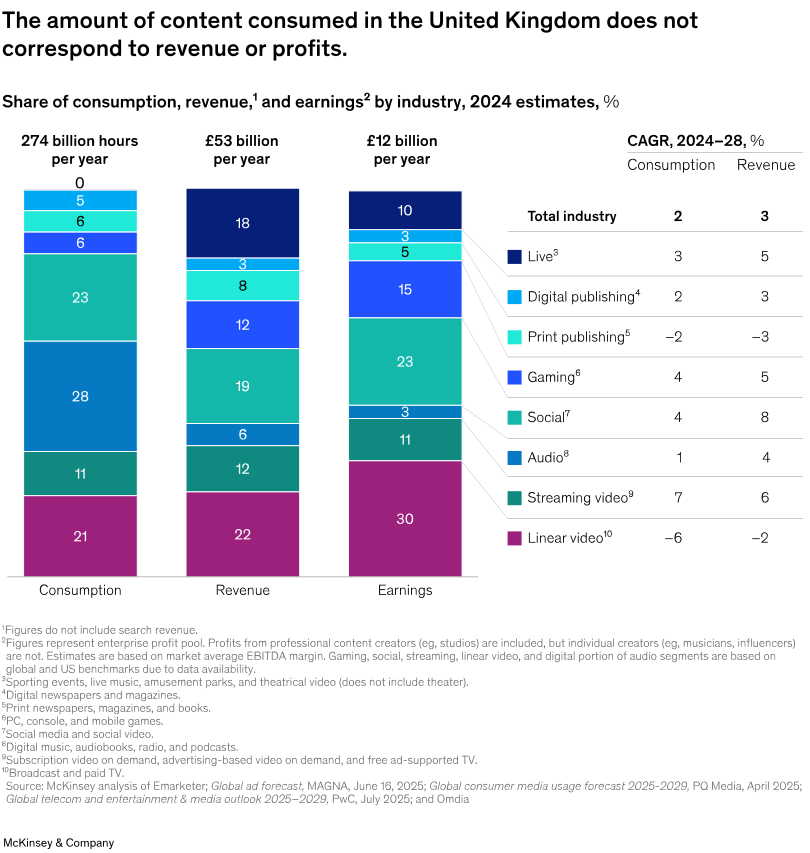
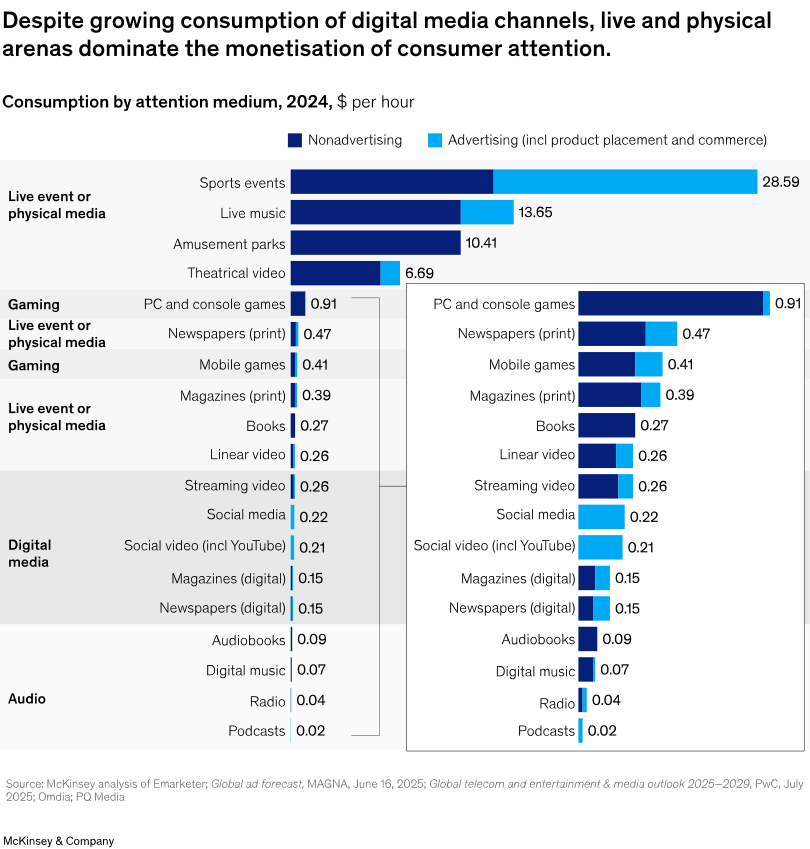
Of the primary media arenas we analyzed that are vying for consumers’ attention in the United Kingdom, the value of consumption per hour ranged from highs of $10 to $29 for sports events, live music, and amusement parks to lows of about $0.09 to $0.02 for audiobooks, digital music, radio, and podcasts.12
Despite all the excitement about the emergence of digital mediums, the ability of live events to drive revenue and profits is striking. Live sports events, the most effective medium in the United Kingdom, generate more than 1,400 times the revenue per hour of consumption than podcasts, underscoring vast differences in the ability of mediums to monetise the hours consumers spend (Exhibit 3).13
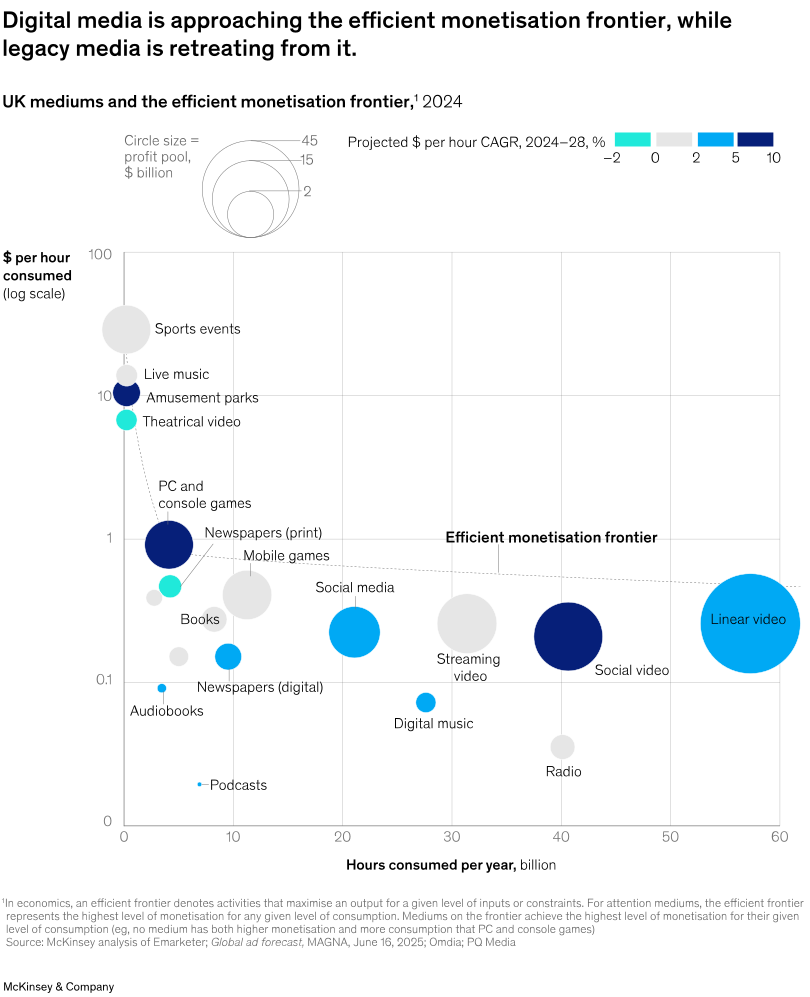
Live sports, live music, amusement parks, PC and console games, theatrical video, and linear video sit on the efficient-monetisation frontier (Exhibit 4).14 These arenas generate more revenue per hour of engagement than any others with comparable levels of consumption.
While several legacy media types sit on or near the frontier, their declining growth in monetisation per hour suggests that their efficiency is at risk. In contrast, most digital media formats remain below the frontier—indicating untapped potential to improve monetisation efficiency. Social video stands out, however, with projected growth of more than 5 percent annually through 2028, suggesting that it may be approaching the efficient-monetisation frontier. To continue advancing, digital media will need to not only continue capturing consumer hours but also enhance its ability to monetise time spent. Achieving this will require a deeper understanding of consumer attention.
The attention equation’s explanatory power in the United Kingdom
Applying the attention equation to the United Kingdom provides significant insight into disparities between consumption and monetisation. Taking the quality of attention into account explains 74 percent of the variability in monetisation of nonlive arenas and improves the ability to predict monetisation per hour, narrowing gaps in understanding why time spent consuming media does not directly predict monetisation (Exhibit 5).
The attention equation also presents an opportunity to identify and explore white space in monetisation across different arenas. For instance, an attention equation estimate of value higher than its actual value today may imply that a medium is undermonetised, and that revenue can or will accelerate with respect to consumption.
TV leading consumption while streaming leads in value
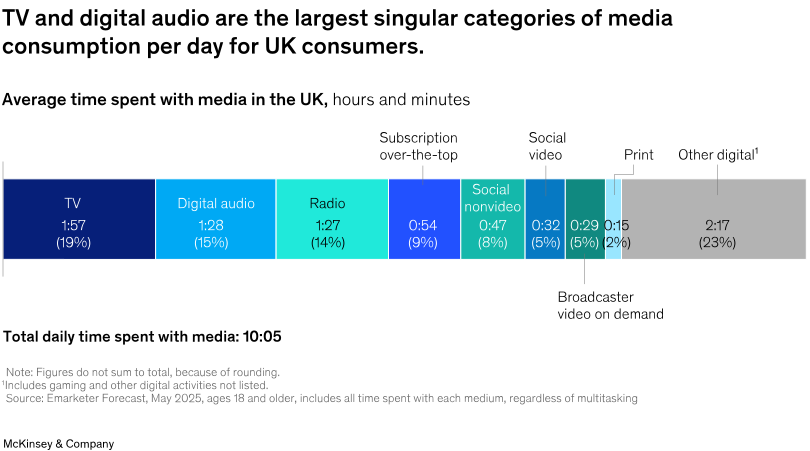
Of the approximately ten hours UK consumers spend with media per day, TV remains the single largest category, accounting for an average of one hour and 57 minutes (19 percent) of daily consumption (Exhibit 6).15
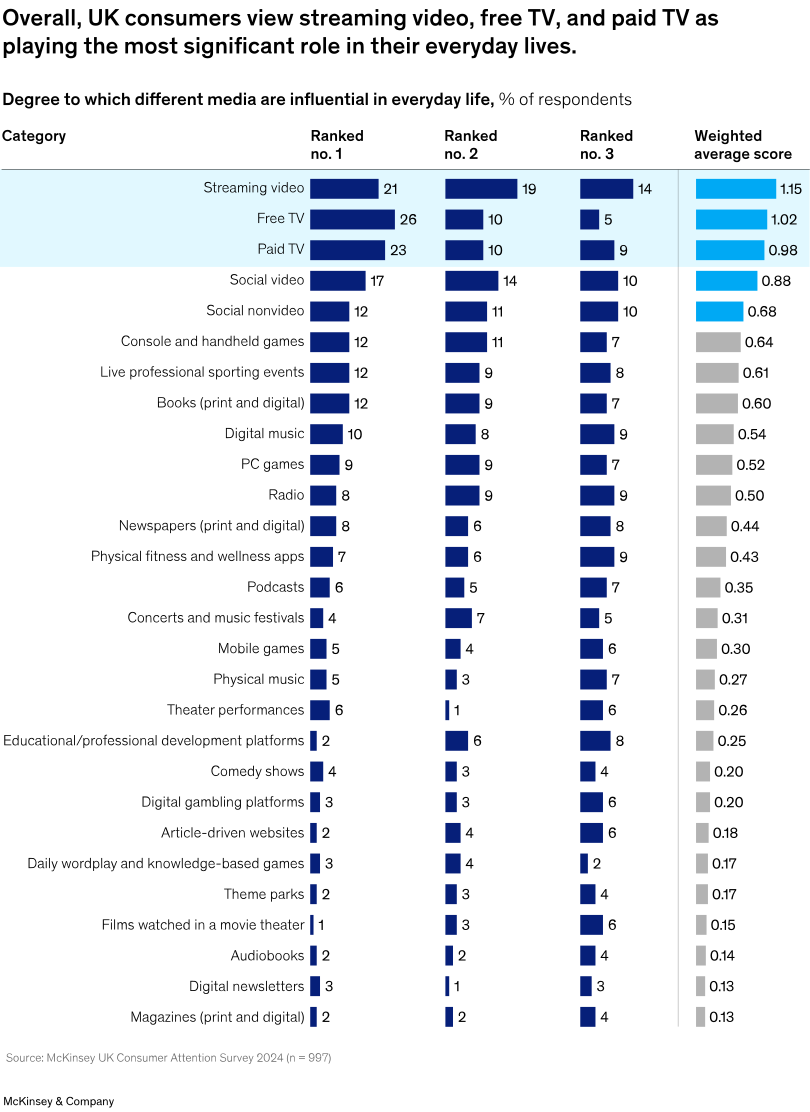
Streaming video, free-to-air TV, and paid TV consistently rank as the most influential in the everyday lives of UK consumers (Exhibit 7). Streaming video leads decisively, with the highest influence score among all media (a weighted average of 1.1516). Free and paid TV rank second and third, while social video and nonvideo remain just behind, underscoring the continued importance of longer-form content to everyday lives of UK consumers.
Streaming video also stands out as the most valued form of media; some 15 percent of consumers say its removal from their lives would upset them, more than for any other medium.17 Together with social video (13 percent) and free-to-air TV (12 percent), these top three video-based formats account for approximately 40 percent of consumers’ strongest media attachments, reflecting their central role in the UK consumers’ patterns of consumption.
Deep dive: Attention drives performance among UK streamers
While the attention equation is a powerful framework for analysing monetisation across media arenas, it can also reveal performance gaps between players. As the media arena with the most influence in day-to-day lives of UK consumers, streaming video illustrates this well.
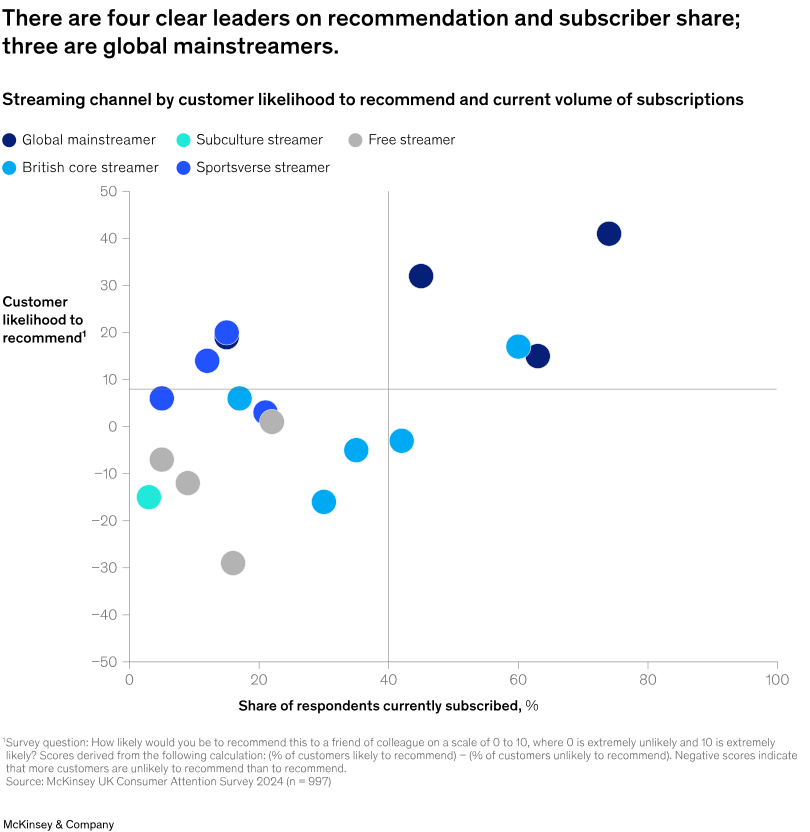
Four main archetypes emerge within the streaming landscape (Exhibit 8), based on global versus local reach and content focus:
- Global mainstreamers are global entertainment leaders with the largest UK subscriber bases and highest customer recommendation scores, leveraging brand strength and extensive, multigenre content libraries.
- British core streamers are UK-based platforms offering mixed programming through free or hybrid models; while accessible, with moderate subscription levels, they have weaker customer recommendation scores.
- Subculture streamers are global players offering curated, high-quality content for discerning audiences, often with small subscriber pools.
- “Sportsverse” streamers are specialist, sports-focused platforms dedicated to live and on-demand sports coverage with a niche subscriber base but high customer recommendation scores.
- Free streamers are ad-supported or free-access platforms with limited subscription penetration and low recommendation scores.
The attention equation framework highlights the explanatory power of the attention quotient in understanding monetisation. In the United Kingdom, attention quality is a predictor of value across streaming platforms. Our analysis found that subscriber lifetime value (LTV) for top streaming services in the United Kingdom is highly correlated with the factors of the attention quotient (Exhibit 9). These results suggest that platforms offering more focused, intentional media consumption opportunities extract greater LTV.
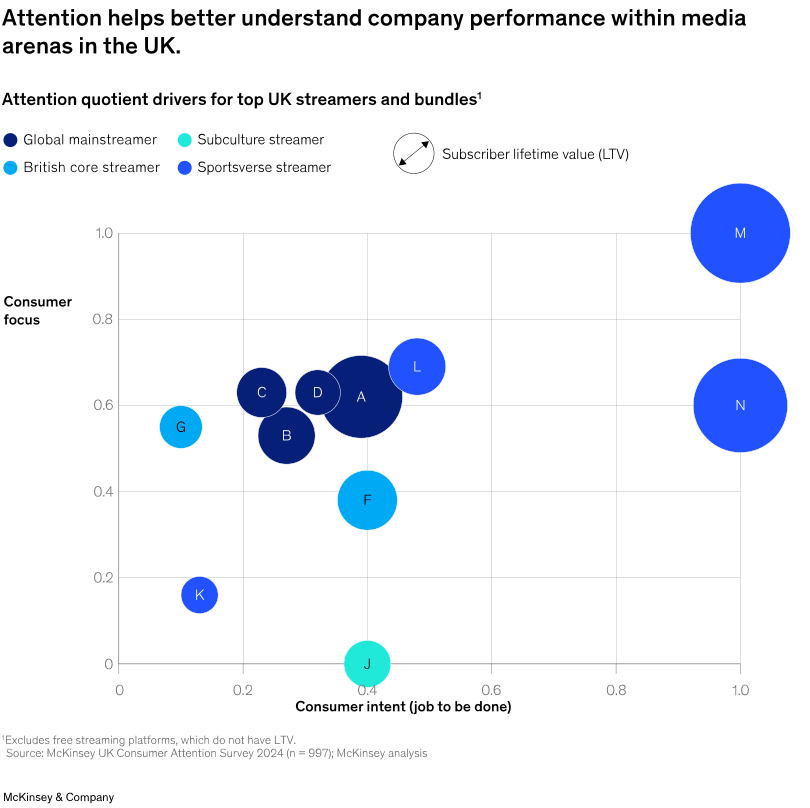
Across UK streaming archetypes, a pattern emerges. In general, sportsverse streamers deliver the highest levels of focus and intent because they give viewers the opportunity to engage with live, compelling events. Indeed, more than two-thirds of viewers reported very high levels of engagement when consuming this content. This intensity of attention enables these platforms to command up to twice the subscriber LTV of more general streaming services. Global mainstreamers are clustered, sustaining solid moderate focus and intent, while subculture streamers command higher intent than focus and are less successful in extracting value. Because of their business model, free streaming platforms don’t command LTV, but consumers report engaging with their content with the lowest levels of focus, approximately half that of sportsverse watchers.
Customer recommendation scores and focus may be partially driven by efficacy of content recommendations, according to our survey of UK consumers. In general, UK consumers report that global mainstreamers and sportsverse streamers offer the most effective content suggestions to subscribers. This is understandable given the mature recommendation engines of the global players and the niche content positioning of sportsverse streamers. Meanwhile, subscribers to British core streamers and free streamers report lower satisfaction with content suggestions, which likely contributes to lower customer recommendation scores and focus.
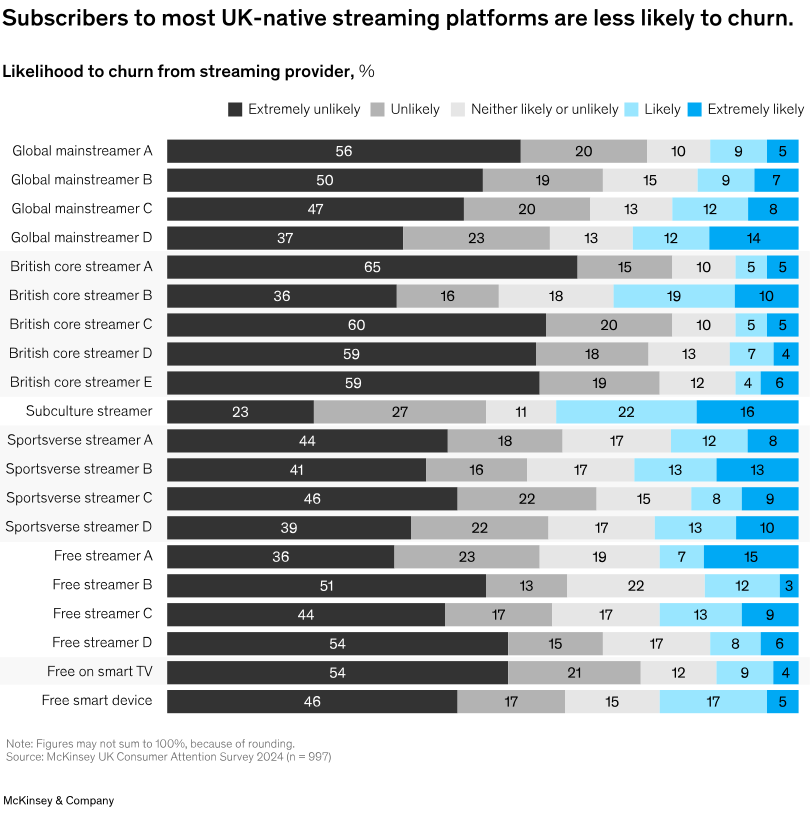
Interestingly, the relationship between overall customer satisfaction and retention is mixed. Despite commanding high customer recommendation scores and satisfaction with content suggestions, sportsverse streamers and global mainstreamers record the highest reported churn intent (Exhibit 10). This likely reflects higher package price points and subscription patterns tied to specific sporting events or cinematic releases. Conversely, UK-native streamers show lower churn propensity, likely due to structural factors such as free-to-watch models after login. This suggests that churn dynamics in this archetype are shaped more by business model and pricing strategies than by focus or customer recommendation scores.
For UK media players, attention is a new performance lever
Consumer attention is increasingly fragmented as audiences grapple with a deluge of content volume, diversity, and mediums. A simple measurement of the number of consumers and time spent is a critical metric—but also a blunt instrument. It’s the quality of attention that makes the difference, and strategies driven by capturing the focus and intent of consumers can break through and drive value.
Our research on consumer attention can help a wide range of participants from across the media landscape more effectively approach their biggest decisions and toughest pain points.
For creators and distributors
Creators and distributors (such as IP owners, musicians and authors, publishers and video platforms, and film, TV, and live-event producers) can use the attention equation to sharpen how they produce and present content across an increasingly fragmented landscape. In practice, this could mean augmenting content strategy by identifying and increasing exposure to mediums with the strongest monetisation tailwinds. Creators and distributors could also deploy attention measurement and tagging to improve the efficacy of content greenlighting, acquisition and recommendation models.
For advertisers
For marketers and media buyers, attention is no longer just a diagnostic tool—it can become a performance driver. Key steps include optimising the media mix relative to quality of consumer attention; driving attention-resonant marketing that layers attention metrics, including focus and intent, over traditional targeting; enhancing segmentation by laying attention-based insights over typical behavioural models; and investing in personalisation and gen AI to combine contextual attention data with targeting and personalised creative. In addition, select mediums (such as streaming video) may be undermonetised and underpriced when viewed through the lens of the attention equation. Success will not necessarily be about spending the full budget on high-attention media but about finding a mix that maximises returns on attention in each channel.
For retail media networks
By layering in attention, retail media platforms have the opportunity to combine intent-rich engagement (the job to be done) with high monetisation efficiency. For UK supermarkets and marketplaces, for instance, this means leveraging shopper data to quantify attention value (how much focus and purchase intent retail browsing represents) and selling it as a premium advertising product. Retail media has seen strong growth in the United Kingdom, with high ROI driven by the maturity of monetisation models, the proximity to conversion, and the attention levels that retail media delivers across most customer journeys.
We all have the same number of hours in a day. And while the total number of hours consumers watch, listen to, read, or otherwise interact with content every day has increased only marginally, where and how they consume content has changed dramatically. But finding consumers is only half the battle. The real key to winning the battle for consumer attention is analysing how time, commercial factors, and attention come together in different media arenas and channels. By focusing on more purposeful and relevant content, brands can also contribute to a more intentional and balanced media environment.