For decades, the Bay Area has been a rare place in the world where talent, capital, ideas, research, and technology collide to fuel global innovation and seed entirely new industries. People come to the region to be creators. They come to test boundaries, challenge assumptions, and scale innovation that reshapes how the world works. With an economy rivaling that of major nations and an unmatched concentration of entrepreneurs, engineers, researchers, investors, and global companies, the Bay Area remains arguably America’s greatest engine of innovation and economic dynamism.
At the center of that ecosystem sits San Francisco. It’s not just an iconic geographic hub; it’s the cultural and urban core that gives the Bay Area its energy and identity. San Francisco has long played a role in bringing together technology, creativity, risk-taking, and civic ambition in ways few places can replicate.1 From the rise of semiconductors and software to today’s breakthroughs in AI and robotics, San Francisco and the Bay Area have consistently served as the meeting ground where new ideas become global movements.
McKinsey’s America at 250 report2 highlights the foundations of the United States’ competitive advantage: the ability to combine innovation, talent, and capital at extraordinary scale. In many ways, the Bay Area represents the clearest expression of that model. At a moment when global competition is accelerating, San Francisco’s role within this ecosystem has never been more important.
The region is entering its next chapter from a position of strength. AI has reinforced the Bay Area’s leadership as the center of technological invention, attracting a new generation of founders, researchers, and investment. But the region’s next project for reinvention may be itself. The Bay Area needs to make efforts to broaden its base of prosperity, avoid an economy overly reliant on AI, reconcile economic disparities among its populations, and address concerns around future jobs. At the same time, the region needs to ensure it isn’t eclipsed by other cities and countries that are moving aggressively to build their own innovation ecosystems, compete for talent, and capture the industries of the future.
So how does a region that has led for generations continue to evolve and extend its advantage? The Bay Area’s foundation is strong, consisting of world-class universities, deep pools of capital, technical expertise, and a culture that attracts creativity and rewards experimentation. However, sustaining leadership will require more than relying on past success—it demands renewed investment in the region’s urban core, infrastructure, livability, and long-term competitiveness.
This article examines the Bay Area’s enduring economic strengths and San Francisco’s role as the heart of one of the world’s most important innovation ecosystems. It explores the advantages that built the region’s global leadership, the challenges that will define its next era, and the choices that could ensure the Bay Area remains a place where the future continues to be invented for decades to come.
The Bay Area as the epicenter of global innovation
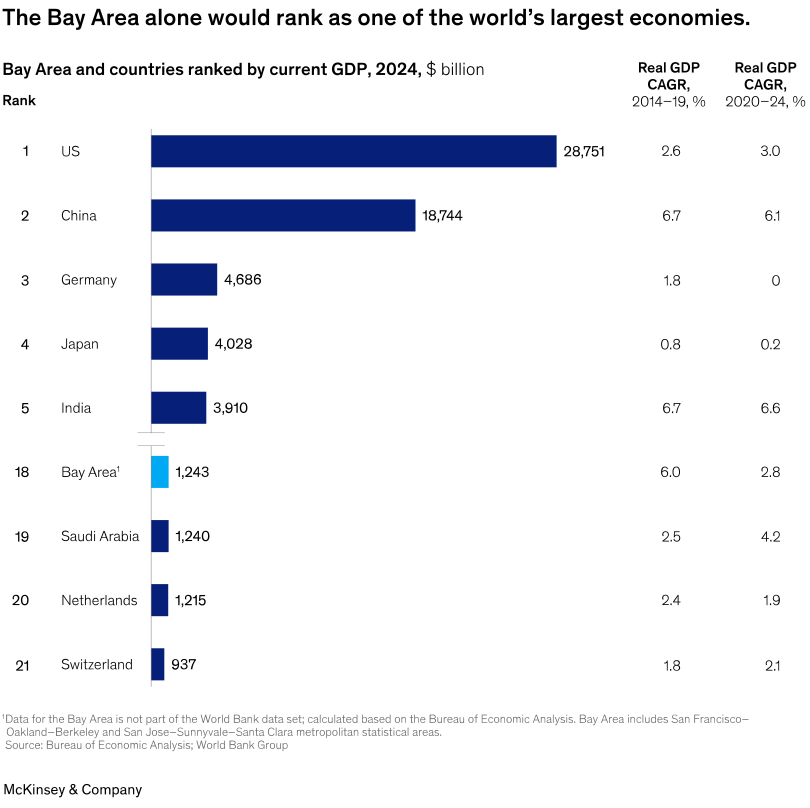
For nearly a century, the Bay Area has been cited as a blueprint for the modern innovation ecosystem. The Bay Area is home to 321 unicorn companies,3 which is more than any other global start-up ecosystem,4 and has continuously reinvented itself across successive waves of technological change, including semiconductors, software, internet, and now AI. The Bay Area is one of the most powerful, fast-growing, and competitive economies in the world, with GDP output of roughly $1.2 trillion per year. If the region were a country, it would be the 18th-largest economy in the world (Exhibit 1).5
A catalyst behind this success is the region’s highly talented workforce. The Bay Area has one of the most productive workforces globally, with a real GDP per capita of $164,100 in 2024—higher than any other urban metropolitan area in the country (Exhibit 2). But other areas are gaining momentum. Since the COVID-19 pandemic, GDP growth per capita in areas such as Seattle, Dallas, and Houston now exceeds growth in the Bay Area.
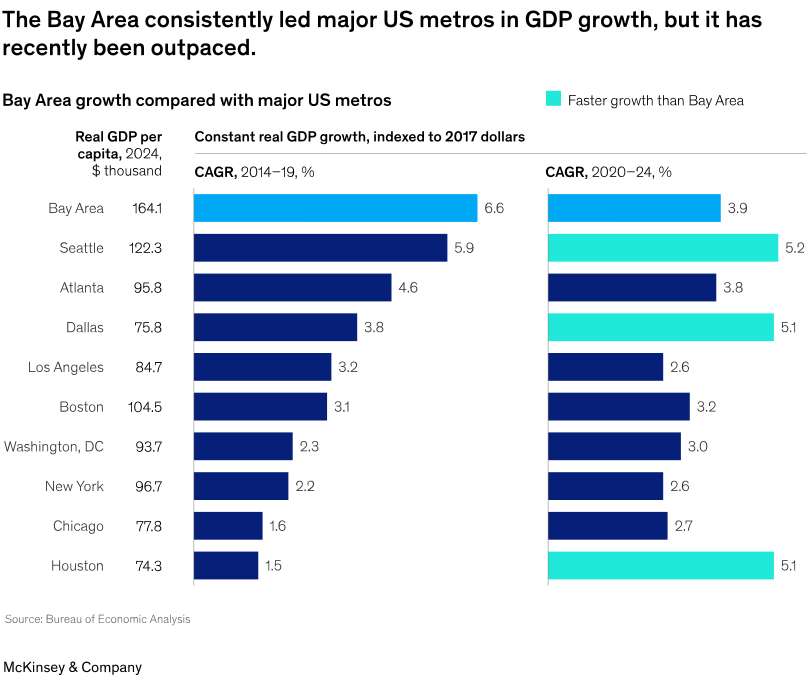
The Bay Area may need to consider two possible realities: Either smaller economies are catching up by boosting productivity, investment, and spending, or the Bay Area’s competitive edge is becoming harder to sustain as the competition for firms, talent, and capital rise. Both can be true. The imperative now is to sustain and find new ways to expand the Bay Area’s economic strength while reinforcing the qualities that make it an attractive place to live, work, and innovate.
A highly productive corporate network
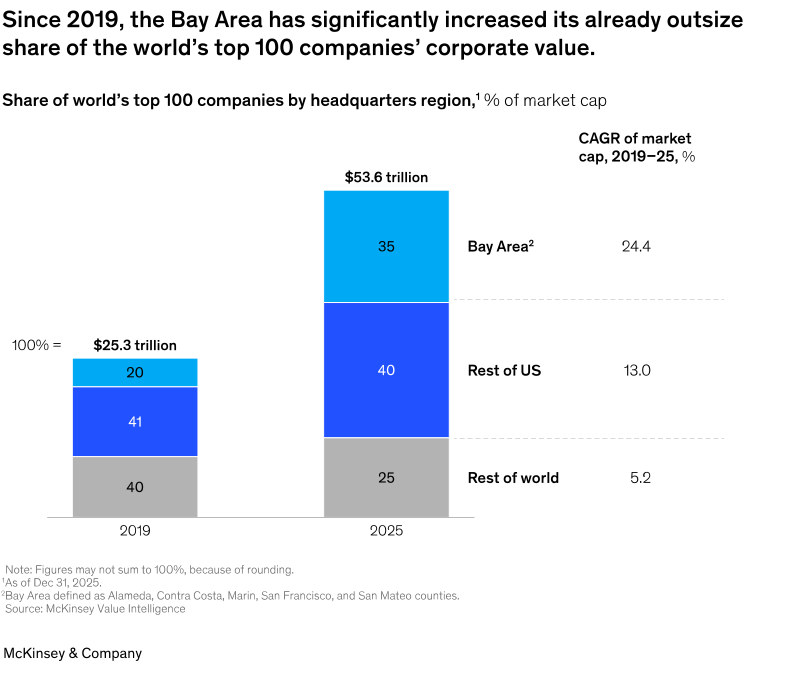
The Bay Area’s economic strength is rooted in an unparallelled concentration of leading companies. Firms headquartered in the region now account for 35 percent of the market capitalization of the world’s top 100 companies, up from 20 percent in 2019 (Exhibit 3). In fact, four Bay Area–based companies in the top ten of that list—Apple, Alphabet, Broadcom,6 and Meta—account for 29 percent of that market value on their own.
At the center of this ecosystem, San Francisco remains a leader in frontier technologies and patents and advanced R&D, particularly for AI and biotech. The next generation of San Francisco–based AI and robotics companies are scaling rapidly and approaching potential IPOs, with valuations that could place them among the world’s largest public companies.7
Still, the ongoing success of the Bay Area’s historic innovation networks doesn’t guarantee that jobs, business formation, and local economic activity will expand at the same pace. Sustaining the value the Bay Area has created over decades is as important as addressing its immediate and acute issues, including cost pressures, talent availability, business environment, taxes, and quality of life for residents. Peer cities have managed such issues in ways that help local companies grow more easily and readily.
San Francisco is representative of the broader Bay Area’s urban prosperity, innovation, and cultural vitality. Its continued success is critical for the holistic prosperity of the state—and, in fact, the United States’ resilience.
Translating San Francisco’s economic strength into broader prosperity
Continued technological innovation is critical, but enduring growth and leadership will require other kinds of ingenuity. The Bay Area must reimagine how to translate economic dynamism into broad-based opportunity, a high quality of life, and an environment that is livable, inclusive, safe, and accessible to all its residents.
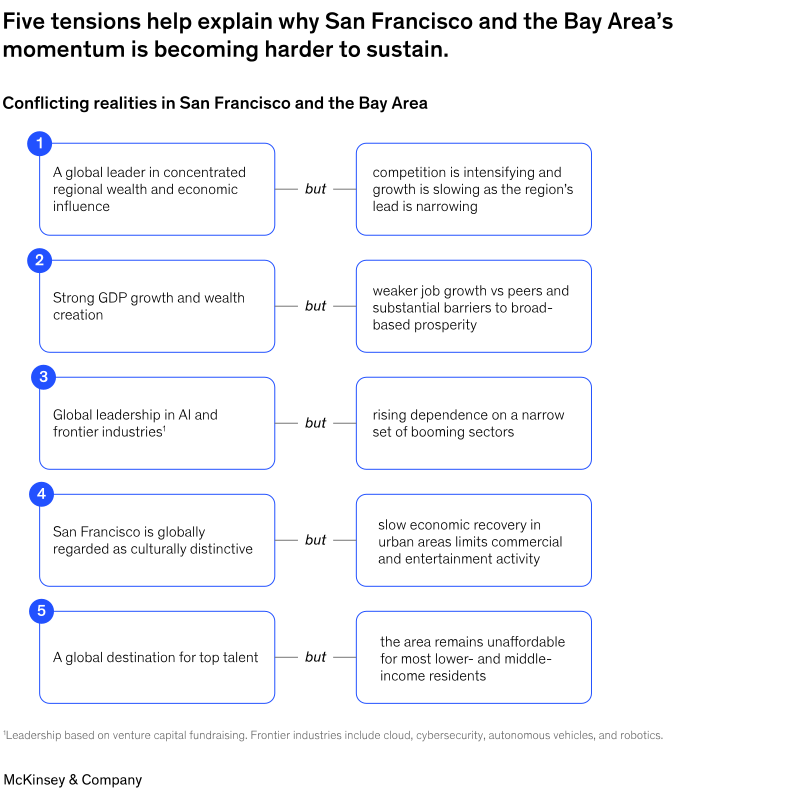
To do so, San Francisco and the Bay Area must confront and address five central tensions (Exhibit 4).
Overcoming barriers to broad-based and inclusive prosperity
San Francisco is one of the top metropolitan areas in the world. It is the home of leading scientists8 and the place of origin for tech innovations across data, banking, and personal devices as well as new innovations in digital and physical AI. San Francisco’s GDP has grown strongly and steadily since 2019, outperforming peer metropolitan areas in terms of output recovery after COVID-19 (Exhibit 5).9
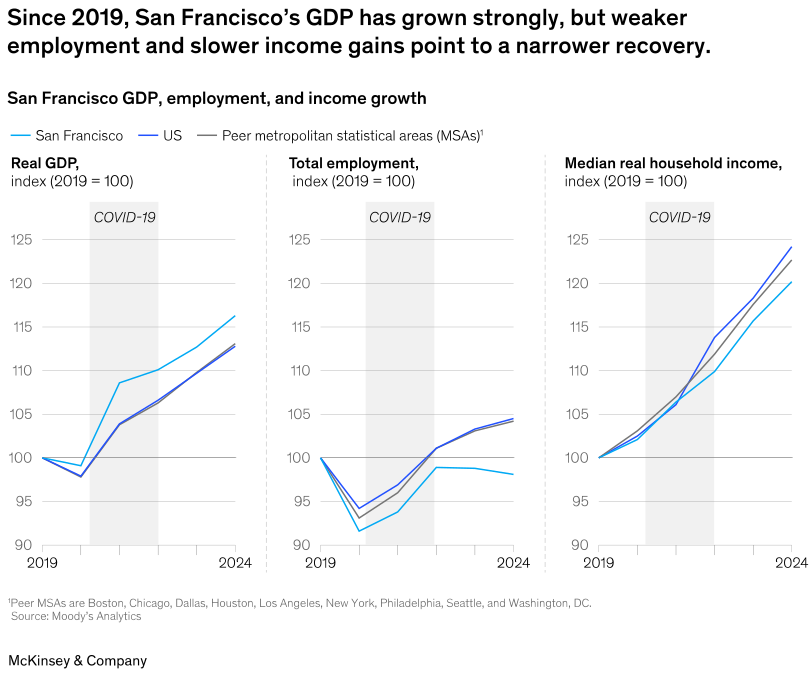
That economic strength hasn’t yet translated into broader and commensurate gains for residents, workers, and neighborhoods, however. Total employment and median household income lag GDP growth, suggesting that San Francisco’s recovery is concentrated in the wealthier portions of the population.
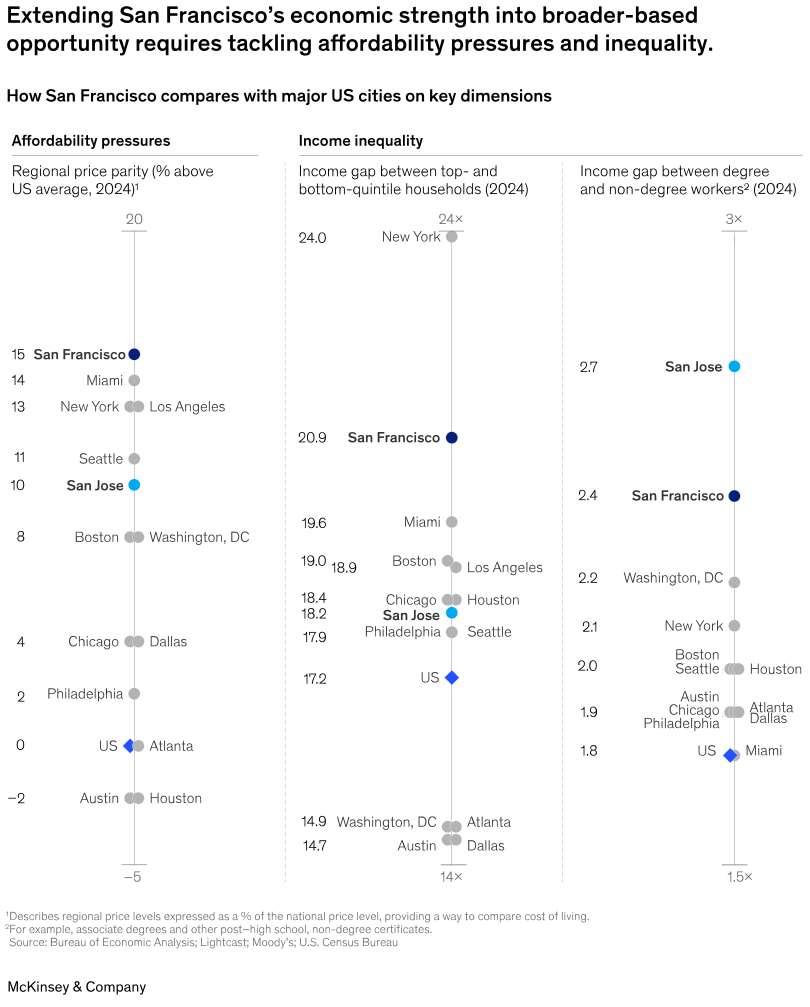
The city’s cost of living is 15 percent higher than the US average, widening disparities across socioeconomic groups and making peer cities more attractive to younger residents, people who are earlier in their career journeys, underrepresented groups, and middle-class citizens. In 2024, the income gap between top- and bottom-quintile households in San Francisco was nearly 21 times, the second highest among peer metropolitan areas next to New York City. Incomes among degree-holding workers were 2.4 times higher than those of non-degree-holding workers in 2024, a gap that is 10 percent higher than in New York City and about 20 percent higher than the national average (Exhibit 6).
Underrepresented groups are disproportionately affected by this inequity and experience worse outcomes in poverty, per capita income, employment, and education. The average per capita income for people of color is 50 percent or less than that of white residents, driven by higher unemployment rates and lower levels of educational attainment.10
As San Francisco works to create a strategy to revitalize and broaden its economic strength, lessening these gaps may be important considerations, especially considering the important role diversity has within uncertain and complex macroenvironments.11
San Francisco’s competitive edge: A boon or a vulnerability?
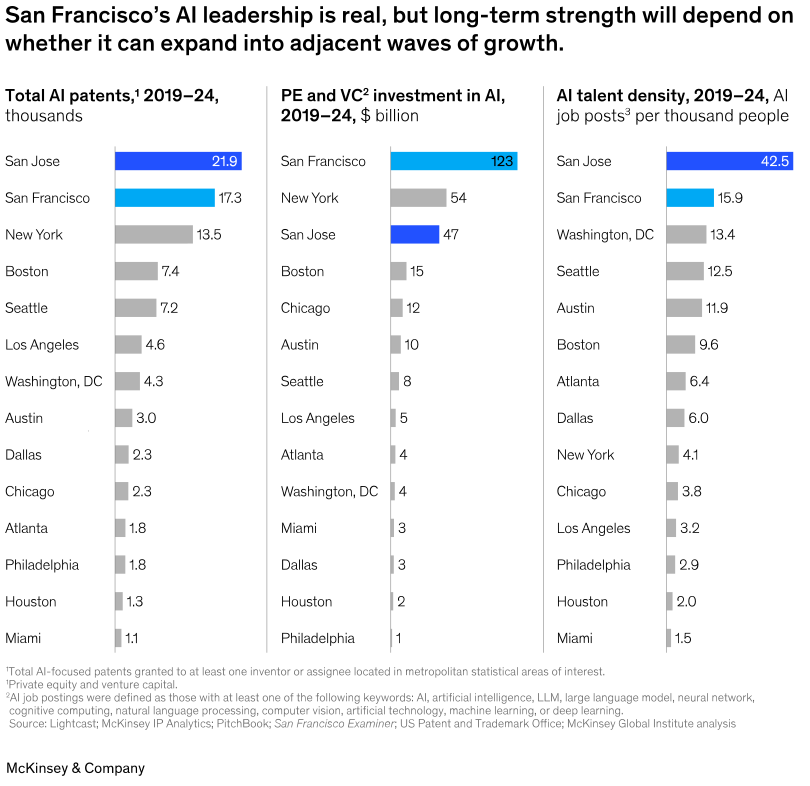
San Francisco is central to shaping the future of AI and robotics.12 The city is home to 25 of the top 50 AI companies in the world,13 and it ranks among the leading hubs for AI patents, second only to San Jose, underscoring the strength of its research ecosystem and the Bay Area overall. But is this competitive edge concentrated too narrowly for long-term, equitable growth?
San Francisco attracts an outsize share of AI investment, with roughly $123 billion in AI-related private capital between 2019 and 2024—more than double that of the next US hub (Exhibit 7).
In 2025, San Franscisco–based companies received 30 percent of global venture capital (VC) funding and 85 percent of the Bay Area’s total amount of VC funding.14 Between 2019 and 2025, San Francisco secured nearly $375 billion in funding for AI software and services. That dwarfs the region’s funding for cloud services ($67.4 billion), cybersecurity ($10.3 billion), autonomous cars ($19.4 billion), and robotics ($16.1 billion) (Exhibit 8).
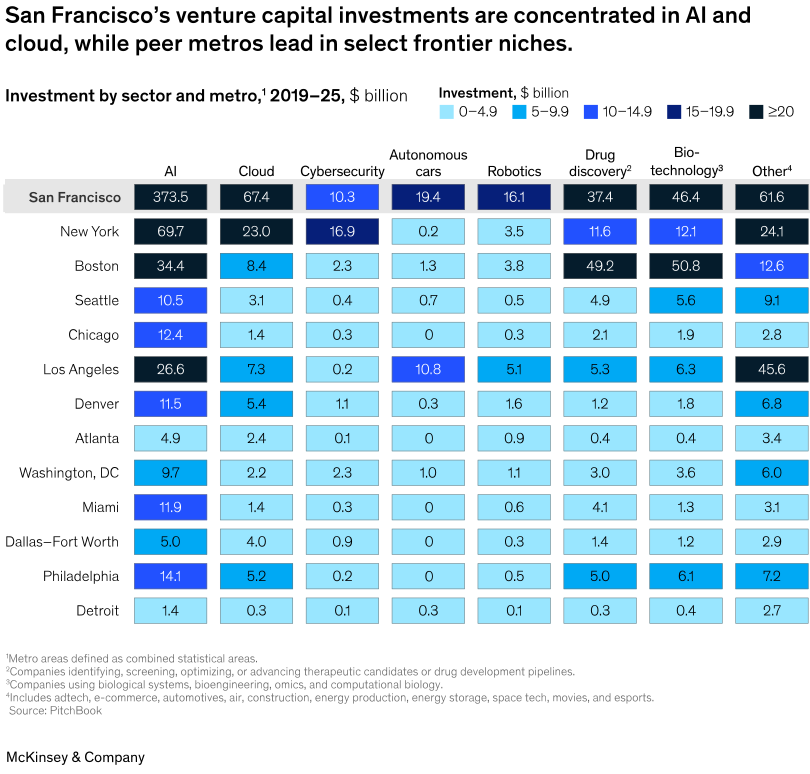
The concentration in a powerful but relatively narrow sector mix may leave the city overexposed, raising the possibility of an outcome similar to the “bust” of the dot-com bubble of the early 2000s. Today, AI-related activity represents 35 percent15 of total leasing demand in San Francisco. About 40 percent of GDP is also tied to industries in which gen AI may have a bigger impact, potentially leading to regulatory disruptions or job displacement.16 AI could even disrupt knowledge workers, who have been the driving force of the region’s success. San Francisco ranks among the top regions in AI talent density, reflecting a highly concentrated base of specialized researchers, engineers, and entrepreneurs.17
As the America at 250 report underscores, the next era of US economic leadership will depend on its capacity to regenerate such engines of innovation, with San Francisco at the top of the list. Without continued expansion into a broader set of industries, San Francisco’s resilience could be challenged by future shocks and shifts in technology cycles. The city is uniquely positioned to leverage its AI strength to catalyze growth across a diverse range of sectors such as life sciences, finance, and robotics and physical AI. But the future of AI will need to be shaped responsibly and in a people-centric way to ensure communities are not an afterthought in the next era of innovation.
Translating innovation into urban and cultural prosperity
San Francisco has long been thought of as one the most attractive and culturally diverse places in the United States, serving as a global magnet for talent, creativity, and tourism. In fact, this ability to serve as a global magnet has been a key part of its innovation edge.
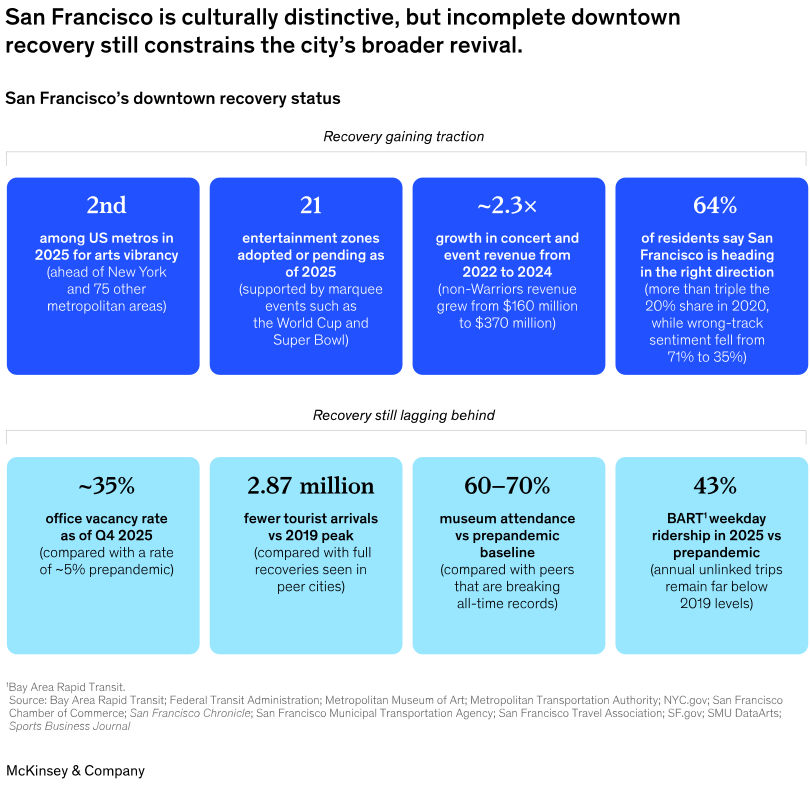
Still, the city’s rebound after the COVID-19 pandemic has been slow despite recent positive momentum: Tourism and cultural sectors are recovering but remain below prior peaks. In 2025, visits to downtown San Francisco were up 88 percent compared with 2020. That’s still short of prepandemic levels—for instance, downtown foot traffic remains 60 percent lower,18 with office visits at just 58 percent of prepandemic levels,19 compared with 90 percent in New York City, 66 percent in Houston, and 63 percent in Boston.20
The uneven recovery reflects broader structural shifts. Lower return-to-office rates in downtown San Francisco, which has a relatively high concentration of office space,21 has slowed the pace of recovery. Office occupancy has rebounded only about 1 percent from all-time lows, suggesting that the path to a fully reactivated downtown will likely take time and continued adaptation.
Nonetheless, San Francisco remains a vibrant, multicultural hub for tourists and citizens alike. San Franscisco is home to citizens from nearly 100 countries (foreign-born citizens represent 30 percent of the city’s residents22) and welcomes about 23 million visitors annually who support a meaningful cultural and economic ecosystem.23 As highlighted in the America at 250 report, the United States’ enduring strength has been rooted in its ability to attract people, ideas, and capital from around the world; San Francisco has been doing so for decades.
This diversity underpins a thriving arts and creative sector that is central to the city’s identity and competitiveness. In 2025, San Francisco ranked as the second-most “arts vibrant” place in the United States,24 with 24 art museums, 98 theaters, and more than 4,000 public artworks.25 Staff and artists at nonprofit cultural organizations in the city are paid more than anywhere else in the United States,26 and new exhibits and museums continue to grow San Francisco’s cultural relevance on a national and international stage. Far from being ancillary, this cultural dynamism plays a critical role in attracting and retaining global innovators. Nonetheless, much data reflect the fact that a creative revival is still a work-in-progress (Exhibit 9). Coupling its efforts to strengthen economically with its efforts to be a world-class place to live, work, create, and thrive will ultimately strengthen the Bay Area’s wider cultural ecosystem.
What it will take to turn today’s strengths into tomorrow’s success
As the Bay Area enters this next phase, the answers to five questions will shape its future:
- As competition intensifies and technological disruption continues, how can the Bay Area sustain and expand its position as the most productive metropolitan region in the United States?
- How can the Bay Area ensure its historical advantages in VC and talent attraction continue to translate into locally rooted growth, jobs, innovation, and opportunity?
- What will it take for San Francisco’s economic strengths to translate into faster job growth, affordability, and broad-based prosperity for all San Franciscans?
- How can San Francisco build on its AI and innovation leadership to seed and scale the next generation of mega-industries?
- How can San Francisco continue to build on its momentum to reassert itself as a vibrant, global cultural center? What does successful reinvention of downtown San Francisco look like?
San Francisco’s next phase of growth may entail focusing on effectively translating its technologically driven economic gains into higher standards of living and improved city functionality. Areas often associated with urban competitiveness tend to feature efficient public services, clear permitting processes, small business support, and accessible resident interfaces. A revitalized downtown might serve various purposes, such as office use, residential activity, cultural assets, university presence, and public-space vitality.
The city could also explore how to use its strength in AI as a platform to participate more broadly in the next big arenas of competition. For instance, it might extend or regain its leadership into adjacent arenas such as e-commerce and biotechnology, healthcare, and life sciences. Stakeholders could consider building more-intentional AI and robotics connections across sectors to accelerate innovation and commercialization.
San Francisco and the Bay Area’s continued leadership in innovation will increasingly hinge on the strength and depth of its human capital. Continued attention to education and lifelong learning—from early childhood education through adult reskilling—could help strengthen the region’s long-term talent base and deepen collaborations between academic institutions and companies. With about 60 percent of the workforce holding a bachelor’s degree or higher27 and a high concentration of specialized talent, the city has a strong foundation to build on. Sustaining this edge will require continued investment in talent pipelines, research partnerships, and workforce development, alongside efforts to reinforce San Francisco’s position as a global magnet for top talent.
Over the years, the Bay Area has converged innovators, scientists, artists, entrepreneurs, hard workers, and out-of-the-box thinkers. The region’s makeup has made it a highly productive hub that has pioneered life-changing innovations and has helped fuel America’s economic growth. And with San Francisco at its heart, the Bay Area has also helped foster a rich, vibrant culture that draws tourists and residents from all around the world. Now, at the helm of the AI revolution, San Francisco and the Bay Area will have to reinvent themselves to extend their leadership. The region’s foundation is inimitable, but competition is fiercer than ever, and the challenges present in San Francisco and the Bay Area broadly cannot be ignored. This new gold rush requires the region to evolve as a place that is livable, inclusive, and accessible at the same pace that it expands its economic success. Translating the Bay Area’s strengths into broader prosperity will allow it to capture this golden moment.



Related Articles