In the private sector, it’s beyond question: Healthier organizations perform better. Companies in the top quartile of organizational health—as measured by McKinsey’s Organizational Health Index (OHI)1 across dimensions spanning leadership and accountability to innovation, collaboration, and external orientation—deliver stronger sales growth, earnings, and returns on invested capital, as well as higher employee satisfaction and talent retention.
But what about the public sector? Improving public sector efficiency and effectiveness is arguably more critical than ever amid efforts to rebuild public trust while under pressure to deliver more with fewer resources. While in 2024, we noted the unique constraints public sector entities face2—such as external scrutiny, rigid structures, and budgetary limitations—our work identified a direct positive correlation between organizational health and public sector performance. In fact, in drawing on more than a decade of OHI surveys and an expanding set of public sector case examples, we’ve determined the following:
- Organizational health is one of the most controllable drivers of public sector performance.
- Improvements in OHI scores are associated with stronger outcomes for citizen satisfaction, financial performance, service quality, and public trust.
- Declines in the health of public sector entities are often associated with deteriorating performance.
This is not to suggest that measuring public sector performance is easy. Public sector outcomes are often long term in nature, definitions of success may be very different than for private companies, and collecting data can be difficult. Yet this article builds on our foundational research to provide public sector leaders with a fact-based case for why organizational health matters and how it can become a core enabler of better outcomes for citizens. And for public leaders navigating constrained budgets and rising expectations, organizational health may be one of the few levers fully within their control.
Public sector performance: A more complex challenge
It’s fair to ask if the same organizational health dynamics that drive performance in the private sector apply to public entities. After all, most public agencies pursue complex, long-term missions that defy simple metrics. Unlike private firms, they do not compete for market share or earnings. Instead, they must balance multiple (often conflicting) objectives such as improving public health, delivering education, ensuring public safety, fostering economic development, and building trust.
Moreover, almost 80 percent of global public sector leaders agree that the next five years will be more disruptive than the past decade, filled with challenges including tighter budgetary constraints, disruptive technology such as AI and automation, rising citizen expectations, and limitations on and the inability to attract talent.3 “Besides just resources, for people to keep showing up to work, you have to provide purpose,” the former chief operating officer of one US state said. “Allowing folks to feel that they can make that impact and take control of that is critical.”4
Yet we’ve found that the same broad approach to assessing the organizational health of private sector companies can be applied to the public sector (for more on the OHI approach, see sidebar “What is the Organizational Health Index?”). The difference? While we still examine dimensions such as leadership, capabilities, and accountability, the assessment is in service of driving performance outcomes unique to the public sector, including impact, trust, and results for citizens (Exhibit 1).
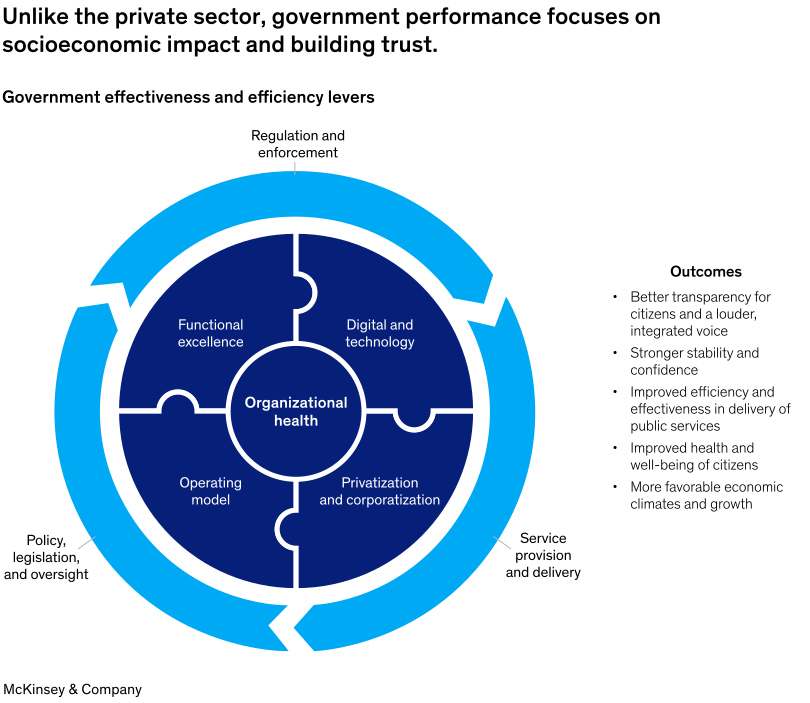
Measuring these outcomes is inherently complex, requiring a balance of quantitative and qualitative indicators. Public agencies must also operate under greater constraints, including political turnover, fiscal limitations, legacy systems, and siloed bureaucracies.5 These factors can make it difficult to link internal efforts (such as improving organizational health) to external outcomes.
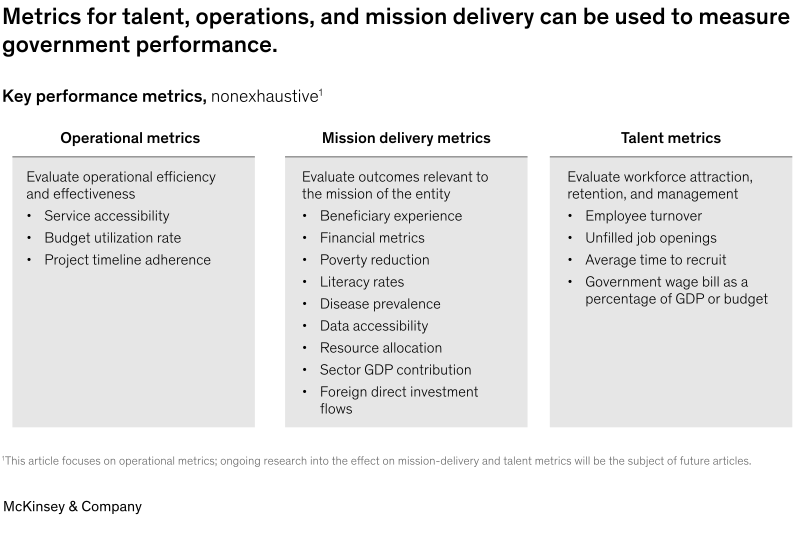
Yet that is precisely why organizational health matters. In such complex systems, strong organizational health provides the alignment, leadership, and adaptability needed to sustain performance. Our analysis looks at talent, operational, and mission delivery metrics—essentially examining whether the public sector has what it needs to achieve its goals as well as how efficiently and effectively it delivers outcomes relevant to its mission (Exhibit 2).
New evidence: Health drives government performance
In the public sector, the challenge is not only translating the theory around organizational performance into tangible actions but monitoring and measuring government outcomes. In recent years, McKinsey has deepened its research on this link between OHI scores and public sector impact, drawing on surveys of more than 400,000 public sector respondents and a growing set of case studies across agencies, ministries, municipalities, and utilities. We now see a clear pattern: Healthier public sector organizations deliver better results.
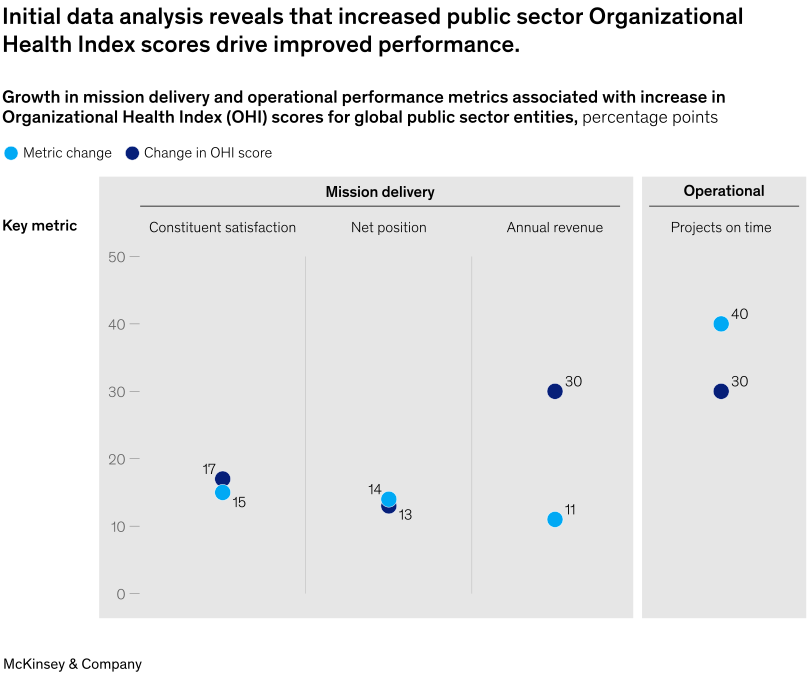
In other words, when agencies improve their ability to align on a common mission and strategy, execute effectively, and continuously innovate and renew, they become better equipped to translate mission into outcomes. This relationship emerged in the five case studies we analyzed, and Exhibit 3 shows corresponding increases in health and performance scores for three of those examples.
Our analyses were consistent: Public sector entities that improved OHI scores by 13 to 30 points saw gains in citizen satisfaction, service delivery quality, operational efficiency, financial outcomes, and measures of public trust (for more on our approach, see sidebar “About our research”).
Gulf Cooperation Council municipality: Better citizen experience, faster delivery
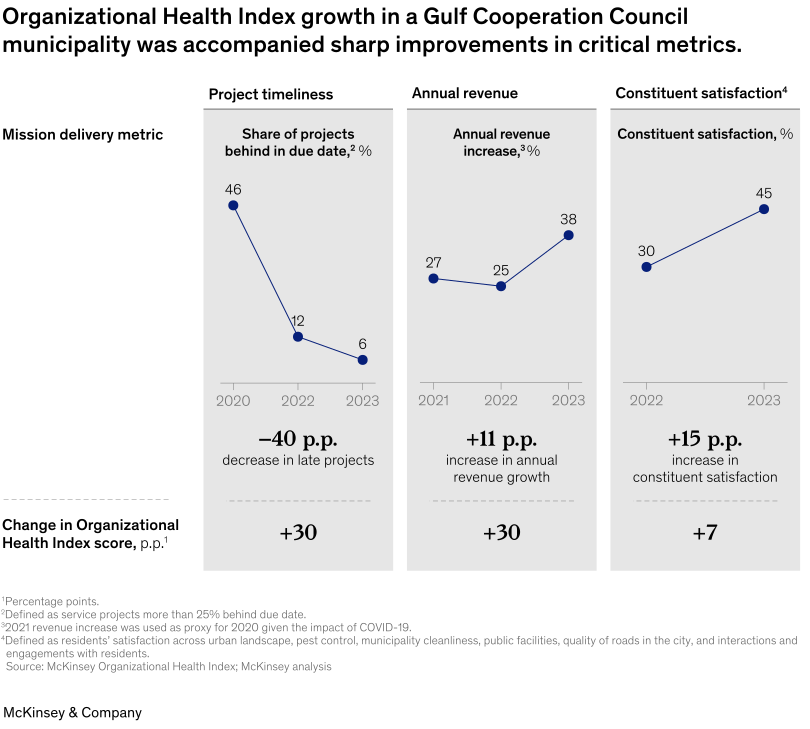
A fast-growing city entity, seeking to improve quality of life for residents and visitors, was diagnosed with a 2020 OHI score in the bottom quartile. It set a goal of dramatically improving organizational health, first analyzing the root causes of its poor performance, conducting a leadership workshop to identify and set priorities, and then launching strategic and focused efforts to improve leadership capabilities, cross-functional collaboration, performance management, and employee engagement. The net result was dramatic OHI improvement that translated into tangible increases in revenue, constituent satisfaction, and project delivery, among other metrics (Exhibit 4).
US utility: Stronger financial and service outcomes
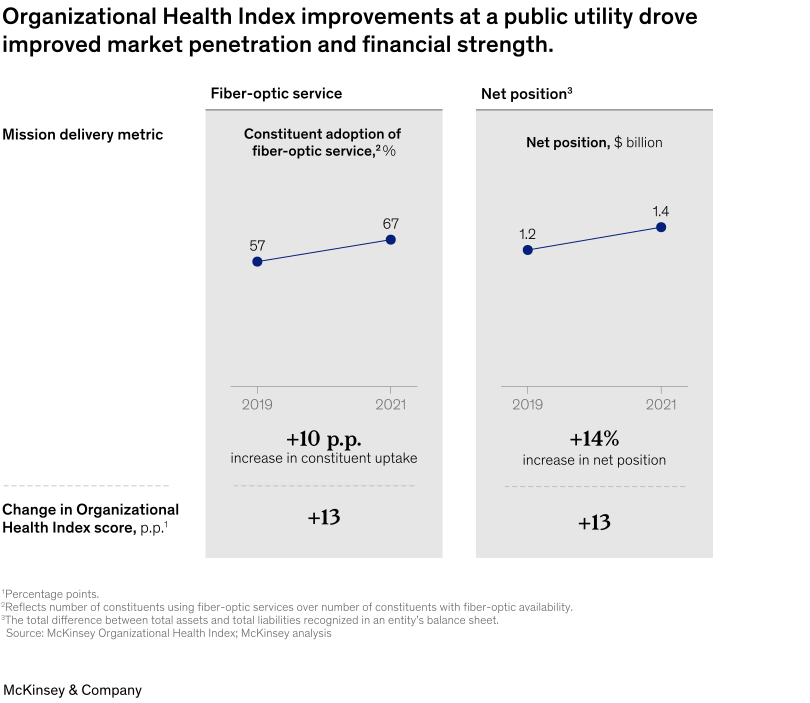
A US county-level utility focused on energy services reacted to a low 2019 OHI score by embedding organizational health into strategic planning, which resulted in notable improvements to its health and performance (Exhibit 5). In fact, OHI scores improved across all nine dimensions—the largest gains were in leadership and accountability—and all but two management practices. These advances were the result of initiatives aimed at the foundational power practices6 of strengthening personal ownership, more clearly defining roles, and providing competitive insight and strategic clarity. We have also seen the strong relationship between health and other performance metrics in US public sector organizations.7
Advisory think tank: Expanded ecosystem impact
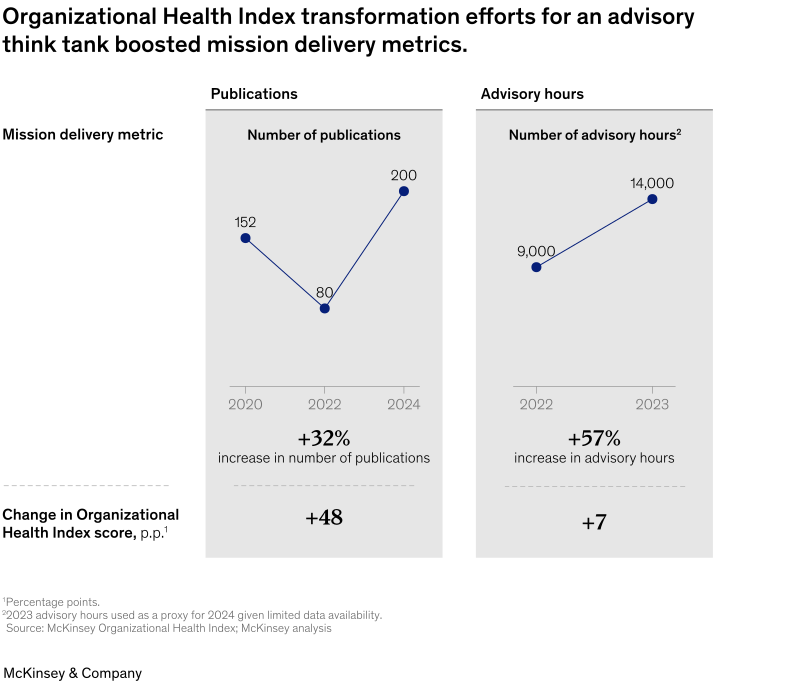
An advisory think tank on energy and sustainability undertook a multiyear OHI-driven transformation to improve its leadership, innovation, and external collaboration. The effort resulted in the adoption of a new organizational structure, fresh approaches to people management, a digital transformation, and a reset of the think tank’s partnership approach and offerings. The resulting 48-percentage-point improvement in its OHI score corresponded with a significant uptick in its two mission delivery metrics: publishing output and advisory hours (Exhibit 6).
A path forward: Linking health to performance
Organizational health influences public sector performance through its clear link to ultimate outcomes. For example, the OHI dimension of direction manifests directly in an entity’s ability to deliver services and value for citizens, just as a dimension such as innovation and learning affects the speed with which government can digitally transform. Healthy organizations create the leadership focus, collective energy, and cross-functional collaboration needed to deliver on complex public missions.
But just as improving organizational health boosts outcomes, declines in health hurt public sector performance. For example, we found a three-percentage-point decline in OHI at one national utility corresponded with reduced customer satisfaction and service outcomes. That’s why organizational health is never neutral: It’s either propelling the organization forward or holding it back.8
And while there is growing evidence of the link between organizational health and public sector performance,9 significant barriers persist in improving health within many public sector entities. These include difficulty in defining performance outcomes across complex missions, leadership turnover and inconsistent sponsorship, siloed HR functions and performance improvement efforts, and limited measurement of citizen experience and trust.
Yet leading public organizations are finding ways to bridge these gaps between organizational health and performance. Their actions include the following:
- making organizational health a strategic priority for top leadership
- defining clear, mission-aligned performance outcomes
- embedding OHI into strategic planning and tracking systems
- developing leadership capabilities at all levels
- tracking organizational health outcomes and implementing feedback loops
- treating health as a continuous improvement journey
Better health, better government
Our first article explored the potential for organizational health to drive better public sector performance and outlined how public organizations can improve their organizational health.10 This article underscores why that’s critical: Healthier organizations consistently deliver stronger public sector performance.
The next frontier in public sector effectiveness may be treating organizational health as a critical pillar of civic infrastructure. Our research already shows how commitments to and investments in organizational health correlate with improvements in everything from citizen satisfaction and service outcomes to stronger financial performance and greater public trust. And while we are continuing longitudinal studies of government effectiveness, it’s clearly one of the most powerful—and controllable—drivers of better public sector performance. Given today’s environment of rising citizen expectations and limited resources, organizational health is a lever that public sector leaders increasingly cannot afford to ignore.