The past year has been one of mixed fortunes for grocers in the Middle East and North Africa (MENA) region. While consumer confidence continues its upward trend from previous years, that optimism has not translated into faster growth. In fact, growth has slowed over the past year, despite a sharp uptick in new store openings, suggesting that a change of strategy may be required for grocers to succeed in 2026.
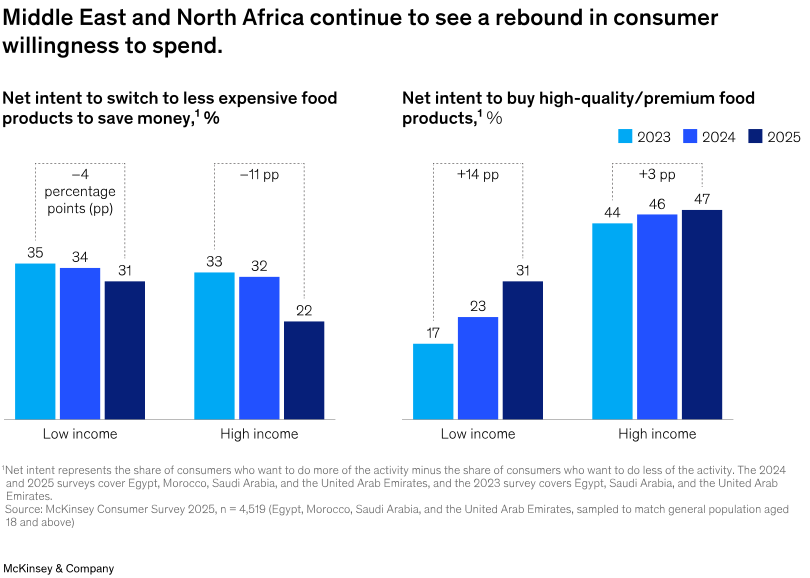
Our 2024 State of Grocery Retail MENA research highlighted that, after years of declining consumer confidence, the market had turned a corner—and our 2025 research confirms it.1 Across the region, consumers are balancing price consciousness and bargain hunting with a willingness to spend more on selected products. Fewer consumers, from both higher- and lower-income groups, were intending to trade down to save money in 2025, compared to 2023 and 2024, and more consumers across the income spectrum expressed an intent to buy high-quality and premium food products (Exhibit 1). Healthy and fresh produce, and food-to-go, were the primary beneficiaries of this trend.
However, this willingness to spend has not provided the tailwind for growth that might have been anticipated. Growth in the formal grocery industry was slow in the five markets included in this study, with the exception of Morocco, where it picked up to 4.7 percent in 2024 (Exhibit 2) (see sidebar, About this research). New store openings in Morocco also topped the region with an 11 percent increase from the previous year.
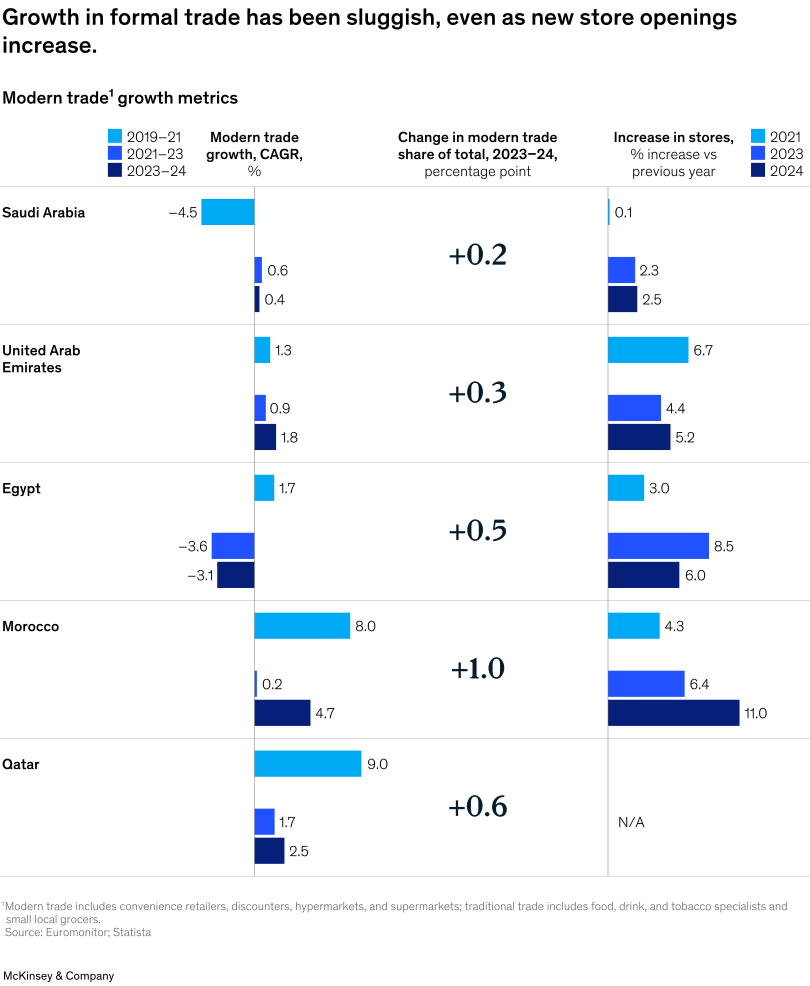
Egypt’s formal grocery industry saw the lowest growth, contracting by 3.1 percent, while new store openings grew by 6.0 percent, suggesting that store sales are declining in that country, as in most of the rest of the region.
Looking ahead, to capitalize on rising consumer optimism and break out of this slow-growth trap, grocers may need to find pockets of opportunity, sharpen their customer offer to cater to shifting shopper preferences, and leverage data and AI to accelerate growth. This article explores ten trends shaping the landscape to help retailers identify where opportunities may lie.
1. Format differentiation: Ripe for a shake-up
An undifferentiated grocery ecosystem with fewer shopping choices creates a clear opportunity for new formats and propositions.
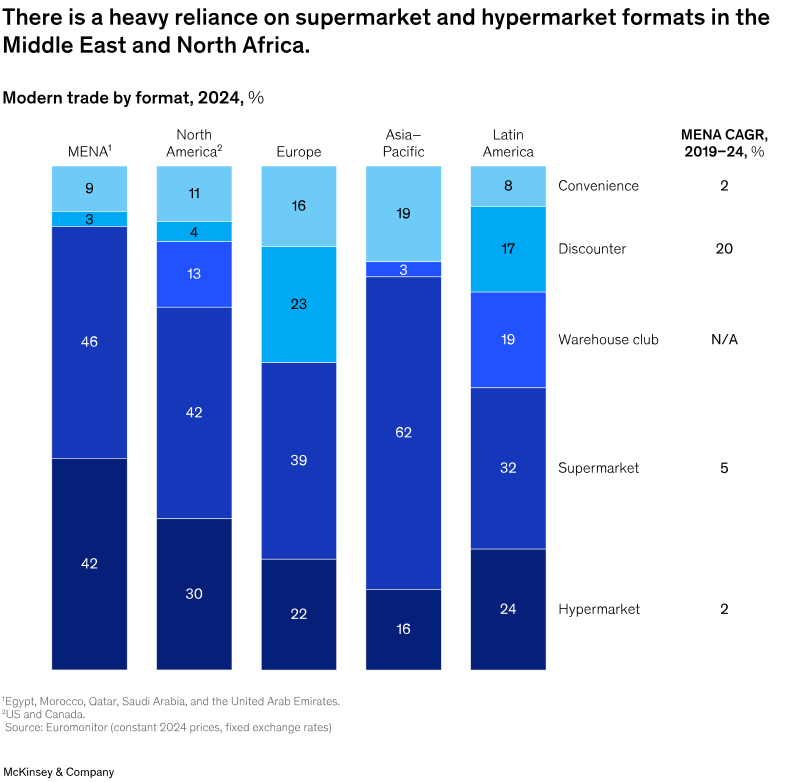
Compared to other regions in the world, the grocery industry in MENA is overly reliant on supermarket and hypermarket formats. Together, these two formats account for almost 90 percent of consumer spend in the region (Exhibit 3). By comparison, the industry elsewhere in the world operates a broader range of store formats to cater to diverse customer segments and shopping occasions, ranging from small-format stores targeting urban convenience shoppers to larger warehouse stores serving bulk and family shoppers. In Latin America, for example, supermarket and hypermarket formats account for only 56 percent of consumer spend, with convenience, discount, and warehouse formats making up the difference.
The lack of shopping formats is driving low customer satisfaction across the MENA region because of limited choice and convenience. Our research shows that consumers have a wide range of shopping missions—from quick daily top-ups, food-on-the-go, and bargain hunting to special-occasion shopping and major weekly or monthly stock ups—but current formats are not serving these diverse missions effectively. On average, customers’ satisfaction with different elements of their shopping experience across these missions is well below 40 percent (Exhibit 4).
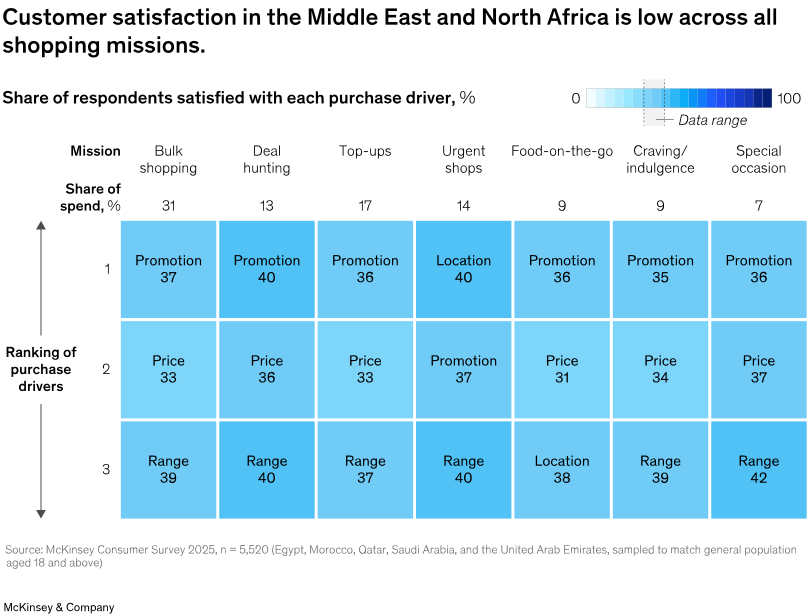
Price, in particular, is the largest driver of dissatisfaction in the market, which may explain why discounters are growing much faster than the market as a whole. On average, only a third of shoppers surveyed were satisfied with the prices they paid across shopping missions. Partly in response to this, discount formats grew at a 20 percent CAGR between 2021 and 2024, far outpacing total modern grocery growth in countries included in the survey, which grew at just a 1 percent CAGR. Discounter growth was fastest in the UAE, at 56 percent, albeit from a low base, and slowest in the KSA at 11 percent.2 The quest for value in this market creates an imperative for retailers to find innovative ways to meet this need.
While we are seeing early signs of format differentiation across the region, the field is still wide open for grocers. Emerging format trends in the region include a rise in value-focused discounters, formats combining value and convenience—such as small discounters—and “fast and fresh” convenience stores catering to grab-and-go urban lifestyles.3 The persistence of baqala stores in the MENA region also points to the relevance of formats anchored in the community that provide value-added services like credit and free delivery.
2. Private labels: An opportunity waiting to be unlocked
Private labels offer a route for hypermarkets and supermarkets to tap into the value opportunity, but grocery retailers have yet to unlock the formula for success in the region.
Consumer acceptance of private labels is high and growing across the region. In our survey, more than 80 percent of consumers saw private labels as equal to or superior to branded products and as offering better value for money, with attitudes surprisingly consistent across markets and shifting in favor of private labels with each passing year.4
Despite this rising interest in private labels, market penetration remains low, even by emerging-market standards. In four out of five markets, penetration of private labels is below 10 percent, compared with 20 percent or more in comparable markets such as Türkiye and South Africa, and close to 50 percent in many European markets (Exhibit 5). Supply-related challenges, such as a limited base of local manufacturers and high import costs, are obstacles to growth in this area as they hinder retailers’ ability to create sufficient variety and stock of private label products at a good price to meet consumer demand.5
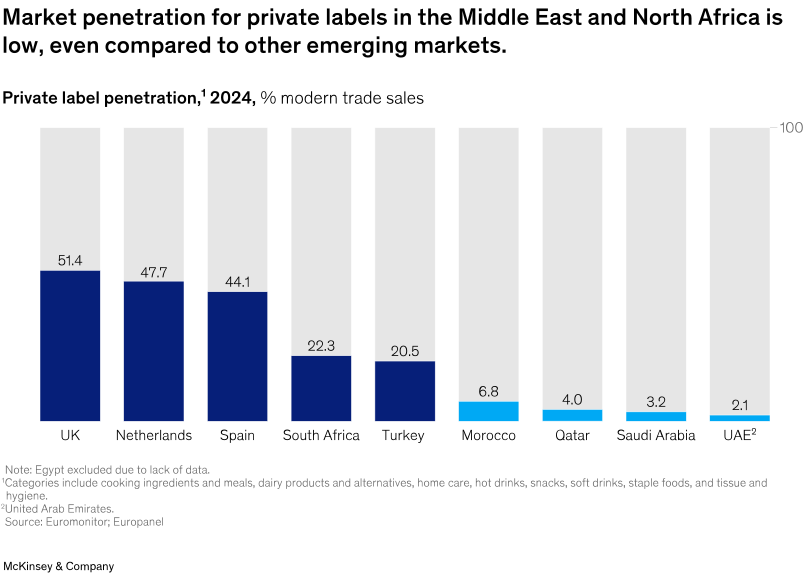
The retailers that solve this challenge first and build an integrated private label supply chain are likely to capture a significant opportunity. To unlock the opportunity, grocers can consider partnering with international manufacturers to establish a local presence or investing in owning or controlling parts of the supply chain directly.
3. E-grocery: A chance for incumbents to gain market share
Consumers’ preference for lower prices over convenience is creating an opportunity for grocers to reclaim market share from digital competitors.
There is significant headroom for continued growth in e-grocery, as penetration is still low relative to global benchmarks, and intent to buy more online is high. Online grocery grew by more than 40 percent a year between 2019 and 2024 in four of the five MENA markets examined (Exhibit 6). Qatar has the highest share of e-grocery, at 11.4 percent—already on par with, and likely to surpass, global benchmarks. At the same time, consumers are willing to buy even more online, further boosting growth prospects. Forty-four percent of consumers in Qatar said that they intended to buy more groceries online in 2025, up by six percentage points from 2024, the highest in the region. Even in Morocco, where intent was lowest, 21 percent of consumers said they intend to buy more online.
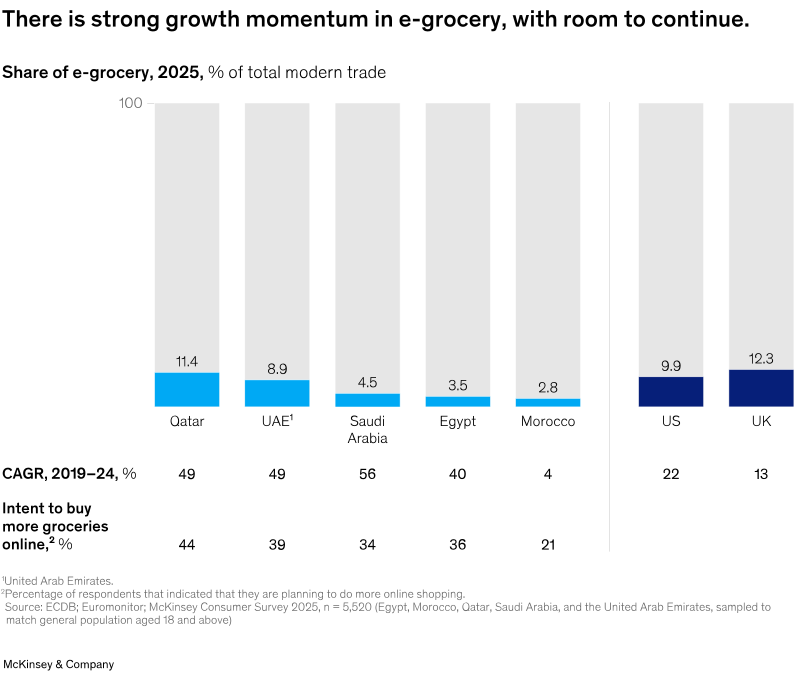
So far, the e-grocery opportunity has been captured by digital attackers focused on ultra-convenience at high prices. However, this might be difficult to scale further as online shoppers are increasingly seeking a better trade-off between price, assortment availability, and convenience. Consumers who have stopped buying online cited high prices, poor user experience, and limited product availability and range as their top reasons for moving offline.
Incumbents can address the gaps left by quick commerce players and offer consumers a more balanced online value proposition. By leveraging their existing strengths, incumbents can cater to consumers in the e-grocery space by offering lower prices and better user experience, along with a broader range of products, even if this comes with slightly slower delivery. Migros in Türkiye presents a compelling case example of a traditional retailer successfully using this strategy to gain market share in e-grocery.6
4. Healthy eating: Appetites converging
Healthy eating remains a priority in the region, with low-income shoppers in particular showing increasing demand for fresher and healthier products.
Across income groups, the level of intent to buy healthier products is converging. The net intent of high earners to buy more healthy products is 54 percent, down seven percentage points from 2024. Lower-income consumers are catching up, with a 52 percent net intent, up six percentage points from 2024 (Exhibit 7).
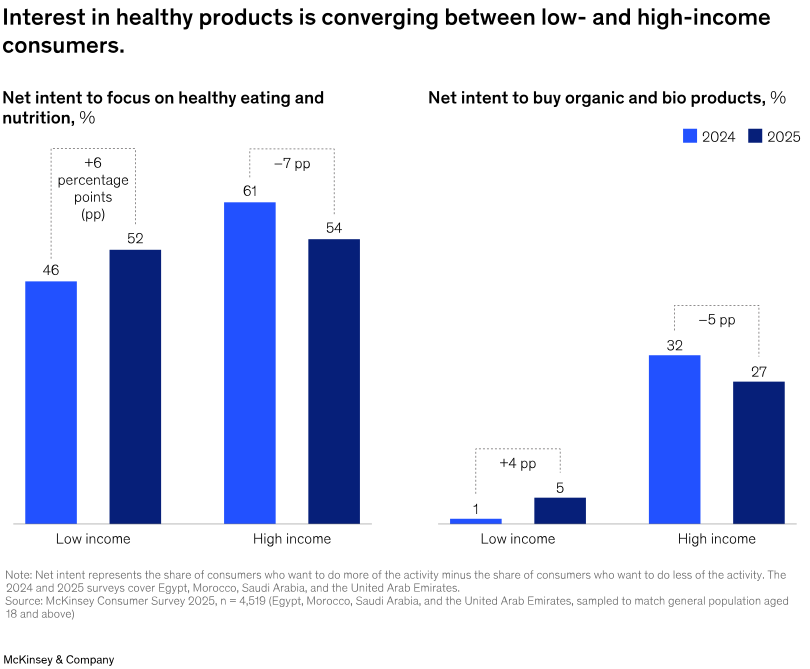
Despite the appetite for healthy products, consumers—especially low-income earners—are not necessarily willing to pay more for them. Among low-income consumers, our survey reveals that net intent to pay more is below 20 percent in all markets.7 For example, this figure is at 19 percent in the UAE, up three percentage points from the previous year, and Egypt and Qatar are at 3 percent, respectively. This suggests an opportunity for grocers to deliver the healthy, high-quality products that both high- and low-income consumers desire at affordable prices.
5. Food-to-go: Continuing to outpace the total grocery market
Convenient eating is another key area where MENA’s consumers are willing to spend.
The food-to-go market in MENA is growing fast and continues to outpace total grocery growth. Between 2021 and 2023, this segment grew at a 16 percent CAGR, almost four times the pace of total grocery sales over the same period. Growth continued in 2023–2024 but slowed to 10 percent (Exhibit 8).
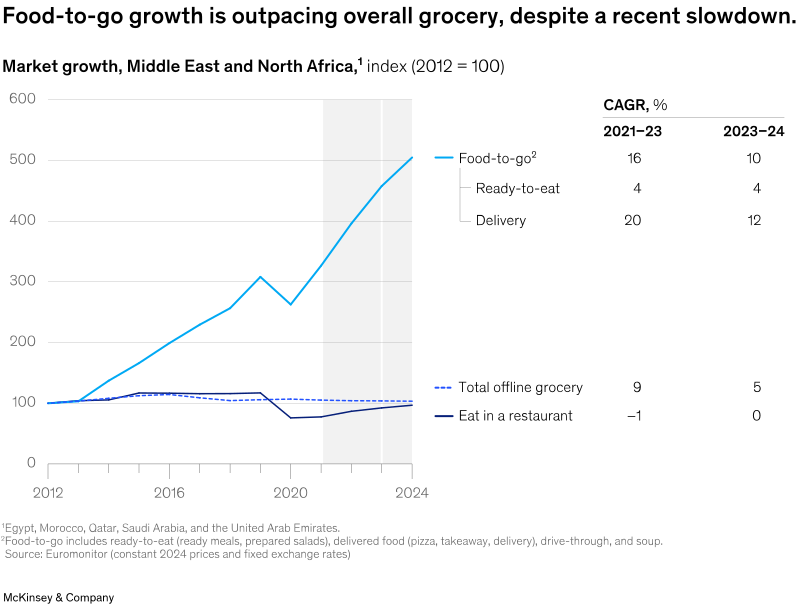
Younger generations are driving the greatest interest in ready-to-eat options. Between 2024 and 2025, net intent to buy ready-to-eat meals increased by 9 percent, 7 percent, 6 percent, and 1 percent among Gen Z, millennial, Gen X, and baby boomer consumers, respectively.8 This suggests there is an opportunity to further accelerate ready-to-eat products tailored to the needs of younger generations.
6. Customer loyalty: Shaping shopper behaviors
Ever-smarter and hyperpersonalized loyalty programs, driven in part by AI, are successfully turning customer data into deeper engagement and higher spend.
In recent years, many leading retailers have launched or restructured their loyalty programs to deliver more value to consumers. Four key trends include the expansion of all-in-one ecosystems that go beyond retail; the shift away from points-based systems toward instant discounts and exclusive promotions; leveraging AI and customer relationship management (CRM) to drive hyperpersonalization and precision loyalty, delivering tailored experiences through deeper customer insights; and finally, the rise of subscription-based loyalty programs, where consumers pay for exclusive benefits such as unlimited deliveries and deeper discounts for members-only benefits.
Done right, loyalty programs offer clear value in driving incremental customer behavior and deeper relationships. Unpublished McKinsey research has shown that loyalty programs can drive a 4 to 7 percent increase in incremental revenue and lower marketing costs by 6 to 8 percent.9 However, retailers need to guard against the risk that greater sophistication could create more complications for customers. Increasingly, the most successful loyalty programs are those that are the simplest for customers to understand and engage with.
7. AI: An engine for value creation
Across the region, the deployment of gen AI is accelerating in line with global trends, with the potential to deliver up to $20 billion in value to retailers and consumer packaged goods (CPG) companies (Exhibit 9).
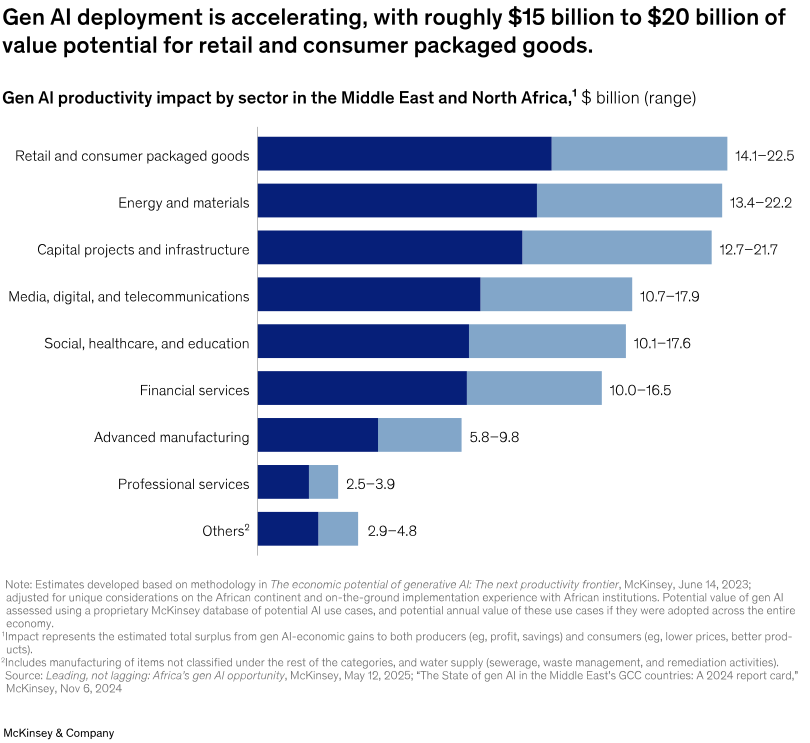
Retailers in the region have already started to experiment with gen AI use cases across the value chain. These range from marketing use cases, such as auto-generated and personalized marketing content and sales campaigns to drive customer loyalty, to AI-driven task orchestration to optimize labor scheduling in stores, and agentic AI use cases in commercial decision-making and support functions.10
While gen AI is currently receiving a lot of attention, we estimate that the vast majority of value to be captured will likely come from non-generative or analytical AI. There is still significant value on the table for analytical AI in retail, especially in core areas such as pricing, promotions, and assortment.11
8. Retail media: A profit powerhouse ready for takeoff
Retail media (RM) is still nascent in MENA, but momentum is picking up, thanks to improved data management capabilities, better customer insights, and higher traffic on e-grocery channels—increasing grocers’ relevance to advertisers.
RM is delivering outstanding returns to grocers globally. McKinsey analysis shows that cutting-edge RM users are achieving margins of 40 to 50 percent on this business, with incremental revenues of 1 to 3 percent. For CPG brands, this medium offers an irresistible opportunity to reach their target customers more directly, thereby enhancing marketing efficiency and return on investment.
The acceleration of RM in MENA is moving hand in hand with the rising sophistication of loyalty programs. The deep, data-driven customer insights these programs enable allow for highly personalized, targeted retail media advertising, which boosts customer engagement and conversion rates. Thus, retailers in the region are well positioned to extract further value from their loyalty programs by establishing a core retail media business and a full suite of audience-driven product offerings.12 In addition, grocers don’t have to think only about RM in the online channel. There is also an opportunity to deploy RM in-store with digital screens, smart shelves, promo kiosks, and more.
9. e-B2B: Retailers are well positioned to capitalize on the trend
While digital attackers led the initial growth phase of e-B2B platforms in MENA countries, the pendulum is now swinging toward retailers with cash-and-carry models, which are increasingly launching their own platforms to compete.
Some early e-B2B market movers may have struggled to scale their offerings due to supply chain challenges.13 Our research suggests that securing enough supply to offer a good assortment at a competitive price can prove difficult for digital attackers because they often lack the required purchasing scale.
Grocery retailers are well positioned to capture the e-B2B opportunity by capitalizing on their strengths in assortment and procurement, and their existing logistics footprint. For example, retailers with cash-and-carry models14—such as Atacadão in Morocco—are entering into the e-B2B space. Atacadão has launched a flexible e-commerce platform and mobile app specifically to meet the needs of small and medium-sized traditional retailers, which is supported by a dedicated logistics and distribution network.15
10. M&A: You don’t have to go it alone
Retail M&A, including grocery, is rebounding in the Middle East and Africa, with the number of deals more than doubling in 2024 to levels last seen in 2021.
Between 2023 and 2024, retail M&A deals grew by 160 percent in Africa and the Middle East, up from a CAGR of –5 percent between 2021 and 2023 (Exhibit 10). This was the second-highest rate globally, with Europe at a 165 percent increase in deal volume. Latin America’s retail M&A activity grew the slowest at 20 percent.
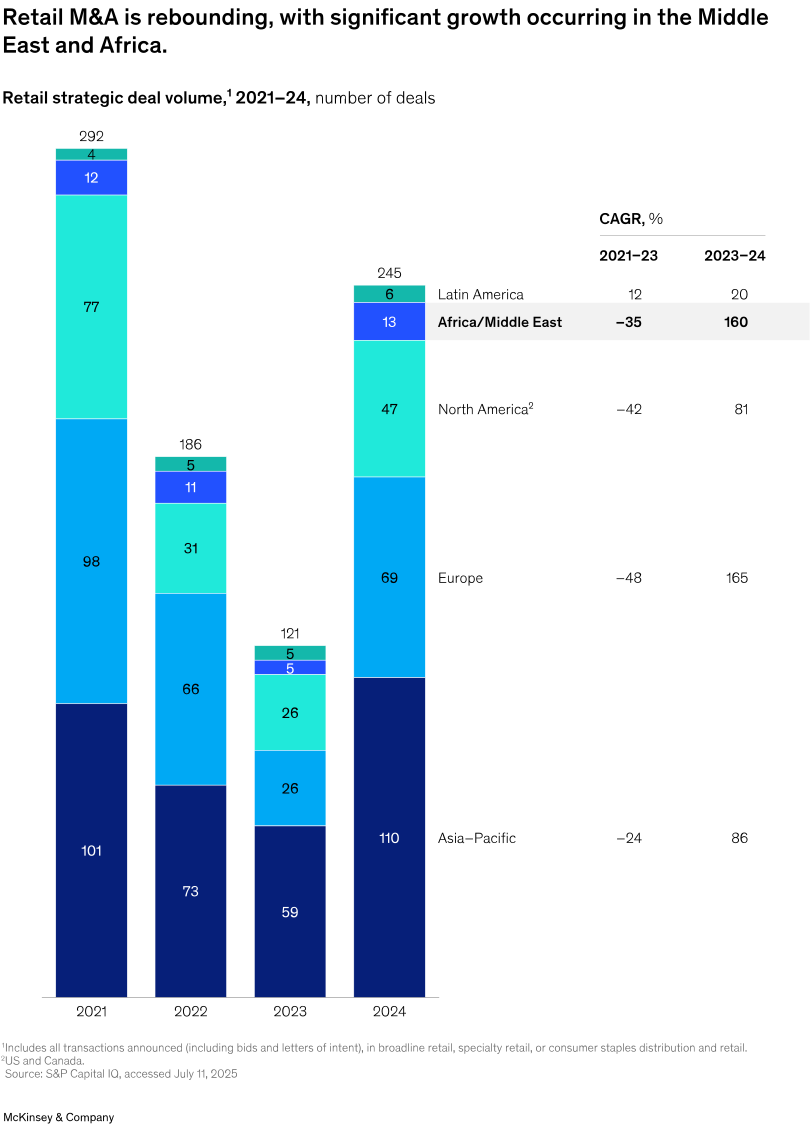
Three main motives appear to be driving M&A growth in the region: expanding scale, building capabilities, and diversifying into new profit pools. Noteworthy M&A deals in the MENA region that exemplified these approaches include Tamimi Markets’ acquisition of Al Raya in 2024 to strengthen its position in the KSA and BinDawood’s acquisition of Zahrat Al Rawdah in 2024 to expand into healthcare and wellness.16
Implications for grocers
Rather than waiting for consumer optimism to filter down to the bottom line, grocers across MENA could proactively capture growth opportunities by focusing on three strategic priorities.
1. Doubling down on granular pockets of growth
In a low-growth environment, retailers can improve their position by increasing differentiation, accelerating innovation, and driving targeted premiumization. Specific opportunities include:
- identifying new store formats and sharpening the value proposition of existing formats to better target the differentiated needs of customers across a diverse range of shopper missions
- crafting the right proposition to improve share in e-grocery
- enhancing assortment in high-growth areas such as healthy food and ready-to-eat meals, with a specific focus on younger generations
- defining a comprehensive private label strategy to fully unlock the opportunity, with a specific focus on solving supply-side constraints
- targeting new adjacent revenue streams, such as retail media and e-B2B
2. Scaling AI and tech across the core business
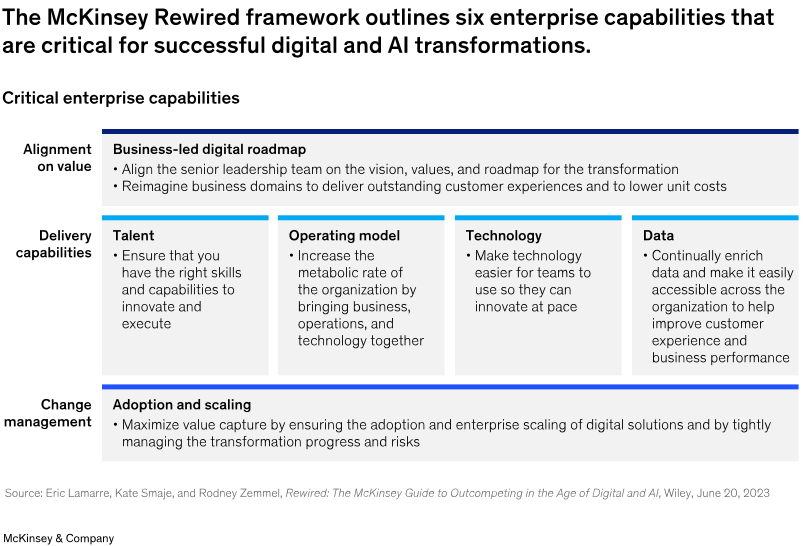
Capturing the full opportunity from AI requires a comprehensive approach that goes well beyond tech and data. Retailers have often struggled to scale their AI capabilities beyond small-scale pilots because they have treated AI primarily as a tech and data challenge.17 Those that take a much more holistic and transformational approach, addressing six enterprise capabilities, are more likely to capture the opportunity at hand (Exhibit 11). This requires first establishing a clear, value-driven strategy and road map that prioritizes the transformation of specific, high-value business domains. Delivering this strategy depends upon building a strong in-house talent bench of engineers and supporting them with an operating model that can scale cross-functional teams across the entire enterprise. Technically, success hinges on fostering a distributed technology environment, using the cloud and APIs to empower independent innovation, while ensuring every team has access to reliable, governed data structured into easily consumable data products. Finally, success depends on strong adoption and change management to ensure the changes are scaled and sustainable.
3. Increasing efficiency
Investing in growth requires a simultaneous focus on cost efficiency to free up funds to reinvest. Top performers are prioritizing efficiency through a combination of data-driven sourcing optimization (for example, using customer insights to support supplier negotiations), operational excellence in stores and logistics, and organizational efficiency to streamline head office costs.
There are plenty of reasons to be optimistic about the future of grocery retail in the MENA region. Consumer preferences are changing. A new generation of shoppers is evolving. And despite low overall growth, there are pockets of potential that grocers can pursue. Those that can unlock these new avenues of growth by scaling AI and tech across their core business and prioritizing efficiencies to fund the required investments will likely be best positioned to thrive.