Every company says it listens to customer input and feedback—but some companies go a few steps further. Perhaps they conduct annual surveys of their target audiences. Or they establish advisory councils made up entirely of customers. Or they create forums and spaces for customers to connect and engage. Pacsun is doing all of the above.
These moves are part of Pacsun’s strategy to become “a coveted youth culture brand,” in the words of CEO Brieane (“Brie”) Olson—and they seem to be working. The California-based clothing retailer, formerly known as Pacific Sunwear, has seen sales grow by about 10 percent in each of the past two years, reaching just under $1 billion in 2025. It operates more than 300 US stores and plans to expand both domestically and abroad. This year it opened its first international store, in Dubai.
Olson attributes the company’s recent success in large part to its focus on community collaboration, which she discusses in her book, Co-Created: The Cultural Strategy that Redefined Pacsun (Forbes Books, May 2026). In this episode of the McKinsey on Consumer & Retail podcast, Olson speaks with McKinsey Partner Pamela Brown about customer collaboration, leadership lessons, and what’s next for Gen Z and for Pacsun. The following are edited excerpts of their conversation. (Subscribe to the podcast.)
‘The power of relinquishing control’
Pamela Brown: Brie, thank you so much for joining us today. I’m a longtime follower of Pacsun and have observed what Pacsun has been doing from afar. It’s an impressive story, so I’m excited to get under the hood of what you’ve done and how you’ve done it.
Pacsun has rebuilt its brand around the concept of community cocreation. I’d love to hear whether there were any moments of tension between what your community was saying and what the leadership team thought. How did you decide which one to follow?
Brieane Olson: One thing we’ve learned in listening to our community is that it doesn’t automatically mean saying yes to everything. It’s not about crowdsourcing every decision. Pacsun has a very clear mission and purpose. Our purpose is to inspire the next generation and build community at the intersection of music, fashion, art, and sport. Those four pillars are the initial filters of the things that we want to bring to life for our consumer, so if it doesn’t fit into those four pillars, it isn’t a trend that we will chase. We get a lot of inputs and inbound ideas, and ultimately it’s an incredibly talented team, a clear value system, and a clear purpose that help us understand how to move forward.
Sometimes, members of your community might be ready for something before the broader population is ready. For example, three or four years ago, baggy jeans were trending, and we went after baggy jeans based on feedback from our community, but it took a year or two for the trend to really take off.
There’s an operational system around cocreation. The power of leaning in and building with your community also intersects with data, testing, being nimble with your supply chain, and ensuring that you have the correct inventory. The strategy is quite complex, but the pronounced shift in what we believe in is building alongside our community as opposed to for them.
Pamela Brown: There’s a tension between test and learn—responding when we see that something’s not gaining traction—and persevering through the strategy to say: “We have a vision and we’re going to stick with it.” What are some of the signs and signals that tell you, “What we’re doing might take a bit more time, but it is gaining traction and will play out the way we want it to”?
Brieane Olson: There’s an interesting contrast between persistence and patience, and virality and speed. An example I can give is about a technology platform that we were exploring in 2019: TikTok.
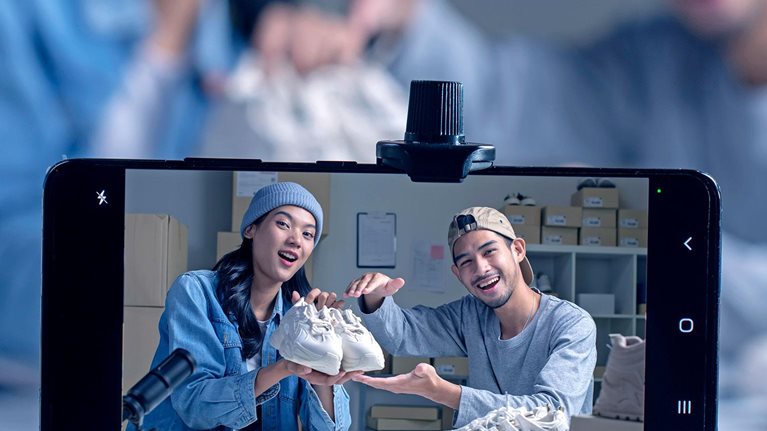
Originally, TikTok was seen as a dance app. A lot of people dismissed it early on, not believing that it would end up being a social commerce platform, which it is today. Pacsun believed in the platform because our consumers were showing us that they enjoyed spending time there. From 2020 to 2022, in a span of about 18 months, we amassed two million followers—not because we thought TikTok would replace traditional social media, but because we believed there was something more there.
We had early learnings from Douyin in China about the power of live shopping. We started building an infrastructure alongside the TikTok team. That led to a moment in November 2023 when a young creator, Lyla Biggs, based in Nashville, Tennessee, who was a fan of ours and a consumer—not contracted by Pacsun—went to her local Pacsun store, bought a pair of jeans, and made an authentic video in her bedroom trying on her new baggy jeans. Baggy jeans had not quite taken off for Pacsun yet. Within 48 hours, we sold 11,000 pairs of jeans.
That’s the power of relinquishing control as a brand, encouraging community participation and allowing your consumers to be your best storytellers, and patiently believing in the platform. Had we given up—like many brands did, in 2021 or 2022, when TikTok Shop didn’t take off right away—we wouldn’t have been on the forefront of that trend.
There’s a complex story there about how and what it takes to go viral. How do you predict virality—or can you? How do you get your inventory allocation processes in place and be nimble enough to react to the trends when the community does lean in? It takes patience and persistence to engage with the consumer and be in a constant listening loop, but it’s also important to be ready when the trend does take off.
The role of the store
Pamela Brown: What’s your operating model for TikTok Shop? For some brands, it’s a marketing and customer acquisition engine; for other brands, it’s about driving volume; for many, it’s somewhere in between. How do you think about setting up your organization to deliver and to make TikTok Shop a core component of your business today?
Brieane Olson: It’s no different from any other place where our consumer spends an inordinate amount of time. Malls are making a great comeback, so we’re really leaning into malls. We’re converting traditional brick-and-mortar retail into experiential retail and giving our consumers a view of what it means to shop in a Pacsun store again.
TikTok is a platform that our consumers are using for discovery, entertainment, and shopping, so we’re showing up in an authentic way across those three spheres. There isn’t a singular division or department that is dedicated to TikTok Shop, for example. We have a cross-functional view to ensure that we have an important and genuine presence where our customer spends time. And yes, we have a strong business there, but it is tertiary to our core business. It is more about discovery than anything else—we see consumers who shop with us for the first time on TikTok Shop quickly convert into being customers of our store and our website. And it’s not only an acquisition tool, but a tool to connect and ensure that our community remains highly engaged across all our platforms.
Pamela Brown: Brie, what do you see as the role of the store? You mentioned Gen Zers love to go to the mall. There was a narrative around “the mall is dead” or “the store is dead,” but I think everybody has come to realize that’s certainly not the case. What do you think will be the role of the store—for the industry and for Pacsun specifically—in the next three to five years?

Brieane Olson: I’ll speak from a Pacsun perspective. We have about 300 stores in the United States today. We opened our first store in Dubai at the end of May; we had a tremendous response to that international store opening. We’ll be accelerating new store growth because the customer is demanding it and because we have not saturated the market. There was a time when Pacsun had more than 1,000 stores and we were in a lot of malls that we needed to exit. Now we have an earned opportunity with our customer where there is demand in 100-plus locations for us to open new stores.
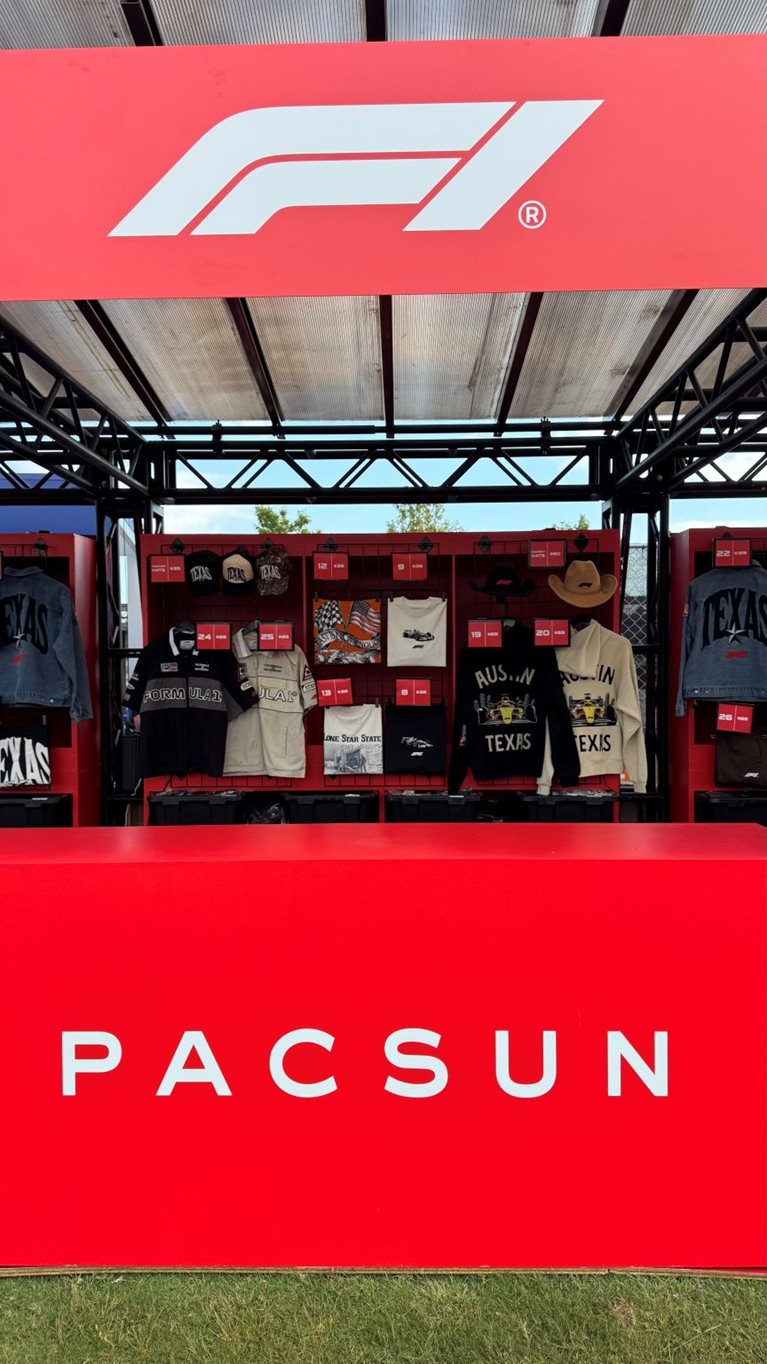
Stores in the future will continue to be a source of discovery. The store will continue to be a third place. We’re also leaning into experiential retail, whether that’s with our A.R.C. running club in Newport Beach, California—which has a tremendous turnout, with hundreds of young people showing up to participate in runs—or whether that’s popping up in unexpected places and creating a surprise and delight for the consumer, such as trackside at the Formula One race in Austin, where we’ve had a presence for the past four years. We want to connect with the consumer across our four pillars of music, fashion, art, and sport, and that’s where our stores will become more important in terms of both discovery and experience.
On pivots and partnerships
Pamela Brown: Now that we’ve talked about channels, let’s talk about brands. How have you thought about striking the right balance in your assortment between your own brands and third-party brands?
Brieane Olson: We made a crucial decision, about ten years ago, to transition Pacsun from a traditional retailer that carried and curated the best brands of California lifestyle to a coveted youth culture brand ourselves. About 50 percent of our sales are generated by the Pacsun namesake brand. Just 12 years ago, there wasn’t a single item in the store that carried the Pacsun label. We thought about it in the most simplistic way: When a girl or guy is in their closet getting dressed and they’re picking out their favorite pair of jeans, today it carries the Pacsun brand. It’s a brand that they have come to love; it’s now sold in Nordstrom and internationally. That was a really important pivot.
At the same time, the cornerstone of Pacsun—what we love about our heritage and our legacy—is our history of building incredible brand partnerships. We’re building them now at the intersection of fashion, music, art, and sport. Our partnership with Formula One, which we’ve had for four years, is a unique blend of sport and fashion. We also formed a partnership between Pacsun, Formula One, and Yohji Yamamoto Wildside, which was a breakthrough in bringing sport and high-end fashion from a renowned Japanese designer to people who perhaps had not been exposed to it before.
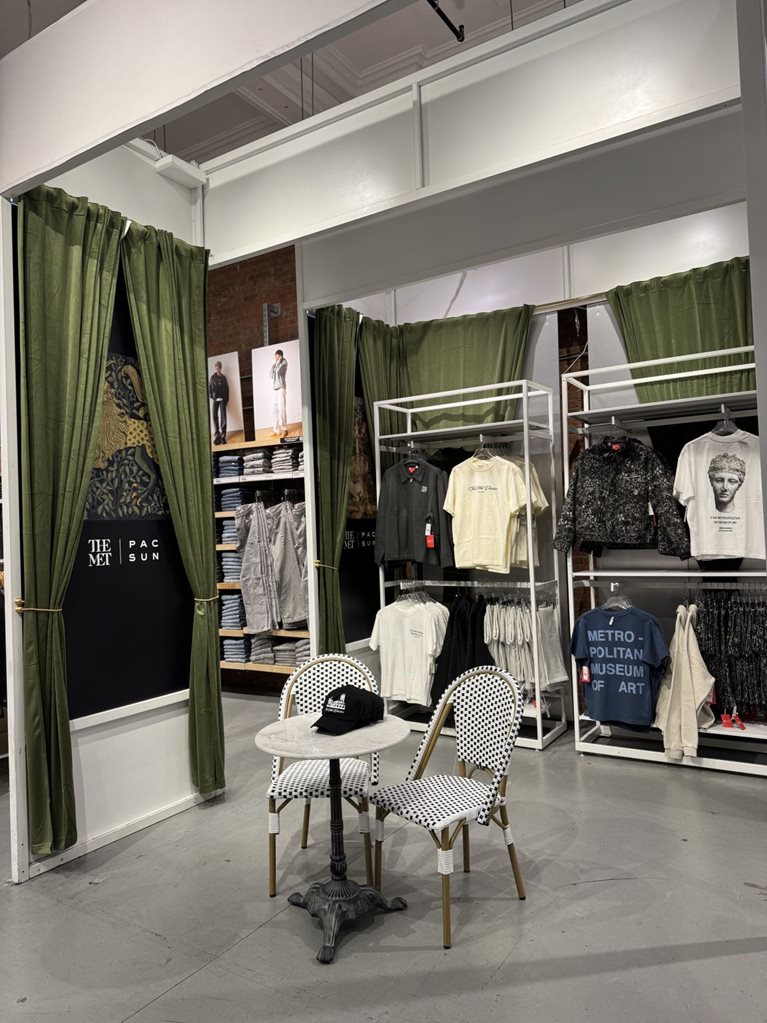
Another thing that might surprise people who haven’t been recently exposed to Pacsun is our partnership with the Metropolitan Museum of Art, which is in its fourth year and has been tremendous in connecting young audiences with the arts, reintroducing them to museums, and fulfilling that desire that young people have to be connected to creativity, self-expression, and individuality. We also have other great brand partnerships, whether it be with Adidas, Vans, John Galt, or Jerry Lorenzo, and we’re very proud of how we show up with these relationships. We’ve been able to bring to the forefront some younger, emerging brands and designers.
Subscribe to the McKinsey on Consumer and Retail podcast
Pamela Brown: Are there any examples of partnerships you’ve pursued that haven’t turned out the way you expected? Maybe you thought you were going on a certain journey with a partner or brand, and it ended up going in a different direction?
Brieane Olson: Ultimately, you have to have clear guidelines and an understanding of what your intention is in each partnership. We try to bring in our community at the front end—not the back end—of those decisions. We’re getting consumer feedback, whether that’s through our youth advisory council or our Pacsun Youth Report, where we engage 6,000 young people and ask about their thoughts and preferences and get at the emotive behavioral differences in why their consumption patterns are changing.
In the same way we had to be patient on TikTok, sometimes you have to be patient with new designer drops or new brand introductions. So, we’ll use an incubation model and perhaps introduce a new brand online, on social media, and then in a select handful of stores. We’ll get consumer feedback and then we’ll build from there. It’s about being intentional and building for the long view as opposed to trying to get short-term wins.
Purpose, AI, and the creative process
Pamela Brown: You’ve been with Pacsun for quite some time. Knowing what you know now, is there anything you would have done differently when you took the helm as CEO?
Brieane Olson: I’ve been with Pacsun for almost 20 years and I’m in my fourth year as CEO. The most important thing was understanding that in order to build something that has longevity, we had to further engage the consumer on the front end. We needed to do more research. We also needed to shift our mindset from curating the best brands and celebrating the California lifestyle to being a purpose-driven brand that is seeking to inspire the next generation of youth. We needed to create community. That pivot, and our four pillars, created clarity internally and externally about what the brand stood for.
The internal work is just as important as the external work. It’s hard to get the maximum results without doing real internal work. So, when I first became CEO, I spent a lot of time eliminating the silos within the organization and ensuring that our mission and our purpose were sticky, that everyone rallied behind it, that everyone had done their own purpose work. There’s a book by Bill George called True North, which most of our leadership team and management team have engaged with, and it created a lot of clarity for our organization and made a pronounced shift in our culture.
Pamela Brown: What are some brands, retailers, or companies outside the retail industry that you look to for inspiration—for what they’re doing either externally or internally, as you’ve just framed it?
Brieane Olson: One organization and brand that I look up to is Trader Joe’s. They have a very clear mission and purpose, which comes to life and is celebrated in every interaction, in every store visit. And they have a fairly simple philosophy that resonates strongly with the consumer. Trader Joe’s has been a North Star for Pacsun. Another brand we admire, adjacent to our space, is Patagonia—again, a very clear mission and focus, and a relentless dedication to their belief in trying to leave the earth a better place.
Also, some of the recent work that is happening in the beauty space is inspiring and interesting to us; that’s an industry we continue to watch closely. And of course, we all acknowledge that we’re in a time of rapid transformation, so staying close to technology and AI and the questions of adoption, acceleration, and what we choose to use and what we choose not to use are equally important—so I spend a lot of time in the technology space as well.
Pamela Brown: On that front, what are some examples of things you’ve chosen not to use? Or what are places where you’ve said, “We’re not going to use AI here—this will be purely human led”?
Brieane Olson: AI will certainly integrate across most facets of the organization. About three years ago, we established an AI council at Pacsun, which meets weekly and ensures that we’re staying abreast of the constantly changing movements, opportunities, and challenges but also gut checking what makes sense for us.
The filter is always: “Is this going to create a further benefit to the consumer or the employee? Does this make the work more efficient? Does it allow people to do better work or spend more time on creative work?” Some of the areas where we’ve initially been slower to adopt AI are in the creative realm, to ensure that we’re maintaining the integrity of product design and our creative process. That’s not to say there won’t be opportunities in the future to accelerate or reassess, but right now we’re putting the consumer and the community first.
Listening to the customer will not be replaced by AI; how we gather our data and research might be accelerated by AI. From a creative standpoint, we want to make sure we’re celebrating the unique talent pipeline at Pacsun and avoiding a sea of sameness in product design, which can certainly happen when embracing AI.
The question that has remained constant—the one that we start most of our strategic discussions with—is a question that would keep any leader up at night: “If your brand disappeared tomorrow, would your customer miss you and where would they go instead?” As agentic AI comes to the surface and there are shifts in overall consumer preferences, it’s very important to revisit that question.
Giving Gen Z a seat at the table
Pamela Brown: What’s one thing that brands, retailers, or industries more broadly get wrong about Gen Alpha and Gen Z and this concept of cocreation?
Brieane Olson: There are a lot of misconceptions about Gen Z and there’s less research about Gen Alpha, so we all have to remain curious, ask questions, do a better job listening, and not make assumptions about these younger generations. We also need to acknowledge that these generations, just like those before them, will be fluid and dynamic.
To stay close to them, we have to give them a seat at the table. Pacsun has a youth council—which is essentially like a board of directors—that advises the leadership team, the management team, our board of directors, and me. Giving your consumer and your community, regardless of generation or cohort, a seat at the table is incredibly powerful.
Pamela Brown: What does that look like in practice? For example, what’s the frequency with which you meet with the council? We hear about consumer councils in all sorts of forms, but Pacsun has really shown what the power of that can be. How do you actually operationalize it and make sure you’re getting value out of it?
Brieane Olson: We have four in-person meetings a year and monthly touch points. But I think it’s less about cadence—it’s about engaging differently. You have to shift your culture and the mindset and attitude of your team to be willing to authentically listen, take in the feedback, and act on it differently. If the team comes in with bias or assumptions, which naturally happens, or if they’re only listening in part, then it’s very difficult for any council or committee to function well and deliver results.
It’s about creating an open funnel, just like you would with your board of directors. As they have ideas or thoughts off the cuff, you need to welcome that feedback. Building authentic relationships and giving them real power and authority to speak honestly is a game changer.
‘A unique vantage point’
Pamela Brown: Why did you choose to write a book?
Brieane Olson: The choice to write a book was not necessarily mine alone. The story of Pacsun is told through so many different voices, opportunities, leaders, challenges, and wins. As we were looking at the overall retail landscape, and in particular with so many misconceptions about Gen Z, it seemed like a great opportunity to tell the Pacsun transformation story and perhaps encourage or inspire other brands or organizations to lead with purpose and put their consumer and their community at the center of what they’re building.
I would also say it’s unique for a sitting CEO to have the ability or privilege to pause and reflect on two decades of stories. I am not the founder of the brand, but I have been with the brand for almost 20 years, so I have a unique vantage point. A subset of what the book created was a Harvard Business School case on Pacsun, written through the lens and storytelling of dozens of people that the authors interviewed. That was very rewarding for our teams.
Pamela Brown: What reaction to your book has surprised you most?
Brieane Olson: What has been most encouraging is that the model of cocreation is resonating outside of just retail or fashion. It’s resonating with leaders in healthcare. There are universities and high schools embracing the philosophy. It’s resonating in technology. It has been amazing to see that people working in the energy sector or the medical sector have found this model and operating system of cocreation to be applicable to their industries.
Pamela Brown: One last question: Thinking about the year ahead, what are you most excited about?
Brieane Olson: I am most excited about continuing to engage our community in meaningful, authentic, and unique ways. This year, we’re accelerating our Pacsun Community Hub, which is available on the Apple app store and is the convergence of community, creativity, and technology. We’re still in early stages of development, but we’re starting to see signs of excitement and energy behind it. Having a centralized home for the inflow of great community ideas is very exciting to me.