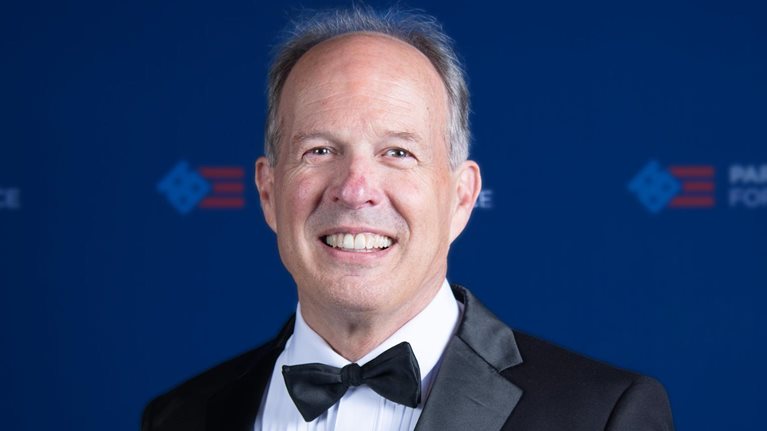
Kathy Roth-Douquet did not grow up in a military family. But after marrying a combat Marine, she experienced firsthand the honor and camaraderie—and the sacrifice and isolation—that came with military life. In 2009, Roth-Douquet cofounded Blue Star Families to empower other military and veteran families, create communities of mutual support, and amplify these families’ experiences and challenges, which were long misunderstood or even absent from the national conversation about the military. As its CEO and board president, she has overseen the organization’s growth to roughly 450,000 members worldwide.
As America marks its 250th anniversary, McKinsey is sitting down with public, private, and social sector leaders to explore the ideas and opportunities that will shape the country’s next chapter. In this interview, McKinsey’s Yocheved Rabhan talks with Roth-Douquet about the military’s role in American life and as a catalyst for the country’s continual change; how to build trust and bridge gaps across military and civilian communities; and the leadership and talent lessons that have enabled her success with Blue Star Families. This interview has been edited for length and clarity.
Yocheved Rabhan: With America turning 250 years old, we’ve been reflecting on the country’s ability to reinvent itself through periods of profound change. Which uniquely American qualities have allowed us as a nation to adapt to change?
Kathy Roth-Douquet: I love the way America is a country that incorporates change in who we are. We’re a nation of change. We turn over completely who is American, but it doesn’t change the fact that we are all American from 1776 to 1876 to 1976 to today. That dynamism and that ability to incorporate change and still feel part of the identity: It’s why we as individual Americans are so much part of the country, because we’re the ones who are making that change.
Yocheved Rabhan: Looking at your career with Blue Star Families and even before, which moments do you feel personify that resilience or capacity to adapt?
Kathy Roth-Douquet: First off, I think the experience of being a military family is understanding that this country is all of us and it takes our blood, sweat, and tears to make this country real.
The reason we could be a self-governing democracy is because we have a citizen military, a military that comes from the people. People who say, “I’m going to set aside my self-interest for a period of time and do whatever it is that this nation says needs to be done, because a nation needs a military.” But we also change it because we’re today’s citizens. The military of today and the families of today are different than those of 50 years ago, and we have to change how we support the military to reflect that.
My experience with Blue Star Families has been so gratifying because it shows how receptive the nation really is to change. We’ve seen tremendous receptiveness to the change we’ve been trying to make in the 17 years we’ve existed.
When we started this organization, people didn’t really know that military individuals had families. At the beginning, much of what I did was just say, “And military families.” People would say veterans, and I’d say, “And military families.” They’d say troops, and I’d say, “And military families.”
Then, a few weeks ago, we were doing a big event with Ford on the deck of the USS Midway with NASCAR and the Zac Brown Band. They are celebrating our military and their families. And they are fully embracing the idea that when we talk about supporting the troops, there are families that go with these troops. I’ve seen a tremendous change in how we understand this population, and that’s very motivating.
Yocheved Rabhan: Blue Star Families is responsible for one of the biggest military family surveys in the country. I’m curious what you’ve learned through the data about military families’ quality of life and what military service asks of families and communities, not only of service members.
Kathy Roth-Douquet: We created the first Military Family Lifestyle Survey in 2009. It was the first thing we did, because the nation didn’t have any data to aggregate the anecdotal experiences of those who lived this life. I was a real-life military spouse. My husband was a combat Marine who went into harm’s way. We were moving over and over again—nine times in 16 years. I kept losing my job. I kept putting my kids into new schools. I was far from family and friends trying to cope with it all—my community was, too—and there was no way to talk about it in the larger world other than, “This was my experience as one person.” But what about the aggregate experience?
Our first survey asked: “Do you feel the larger society understands and appreciates the work you do for the country?” In 2009, 94 percent of people said no, which was shocking. To identify this big gap motivated and allowed us to tell our story to a broader group: “The support that you, our fellow Americans, feel you’re giving us—we’re not receiving it.” Blue Star Families was all about creating the bridge over that gap so people could feel support in ways that we wanted and needed.
We’ve now surveyed over 100,000 people over the last 16 years, and we do it every year. We were the first people to identify that military spouse unemployment was five to six times the national average. Over the years, we’ve seen a declining likelihood that respondents would recommend military service to others. With the cost of living increasing around the country, we’re seeing that food insecurity is rising for military families. These are important findings.
But we have a lot of positive findings, too. We closed a lot of bases and military housing at the end of the Cold War, so about 70 percent of military families are now in civilian communities; a lot of people don’t know they’re there. They’re feeling isolated. But when military families do feel connected—because their spouses have meaningful employment, their kids are in good schools, or they’re part of a Blue Star chapter—they’re thriving. When they feel that their communities understand them, they’re more likely to recommend service, they’re less likely to be food insecure, and they’re more likely to have a stronger sense of personal resilience.
Yocheved Rabhan: That brings to mind the broader conversation in the United States, that many Americans are feeling isolated right now. In your experience, what drivers or behaviors have you seen that can create belonging in the workplace, in the community, within the military?
Kathy Roth-Douquet: The work that Blue Star Families does to create community and a sense of belonging is very exportable to the larger society. You need goodwill. You need to believe that the people around you who are strangers are people whom you could be safe knowing. Blue Star Families and its programming help create those feelings of goodwill and safety, and that we can trust each other.
We also find that people outside the military need help making bonds. I think our nation is becoming increasingly individualized, especially after COVID-19. Military spouses often say to me, “I just need one friend.” Military families are looking for that, and often so are people in the community. They want to be part of what we’re doing as community builders because even if local residents haven’t moved to a new neighborhood as a military family, they are feeling that sense of atomization.
The people who serve in the military are every race, religion, socioeconomic group, political view—and yet we aren’t divided. We don’t have friction. We don’t even need to like each other, necessarily. But we are loyal and try to take care of each other because we all believe each of us is doing something bigger than ourselves. That gives us a cohesion that everyday Americans—our neighbors who come in and get involved with us at the chapter level—can reflect on and see that it’s possible for all of us.
Yocheved Rabhan: You are the cofounder and the current CEO of a $40 million not for profit. What have you learned about leading a mission-driven organization that has allowed you, and Blue Star Families, to be successful through periods of growth and change?
Kathy Roth-Douquet: When I started, I had no intention of being the leader of a national not for profit. I planned to be on the board but keep my day job. I planned for one employee—everyone else would be a volunteer—and I was looking at a $200,000-a-year annual budget. That was my plan. But within three or four years, we had literally one million people trying to access our programs and resources. We had the temerity to start this thing, and once we offered the promise of making life better for people in the military and their families, we had to figure out a way to do that. And that pushed me to grow.
At first, it was growing the partnerships and the ability to reach people, growing the impact and the measurement. But at a certain point I realized that this is an enterprise. We’ve got employees and a future for whom we are responsible. This is actually a business. So I had to learn that side of things as well.
There are a couple of things that helped me do that. First, I had a vision that things were not OK—but they could be, and I knew how to get there. Second, I was not afraid. Why not? I had a career before embarking on this. I had been in politics and government. I was a lawyer. But what made me unafraid was being a military spouse. I started this life where I lost my identity, career, and what made me interesting and important to other people. I had to find out why I had standing in this world without all of those things.
Then we moved again, I gave birth, and my husband was gone. I had to keep life going and create a future for my children in case my husband didn’t come back. That toughened me up. Then we moved again and my husband went to combat again, I lost my job again, and my children had other challenges. These successive waves of things made me unafraid, because you confront the idea that you’re doing something very hard; you’re doing it for a person, for a purpose, for a nation, and for people you love.
I’m also very good at asking for help. I think that’s my superpower. McKinsey helped me because I asked. I can ask funders for help; I can ask volunteers. I can ask smart people whom I know and I like. And people help me because our cause is wonderful, which also gives me a way forward.
Yocheved Rabhan: You spend a lot of time in the military system speaking with leaders, working with advisers in the not-for-profit space, and examining how the military attracts, develops, and retains talent. How do you think about talent within the military context and more broadly?
Kathy Roth-Douquet: In an organization that doubles every three or four years, I need people who are really good at working in white space. I need people who can think and respond quickly because change is happening quickly, so there’s a premium placed on that. The Marine Corps talks about the “strategic corporal,” the idea that, even at the most junior level, we can train and empower people to think on their own. There’s also the idea that you tell a Marine to “take the hill”: that is, you give the person on the ground the objective but don’t tell them how to do it, since they are best positioned to figure it out.
At Blue Star Families, I am relying on AI tools and AI agents. I need people who can be on the front line of that, because any very large organization that’s trying to have a very big impact needs to work with AI. But we need people who can control and understand those tools and make them work for us.
Over time, I’ve learned that talent is not something you can outsource fully to your HR department or to recruiters. You have to understand what your values are and what will create change in your workplace, then bring in people who can reflect that, who can inspire, lead, and carry that themselves. We can get a lot of expertise from things that are not human. But you can only get leadership, charisma, and true imagination from human talent. Those things become more and more important, and it’s for our benefit that we recognize that and look for them first.
Yocheved Rabhan: How would you define leadership, then? What does it mean to you and what do you think it means in the context of the US military?
Kathy Roth-Douquet: Leadership is the difference between success and failure in many places. The military has a rich history of leadership to build on, these ideas of leadership, trust, and the ability to follow someone.
As a leader, you have to be able to create the conditions for people to believe that they will be going in the right direction if they follow your lead. Being very clear about what your vision is, what your mission is, what your “command climate” is, as the military calls it—or what we would call corporate culture. You have to create an environment that allows people to know what they’re achieving and see you as the person who can get them there. And I think it’s important to be honest as a leader. All of us have strengths and weaknesses, and I am honest about my weaknesses. I find people whose strengths can shore up my own weaknesses and show others that you can be a leader even with flaws.
Leaders also have to listen to the people around them—always incorporate, “Where is the demand? Where are the best insights? How can we change our direction?” Because we’re getting new information all the time. If you can do that and keep setting the direction with confidence, you become someone who people can follow.
Yocheved Rabhan: Let’s talk about navigating the compass or making those shifts when new information comes in. How do you go about that in your own organization?
Kathy Roth-Douquet: I think Blue Star Families’ strength is how quickly we adapt; I think it’s the reason that we have doubled every three or four years. I’ve learned this from my husband, who taught me about the “OODA” loop that fighter pilots learn early on. They have to observe, orient, decide, and act—on a loop. The other guy in the dog fight is doing the same thing—observe, orient, decide, and act—and whoever’s OODA loop is tighter wins.
In Blue Star Families, we call it: listen, share, partner, and act. We’re listening by collecting data: from our research, by talking to people on the ground, by listening to our partners. Then we share what we have with others because the information shapes things when we share it. When I tell you, “94 percent of military families think the larger society doesn’t appreciate or understand what they’re going through,” that changes your mind. That changes your orientation. So sharing is really important.
Now that I’ve collected all this information, what do I do about it? It’s not enough to decide; you’ve got to act. But as soon as you act, you’ve changed the environment and have to start listening again. Now that I’ve acted, is that working? What am I learning from it? How do I share that information? How do I decide and act again? And in choosing that action, with whom do I partner: the government, or another not for profit? Who’s the right funder?
Yocheved Rabhan: Less than 1 percent of Americans serve in the military. But service can take a lot of different forms. Could you tell us how you think about service in the context of both the military and our communities? What can everyday Americans do?
Kathy Roth-Douquet: I think a lot of Americans truly have a service heart, which is why we feel energized and excited when we have the opportunity to serve. When you coach Little League in your community, that’s a kind of service making. When you bring a bowl of chicken soup to a neighbor who’s not feeling well, that’s a kind of service as well. There are many people in government building out opportunities for service. There are so many not for profits; America is unique in the number of not for profits we have. If I weren’t in this country, I could not have started Blue Star Families. The United States is structured to allow people to have the enterprise to create these new visions.
I’m a fan of national service opportunities. I don’t think they need to only happen at age 18. They should be available throughout life, but organizations like mine also need to create more pathways for everyday Americans to be part of solving the problems that they want to solve. That makes individuals stronger, makes the community stronger, makes the country stronger.
Yocheved Rabhan: As America turns 250, what gives you hope and optimism for the country’s birthday and its next chapter?
Kathy Roth-Douquet: America was built out of a lot of strife and turmoil by people who believed that they could make a difference, who had a lot of hope. We can still be those people. In Blue Star Families, we say our corporate culture is one of “happy warriors.” We’re warriors because we’re trying to change something. We’re happy because we have an awesome mission: to create change and build bonds between everyday Americans—and the communities where they live—and the military.
Relationships are the solution. That’s why trust is the basis of what we do, because once you have trusted relationships, then everything else can flow. So, rehealing these bonds, building these bridges, that’s the solution. Every single person can be part of it if they want to. That’s the future.
America’s 250th is also a time to appreciate the military institution that we’ve collectively created and not take it for granted, because the people who serve are volunteers. As much as they love their country, they love their families more and if it’s too hard for their families, they won’t do it. We have to make it possible for people to serve while their families thrive.
Related Articles