In just five years, Asia has expanded its share of the global innovative pipeline from 28 percent to 43 percent,1 surpassing both the United States and Europe. In 2024, Asia contributed more than 85 percent of the global growth in innovative drug pipelines, with China and South Korea leading the surge in new clinical assets.
Asia has leapfrogged from fast follower to frontrunner. Once seen as a manufacturing hub, it’s now a launchpad for next-gen therapies, new modalities, and global partnerships. That momentum is playing out across key innovation metrics—from US Food and Drug Administration (FDA) approvals to cross-border deals.
Consider these milestones: In 2024, Asia generated nearly two-thirds of biotech patent grants—five times Europe’s share—and contributed about a quarter of global out-licensing deals.2 While still accounting for only around one in ten FDA novel-drug approvals, these lagging indicators are expected to follow the region’s rapid gains in earlier stages of innovation (Exhibit 1).
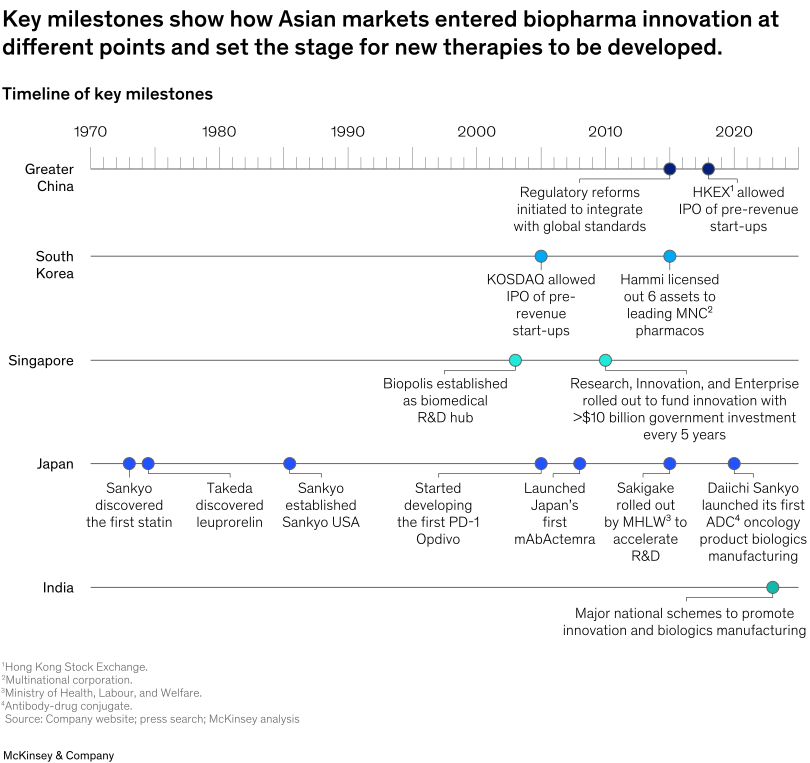
Asia’s emergence as a hub for biopharma innovation is underpinned by government support, deep scientific capabilities, and globalized models of trial design, licensing, and collaboration.
Within Asia, China stands out as the pacesetter, now representing 29 percent of the global innovative pipeline and accelerating development timelines far beyond industry averages.3 Upfront payments from China-originated out-licensing deals have grown from below US $100 million in 2020 to more than US $800 million in 2024.4
But there is more to Asia’s innovation than China. South Korea is rapidly scaling, building momentum in FDA approvals, striking out-licensing deals, and advancing regulatory reforms to fuel growth. Singapore has carved out a role as a biomedical R&D hub, while India is quickly pivoting from generics to novel drug R&D.
Each market sits at a different stage of maturity, but all are on a clear innovation journey. Their cumulative momentum could transform the global biopharma landscape—and establish Asia as the sector’s next powerhouse.
Innovation progress through two lenses
To assess how Asia’s biopharma markets are progressing on innovation, McKinsey applies an analytical framework built on two complementary lenses.
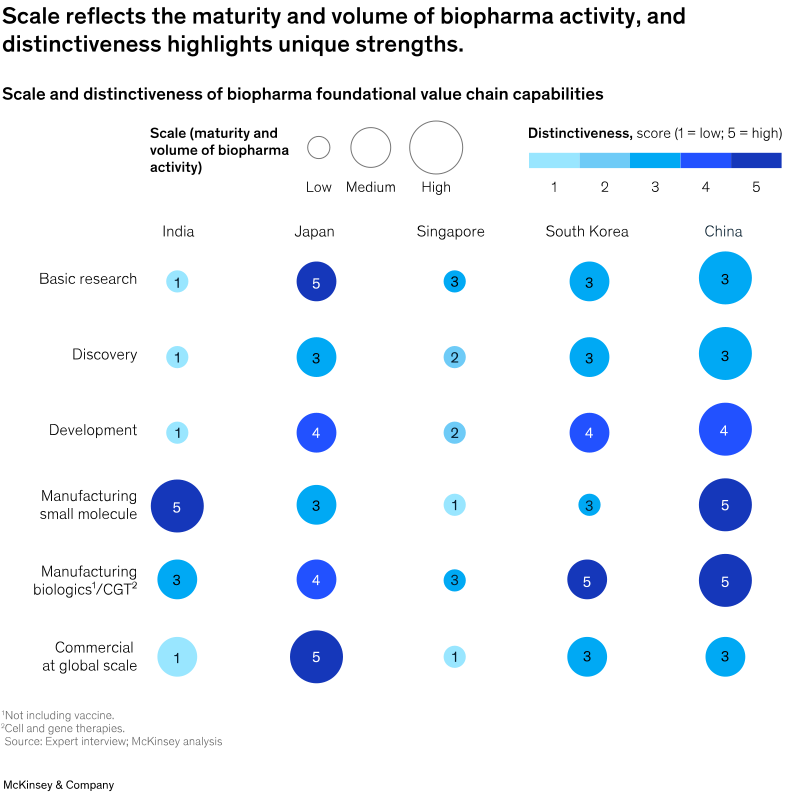
The first (Exhibit 2) focuses on foundational capabilities across the value chain—from basic research and discovery through development, manufacturing, and commercialization. Across the value chain, Asia’s markets bring differentiated and complementary strengths. China and South Korea show scaled capabilities in discovery, development, and advanced biologics manufacturing, supported by dense Contract Research Organization (CRO)/ Contract Development & Manufacturing Organization (CDMO) ecosystems and fast clinical execution. Japan anchors the region in basic science, translational research, and global commercialization, while Singapore contributes focused excellence in early-stage innovation and platform development. India continues to lead in cost-efficient manufacturing and is gradually expanding its innovation footprint. The overall picture is a distributed capability system with each market offering distinct advantages that companies can combine depending on modality, therapeutic area, and development needs.
The other (Exhibit 3) looks outward at the key enablers that shape the broader ecosystem, including government policy, regulatory integration, access to capital, talent, culture, and digital infrastructure. The region’s innovation potential is reinforced by varying levels of ecosystem readiness. China benefits from sustained government investment, greater regulatory alignment with global standards, a large and increasingly skilled talent base, and advanced digital and data infrastructure. Japan brings mature regulatory processes and high-quality scientific talent, while South Korea and Singapore pair targeted policy incentives with strengthening clinical and digital capabilities. India offers significant talent scale and rapid digital adoption, supported by recent policy efforts to stimulate R&D. These differences reflect a diverse set of innovation enablers across the region, underscoring that Asia’s advantage lies in multiple markets reaching readiness through distinct pathways rather than a uniform model.
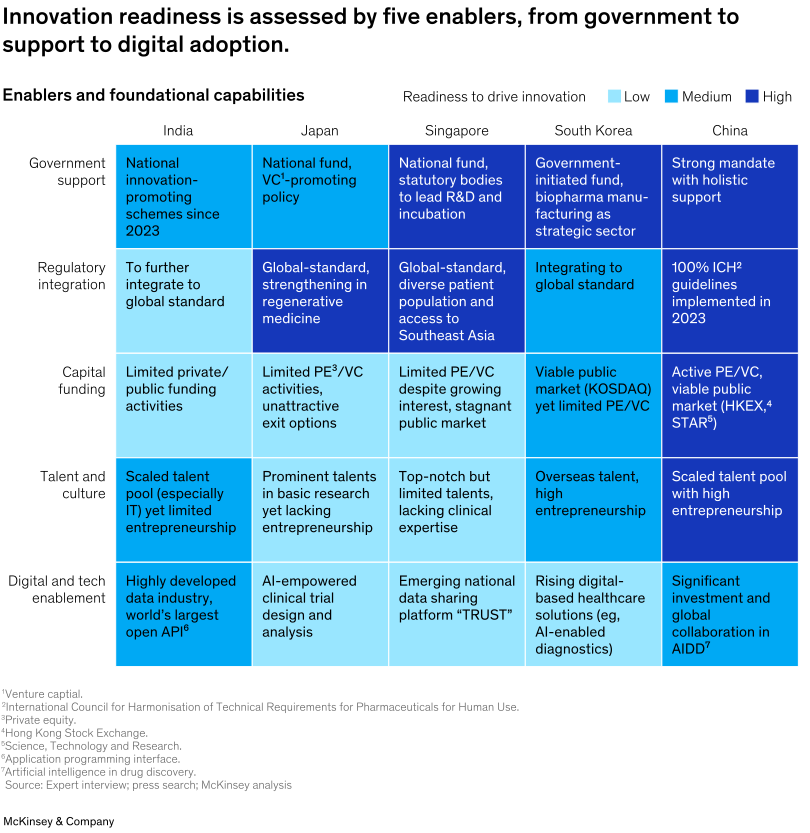
Together, these lenses reveal not only how far each market has come, but also which ecosystem forces will shape what comes next.
Country-by-country deep dive
China: Scale, speed, and scientific reach
China is Asia’s largest contributor to global biopharma innovation—responsible for approximately 30 percent of the worldwide innovative pipeline—and is increasingly shaping how therapies are discovered, developed, and scaled. China is Asia’s top destination for biotech-focused investment, raising US $26 billion in private equity (PE)/venture capital (VC) between 2019 and 2024.5 Its capabilities now span discovery through late development, with strength in antibody-drug conjugates (ADCs) and multispecific antibodies, and growing depth in cell and gene therapies. It is also building positions in protein degraders, RNA therapies, and radioligands—second only to the United States across several next-generation platforms. While oncology has historically anchored China’s innovation engine, the portfolio is now diversifying meaningfully across immunology, neurology, and metabolic disease, with rising deal activity in GLP-1 and immunology assets.
What most differentiates China is R&D velocity. Early discovery-to-IND (Investigational New Drug) cycles are 50 percent to 70 percent faster than the rest of the world due to parallelized workflows, dense CRO ecosystems, and a culture of executional intensity. In late development, trial recruitment often runs two to five times faster than US and EU benchmarks, thanks to large and concentrated patient pools, well-resourced sites, and maturing clinical capabilities. At the same time, Chinese-originated research is rising: China’s output in top-tier journals has climbed sharply since 2019, pointing to a shift from fast-follower assets toward first-in-class ambitions.
China’s trial execution is also a differentiator—its share of global clinical trials reached 39 percent in 2023, with patient recruitment and development timelines outpacing benchmarks in the United States and European Union.
Regulatory reforms—including China’s accession to the ICH (International Council for Harmonisation of Technical Requirements for Pharmaceuticals for Human Use) and a fourfold increase in staff at the Center for Drug Evaluation (CDE)6—have cut the approval duration from 4.5 years in 2018 to about one year by 2023. Chinese investigators are increasingly leading clinical trials, including first-in-China tests of new modality combinations such as Akeso’s PD-1/VEGF bispecific antibody. China’s innovation engine is backed by coordinated public-sector investment, diversified funding sources beyond VC and IPOs—including out-licensing, NewCo formation, and, in select cases, M&A by multinationals—and a growing pool of globally trained talent. The government has established more than a dozen biotech innovation hubs, each backed by targeted public funding. Between 2019 and 2024, Chinese biopharma firms attracted US $26 billion in private equity and venture capital,7 and more than 80 companies went public during that period.
South Korea: Deep science and modality specialization
South Korea is gaining recognition for its strength in advanced biologics, particularly in ADCs and cell and gene therapies. South Korean biopharma firms have landed multibillion-dollar licensing deals—such as GSK’s US $2.5 billion pact with ABL Bio8 to develop drugs that cross the blood-brain barrier for neurodegenerative diseases and LigaChem’s US $1.7 billion partnership with J&J Innovative Medicine.9 These reflect growing credibility in oncology innovation. South Korean companies are also increasing their participation in global regulatory filings and multiregional clinical trials. This scientific progress is supported by a maturing biotech infrastructure, including hospital-linked R&D centers and a growing presence of contract development and manufacturing organizations. The government’s commitment to biopharma has helped scale next-gen therapeutic development and positioned the country as one of Asia’s leading modality-focused innovation hubs.
Public investment and ecosystem maturity are accelerating South Korea’s ascendance in the field, with biopharma designated one of 55 “National Strategic Technologies.” In addition, the Korea Drug Development Fund committed US $2 billion to support more than 1,200 innovation projects through 2030.10 Capital markets have enabled early-stage growth, with approximately 40 biotech IPOs on KOSDAQ since 2018—even for pre-revenue companies.
South Korea’s growing research credibility is showing through its robust publication output and expanding clinical trial footprint. Meanwhile, the country’s biopharma sector is building globally oriented leadership teams—along with contract manufacturing capabilities that support global expansion—adding operational strength to its innovation portfolio. These interlocking capabilities and enablers are transforming South Korea into a global hub for next-generation biopharma innovation.
Japan: Precision, quality, and global orientation
Japan combines regulatory frameworks with deep research, established R&D capabilities, and commercial track records. The country leads the continent in FDA novel-drug approvals, with 24 new molecular entities (NMEs) granted between 2015 and 2023. Japanese firms have built global franchises—Daiichi Sankyo in ADCs and Eisai in Alzheimer’s disease—while operating across the value chain from discovery through launch and increasingly pursuing global partnerships. Japan’s “Sakigake” designation is an enabler that streamlines priority drug reviews. In addition, for cell and gene therapies, Japan created a distinct category of regenerative medicine properties with a conditional, time-limited approval pathway to accelerate innovation.
Japan’s innovation ecosystem is defined by consistent policy support, capital depth, and global talent pipelines. AMED operates on an annual budget of approximately USD $1 billion, with six core research pillars, including advanced drug discovery, regenerative medicine, and genomic science.11 Though Japan sees fewer biotech IPOs than China or South Korea, its business development models provide scale and market access. Japan continues to lead the region on research, producing top-selling global drugs and investing in high-value science.
The country’s labor market benefits from a cross-pollination of global skills: One in four leaders in Japan’s leading pharma companies has international work experience, and firms are increasingly adopting global-local governance models in their leadership structures. Together, these elements have made Japan not just a science hub but also a trusted global partner in drug development.
Singapore: Early-stage innovation and regional scale
Singapore has positioned itself as Southeast Asia’s leading hub for early-stage biopharma development, combining translational research capabilities with commercial readiness. The country excels at translating scientific discoveries into market-ready therapies, supported by institutions like Biopolis and the Agency for Science, Technology and Research (A*STAR), which offer platforms for start-ups to develop and test novel therapies.
Although Singapore’s R&D investment—at around just under 2 percent of GDP—is lower than that of Japan or South Korea, it outpaces several regional peers and supports a steady stream of clinical and digital health advances. The country also benefits from a robust intellectual property regime, efficient clinical trial processes, and a digital infrastructure that allows for both local scaling and regional collaboration. These ecosystem advantages position Singapore as an attractive launchpad for global companies entering the Asian market, as well as a home base for Southeast Asia’s expanding biotech economy.
Singapore’s innovation growth is supported by public investment, growing venture activity, and a globally connected talent pool. Since 2010, the government has committed more than USD $45 billion through the Research, Innovation, and Enterprise (RIE) programs, including USD $27 billion from 2010 to 2020 and USD $19 billion from 2021 to 2025. Roughly half is allocated to biomedical and health sciences, including biopharma—helping bridge academic research and industry needs.
While the country has not matched the IPO volume of China or South Korea, leading global venture capital firms such as Flagship Pioneering, CBC Group, and Novo Holdings have established a regional presence there, reflecting confidence in the country’s ecosystem. On research, Singapore punches above its weight in reputable publications and early translational output. Its biopharma workforce is supported by cross-border hiring and returning diaspora professionals, creating leadership teams that are globally fluent and operationally agile. These enablers and its strategic geographic location give Singapore outsize strategic importance as a regional gateway and scientific commercialization hub.
India: From generics to science-led growth
India is evolving from a generics leader to a more diverse biopharma hub. India leads the world in pharmaceutical manufacturing scale, with more than 750 facilities approved by the FDA and more than 2,050 certified by the World Health Organization for good manufacturing practices.
Indian firms are expanding beyond generics into more complex treatment categories, including biosimilars, injectables, and ADCs, with more than 138 biosimilars approved across all markets.12 India’s innovation pipeline has expanded meaningfully over the past decade, increasing from roughly 270 assets in 2015 to about 450 in 2024—a 1.5x rise. The country’s strengths in contract manufacturing, operational precision, and digital health tools are helping global firms diversify their supply chains while tapping a high-quality, cost-efficient talent base.
India’s innovation environment is driven by policy incentives, expanding capital access, and a growing ecosystem of returnee talent and biotech entrepreneurs. In 2023, the government launched a national policy to boost R&D and innovation in pharma and medtech, backed by US $600 million through a Research-Linked Incentive program running until 2028.13
Meanwhile, private capital is following suit: between US $2.5 billion and US $3 billion was invested in pharmaceutical R&D in fiscal year 2024, while total private equity and venture capital investment in India grew 9 percent year over year to about US $43 billion, with healthcare and biopharma accounting for a growing share.
India also supports more than 1,000 biotech startups and 12 biotech parks, alongside a growing number of artificial-intelligence-enabled research initiatives and digital-first platforms. The country’s “brain gain” policies are attracting diaspora scientists and global pharma professionals back to India, strengthening domestic capabilities in both scientific discovery and commercialization. These developments mark India’s shift from a primarily cost-efficient manufacturing base to innovation-driven scale, positioning it as a globally relevant force in the next phase of biopharma growth.
The interconnected nature of market developments
Though it’s clear each market is moving at its own pace, important patterns are starting to emerge. Governments are committing long-term to biopharma innovation. Private capital is picking up and scientific capabilities are moving forward—from manufacturing and trials to developing new drugs and bringing them to global markets. Markets are also pushing to develop cross-border talent, align regulations, and strengthen clinical trial infrastructure—all reflecting a shared move toward global standards.
Globalization archetypes: Business models driving Asia’s biopharma expansion
Asian biopharma companies use a mix of established and emerging business models to commercialize innovation,14 balancing risk, control, and speed. Companies in the region leverage four models to fuel global expansion.
- Out-licensing: This is the mainstay of biopharma commercialization for Asian-origin firms. This model involves the development of a promising drug candidate by the Asian firm, which then licenses the rights to a foreign partner, who leads development, manufacturing, and market launch. This approach allows Asian biopharma firms to monetize their research and innovation efforts without the capital-intensive burden of having to build costly infrastructure in foreign markets. Asia contributes around 25 percent of global out-licensing deals, with a continued focus on oncology and growing activity in next-gen modalities such as cell and gene therapies and ADCs.
- Strategic partnerships: A hybrid between pure out-licensing and building full in-house global capabilities, strategic partnerships involve collaborating with global companies for market entry. It could involve co-developing and co-commercializing/creating a product—with both parties sharing costs, risks, and revenue opportunities. Asian biopharma firms contribute approximately 30 percent of global partnerships, and this momentum is expected to pick up in the near term.
- Direct to global: More companies independently enter global markets, managing regulatory approvals, local operations, and product launches without a partner. Some Asia-origin pharma companies employ this approach due to greater control over assets and improved revenue opportunities. The region now contributes about 43 percent of the world’s innovative pipelines, underscoring how Asia-origin innovation is increasingly competing on the world stage. Japan leads with globally active players such as Takeda and Eisai, while China’s BeOne is one of the first major biopharma companies from the country to take its own assets directly into international markets, managing regulatory approvals, clinical trials, and commercialization abroad. Meanwhile, South Korea’s SK Biopharmaceuticals and India’s Dr. Reddy’s Labs demonstrate how the region is continuing its global footprint.
- NewCo model: This emerging model involves spinning off one or multiple pipeline drug(s) into a newly formed corporate entity in a foreign jurisdiction. The new company attracts its own investors to finance the development of the asset and hires local leadership and team members who commercialize the product. The Asian biopharma firm may maintain a stake in the new company and participate in a revenue-sharing agreement. More than ten NewCo deals have been completed over the past year, a model gaining popularity among both Asian and global biopharma companies. China accounts for most of Asia’s NewCo activity. For example, in early 2025, China’s KeyMed Biosciences partnered with US-based Mountainfield Venture Partners to launch Timberlyne Therapeutics, a NewCo that licensed ex-Greater China rights to KeyMed’s CD38-targeting antibody, CM313, for development in cancer and autoimmune diseases.15 The NewCo model enables Asian biopharma companies to access specialized capital and local expertise while maintaining strategic control, accelerating asset development and global market entry.16
Asian biopharma players strategically deploy a mix of these models, allowing flexibility to build a business optimizing risk, control, and speed to market. This portfolio approach provides companies with the agility to tailor market entry based on asset maturity, internal capabilities, and willingness to partner with foreign or multinational firms. By leveraging these diverse pathways, Asian firms are not only accelerating global expansion but also strengthening their position as dynamic, innovative players in the highly competitive global biopharma landscape.
Conclusion: Why Asia’s rise matters: A strategic imperative for global biopharma
The next wave of global biopharma innovation won’t come from any single market, but Asia’s accelerating capabilities ensure it will play a central role. For pharma executives navigating pipeline productivity challenges and for investors seeking scalable, high-yield innovation platforms, the signal is clear: Asia is no longer a market to watch—it’s central to how the industry will evolve.
As global R&D becomes more distributed and cost pressures intensify, one strategic question emerges: How can Asia contribute scalable, cost-effective innovation models that serve both domestic and global needs?
Three implications follow from this.
-
Asia is emerging as a critical global source of biopharma innovation. In a world grappling with patent cliffs and slowing new molecular entity submissions, Asia is emerging as a complementary force—an engine that can help bridge the global productivity gap.
Each country offers unique advantages. For example, China offers scale and operational depth across pipeline breadth (in terms of therapeutic areas and modalities), and efficient discovery, clinical development, and manufacturing capabilities. South Korea delivers modality-specific strength in areas like cell and gene therapy. And India combines cost efficiency with growing capabilities in discovery and early-stage development. The takeaway: Asia represents a strategic lever for biopharma companies seeking to accelerate innovation delivery and improve R&D productivity.
-
Asia’s evolving biopharma value chain could reshape the structure of global drug discovery and development. Multinational investors can no longer afford to overlook Asia. Asia is no longer a peripheral market. It’s a source of differentiated innovation—and increasingly, a launchpad for global-first strategies. Yet many venture capital and private equity firms ignored the region, particularly China, until recently—despite more than a decade of momentum. Investors who sat out the last cycle risk missing the next one, as Asia continues to emerge as a key driver of global biopharma innovation.
The call to action is clear: deepen engagement. Build localized intelligence, forge cross-border partnerships, and explore alternative fundraising platforms such as Chapter 18A of the Hong Kong Stock Exchange (HKEX). Asia is no longer optional. It’s where the next wave of opportunity is taking shape.
Some companies are already moving in this direction. This momentum extends beyond private investors. AstraZeneca’s 2024 acquisition of Gracell Biotechnologies—a China-founded cell-therapy company—demonstrated how Asia-origin innovation is entering global pipelines and why multinational biopharma companies are seeking earlier access to emerging modality platforms developed in the region.
What sets these markets in Asia apart is not just their shared progress but also how their strengths fit together. The region offers a powerful proposition for global biopharma investment and innovation. A therapy developed in China, for example, might tap South Korea’s large-molecule manufacturing or link early-stage work in China with India’s strength in formulation and commercial-scale production. These connected capabilities form a regional value chain that’s more competitive together than any country alone. As companies plan where and how innovation will happen, Asia’s integrated biopharma potential is becoming hard to ignore.
-
Asia has the potential to lead in affordable innovation. Unlike the United States, which often concentrates on premium, high-cost breakthroughs, Asia is positioned to lead in affordable innovation—practical, scalable solutions designed for broad populations and at a lower cost. This innovation model could improve access in other emerging regions—from Southeast Asia and Latin America to the Middle East and Africa.
Ensuring access to innovative therapies remains a global priority, as affordability and distribution barriers continue to affect patients across both mature and emerging markets. Patients in many emerging markets continue to face barriers to accessing innovative therapies because of high prices and fragmented distribution. Asian biopharma firms, with structural cost advantages in research and manufacturing, can address this gap. Chinese biopharma companies’ cost structures and broad portfolios position them to reach a broad patient population, particularly across the Global South. Chinese biopharma firms benefit from distinctive structural efficiencies, running discovery programs at roughly one-third to one-half of global costs and clinical development at 20 percent to 50 percent of US levels. They’re enabled by a deep STEM talent pool, a scaled CRO/CDMO ecosystem, and streamlined regulatory timelines. These factors enable them to deliver innovative therapies at greater speed and accessibility, without compromising scientific rigor.
To scale this impact globally, companies will need to ensure sustainable commercialization models—either by building efficient distribution platforms themselves or by partnering with local players in Southeast Asia, Latin America, the Middle East, and Africa. Such partnerships, if successful, could open access to modern therapies for millions of patients who are currently underserved.
Asia’s growing role in biopharma marks an evolution in how global innovation systems are configured. As cost pressures intensify and scientific frontiers expand, the region’s integrated capabilities in discovery, development, and manufacturing are redefining what’s possible for both established players and emerging innovators. At the same time, evolving geopolitical dynamics are influencing how companies consider building and accessing innovation capacity in the region.
As global R&D becomes more distributed, the architecture of innovation itself is shifting. Increasingly, competitive biopharma companies are organizing around capabilities rather than geographies—linking basic science, translational research, clinical execution, and manufacturing strengths across regions. This hybrid, capability-focused model leverages on differentiated capabilities worldwide, enabling more flexible and resilient innovation pathways.
The strategic question is no longer whether to engage with Asia, but how to establish fit-for-purpose models that enable sustained access to innovation. These may range from asset-level arrangements to ecosystem-based approaches such as NewCos or distributed development constructs that provide flexibility amid uncertainty. Asia offers a portfolio of complementary capabilities rather than a single entry point: Japan in basic science and translation, China in scaled and cost-efficient clinical development, South Korea in advanced biologics and manufacturing, and Singapore in early-stage innovation and regional deployment. Companies that architect models combining these strengths—beyond traditional partnerships—can accelerate development, broaden modality reach, and build more resilient global R&D systems. In an era when biopharma success depends on both scientific excellence and operational agility, Asia stands not at the edge of global innovation, but at its center.