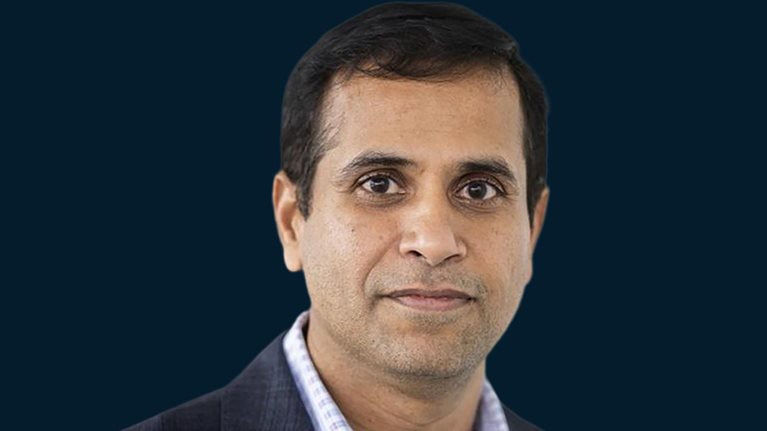
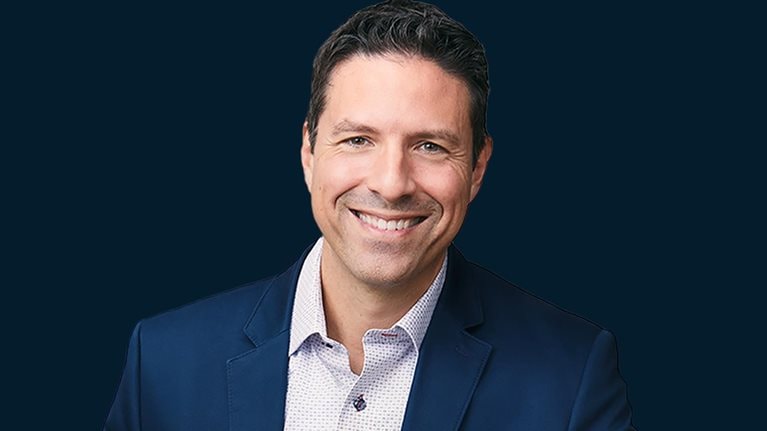
In this episode of Eureka!, McKinsey’s podcast on innovation in life sciences R&D, hosts Navraj Nagra and Valentina Sartori speak with Christian Diehl, chief data and digital officer of Biomedical Research at Novartis. They discuss the origins of Novartis’s data42 platform, where AI is already moving the needle in drug discovery, the difference between a “cool demo” and a technology that scales, and how Novartis is thinking about governance as agentic AI becomes part of the workforce. An edited version of their conversation follows.
Solving a 200-year-old problem
Navraj Nagra: Christian, you’ve spent your career at the intersection of science, data, and business. You’ve moved from consulting to corporate transformation, and now you’re leading digital for research at Novartis. What drew you to this space in the first place?
Christian Diehl: Early on, when I left school, I couldn’t decide what I was most interested in, so I chose range over specificity. I studied business engineering first, a mix of chemical engineering, informatics, and business. Later I did an MBA and then studied pharmaceutical medicine. My dream was, and still is, to bring these different perspectives and functional knowledge together to help discover new medicines that patients will benefit from, either giving them more days in their lives or better days in the remaining life they have, so they can lead a normal life. To pursue that dream, I’m now at a great place, at the intersection of all these topics, where they converge.
Valentina Sartori: Very inspiring, Christian. How do you describe your role today to someone outside the pharma world? What problems do you wake up to solve for scientists every day?
Christian Diehl: I work in biomedical research for a pharma company, and drug discovery is difficult and challenging. Many drug candidates that look promising fail along the way and never become drugs. You have to pick the right target in the human body, one you at least hypothesize has a link to the disease you want to change. Then you have to design the right molecule that hits the target and optimize its properties. Then comes the hardest part: finding out if the molecule is actually a drug, whether it exhibits drug-like properties, and balancing safety and efficacy at the right dose.
My team and I help transform the collective power of data, AI, machine learning, data science, and the underlying digital infrastructure into measurable scientific progress. We’re aiming for faster development cycles, better choices along the way, and higher confidence in what we learn about disease, all with the aim of translating into faster delivery of new, innovative, safer drugs to patients.
Collectively, we’ve been at this problem for 200 years, trying to unravel the mysteries of human biology. So far, we understand about 2 to 4 percent, optimistically maybe 5 percent, of what’s going on within us. More than 95 percent is still unknown. It’s fulfilling to be part of a team of scientists venturing into that unknown territory.
The spark for Novartis’s digital transformation and the birth of data42
Navraj Nagra: You referred to this 200-year-old journey. Let’s talk about the shift from traditional research methods, some of them centuries old, to digital-first approaches that have only really existed in the last decade or so. Novartis has made major investments in data analytics and AI. What was the original spark for this transformation?
Christian Diehl: Novartis has always been a data-driven organization. Machine learning has been used in biomedical research for more than three decades, and before the recent AI tsunami, we were already seeing progress from computational scientific approaches, before it was called AI.
For Novartis, the crucial moment was Vas Narasimhan becoming our CEO in 2018. Since then, he’s led a strategic and cultural transformation to make Novartis a fully focused, innovative medicines company, one that delivers high-value medicines addressing society’s greatest disease burdens through technology leadership in R&D and by defining novel access approaches. Part of that leadership has been strategically elevating the importance of data and digital across the enterprise.
We created a digital health innovation lab in R&D. From there came Sense, a control tower to monitor our clinical trial operations in real time, and data42, one of the first clinical trial data lakes. It started as a crazy idea over a weekend and is now a very large data lake hosting all the clinical trials we have done over the past 20 years.
Valentina Sartori: Can you say more about the original thesis for data42, and what scope and decisions made it more than just another data lake?
Christian Diehl: If we go back to 2003, when the first draft sequence of the human genome was completed, many predicted that drug discovery would be done within months rather than decades. It turned out to be far more complex than understanding genetics alone, though it did revolutionize the creation of cells and animal models for exploring biology. Those models have been valuable, even though they don’t always perfectly represent human biology and physiology.
Fast forward ten years to 2013, and Elias Zerhouni, a former director of the US National Institutes of Health, argued that researchers had moved away from studying human disease in humans, and advocated refocusing on methodologies that study disease biology directly in people. Over the years, Novartis generated a lot of data from animal models and organoids and also accumulated data from more than 3,000 clinical trials.
Since then, we’ve also in-licensed external data sets, so-called real-world data, including electronic health records, which let us study disease progression in the real world. That’s not to say clinical trials don’t happen in the real world, but they take place in a controlled environment, whereas electronic health records capture something different.
Out of that, the idea for data42 was born: combining clinical trial data with external data to better address preclinical-to-clinical translation, the question of what happens between bench and bedside. That’s been a journey of almost ten years, leading to one of the largest data sets of its kind, letting us study the effects of hundreds of treatments on large, controlled human populations. What we’re really after is forward and backward translational learning, from preclinical to clinical and back, to bridge that gap and find more effective medicines.
What data42 makes possible today
Navraj Nagra: You’ve outlined a really exciting potential for data42. What can you do today that you couldn’t do ten years ago because of this platform?
Christian Diehl: Having all this data in one place lets us study the totality of evidence. It’s one thing to look at a single clinical trial and understand what you can learn from it, but the learning explodes when you can look at dozens of trials addressing the same mechanism of action, even across very different diseases, and draw more generalized conclusions.
Because we also have all our animal tox studies in there, and we’ve diligently recorded every result, the successes and the failures alike, we can now do things like predictive safety: using forward or backward translational learning from trials where we found toxicity effects that ended a drug candidate, to better predict potential safety risks early on in future candidates. The ultimate goal is safety by design, built into the compound from the start.
Navraj Nagra: As a pioneer in this space, you’ve probably faced decisions where, on reflection, you would have done things differently. If you could redo one early platform decision, what would it be? Architecture, metadata, change management?
Christian Diehl: Good question. We had to pivot quite a few times along the journey, and in hindsight you’re always smarter about what you’d do differently. When we started, almost ten years ago, there was no mature platform technology yet, so it took a few experiments with different technologies before we landed on the current data42 architecture, and before we could show return on investment.
Redoing it today, with the underlying technology having matured dramatically, would probably save a lot of time and let us start cleaning the data much faster. What’s still ongoing, and has been for many years, is the huge investment in cleaning, curating, and harmonizing data to make it AI-ready. Having a lot of data is one thing; having AI-ready data you can actually leverage for advanced data science and AI models is a very different thing. It needs a metadata layer, context, and harmonization so different data sets can be compared. Having made that investment and having had the stamina as a company to sustain it for years puts us in a good place to leverage the latest AI capabilities as they emerge.
Where AI is moving the needle in biomedical research
Valentina Sartori: Shifting gears to where you stand today and the impact you’ve had: when you look at Novartis’s biomedical research, where is AI already moving the needle? Is it in Target ID space? Is it chemistry, whether antibodies or small molecules, trial design, operational decisions, or all of them?
Christian Diehl: Yeah, probably everywhere. The first immediate impact of AI we can observe across the organization relates to personal productivity and business operations. First came the chatbots, and now our associates commonly use AI to generate emails, texts, reports, images, slides, and training materials. Many meetings at Novartis are now enhanced by automated minute-taking. It’s becoming more common that we leverage AI when we identify recurrent processes like writing reports, reporting experiments, and reporting trials.
On the data science and research informatics side of my own organization, I see vibe coding and scripting becoming more common, or agentic engineering, using natural language to have an AI help write code. It’s not perfect, but it’s a huge productivity gain. It’s also speeding up basic back-end tasks, like IT documentation, software testing, and vulnerability testing that come with every IT product.
Even more exciting is the scientific side. One thing that’s very common now is what large language models enable through retrieval-augmented generation, which we’ve paired with agentic research capabilities. That helps our scientists a great deal with biomedical literature review, extracting findings from vast amounts of papers, summarizing, and identifying new disease targets.
We also run major AI use cases on generative chemistry and AI for biologics, using AI to generate better molecules and more molecules faster in silico on both the biologics and chemistry sides. As I mentioned, we are using AI and data science and machine learning to assist us in safety predictions. This is about avoiding toxicity before we actually observe it. We also use it for clinical trial design and protocol writing. It’s a broad range of use cases, and it’s such a privilege to work at an organization with a lot of smart people who are willing to embrace new technologies and new approaches and are figuring out how best to use it in their personal context.
Valentina Sartori: What have you learned about scaling AI beyond the cool demos? For example, on data readiness, lineage, computation, MLOps [machine learning operations], or product ownership, over these years?
Christian Diehl: My experience, to be provocative, is that cool does not scale. I’ve sat in many meetings where you see an impressive demo, and six months later you check in to see what happened: has it been rolled out, industrialized, made generally available? Usually it hasn’t. A cool demo is great for impressing people in a SteerCo meeting, but translating it into something that scales and gets embraced by the organization is very difficult.
You have to make it, in virtual quotes, boring. You have to make AI part of the daily process, embedded so it’s just the way things are done, just another tool in your daily work rather than something you marvel at every day. It’s a journey.
Change management is still ongoing. Some people are early adopters who embrace these technologies; others are more skeptical. Like everyone in the industry, we’ve started use cases where we were maybe a bit naive or over-optimistic about the impact they’d bring. Some scaled, and others didn’t. I think the art is picking use cases, checking whether you have the data to create real impact, assessing where the technology stands today, running the experiment, and being willing to stop at the right point and pivot if it doesn’t work.
Navraj Nagra: You mentioned bleeding-edge approaches like vibe coding. As you evolve your AI strategy, how do you balance the ambition to move quickly with scientific caution, especially in some of the regulated processes we have in the pharma industry?
Christian Diehl: Excellent question. Novartis has been actively thinking about responsible AI use for more than a decade, since the Asilomar AI principles were released; they’re available on the Future of Life Institute’s website. We were among the first pharma companies to publish our own set of principles, back in 2021, and we’ve updated them regularly. I’m also part of a project looking at the enterprise view: how we find the right balance between leveraging AI progress, using it responsibly, and having the right governance in place.
With every technology, great power brings great responsibility. We will leverage AI to serve the greater good, to find innovative medicines that help patients. We’ll use AI to enhance the human capabilities of our scientists to help them discover breakthrough innovation that helps patients, and we will do this responsibly, so that we have positive societal impact with these innovations while minimizing the risk and consequences.
The Hippocratic oath begins with “primum non nocere,” first do no harm. That’s been, and will remain, non-negotiable, and everything we do is meant to benefit patients. All our researchers strictly follow the Declaration of Helsinki, which governs how we conduct clinical trials, which are essentially experiments on humans. There is a high ethical focus on what we do and how we conduct these experiments in the most responsible manner.
There are other risks we’re watching too. For example, how do we keep private data private? AI is incredibly resourceful in crawling through data and connecting data sets with each other in ways that could compromise privacy, so we’re actively addressing patient data privacy and genetic data. We also don’t want an agent surfacing our intellectual property and posting it to the world, so protecting the company matters as well. And depending on the data, pairing it with AI can lead to biased decisions or proposals, so we have to carefully check for hallucination, robustness, whether the model’s been tested, and whether its outputs are controlled and replicable.
Something I’ve thought about a lot lately, now that agentic AI is arriving, is what to let agents access. Agents are becoming part of the workforce, and like any workforce, not everyone should see everything. I think agents need to be governed almost like associates: you have the right to do this, but not that. There’s also the question of what we let agents do outside the company: can they call external tools to outsource part of their work through Model Context Protocol servers or similar? And how do we document what an agent does well enough to defend it to health authorities, with a replicable audit trail?
The ultimate question, if we imagine a future with agentic networks of tens of thousands of agents, is where do we insist on a human in the loop? A circuit breaker where a human must make the decision, versus a human in the loop simply observing and intervening when needed, versus being confident enough to take the human out of the loop entirely because the process is validated and fully automated.
Building the right talent and culture
Valentina Sartori: You mentioned the talent this requires, and drug development is a complex process. How do you combine veteran researchers with digital natives? Is it an operating model choice, an organizational design decision, communities of practice, role rotation? How do you build the right skillset?
Christian Diehl: It’s a people story, really. I’m convinced AI won’t replace us. I like the concept of the copilot: not the pilot, the copilot, and everyone has to learn how to work with one. What AI is already doing is redefining which parts of our work make us valuable versus which can be automated, and everyone needs to think about that: paying attention to new AI capabilities, finding out how best to use them, and being clear on what makes each of us unique and valuable versus what part of the job AI can take over.
In science, change is constant; every new discovery changes jobs. ’Novartis’s culture is generally open-minded about novelty, so we have to keep evolving roles and approaches. The key message is to think about how our roles are evolving.
There’s a famous idea in AI called Moravec’s paradox: what’s hard for humans is easy for AI, and what’s easy for humans is hard for AI. It’s very difficult for me to become a chess grandmaster, something that’s easy for an AI, but very easy for me to walk barefoot across gravel and keep my balance, something that’s very difficult for an AI. With that in mind, I think we have to embrace diversity: I’m getting a new associate, which happens to be an AI, with a very different skill set from mine, and I need to figure out how to leverage that associate to augment my own capabilities, while being clear about what I do best. That’s a fruitful collaboration.
Navraj Nagra: Picking up on agents: at McKinsey, we have 60,000 people working with us, but 25,000 of them are agents. As we’ve thought about this internally and with clients, governance and oversight of these agentic employees, for want of a better word, has been interesting. How are you thinking about that? Who’s responsible, HR or IT, for the constraints you described around how agents will operate?
Christian Diehl: Ultimately, it’s the human who leverages the agent and triggers a decision, but it’s genuinely a cross-functional challenge. There’s an infosec piece: you can put technical guardrails on what agents can access and do, so InfoSec plays a part. There’s also a compliance piece, around what ethical principles we follow, so legal and compliance functions are involved too. But ultimately, every associate who uses an agent’s output to trigger something has to be mindful of that responsibility.
I like to anthropomorphize agents, though I probably shouldn’t: think of it as a very smart, very eager, super-fast intern you’ve handed a task to, who comes back with a result. Would I send that straight to the CEO without checking it? Probably not. I’d say, this is great, thank you, but I need to review it carefully. The decision is mine, not the agent’s.
Navraj Nagra: Thank you, Christian. Novartis has launched programs like the AI Early Career Initiative. What inspired that, and what are you learning from the early-career data scientists entering pharma?
Christian Diehl: Last year we started a program hiring graduates fresh out of university and rotating them through biomedical research for two years, so they get breadth across the drug discovery and development value chain. After two years, they settle into a permanent department based on their interests.
I was recently in Cambridge, MA, and had lunch with our first cohort of AI early-career interns. It’s a great opportunity to get a fresh view on what people coming in fresh—call them AI natives—find awkward about the organization; sometimes something as simple as a very manual onboarding process. They’re also surprised by things we take for granted, like our access to compute power or certain scientific approaches. It’s a good infusion of new thinking, and both sides benefit: the existing workforce gets help upskilling and rethinking things they’d long accepted as normal, and we get the opportunity to rethink some of our workflows and say, we have done it like this for ten years, but is this really the best way to do it? Or does AI give us an opportunity to reengineer the way we do certain things?
Valentina Sartori: What does a data-literate R&D organization and culture look like to you in practice?
Christian Diehl: Having data literacy across the organization is a constant endeavor. We have to train people, build their skills, and show them the value of the data, because data is really the fuel for AI, our most precious differentiating currency. Anyone can buy compute power, and anyone can find AI models to build on, but the proprietary data an organization holds is what makes it unique. That’s a key differentiator for Novartis. Since we’ve done research for decades and never thrown anything away, I’m constantly buying more storage capacity, and we now have a large data repository we can mine for new insights with AI.
We run enterprise data management programs and formal data literacy training across the organization. In fact, we’re among a small number of companies recognized by the Enterprise Data Management Association for advanced data management maturity, and I believe we’re the only R&D organization in the industry to receive that recognition so far, though I’m sure others will catch up. Besides these formal programs, people in pharma R&D are naturally data savvy and data hungry; generating data and turning it into scientific insight is what we do. High-quality data production and analysis come naturally to us because we’re driven by scientific progress, and data is how we get there. On average over the years, Novartis spends around 20 percent of sales on R&D, largely on data production and insight generation that leads to new medicines. Data is truly at the heart and core of what we do in R&D.
Realistic targets, staying disciplined, and the road to 2030
Navraj Nagra: You’ve walked us through this broader transformation journey, the impressive investments in both platforms and people. I’d like to ask about the lessons you’ve learned. Can you describe a moment where a platform or program didn’t land, how you reacted, and what changed afterward?
Christian Diehl: A good example of where we had to pivot a few times is data42. At first we tried stitching different technology platforms together, and it didn’t work as expected, so we pivoted multiple times until we found the right underlying architecture. Then we started curating data, forming the hypothesis that curating a given data set would be hugely valuable to the organization, only to find no real takers for that data set, while people asked for other data sets we hadn’t curated yet. The lesson learned was to stay close to the scientists and the questions they actually have, and back-solve what data asset or product you need to answer that question, rather than building a data product first and searching for customers. Inevitably, you try things that don’t work, and I think the art is treating that as learning rather than failure. It’s part of the journey: some things land, some don’t, and the key is knowing when to pivot versus pushing a little further.
Valentina Sartori: Science is never black and white, whether in drug discovery, preclinical, or early clinical work; there’s a lot of variability and factors out of your control. Given that, what are realistic performance and impact targets for new platforms and programs?
Christian Diehl: The best programs are close to the portfolio of diseases we already work in, where we have as much fundamental understanding as possible. Downstream in clinical development, speed is the crucial metric: how long it takes to get through the clinical trials. In early research, speed still matters, but the bigger question is whether we can increase the probability of success, the number of shots on goal, and our ability to pick the most promising targets and design molecules with the right drug-like properties and safety built in from the start, so we don’t fail years later once human trials begin.
Navraj Nagra: We’ve seen a number of AI-first biotechs with billions in investment that haven’t managed to convert that into molecules for patients, and many haven’t even reached Phase III trials. How do you personally keep perspective, balancing the excitement of innovation, AI or modality, with the patients that science ultimately serves?
Christian Diehl: As much as I’d love it to be true, drug discovery isn’t purely an engineering problem where a good molecule guarantees success; at least not today. In general, we’re excited, and a sense of urgency is a core Novartis behavior; we remind ourselves constantly that patients are waiting for the breakthrough discovery we’re working toward. But in the AI space, you also need discipline in your priority use cases. You have to stay focused and keep a critical eye on what works and what doesn’t.
I think it’s very dangerous to spread yourself thin across too many use cases that ultimately don’t scale. I would say it’s better to focus on some of your core business processes; in generative chemistry, for example, it’s core to us to find the right hit and then to optimize the properties of that molecule. With or without AI, that is a core business process, so we can build the AI use case around optimizing that process. What we constantly debate is, what is good enough? It’s easy to lose your way chasing the latest AI model when something simpler that already works would do the trick.
I try to avoid doing AI for AI’s sake and claiming I’ve done the latest thing. If it doesn’t scale, that’s a one-trick pony. I’d rather have AI embedded in real processes than have many proofs of concept. Novartis has the willingness and the financial firepower to invest, but we still have to critically ask what the return on investment actually delivers for the task we’re here to do: discovering the next round of breakthrough medicines. All AI we do has to serve this purpose. In general, we’re chasing impact, not novelty, though sometimes the latest novelty does have the biggest impact.
Valentina Sartori: If we look ahead to 2030 and think about what can be done with AI, what excites you most, but also what keeps you up at night?
Christian Diehl: I think human physiology is complex and still poorly understood. As much as I’d like to believe otherwise, I don’t think AI will dramatically change that or let us create a new drug in weeks by 2030; that’s not realistic yet. Other industries have seen a single innovation change the entire mantra of the field, so never say never, but at the moment, we’re not there. We may see one-hit wonders, cases where someone achieves something remarkable but can’t replicate it.
What I see more realistically on the horizon, and already happening, is the convergence of dry and wet labs: the wet lab being the physical laboratory, and the dry lab being what our data science teams do for in silico discovery. I expect more in silico hypothesis generation linked to semi-automated, or eventually fully automated, self-driving labs that run experiments to validate those hypotheses, generating massive amounts of data to train models and feeding the results back into the next round of hypotheses. We call this a lab-in-the-loop concept. If we can build these loops at scale, it should meaningfully accelerate drug discovery, making the hardest parts of the process faster, smarter, and less prone to failure, or perhaps we’ll simply fail more often but recover faster because we can run through more loops. Novartis aims to be at the forefront of that transformation, which is why we’re making big investments in, for example, our San Diego site, where we’ve committed $1 billion to next-generation laboratory setups.