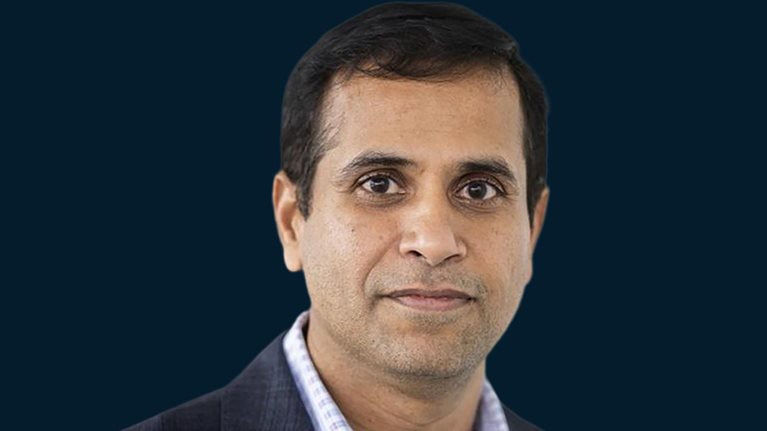
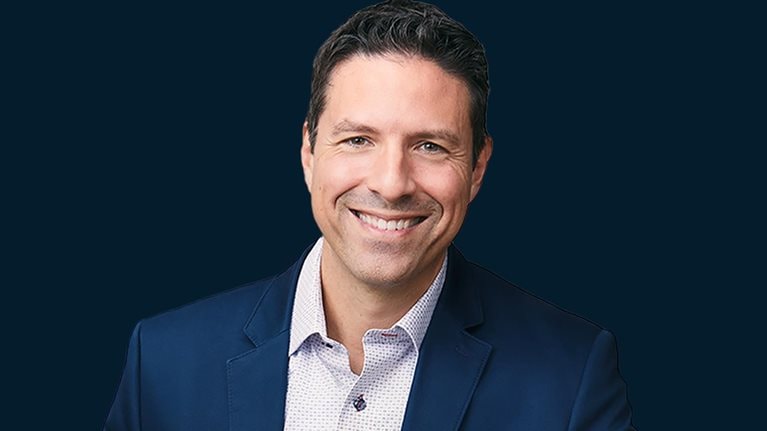
In this episode of Eureka!, hosts Navraj Nagra and Anas El Turabi, a partner in McKinsey’s Boston office, speak with Bob Li, Senior Vice President, Global Head of Medical Affairs, Oncology, at AstraZeneca. Li, a physician-scientist who spent over a decade at Memorial Sloan Kettering Cancer Center (MSK) before moving into industry, draws on years of treating patients in underserved and remote communities to argue that access, not scientific discovery, is now the biggest barrier to curing cancer. He talks through what AstraZeneca is doing to close that gap, from decentralized trials to AI-enabled research, and why he believes it’s possible in this lifetime. An edited version of their conversation follows.
Healthcare systems as an enabler and a bottleneck
Navraj Nagra: You’ve built your career at the intersection of clinical care, research, and now medical affairs. What were the pivotal moments that shaped your patient-first lens, and what pulled you from academia into this role?
Bob Li: I’ve been in practice for more than 20 years, with over a decade at Memorial Sloan Kettering Cancer Center (MSK) in New York. As an Australian physician-scientist and medical oncologist, I’ve seen differences among healthcare systems in Australia, the US, and through international outreach in Asia, Latin America, and beyond. It has been a learning experience, from a personal passion to cure cancer as a physician-scientist focused on drug development, to the realization that healthcare systems play an enormous role in our ability to deliver medicines, prevention, and innovation to patients. Ultimately, healthcare systems are the key enabler, but also the primary bottleneck, in our efforts to eliminate cancer as a cause of death.
Several critical moments stand out from designing innovative clinical trials at MSK. I’ve seen patients who have to jump through hoops just to get onto a clinical trial. I’ve had patients in rural America who struggled to access the standard of care, multidisciplinary teams, or the latest advances in clinical practice. I’ve seen real disparities, and those were eye-opening moments in my career.
I remember a patient in rural Minnesota with a HER2 mutation, struggling with metastatic lung cancer, who was struggling to get an appointment at the Mayo Clinic. I stepped in by making phone calls to colleagues and conducting a remote telemedicine consultation from MSK in New York to provide a second opinion and help the patient’s journey. There was a lot of doctor-to-doctor collaboration. This was during the COVID-19 pandemic, when telemedicine was just becoming a new norm. Without that remote access, the patient likely would still be in the dark, and it would have been really challenging.
There are countless examples like this. This is the norm of what patients are struggling with, just to get the right medicine, which can transform their lives. At MSK on the Upper East Side of Manhattan, I was used to seeing patients who arrived well-informed, supported by family members equipped with medical knowledge. But there are a ton of patients who simply don’t have that level of access. Those experiences led to a realization that we need to transform the healthcare ecosystem to be more equitable and enable more access. Expanding access is the single most critical factor if we are to eliminate cancer as a cause of death.
7 percent, and the disparity behind it
Anas El Turabi: It’s inspiring to hear how your experience has shaped your mission and the problems you’ve chosen to focus on. The reality of what it’s like for patients, especially in more out-of-the-way areas, is profound and moving to hear. But you’re also in a position of global leadership, leading a large organization. What about your prior experiences helped shape your leadership vision and style?
Bob Li: These experiences have played a key role in shaping my vision and leadership. It’s the connection to the patient and their struggles—their longitudinal stories and their challenges overcoming hurdles. Whether it’s getting a state exception to reimburse telemedicine, or navigating an ocean of information overload, patients are fighting to find a treatment that works. It hasn’t been easy.
Hearing patients struggle—not just on the Upper East Side of Manhattan, but across all communities and internationally through outreach in Brazil, Chile, China, India, Europe, and the Middle East—showed me how hard it is to get the best cancer care. I came to realize that this actually represents the vast majority of patients, while the well-connected patients I was seeing every week or two are actually in the minority—showed me how hard it is to get the best cancer care.
If you look at the statistics in the US, despite decades of effort to improve access to trials, participation remains at 7 percent, which is abysmally low. When you consider clinical trials to be the best care for patients with cancer—as endorsed by guidelines and academic societies—fewer than 7 percent of patients get access, meaning the vast majority miss out. That is the reality we are living in today.
That experience of caring for patients who struggle to get access has shaped my worldview and vision. I’ve come to see that the struggles are the same no matter where you come from. It’s the human experience, the human suffering, and the human endeavor to seek treatment, to pursue a cure, and to rely on family and support circles. That need is universal. There is a deep bond of shared humanity in this work that brings people together from all over the world.
So that international perspective, the patient experience, the healthcare disparities, and an appreciation of the ecosystem’s role in enabling access beyond individual point-of-care moments—those are the experiences that have shaped my vision and mission at AstraZeneca Global Medical Affairs.
Telemedicine, shipped medicine, and what’s already working
Navraj Nagra: Bob, you mentioned a number of big gaps between breakthrough innovation and patient impact. You underscored the gap in access to clinical trials, but you also mentioned broader challenges like access to care. Which of these do you think are the most addressable and fixable in the next two to three years, and how are you thinking about addressing those?
Bob Li: We live in the age of the AI revolution now, and the pandemic served as a watershed moment too, showing that the traditional way of doing things is no longer the only way. Telemedicine, remote monitoring, digital tools, tracking devices, apps, and collaboration are all available and ready to be deployed if we choose to work together. So I think these are fixable, solvable issues if we deploy technology and collaboration so that medicines can be brought to patients no matter where they are.
I’ve had the experience of treating patients at home through telemedicine and shipping medicines to patients’ homes internationally. I was developing KRAS inhibitors during the COVID-19 era, and we coordinated international shipping because the planes were shut down and there was no way the patient could come to the US to get care. Through international collaboration and Ministry of Health coordination, we circumvented a lot of bureaucratic hurdles to ship the medicine to the Middle East and deliver it to the patient. Those are proof-of-concept experiences that taught me these tools are available today.
Through telemedicine, we’re able to monitor a patient’s heart rate, blood pressure, breathing, and all the vital signs we collect routinely in clinical trials digitally. There’s definitely a place for on-site, in-person care, but it doesn’t have to be multiple times a week. We can do a lot to reduce the patient’s burden. Some aspects of care should be on-site, perhaps at an academic institution with extensive backing, but a lot of care could be delivered locally, close to home, at the local clinic—where patients can get local labs and imaging done without traveling hundreds of miles for a CT scan.
Those are things that are readily solvable today, but we need to work together across the healthcare ecosystem to enable access. This is central to our work at AstraZeneca: our mission to enable more access to sustainable healthcare and get our trials and medicines to more patients in remote, underserved, and diverse communities, bringing the medicines to them rather than having them jump through hoops to reach a major center.
It’s a paradigm shift, and those are the technologies we’re deploying today to solve that problem. Once you address access in a fundamental way, it shouldn’t just be 7 percent of patients who get access. It should be double or triple that. Once we keep pushing against those boundaries, you get to a point where most patients can get access to clinical trials. And guess what: clinical trials are going to accelerate. The status quo takes ten years or more to get a new medicine approved by regulators and brought to market, and that is a painful, tortuous, expensive experience that is becoming unsustainable.
The industry is pouring tens of billions of dollars into clinical trial drug development. We published a paper in Cancer Discovery a couple of years ago outlining that the industry spent more than $80 billion in 2022, and that number is going up exponentially. Today it’s likely over $100 billion. This spending outpaces the research spend of the National Institutes of Health (NIH) and the National Cancer Institute (NCI), and yet the bottleneck isn’t budget; it’s a very long, tortuous process of drug development. Access to trials is still abysmally low. So breaking that access bottleneck and getting these medicines out to more patients will fundamentally change the equation. We will be able to develop medicines on a two- to three-year timeline, rather than a ten-year timeline. We have examples of this at AstraZeneca where we’ve accelerated through international collaboration, but it can’t be the exception. It needs to be the norm.
Getting medicines to underserved communities through decentralized trials and technological access is one fixable solution, but so is international collaboration: getting more countries to work together on a common drug development paradigm and a set of regulations that don’t exist in silos, but within a coherent, cohesive system. When countries work together and patients enroll and get access to innovation at scale, that will accelerate the drug development process—not just for drugs, but for all kinds of innovation: vaccines, prevention, and diagnostic tools. If we do this at scale, I believe we will see the cure for cancer in our lifetime. When we talk about eliminating cancer as a cause of death as our AstraZeneca ambition, we want to deliver that in our lifetime, so that our grandkids can live in a much better world—one that isn’t fearful of cancer.
From individual cases to proof of concept
Anas El Turabi: It’s wonderful to hear what will sound to many listeners like tremendous optimism on your part. But some people might be skeptical that it’s really possible to deliver trials of sufficient standard, with advanced therapies and capabilities, into more resource-constrained contexts globally. What’s the basis for your optimism? Why do you believe we can do that?
Bob Li: That’s because I’ve seen it. I’ve seen the coordinated approaches we’ve made to deliver first-in-class or best-in-class medicines to patients in rural communities. I’ve had patients’ lives literally transformed, moving from a life-threatening, almost hopeless struggle to a place where they are thriving, taking a new medicine, contributing to cancer research, going back to work, and traveling again. One of my former patients told me she’s getting married; another told me she’s having a child. That’s from a near-death situation, coming from remote and underserved communities.
Even though those are still exceptions rather than the rule, I’ve seen it happen again and again through technology and collaboration: the local oncologist, the primary care doctor, the local radiologist working together. Yes, there is a lot of bureaucracy and regulatory hurdles to overcome, but that’s doable. I’ve seen this done individually, and I’ve also seen examples of such triumphs in our drug development story at AstraZeneca, where we’ve developed medicines at an accelerated pace—less than three years to FDA approval—through the spirit of international collaboration.
Those experiences give me great confidence that this is doable today, even if it’s not yet the norm. It’s up to us now to leverage what we have, make it the norm, and then scale it. That’s why we call it the Medical Affairs Revolution Spirit (MARS) mission here at AstraZeneca. It’s a medical affairs revolution spirit—a revolution in mindset centered on innovation and collaboration. With that approach, we can get medicines to patients in remote communities globally, at scale.
Decentralized trials, cancer networks, and global collaboration
Anas El Turabi: Why don’t you talk us through the elements of that then? What I’m hearing is tremendous optimism that we can develop therapies, run trials, and deliver care in a way that means communities aren’t left behind because of where they are situated geographically. That there’s an inherent health equity we can deliver, but also that it leads to faster drug development and better therapies for all. Tell us about this MARS mission. What are its components? How do you go from the kinds of experiences you’ve seen at an N-of-1 scale to something systematic, systemic, and learning?
Bob Li: MARS is all about the patients. The medical MARS mission puts the patient at the center, and all our efforts are focused on scaling impact for patients around the world. Our MARS mission rests on four pillars, largely focused on bringing medicines and innovation to more patients in remote and underserved communities, and on shaping the healthcare ecosystem so our innovations have the greatest impact.
The first pillar is next-generation evidence generation—next-gen ev-gen. This is a new paradigm of clinical trials and cancer research: decentralized clinical trials that go beyond ivory-tower cancer centers on the Upper East Side of Manhattan, leveraging the leadership of academic cancer centers that have a heart for the community. We do this systematically by updating inclusion and exclusion criteria and modernizing how we conduct trials, from site patient monitoring to standardizing local labs and imaging.
Skeptics might ask how you maintain quality, but in this technology era, you can assess quality at scale through local partnerships. Imaging quality can be assessed digitally. It doesn’t require burning CDs and exchanging DICOM images on a CD-ROM. I don’t even have a CD-ROM drive anymore, yet even today some radiology practices are still burning CDs. There has to be a revolution in mindset toward decentralizing access to trials, medicines, and multidisciplinary care, as well as leveraging real-world evidence generated every day at the point of care. Through AI, we can tap into electronic medical records that are often scattered and hard to annotate.
I used to do this as a fellow at two o’clock in the morning, going through Excel sheets and running SAS analysis. Today, AI does this within minutes. In my former lab and team at MSK, we published a paper in Nature (with Justin Jee as first author) showing for the first time that using natural language processing, we could automate the pooling of text data from EMRs into standardized datasets to answer clinical questions and dramatically speed up research.
Today, you can ask a question and use AI to generate forest plots and Kaplan-Meier curves within 30 minutes. You ask a question in the morning, and you have a draft analysis by afternoon. Of course, you need a human in the loop for quality control and critical review, but a draft synthesis of results is ready for the researcher the same day. It used to take me one to two years; now it takes one day. This allows us to improve care not at an incremental pace every few years, but every single day. If we deploy this at scale—and we are on track if we work together—we can deliver research capabilities to patients all over the world. That access will yield richer data, helping us identify and close care gaps rapidly to advance our mission of eliminating cancer.
That’s next-gen ev-gen. Our second and third pillars cover education and scientific communication in communities, alongside our “Building Cancer Networks” pillar. This connects academic institutions with community practices, ushering in a new paradigm beyond traditional comprehensive cancer centers. Comprehensive centers stemmed from President Nixon’s 1971 National Cancer Act during the “War on Cancer.” While that NCI-designated model has been successful, it only serves a minority of patients. In the digital AI age, we need a cancer network model that extends into diverse communities through public–private partnerships and healthcare system collaboration.
The fourth pillar is international acceleration and collaboration: getting countries to work together rather than operating in isolated silos. With international collaboration at scale, drug development timelines will shrink, breakthroughs will follow one after another, and eliminating cancer as a cause of death will become achievable in our lifetime.
AI’s real impact, and where the hype outruns it
Navraj Nagra: You’ve painted a really optimistic and positive vision of the future, and it’s super inspiring to hear you outline it. Medical affairs is a very data-driven enterprise. You’ve talked about the underlying data sources you used as a physician and still do from time to time, but also now, in your role at AstraZeneca, you’re looking more at real-world data registries, claims, electronic health records (EHR), digital pathology, and so on. You’ve also mentioned the role of AI in enabling that future state where cancer becomes a curable condition. Where do you see there still being real impact versus hype from some of these AI capabilities?
Bob Li: AI is readily deployable across many of our clinical trials and real-world evidence research efforts today. While we haven’t made it the universal norm in cancer research yet, we are well on our way. By leveraging AI, we can reach remote communities through digital tools, outreach, and local partnerships. We can also conduct real-time real-world evidence research—getting actionable insights rapidly rather than waiting two years for manual data curation. That is attainable right now.
Where more work and evolution are needed is in broader healthcare ecosystem transformation. For example, how do we use AI to detect cancers and other diseases earlier—not just at a late stage, but at premalignant stages across population scales? We’ve seen progress with colon cancer screening over the decades, but we haven’t achieved the same scale for lung, gastric, or breast cancers. Lung cancer screening rates, in particular, remain far too low. How do we ensure every person at risk gets screened? How do we combine AI with multimodal analysis—radiomics, proteomics, lifestyle factors, and personal history—to predict risk with precision and tailor early interventions?
Research in this area is already underway, but we’re only scratching the surface of precision screening and early diagnosis. For instance, when evaluating nodules on chest X-rays, emerging AI models can help predict which nodules are likely to turn malignant months down the road versus those that will remain benign. It’s not yet the standard of care, but there’s a lot of hope in it. There is always hype around new technology, so you have to distinguish hope from hype, but with scientific rigor, we can isolate the real clinical value.
Beyond cancer, AstraZeneca partnered on the MILTON initiative in the UK with the NHS and published a paper in Nature Genetics on multimodal disease prediction. This serves as a strong proof of principle for tools that could eventually be scaled worldwide.
If we leverage AI effectively, I see a future where cancers are detected, diagnosed, and cured early. The same approach can apply simultaneously to chronic obstructive pulmonary disease (COPD), rare diseases, and infectious diseases like TB, which remains prevalent in many parts of the world. Imagine reading a routine chest X-ray, picking up an early sign, and delivering a curative treatment immediately. That would drive population-scale survival benefits. Delivering on that promise will take rigorous science and deep healthcare system partnerships, but I genuinely see it happening in our lifetime.
One mission, two sides of the same system
Anas El Turabi: Bob, just to be clear, the way you talk about this sounds like more than just an AstraZeneca thing. It’s almost as if you’re imagining a whole system—academia, industry, and community—being reimagined.
Bob Li: Yes, indeed. It really is a shared mission for all of us. That’s why my transition from academia to AstraZeneca felt so natural in terms of vision and purpose; it’s the exact same mission. When I engage colleagues in academia, they ask, “Hey Bob, what’s it like on the dark side?” But viewing pharmaceutical companies as a separate world is an outdated mindset. Today, pharma plays a crucial role in the broader healthcare ecosystem, and the ultimate goal—eliminating cancer as a cause of death—is entirely shared. The so-called “dark side” has a good and important role to play in that shared mission. It’s no longer about which side you’re on; we are part of the same ecosystem, working toward the same mission from different platforms.
Global pharmaceutical companies like AstraZeneca bring international platforms, resources, data networks, and scaling capabilities that individual academic institutions or cooperative groups simply don’t have on their own. That platform allows us to serve as an effective partner to practicing clinicians, researchers, healthcare systems, and government bodies. AstraZeneca is a leader and a partner in this ecosystem, but this MARS mission belongs to the whole industry. There is immense room for co-creation because this work is for all of humanity, and that’s why I believe that by doing this we can make the greatest impact for patients.
That was the crux of why I decided to transition from a practicing oncologist and physician-scientist, who takes care of patients one by one, to leading within a global company. Having a global platform allows us to deploy strategies and resources to impact patients at scale. We’re talking about thousands and millions of patients at a time. As a physician-scientist, that is deeply satisfying, gratifying, and rewarding.