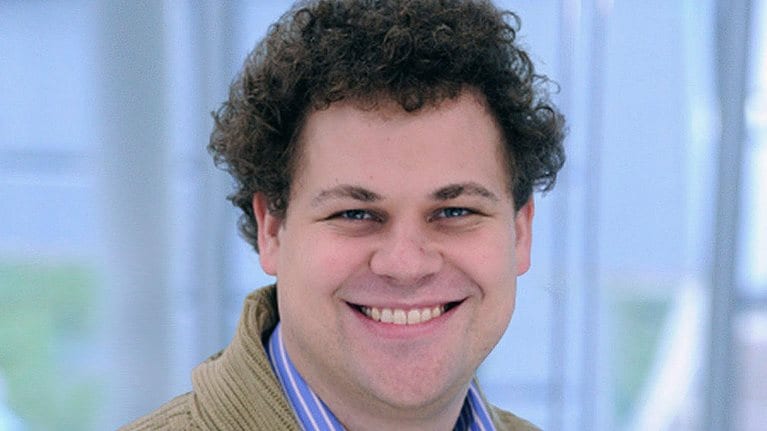
Four and a half years ago, Sai Jasti and Bayer’s R&D practice instituted a bold plan to make AI central to R&D productivity by 2030. The journey has been transformative as Bayer’s R&D shifts from an opportunistic approach to AI adoption to embedding the technology into the company’s workflows.
In this episode of Eureka!, host Navraj Nagra and McKinsey partner Valentina Sartori talk with Jasti on uniting technical, scientific, and clinical teams around a shared vision and discuss how infrastructure, talent, and ways of working must adapt to improve R&D effectiveness at scale. An edited version of their conversation follows.
Establishing guiding principles for data transformation
Navraj Nagra: Sai, you’ve spent the past four years steering data science and AI across Bayer’s pharma R&D practice. What guiding principles help you decide where AI belongs in the pipeline from early research to clinical development?
Sai Jasti: We started this journey about four and a half years ago, when we decided that data science and AI were going to be integral to our R&D. So that was the starting point. We’ve made a huge shift in terms of how we’re going to transform our research toward precision drug development.
We are prioritizing our portfolio and have made a commitment to improving R&D productivity, both from an efficiency perspective and also in terms of effectiveness, from early research to clinical development. We are ensuring that our teams focus on value-backed ideas and keep impact front and center as we try to embed data science and AI capabilities.
Shifting from opportunistic adoption to strategic commitment
Valentina Sartori: Sai, as you reflect on this four-year journey and the principles you’ve just illustrated, what are the big shifts you’ve seen across early research or clinical?
Sai Jasti: To me, the big shift is in mindset. It’s no longer about being opportunistic, which is how we often approached these capabilities in the past. I would say, “We do a lot of wet-lab work. We do a lot of discovery. Can we use AI there or do something with machine learning?” So it was a bit piecemeal.
Now, instead, we are committing to these capabilities. I would like to say we’re moving toward an AI-first approach, but it is too early in some areas. In some areas it is AI first, but in many more it’s about making a commitment to leverage these capabilities to achieve the results we want in R&D.
Valentina Sartori: If you think about the future from now until 2029, for example, across discovery, clinical, regulatory, what do you want to capture?
Sai Jasti: The pace at which these things are moving is new to everyone—it’s no longer the three-, four-, or five-year roadmaps. By 2030, we want to improve our R&D productivity by at least 40 percent. That ambition is there. But at the same time, we are being open, flexible, and agile in how we capitalize on emerging opportunities, for example, in early research, to accelerate molecule design and reduce wet lab experiments. And on the efficiency side, in clinical development, this could reduce clinical-trial costs and increase the probability of trial success. A big part of that is identifying the right patients more effectively. We’ll share tangible numbers of how we’re progressing on these things in the near future.
Embedding AI into day-to-day scientific workflows
Valentina Sartori: Bayer recently scaled its scientific data foundation to make instrument and partner data AI-native for same-day analysis. Can you describe the tactical impact on scientists on the ground?
Sai Jasti: Scientists felt the impact in two ways. First, as we embedded these capabilities into day-to-day workflows, because it can’t be separate from what they already do. From an adoption perspective, integrating AI and machine learning directly into existing workflows has been critical.
Scientists are driven by curiosity and by getting to serendipitous moments. So the second way they see a difference is in how we are enabling these serendipitous moments using AI and machine learning. We’re mining vast amounts of multimodal data so we can generate insights without researchers having to manually prepare and reconcile data from multiple sources. That, in turn, allows them to focus more on exploring ideas than on getting data ready across ten different systems. That’s how we are changing the minds of scientists, and at Bayer the early impact has been very positive.
Piloting agentic co-scientists in regulated domains
Valentina Sartori: Are you also piloting agentic AI, or AI systems that proactively plan and take multistep actions inside regulated workflows without risking quality or compliance?
Sai Jasti: Before answering, I want to say that compliance and regulatory issues are always front and center. We are in a heavily regulated industry, and the responsibility to ensure that we provide quality medicines to our patients comes first. We never compromise on quality.
Now, we are still in the early phases of adopting agentic AI and leveraging it at scale. We have some of these agents as what we call “co-scientists.” Instead of manually mining the literature, this co-scientist is able to go across sources to make certain autonomous decisions and provide insights based on the therapeutic area or indication of interest.
It’s the same on the clinical side. For example, in medical writing, we have to create regulatory dossiers, translate them into various languages, and cater to the needs of different regulatory agencies. We are building AI agents in workflows and domains. We envision a world, maybe in a year or two, where this will be more of an agentic system, wherein the bigger workflows can be reimagined using agentic AI. So that’s to come, but the early part is focused on using agentic AI in narrower workflows.
Building a foundation for transformation
Valentina Sartori: Earlier you mentioned that the biggest transformation is in the culture and ways of working. Have you faced any other challenges—maybe, for example, in the technical architecture or lineage of data models or, from an organizational perspective, capabilities or product ownership that, if overcome, would help accelerate your journey?
Sai Jasti: First, I’d like to point out the co-creation element. We work in a field where you need scientific, clinical, and technical expertise. Often the technical experts will take a pie-in-the-sky view and say we can do a lot of things, and then the scientific experts say they are skeptical and that it doesn’t help them.
One of the first things we did was to envision how to bring the teams together in co-creation mode. Let’s work on our strengths in a way where we can speak each other’s language. It starts with that: having a co-creation rather than having siloed towers.
Once we were working together to co-create, then came testing and learning. How do you make the learning cycles faster? Because just as in wet-lab experiments, everyone wants to see rapidly iterating proof points.
At Bayer, this connects to our dynamic shared-ownership transformation, which was introduced by our CEO, Bill Anderson. It’s designed to replace the traditional top-down hierarchy with self-organizing, cross-functional teams, and it’s helping us leverage co-creation because there’s a commitment from the team to make it happen. Teams are fully autonomous and empowered to make decisions, which speeds up our learning cycles.
The final part is technical infrastructure. We take great pride in being a 160-year-old company and in having a lot of data. But data is captured differently from how it used to be, and if you really want to leverage the power of machine learning, you need a good understanding of the data. So how do you put a technical infrastructure together that helps scale these ideas and opportunities? This is a big priority for us. Those are the three key elements: the ways of working, the people perspective, and the foundation that ensures we do these things at scale.
Demonstrating AI impact from pipeline discovery to regulatory dossiers
Valentina Sartori: Do you have a couple of examples, maybe in discovery or in early or late-stage clinical, where you share how AI has helped you change decisions?
Sai Jasti: Replenishing our pipeline is a priority for us. That means increasing the shots on goal. Historically, we have approached this through target discovery efforts, and they’re not going away. But two years ago we made a commitment to strengthen our internal target discovery platform, where we are bringing a lot of our historical data, including proteomics, genomics, and genetics, together to uncover novel biology. And through that, we think we can provide more quality ideas to go after. What we have observed in our early efforts is that we are able to do this at least 50 percent faster than we were previously. And more importantly, we are also discovering some novel biology.
These are the things that get people excited and encourage greater commitment to this approach. So that’s one example of how AI is helping: We can replenish our early pipeline with more ideas, and we’re doing it much faster and with increased quality and a greater degree of novelty.
Now, when it comes to the late stage, think case in point, we recently released one of our stroke medicines that we want to bring to the patients, which is a huge unmet need in factor level pathways.
We have a fast-track designation for the drug, and typically putting together regulatory dossiers would take four or five months, but using generative AI, we are able to generate documents in less than four weeks without compromising quality. Speed is one aspect, quality is another, and cost is the third piece that comes into all this.
We can potentially bring medicines to patients faster than we could in the past. We are currently going through the approval process, but we believe we have a great medication that is going to address an unmet need for our patients.
Bending the curve in precision fields using real-world data
Valentina Sartori: You’ve referred a few times to precision medicine or precision drug development. In precision oncology, you mentioned a multiyear deal to leverage real-world molecular data and AI software as a service (SaaS). Where exactly does that bend the curve—target indication selection, study design, go-no-go decisions, all of it? Can you tell us more?
Sai Jasti: For precision drug development, we have to make sure we have the right target disease link and the biomarker activity. If we don’t have those, we don’t want to take the medicine forward. We are leveraging a lot of real-world data. In the oncology space, we have a partnership with ConcertAI, a leading SaaS company that’s helping us leverage real-world data to speed up our decision-making. This is applied across five programs in our oncology portfolio, which helps in our decision-making process. It also helps in potentially reducing trial size. When you pursue precision medicine or precision drug development, it is key to identify the right patients and the right cohort size. In some ways, we are also leveraging this real-world data to build control arms. We are working closely with regulatory authorities to make that happen. We involve them well in advance because that is the key to ensuring that we will have regulatory buy-in early on. That allows you to speed up your clinical-trial process as well and potentially reduce the cost of trials. It’s about patient stratification. The goal is speeding up decision-making and reducing the burden of the clinical trial cost and the patient burden that goes with it.
Combining proprietary, synthetic, and ecosystem data to feed AI models
Navraj Nagra: Foundation models and some of the AI models you’ve referred to are quite voracious in terms of the amount of data they require. From your perspective, should pharma proactively generate and share datasets to feed those models, or should data scientists keep crafting synthetic, augmented datasets in-house? And from your experience, what kinds of data move the needle most?
Sai Jasti: The answer is we should be doing both. Data generation from an expert, including historical experiments and critical trials, is one of the key levers for us. In addition, the synthetic data element may be easier to apply in some areas—say, for example, molecule design—than others.
It’s a multipronged approach to making sure we have this data. AI and machine learning models are data-hungry, and more importantly, how and when you’re generating the data matters. Making sure that we have also captured that is key.
In terms of which data modality provides the most value, the classical answer is that it depends on what we are trying to achieve. It also needs to align with the research strategy. For example, in precision drug development, you need a deep understanding of molecular architecture and the underlying biology. That is why we rely heavily on cellular analysis, single-cell data, and various omics data sets early in research to uncover novel biology.
And then with real-world data, you’re thinking about your trial design, protocol design, and stratifying the patients so that the real-world clinical data is of value. Across the various processes in R&D, the end-to-end value chain, certain data sets become more valuable at any given point of time as you look at the targeted problems and opportunities you want to address.
Navigating consortium data-sharing
Navraj Nagra: Thanks for that nuanced answer, Sai. I have also seen that, within the pharma sector, data is being shared across walls. There are efforts like MELLODDY, the MachinE Learning Ledger Orchestration for Drug DiscoverY, which let multiple pharma companies in the European Union share data and train models without necessarily sharing the underlying IP. What have you learned about preserving IP while improving prediction from efforts like MELLODDY and others?
Sai Jasti: I’m all for that kind of project, because ultimately the broader ecosystem needs to come together to have a meaningful impact on drug discovery. Because we are grappling with is the same thing my colleagues in other places are grappling with: a common mission to bring medicines to patients faster.
Tapping into the ecosystem is something that we still have to grow as an industry. Because there are, as you said, consortiums like MELLODDY that are making this happen. But it’s still small, if you ask me, in the current state of things. Doing some of these things together can sometimes slow us down. Our research strategy and priorities may be different from those of other folks. And we’re all approaching it with our own expertise and our own strategic intent.
As a result, decision-making in some of these consortium settings can be quite slow. But when there is alignment on a common theme, it can make an impact.
Navraj Nagra: Thinking about the productivity equation you mentioned, when you’re weighing near-term efficiency against long-term impact, whether that’s success rates or value, do you see greater value in accelerating trials versus lifting the probability of technical success (PTS)? And how are you making those trade-off decisions in the business?
Sai Jasti: Increasing the PTS is the biggest lever we have. Because you can speed up, but in my view “fail fast, learn fast” doesn’t work in the context of clinical trials. I would rather figure out ways to increase our probability of technical success. And then the speeding up of the trial comes afterward, because it’s more about the “how.” Because if you know what you want to do and have clarity on that, the speed comes naturally.
Balancing AI recommendations with clinical operations
Navraj Nagra: One thing we’ve observed is a tension between the recommendations that come out of an AI algorithm and the operationalization of those recommendations when it comes to clinical operations. How is Bayer working at that intersection and translating some of those AI recommendations into operations?
Sai Jasti: Co-creation is key. Bringing in technical and domain experts early on to shape the opportunity has been key for us. For example, when we were designing the clinical trial for one of our assets, we brought the clinicians and the biostatistics people in, but then we also brought the machine-learning experts to say this is what we need to increase our probability of technical success. Can we design the trial in a different way that gives us the opportunity to increase its PTS? So that has been the key for us—involving the right stakeholders and bringing the cross-functional team together early on.
The same example goes even in the context of early research and discovery. When you’re designing the molecules, you don’t want AI to be churning out carbon-hydrogen links. So bringing the chemists together with our machine learning team to see how we can go after the various designs AI is coming up with and what type of validation is going to be needed.
Navraj Nagra: When you’re in these multidisciplinary discussions, how do you come to a final answer? Is there a score grid, or just robust debate until you get an answer? What does that look like in practice?
Sai Jasti: In the early research phase, what experiment can we design to prove or disprove the hypothesis or insight coming out of AI? That validation happens through a wet-lab experiment.
On the clinical side, it is more about the clinician’s intuition and judgment. Ultimately, it comes down to expertise, which has to come from the experts in the space.
Reimagining future workflows
Navraj Nagra: Four years down the road, what will be different in Bayer’s clinical and regulatory workflows, for instance, and, maybe separately, what might be emerging on the drug-discovery side?
Sai Jasti: On the regulatory and the clinical side, number one is we will have reimagined how we look at these workflows. As an industry, we have a huge opportunity to address our clinical and regulatory workflows.
On the research side, there will be a lot of autonomous labs and agents, and a lot of the experiments we do in the lab now will be done in silico. That will likely decrease the amount of animal testing we need to do. We envision far fewer physical experiments and more in silico experiments three to four years down the road.
Navraj Nagra: What would it take to do this? What data contracting, lineage standards, and human-in-the-loop checkpoints can safely let agentic systems orchestrate many of these multistep tasks across the R&D life cycle?
Sai Jasti: Number one, I would start with the people. Being open, being curious, and being able to take smart risks is number one. It’s no longer an option—it’s a commitment to these capabilities. The second part is making sure you get your data in order. Because we get excited about AI, we get excited about algorithms, but often the foundational elements are missing. We need to make sure we have a strong data foundation to drive the transformation. Then the third element is the collaboration and the ecosystem that needs to come together.
Navraj Nagra: So you’ll need scientists, clinicians, and technicians who can rethink workflows, not just code models. What roles and capabilities are you hiring or growing that didn’t exist five years ago?
Sai Jasti: One is the so-called translators—not only technical people trying to translate the domain, but also domain people picking up the technical expertise. For example, MDs who are also data scientists.
The second profile we’re looking for is in change management. So people who understand human-machine interactions and how they are able to drive the change. We’ll be bringing the broader organization together, educating them, and designing workflows where humans and machines can coexist. Those are the two types of profiles I would say we are hiring more and building more of as we look into the future.
Valentina Sartori: Building hybrid profiles and focusing on change management seem to be the key to scaling these technologies safely. Thank you, Sai, for walking us through this transformation.
Navraj Nagra: Absolutely. Thank you, Sai, for joining us on Eureka!
Sai Jasti: Thank you, Navraj. Thank you, Valentina.