Artificial intelligence is accelerating drug discovery, compressing early timelines, and reshaping how biopharma partners with technology companies. But for a head of research, the core question isn’t whether AI works. It is where to direct your team and budget so those early gains survive contact with the clinic.
Right now, most AI investments go where tools are most mature: molecule design. Here, structured data and rapid assay feedback let models perform reliably. Concentrating capital here is logical, and industry deal terms reflect it: large pharma keeps most deal value tied to downstream milestones rather than paying up front for unproven science. But maturity and importance are not the same thing. Molecule design is mature because the data and physical feedback loops are more tractably structured, not because it is where trials fail. Get the disease mechanism wrong—the wrong target, biomarker, or patient population—and even a well-optimized molecule may still fail. Novel, causally validated biology remains biopharma’s scarcest commodity. No amount of raw compute or added GPUs can speed up cell growth.
That is the core question this article answers: is your research team’s AI investment aimed at the biological bottleneck, or where the tools are most developed?
The macro picture and the capital-science paradox
To understand where research AI stands today, two accelerating forces must be weighed together: market activity and partnership economics.
Investor funding in AI-enabled drug discovery (AIDD) reached $8.40 billion in 2025, up from $4.10 billion in 2023, a compound annual growth rate of 43 percent since 2023.1
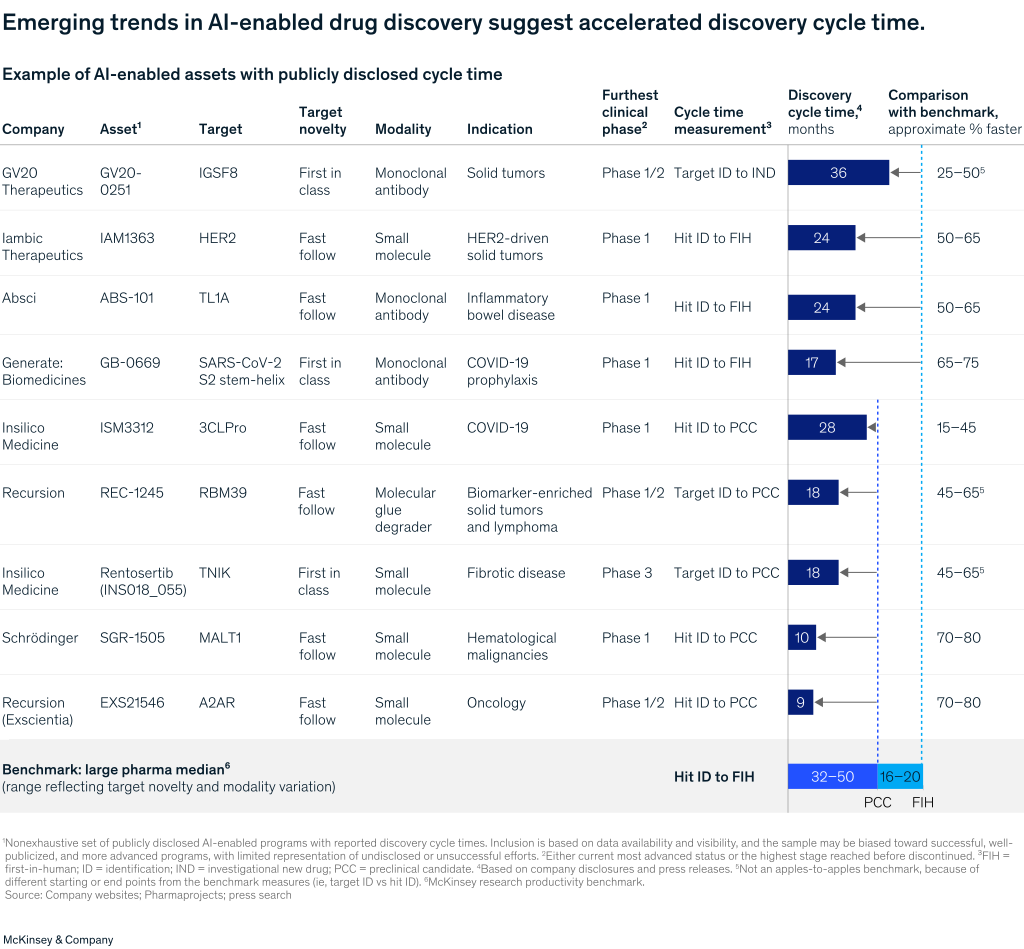
At the same time, the benefits of in silico discovery are becoming evident in research cycle time. Among selected publicly disclosed programs with sufficient self-reported and publicly available data, first-in-human or equivalent preclinical milestones were achieved 15 to 80 percent faster than large-pharma medians, depending on modality and target novelty (Exhibit 1). Leading examples include Insilico Medicine’s rentosertib (INS018_055, Phase III), Recursion’s EXS21546 (Phase I/II), and Schrödinger’s SGR-1505 (Phase I). However, while early-stage timeline acceleration is evident, most AI-native clinical assets remain in Phase I or Phase II safety and dose-ranging trials. Definitive Phase III efficacy readouts for AI-originated molecules remain years away, leaving their ultimate impact on clinical success rates an open question.
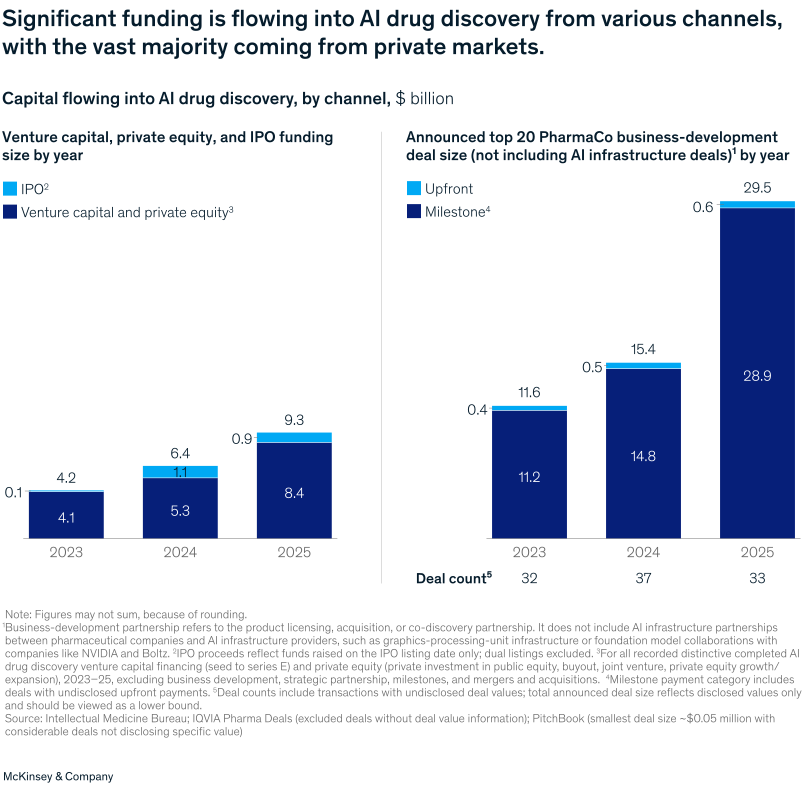
Headline deal sizes among the top 20 pharma companies doubled to $29.50 billion in 2025 (Exhibit 2). Yet deal structures reflect heavy risk mitigation. Up-front cash payments totaled only $0.60 billion, just 2 percent of deal value, in 2025, with 60 to 90 percent of contract value contingent on downstream clinical and commercial milestones. This back-loading reflects pharma’s recognition that early discovery speed does not guarantee clinical survival. Of 38 deals signed between 2023 and 2024, less than 1 percent of maximum milestone value had been paid out by June 2026. While this low payout rate is expected given typical multiyear trial timelines, it illustrates that deal structures can insulate buyers from financial risk, but value creation remains locked until assets navigate late-stage clinical hurdles. To convert headline deal value into payouts, biopharma must focus AI tools where clinical failure rates are determined—at the biological and translational bottlenecks.
Evaluating maturity along the research value chain
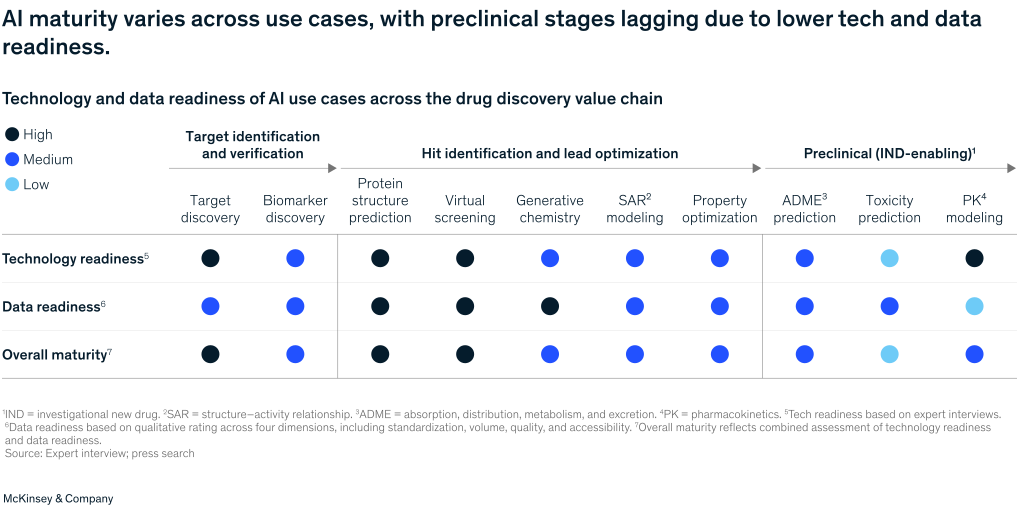
Pharma structures deals to keep economics contingent on downstream proof because AI readiness varies sharply across the research value chain. Capital has concentrated where data is structured and feedback is fast, following technological certainty rather than biological difficulty. Evaluating three primary research domains across two dimensions—technology readiness and data readiness (volume, quality, and standardization)—shows where AI actively informs decisions today and where models remain unproven (Exhibit 3).
Biology and target identification: Medium maturity
AI research for target identification is advancing rapidly. Platforms like Open Targets integrate genome-wide association studies (GWAS) and functional genomics data to prioritize hypotheses, while single-cell foundation models like Geneformer show the field is active and making steady progress.2 If AI can reliably deliver differentiated, validated targets at scale, it could mark a transformative breakthrough, addressing one of the industry’s central bottlenecks and helping prevent asset crowding on well-trodden targets.
However, target discovery remains at medium readiness due to three foundational challenges: slow validation cycles requiring live cellular experiments, high biological heterogeneity across diseases, and sparse feedback loops. Translating long-term clinical readouts back into target models is far slower and noisier than predicting molecular binding, as clinical proof unfolds over multiyear trial cycles.
Crucially, AI target models can struggle to distinguish true biological causality from mere statistical association. Public biobanks and observational genomics datasets can contain confounding variables and lab-specific artifacts. When models mistake observational correlations for true disease drivers, they may incorrectly prioritize targets that fail in human trials.
To advance, biopharma must move beyond correlative data to mechanistic evidence—demonstrating that target perturbation directly alters disease traits. Unlocking this requires converting unstructured proprietary clinical data into training-ready assets and accelerating closed-loop lab experiments that generate proprietary cellular perturbation data at scale.
Molecule design from hit identification to lead optimization: High maturity
Molecule design is the value chain’s most mature segment, grounded in structured data and rapid assay feedback. Breakthroughs in protein structure prediction (for example, AlphaFold) and zero-shot biologics design (for example, Chai) complement deep small-molecule datasets. Yet even here, generative chemistry and developability predictions (solubility, safety) continue to lag behind virtual screening and binding affinity.
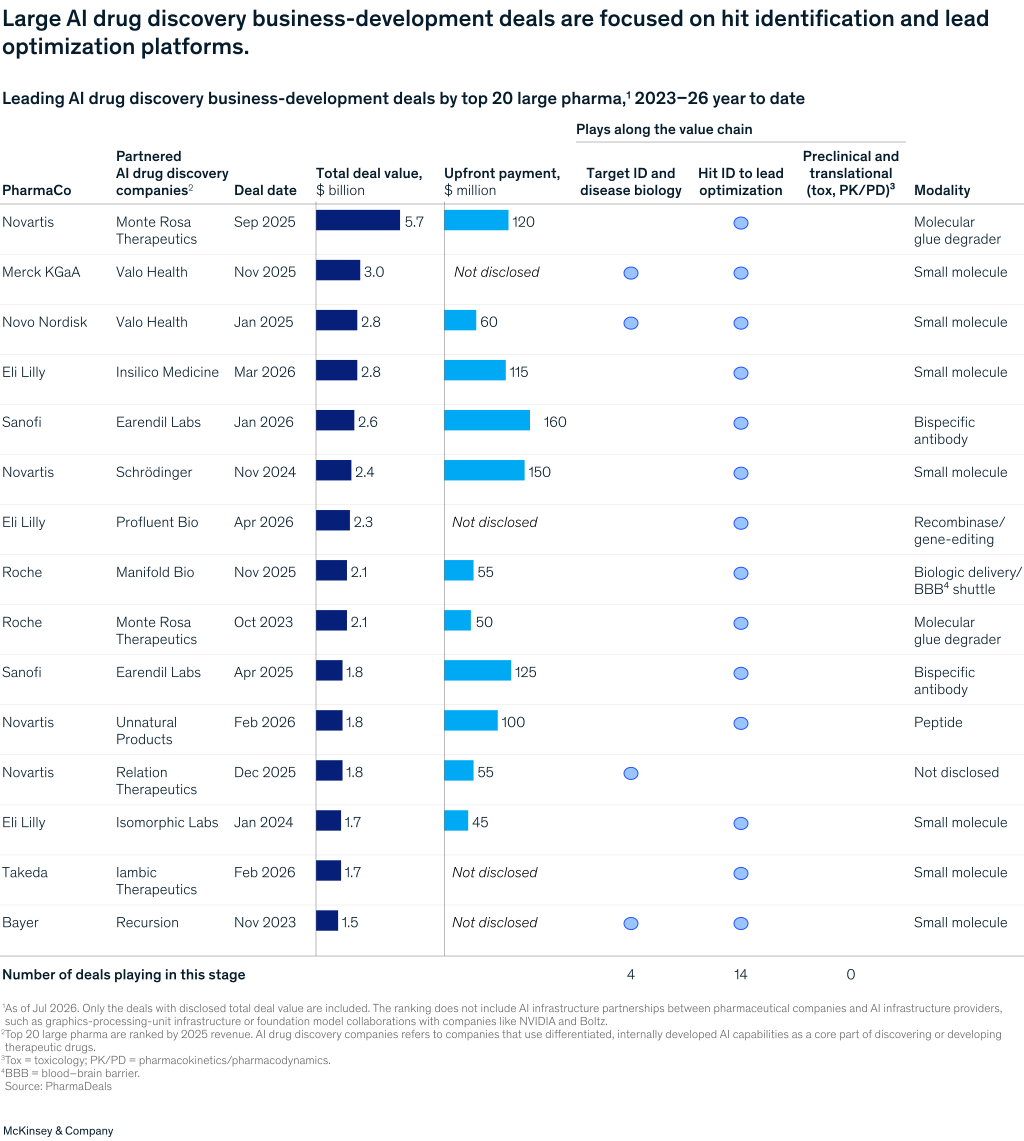
This maturity drives commercial activity. Leading pharma partnerships remain heavily concentrated in small-molecule hit identification and lead optimization, where model readiness is highest (Exhibit 4). The priority is now shifting from predicting binding affinity to generating standardized readouts for developability and closing design-make-test-learn loops.
Preclinical and translational research: Low maturity
Preclinical and translational research remains the least mature domain. Optimizing safety and translation is vastly more complex than predicting binding affinity: species differences, variable disease models, and sparse human-linked data obscure whether preclinical signals hold up in patients. Consequently, roughly one-quarter of Phase II and Phase III failures stem from unpredicted safety issues. And while roughly 85 percent of FDA regulatory submissions now incorporate some form of New Approach Methodologies (NAMs)—such as computational tools or secondary in vitro assays—advanced models like human organoids are rarely positioned as primary decision drivers or replacements for pivotal animal testing.3
Systemic toxicity and off-target effects remain challenging to model. This immaturity is directly mirrored in external dealmaking, where business development transactions in preclinical translation remain limited (Exhibit 4). Rather than seeking traditional platform acquisitions, leading biopharma companies are developing in-house predictive safety pipelines and proprietary data engines, alongside open initiatives like Eli Lilly’s partnership with Insitro to make the TuneLab ADMET model broadly accessible to the biotech community.
What the industry needs most is human-relevant data: linked preclinical and clinical datasets, combined with hybrid models that merge mechanistic biology with AI. Regulatory support is also building. In April 2025, the FDA announced plans to rely more on AI-based toxicity models and human organoids, reducing dependence on traditional animal testing over time.4 For now, external investment flows mainly through niche modeling platforms like Certara and Simulations Plus, while pharma companies build internal data engines. Ultimately, one of AI’s largest potential dividends lies in end-to-end integration—connecting target validation through molecule design to translational readouts—to turn speed into clinical success.
What this means for your research organization
A few concrete actions are worth evaluating based on where AI readiness and program risk sit today:
- Align AI resourcing with actual program risk: If internal AI investment is heavily concentrated in hit optimization and molecule design, evaluate whether that reflects true program bottlenecks or simply tool availability. Differentiating teams will be those willing to fund the harder, higher-risk challenge: target validation.
- Treat target identification as a data generation strategy: The bottleneck in target discovery is rarely a shortage of models; platforms like Geneformer and Open Targets continue to advance rapidly. The real constraint is the lack of evidence—specifically, a multilayer biological signal that proves disease causality rather than correlation. Focus capital on generating and structuring proprietary biological data internally rather than licensing external algorithms.
- Address preclinical translation directly: Because roughly one-quarter of Phase II and Phase III failures stem from unpredicted safety issues—as noted earlier—AI roadmaps that jump from target identification directly to generative chemistry without parallel investments in preclinical-to-clinical data linkage risk accelerating assets toward predictable downstream failure modes.
- Align resource timelines with clinical proof: Early timeline compressions represent progress, but the field will not know whether AI-originated programs yield higher clinical success rates until Phase III readouts arrive over the coming years. Establish internal milestones that account for this lag rather than evaluating AI returns solely on research cycle time.
- Focus on cross-stage integration: The largest returns may come less from isolated point solutions than from integrating target validation, molecular design, and translational data so that gains in one stage directly inform the next.
Industry may need to look beyond the research AI use cases that are easiest to validate and invest in areas where the scientific bottlenecks remain. That includes strengthening target identification through better structured data, causal cellular perturbation evidence, and tighter connections across the research value chain. The path may be harder, and returns may take longer to prove, but it could be critical to translating AI-driven research efficiency into the next wave of drug discovery.