Changing demographics, consumer needs, and economic trends have begun to transform Latin America’s healthcare sector, spurring pharmacies to evolve in tandem. Populations are getting older, fertility rates are decreasing, and more consumers are looking to be well-informed about the status of their health, driving a greater demand for tailored care solutions. In addition, previous McKinsey research found that the cost of healthcare is higher in Latin America than in other parts of the world,1 making accessibility and affordability pertinent issues in the region.
Retail pharmacies are well positioned to address these challenges and meet patients’ unmet needs. Given pharmacies’ prevalence in the region and their ability to provide low-complexity services, they are more equipped to satisfy consumer expectations for service accessibility and affordability than traditional care delivery models, such as clinics and hospitals. Pharmacies aiming to not only adapt but also thrive in this dynamic environment will need to embrace innovative strategies and navigate emerging trends effectively.
McKinsey surveyed 2,500 consumers across 14 countries in Latin America to gain a comprehensive understanding of changing consumer preferences and broader circumstances and develop insights that can help the region’s retail pharmacies thrive. This article explores five factors that are reshaping the industry and presents actionable strategies for pharmacies to implement.
The factors changing retail pharmacies in Latin America
McKinsey’s recent consumer survey across Latin America revealed five factors, conditions, and preferences that pharmacies can consider as they adapt their strategies for the future (see sidebar, “About the survey”).
Access is a relevant challenge in the region
Access to care remains a major challenge in Latin America. According to McKinsey’s 2023 consumer survey in Latin America,2 the 62 percent of respondents who deferred medical care did so primarily because they faced barriers to accessing healthcare services. Other reasons to defer care included high costs and insufficient knowledge of where to receive healthcare services.3
About the survey
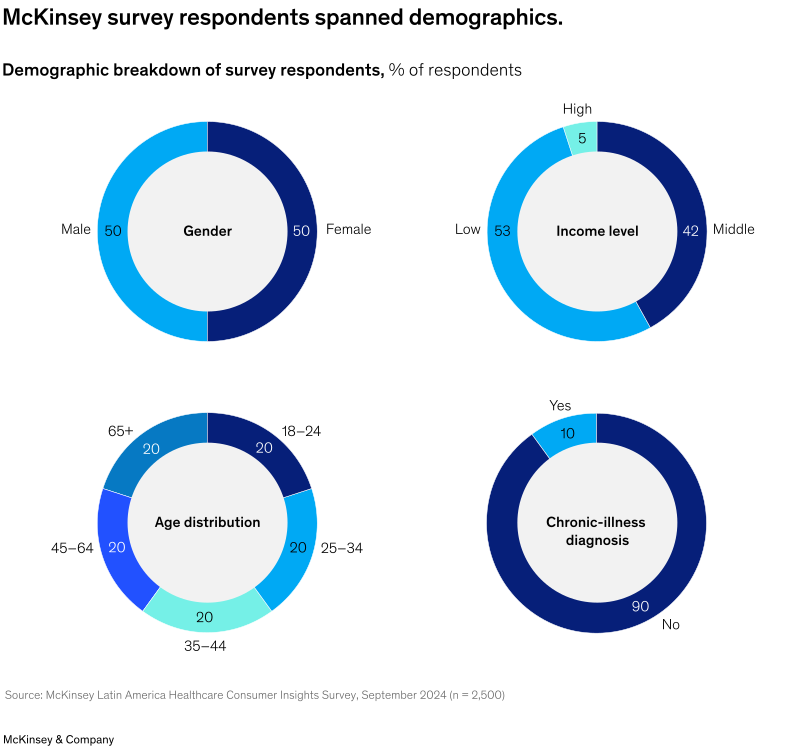
In July 2024, McKinsey surveyed 2,500 consumers across 14 countries in Latin America: Argentina (250), Brazil (450), Chile (200), Colombia (250), Costa Rica (100), Ecuador (100), El Salvador (100), Guatemala (100), Honduras (100), Mexico (350), Panama (100), Peru (200), Dominican Republic (100), and Uruguay (100). Respondents came from high-, middle-, and low-income households, and 10 percent of the sample had at least one chronic illness (exhibit).
To improve access to care, retail pharmacies in Latin America can offer affordable, walk-in services to treat low-complexity conditions, such as a cold or a minor rash or cut. Many pharmacies have attempted to integrate clinical services into their offerings, with mixed results. The most successful maintain a narrow scope of service; for example, they provide vaccinations and offer chronic care follow-ups and teleconsultations. They also use digital tools to promote a more seamless experience and embed clinical workflows into their core operations.
Preventive care is essential to improving health outcomes, and pharmacies have opportunities to help people better manage their health through membership-based models or hub-and-spoke formats that expand points of service. Done right, this approach shifts the pharmacy’s role from a medication dispenser to an access point for timely care, creating both societal value and new revenue streams.4 To scale and mitigate risks, leaders will need to assess regulatory constraints, credentialing requirements, and the economic sustainability of these models.
Digital channels are gaining relevance for medication purchasing, especially for high-frequency buyers
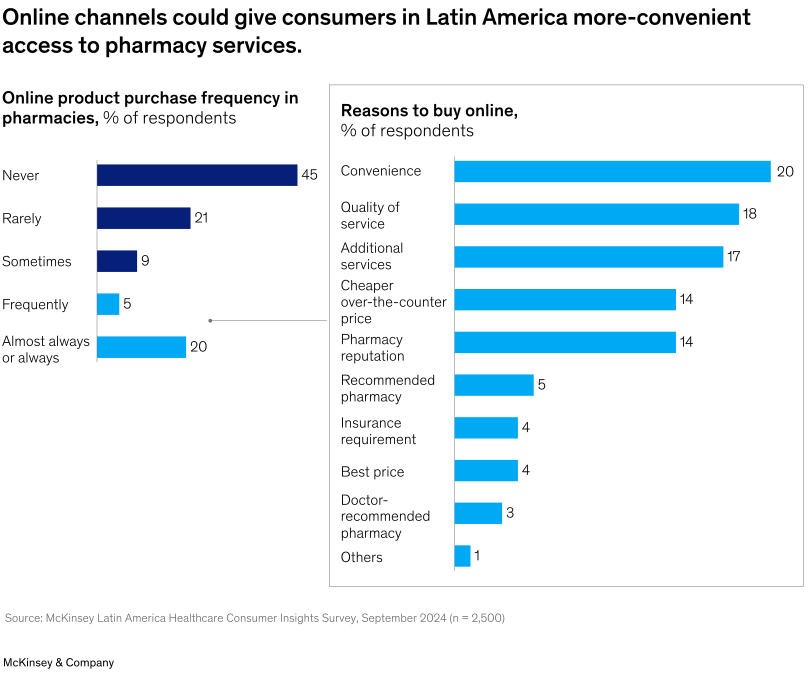
The adoption of digital channels for health-related services in Latin America is nascent but growing, with 25 percent of respondents reporting that they always or frequently purchase medications online (Exhibit 1).
Digital tools can improve customer loyalty and provide substantial opportunities for growth, particularly if pharmacies take steps to make their digital platforms more engaging. For example, pharmacies can incorporate conversational commerce into platforms to expedite shopping experiences, personalize pricing based on conditions, or use AI-based push notifications to remind customers about prescription refills.
Digital touchpoints also generate valuable data that can power next-best-action models, improve adherence, and drive value for consumers. A scalable, omnichannel strategy that prioritizes loyalty while reducing operational friction can have a measurable effect on customer retention, frequency, and basket size.
Convenience and stock availability remain critical factors in pharmacy loyalty
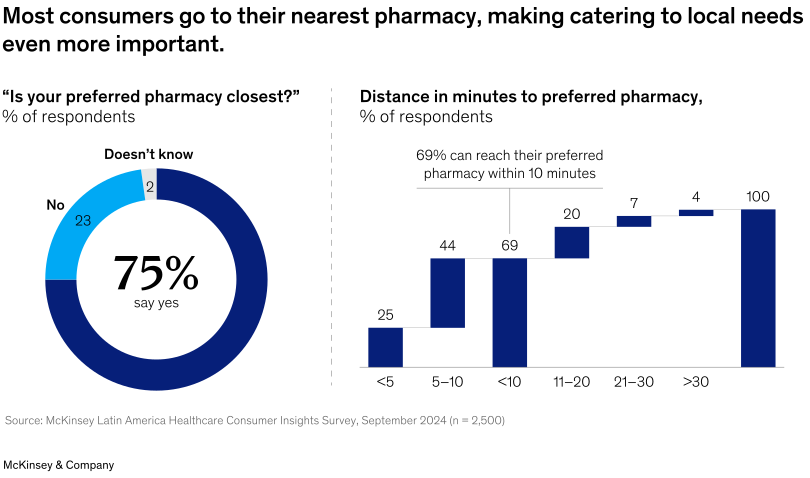
Convenience remains the pharmacy sector’s main loyalty driver. Our survey found that 75 percent of consumers prefer their nearest pharmacy, and 69 percent can reach their preferred pharmacy within ten minutes (Exhibit 2). To meet local needs, pharmacies can better understand the geographic and demographic contexts in which they work.
To further improve convenience while catering to specific consumers, pharmacies can use local data to optimize store formats, provide a local assortment of goods, and improve last-mile delivery. In addition to improving customers’ physical access to stores and products, pharmacies can offer fast delivery or automatic prescription refills to help attract repeat customers. Amazon Pharmacy, for example, recently introduced kiosks in doctor’s offices so patients can instantly receive medications after appointments. The goal is to save patients the extra trip to a pharmacy and encourage patients, especially those with chronic diseases, to fill their prescriptions faster.5
In Latin America, e-commerce company MercadoLibre has been moving into the pharmacy space to offer prescription fulfillment services. In Brazil, for example, the company recently acquired an existing pharmacy to serve as a foothold to fulfill medications online. In other Latin American countries, such as Argentina and Mexico, consumers can order over-the-counter health products through MercadoLibre with fast delivery. These efforts mirror the strategies of Amazon Pharmacy but are adapted to Latin America’s varied regulatory requirements.6
Stock availability is crucial for customer retention: According to our survey, about 40 percent of consumers who could not obtain their prescribed medication cited stock shortages as the primary reason (Exhibit 3). None of the world’s 100 largest pharmaceutical companies are based in Latin America,7 leaving most of the region’s pharmacies reliant on imported medications and thus more susceptible to supply chain disruptions. Even so, some companies are using AI to predict consumption patterns and ensure top SKUs are always in stock, which helps minimize lost sales and maximize loyalty.
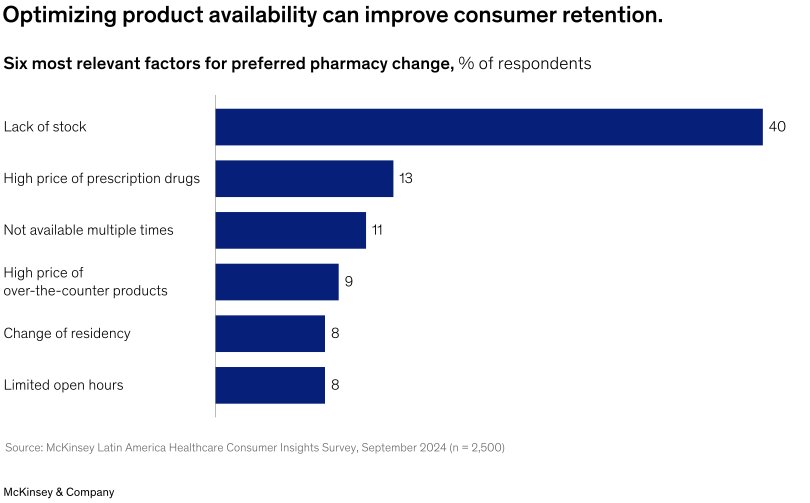
To avoid stockouts, leaders can evaluate their end-to-end inventory strategy, diversify suppliers, and build multisourcing models. These steps will help pharmacies protect against geopolitical or logistical shocks, maintain customer loyalty, and gain a competitive advantage.
Specifically, pharmacies can shift from a reactive inventory replenishment strategy to a predictive one by using an automated inventory system that uses point-of-sale data, seasonality, and localized demand data to prevent shortages before they happen. But technology is just one part of the equation; supplier partnerships are the other. Pharmacies can establish strategic partnerships with distributors, labs, and generics manufacturers to improve supply cost and availability and to counter global sourcing issues. These partnerships could help pharmacies negotiate priority access, gain visibility into planning, and develop risk-sharing contracts and joint demand forecasting models.
Consumers have high price sensitivity, and they’re open to generic options
The economic landscape of Latin America has heightened consumers’ price sensitivity, which is significantly influencing their purchasing decisions and loyalty to pharmacies. Our survey indicates that approximately 40 percent of consumers have switched pharmacies in the past five years—in part due to high medication prices—emphasizing the need for pricing or sourcing strategies that make medications more affordable to customers and position pharmacies as reliable sources for treatments.
Our survey also found that consumers increasingly trust and use generic medications, driven by an increased awareness of their efficacy and cost benefits. Seventy-five percent of our survey respondents expressed a willingness to switch to generic medications (Exhibit 4).
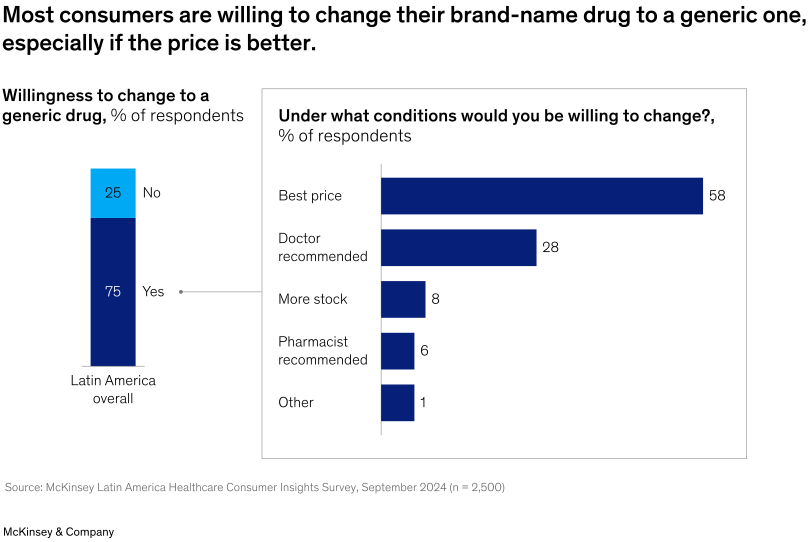
Low-cost generic drugs account for 48 percent of the prescription drug market and 45 percent of online orders. This trend provides an opportunity for pharmacies to promote the efficacy and safety of generic medications through educational campaigns and pharmacist consultations, building consumer trust and loyalty and reducing patients’ out-of-pocket cost for necessary medications.
The business case for carrying generic medications is not one dimensional. Generic drugs typically offer higher margins and simplify inventory, but the absolute profit per unit can be lower than for branded medications. Pharmacies can therefore evaluate the optimal inventory mix that balances generics, branded generics, and lab-manufactured products to meet diverse patient expectations and maintain profitability. They can also use data-driven insights to tailor inventory strategies to certain customer segments and insurance coverage.
Patients with chronic illnesses are often more conscious of price fluctuations because they visit pharmacies more often to manage their conditions. Considering this, pharmacies could explore pricing models that balance affordability with margin preservation while also improving transparency into costs. For example, some pharmacies are turning to revenue growth management to tailor discounts and bundled offers to patients with either chronic or acute conditions. Through this strategy, pharmacies could not only provide competitive prices but also use pricing as a data-driven way to deepen relationships, maximize customer lifetime value, and protect margins in an inflationary landscape.
Consumers continue to face unmet needs for additional health-related services
Consumers are increasingly seeking more than just medications from their pharmacies. More than half of respondents expressed interest in services such as basic clinical care, the sale of medical equipment, and preventive care apps, as well as a willingness to pay for a membership that includes these services. Consumer demand for low-complexity services, such as physiotherapy, nutrition counseling, mental health support, and dermatological diagnostics, is also high—and it remains largely unmet in many markets. Interest in dermo-cosmetic products is especially high, with more than half of respondents expressing a desire for advanced skin care solutions and cosmetics that target specific dermatological concerns, such as acne, aging, sensitivity, and pigmentation (Exhibit 5).
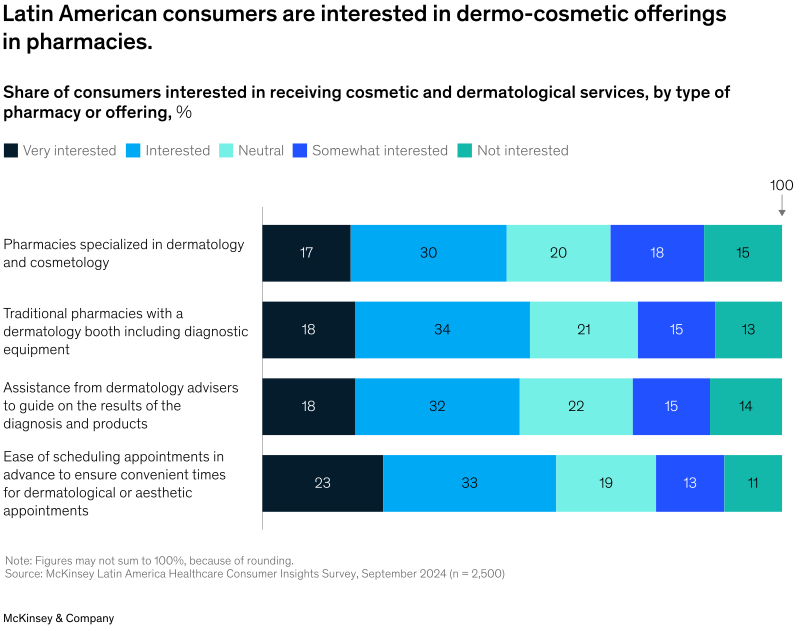
To address these unmet needs, pharmacy CEOs could consider establishing health ecosystems as a viable way forward. An ecosystem would enable pharmacies to orchestrate the patient relationship, with specialists delivering different services, including dermo-cosmetic options. Rather than just distributing products, retail pharmacies could evaluate how to curate skin health platforms that combine premium products, diagnostics, and expert guidance. Depending on the market and regulations, these offerings can include aesthetic services (such as botulinum toxin injections, chemical peels, and facials), personalized skin care consultations, and personalized skin diagnostics and consultations to elevate the consumer experience. Pharmacies can comarket select premium brands through in-store events or educational content. However, success in this space requires thoughtful assortment curation, well-trained and knowledgeable staff, and brand credibility.
In addition, subscription-based models (such as medication bundles for chronic care or wellness memberships that include preventive screenings, health coaching, and priority access and delivery, among other perks and services) could offer a path to recurring revenue while giving customers a reliable source for all their everyday health needs. Pharmacies can assess whether to build services in-house, partner with tech-enabled care delivery organizations, or license trusted service brands from biotech or wellness companies. As part of that decision, leaders can consider embedding basic preventive services—such as early screenings, prediagnosis tools, or adherence support—into the core pharmacy experience. These offerings meet growing consumer demand and can help reduce system-level healthcare costs and increase pharmacies’ value as a touchpoint. Success will depend on designing services that fit seamlessly within pharmacy operations, using the right infrastructure, talent model, and clinical quality standards.
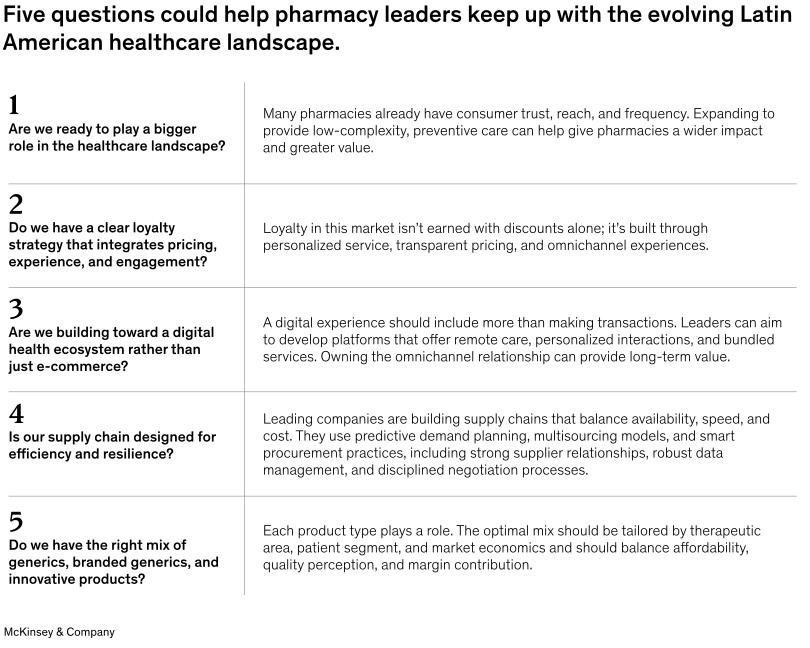
Retail pharmacies in Latin America have the opportunity to not only react to consumer demand but also exceed expectations. Based on our research and market observations, pharmacy leaders can ask themselves five questions to get started (table).