Healthcare is deeply personal and yet, for millions of US residents, it feels distant, costly, and confusing. High costs, limited transparency, uneven coverage, and fragmented experiences have eroded confidence across generations. In the 2025 McKinsey Consumer Health Insights Survey, about one in three consumers say the healthcare industry performs below their expectations, and half feel it fails to meet society’s needs. The result: Trust, long strained, is breaking.
For healthcare organizations, restoring trust requires more than operational improvement. Instead, organizations should intentionally define their brands and fulfill their brand promises by offering experiences, products, and services that consumers genuinely need, value, and can afford. Every healthcare organization has a brand, either one it actively shapes or one that is shaped for it by consumer experience. Brand reflects how credibly the organization shows up for consumers and other stakeholders externally and how it shows up for its people internally. Neglecting brand has widened the trust gap.
Organizations that invest in their brand are now using AI to help deliver value at scale, making interactions more personal, responsive, and transparent. This in turn can help close the gap between what healthcare organizations offer and what consumers actually experience. AI has the potential to enable deeper insight into consumer needs and to translate those insights into personalized experiences. Notably, our 2025 Consumer Health Insights Survey shows that consumer respondents who engage with AI-enabled healthcare tools are more satisfied with the industry compared with nonusers, underscoring AI’s potential to strengthen trust.
This article integrates data from our research, including a decade of annual surveys (see sidebar, “Research methodology”), with our perspectives for how AI solutions can help heal trust in the healthcare ecosystem. Even though cost and insurance coverage remain critical pain points for consumers, this article zeroes in on the role AI can play in improving brand, experience, and ultimately access, as well as where digital innovation can trigger tangible gains at scale.
When brand priorities miss what consumers value most
Many healthcare organizations underdeliver on their brand promises not because they aren’t mission oriented but because what they emphasize often diverges from what consumers truly value.
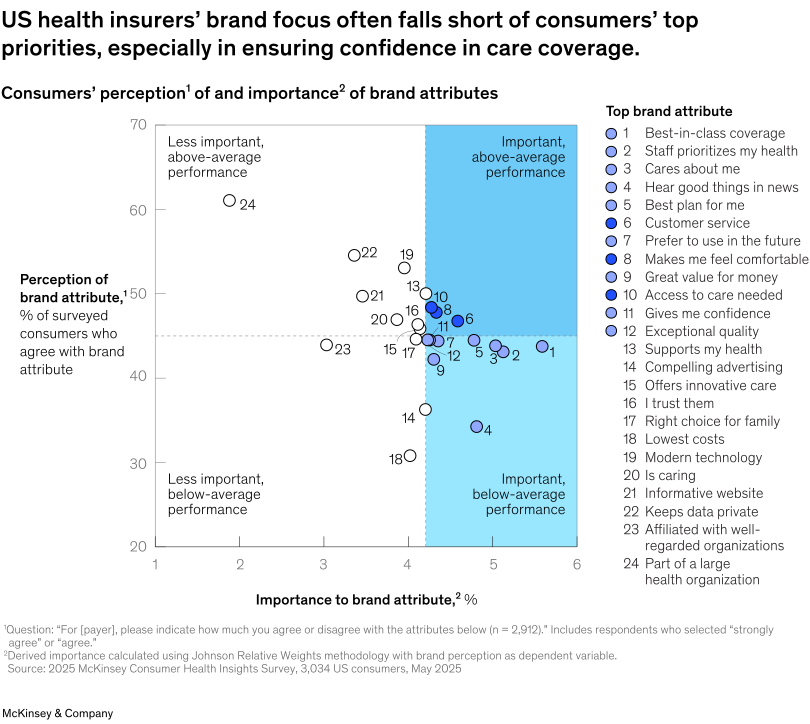
For payers, our survey of 3,034 US consumers reveals that only a few attributes shape brand perception meaningfully, and these high-impact areas are where payers tend to underperform. Of the 12 attributes most important to brand,1 factors related to good insurance coverage and the sense that the payer prioritizes members’ health carry the greatest weight in determining overall brand strength. Yet these are precisely the areas where payers have low consumer perception2 (Exhibit 1). While consumers tend to credit payers for demonstrating scale and offering innovative care, these factors have far less influence on how payer brands are ultimately perceived. In fact, payers underperform on nine of the 12 attributes that matter most to consumers.
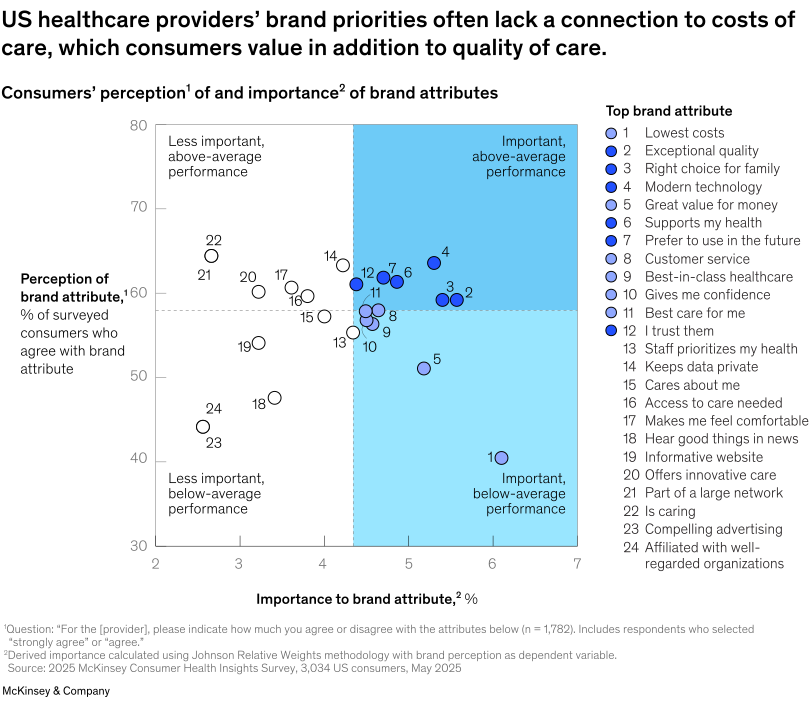
Providers are not immune from this misalignment either. Of the 12 attributes that are most important, factors related to value for money have the greatest impact. Yet this is where health systems suffer (Exhibit 2), with roughly 60 percent of consumer respondents saying that health systems do not meet their cost expectations. About 10 percent of a health system’s brand strength can be explained by cost perceptions alone, a share roughly 35 percent higher than any other factor in the survey.3
Unsurprisingly, cost pressures weigh heavily across income levels. Even among households earning $150,000 or more, 40 percent of consumer respondents report slight or severe financial strain from healthcare costs, rising to 50 percent among those earning under $50,000. Unexpected expenses are a major source of dissatisfaction: More than two-thirds of consumers in our survey who report severe financial impact say that costs were higher than expected and that they did not have a clear explanation for these costs. Transparent pricing, better-aligned coverage, and support in navigating tax-advantaged programs can all help rebuild trust by addressing these pain points head-on.
Across consumers, cost and coverage together account for 75 percent of the factors shaping consumer perceptions of healthcare payer and provider brands. Financial strain doesn’t just damage brand perception, it also affects health outcomes. Only 30 percent of consumers in our survey say they always receive the care they need, dropping to 20 percent among Gen Z. Among those who delay or forgo the care they need, 24 percent cite long wait times and 22 percent cite coverage gaps as barriers. However, the most commonly noted barrier, cited by 37 percent, is the cost of services or medications.
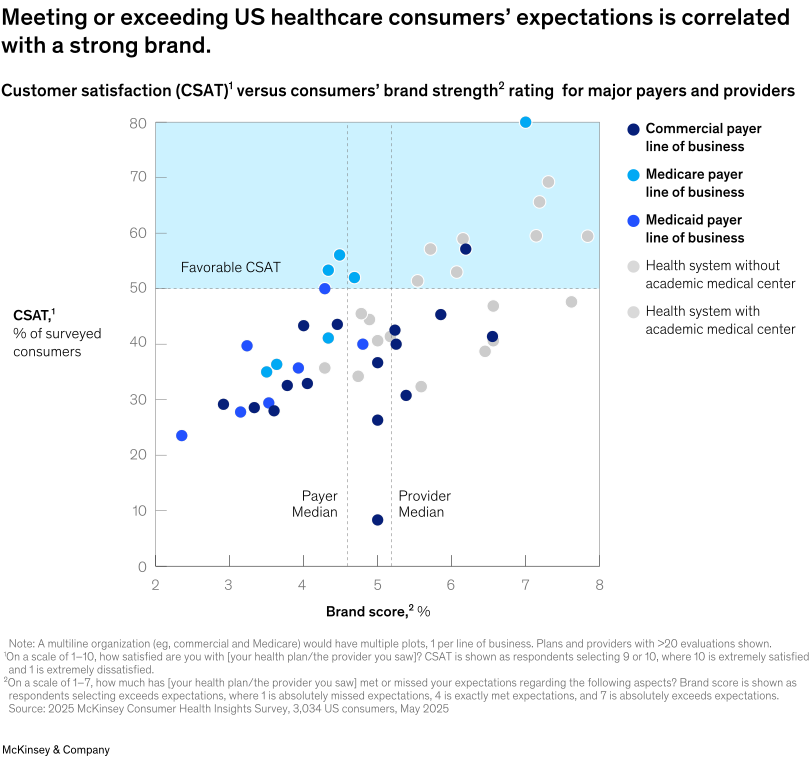
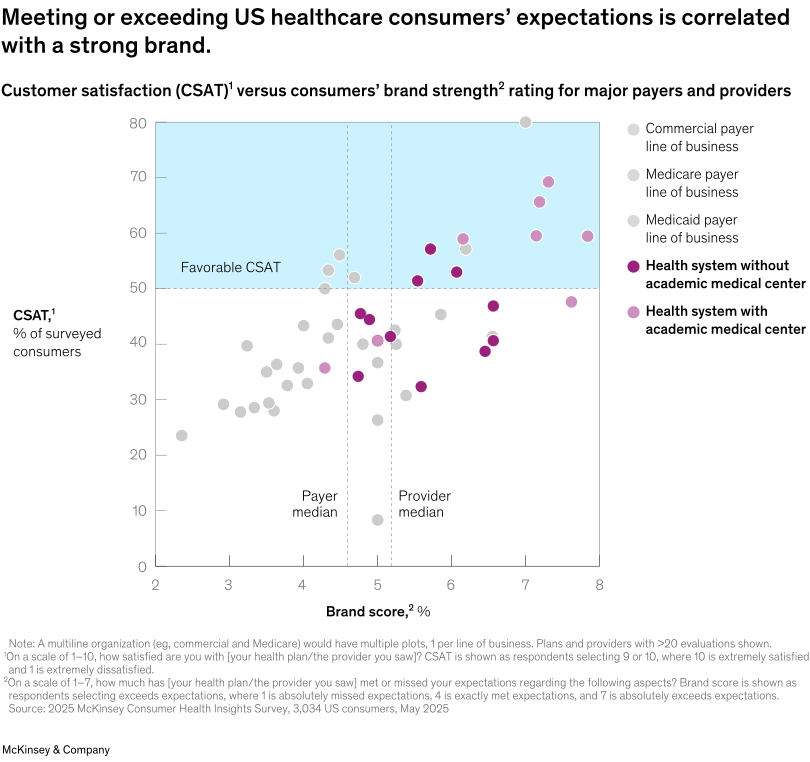
Yet the data also show that stronger performance is achievable (Exhibit 3).
On average, 50 percent of respondents to our survey say they are satisfied or extremely satisfied with their Medicare Advantage plans, while 35 percent say the same for commercial plans.
Academic medical centers (AMCs) have an even higher average positive response rate of 58 percent. This highlights the potential for stronger alignment between value delivered and value perceived, which can translate into markedly higher brand trust and loyalty.
Harnessing AI to identify and address what matters across populations
Understanding each individual’s distinct needs and those of the subpopulations they belong to is no longer aspirational; it’s becoming essential to restoring trust across the healthcare ecosystem. Two views illustrate the opportunity. The first centers on consumers who feel left behind—those who express the most frustration with the healthcare organizations they engage with. The second focuses on individuals with differing clinical needs, whose perceptions and experiences vary widely throughout their healthcare journeys. AI can help identify these nuances, connect signals that traditional analytics miss, and inform more targeted strategies to meet people where they are, across all the dimensions that shape their experience over their entire healthcare journey.
Populations feeling left behind
Our survey shows that the share of highly satisfied consumers has declined, and the share of those who are less satisfied has grown (Exhibit 4). The drop between 2024 and 2025 was more substantial than previous years (an average of +/- 0.1 or 0.2), which we believe is likely because of a combination of factors such as ongoing affordability issues and heightened media scrutiny and negative public discourse about the industry.
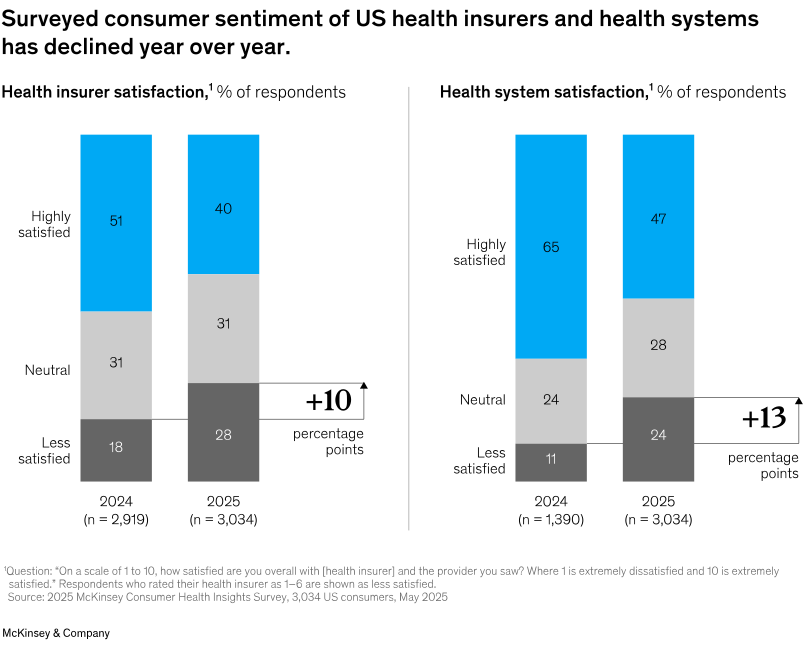
To make real progress, the industry must focus on the populations who feel that the system consistently fails them. A higher proportion of healthy consumers say healthcare falls short of their expectations compared with others, as 37 percent report that they struggle to access care when they need it, according to our survey. Further, dissatisfaction is most pronounced among those facing social, financial, or mental health challenges; those who have difficulty navigating the system; and younger individuals who are working or seeking employment.
Clinical subpopulations and their care journeys
Looking across clinical subpopulations reveals further variation, as needs and perceptions shift at different points in the healthcare journey (Exhibit 5). For example, pregnant women in our survey emphasize the importance of having the right insurance coverage, but many say that they struggle to ensure that their insurance truly meets their needs. On the other hand, consumers focused on their well-being place high importance on cost transparency, but many of them experience frustrations during that portion of their journey.
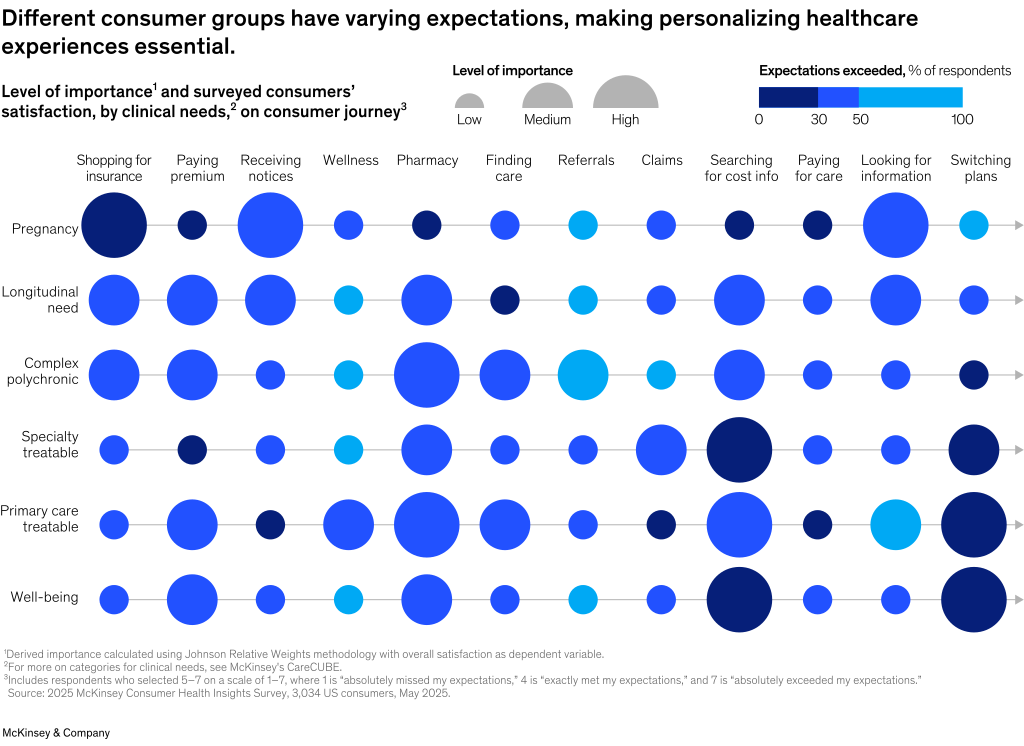
Encouragingly, evidence suggests that perception can improve when technology enhances the experience. A bigger share of consumers who use emerging AI-powered healthcare tools4 say the industry exceeds their expectations compared with those who do not (54 percent compared with 30 percent), according to our survey. Likewise, those who actively engage in wellness behaviors—a separate population from healthy consumers—show higher satisfaction, with 47 percent reporting that the industry exceeds their expectations versus 30 percent who do not prioritize wellness. These patterns suggest that when consumers are empowered in their journeys—whether that’s because they feel comfortable using AI tools or are proactive about wellness—their perception of healthcare brands measurably improves.
AI as a catalyst for personalization
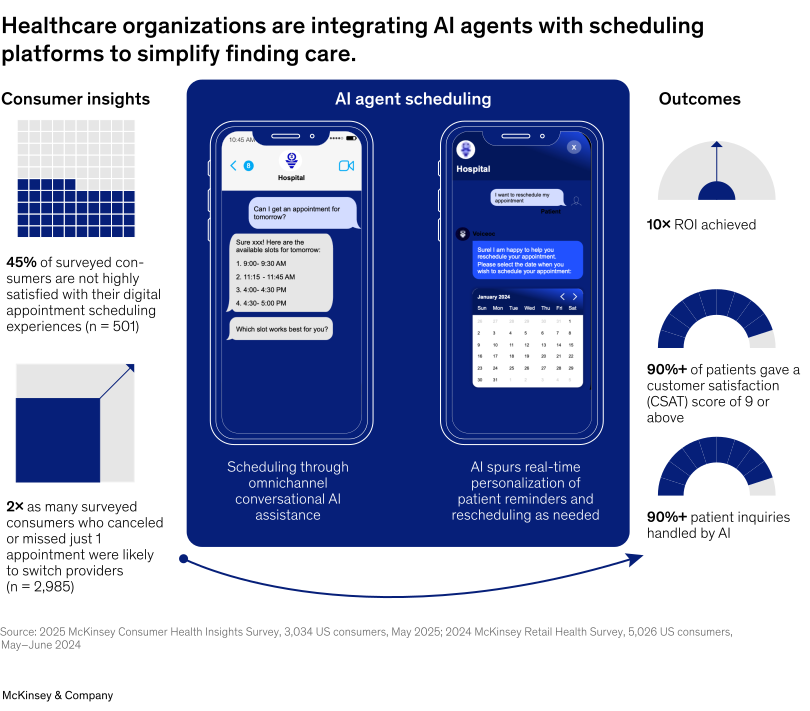
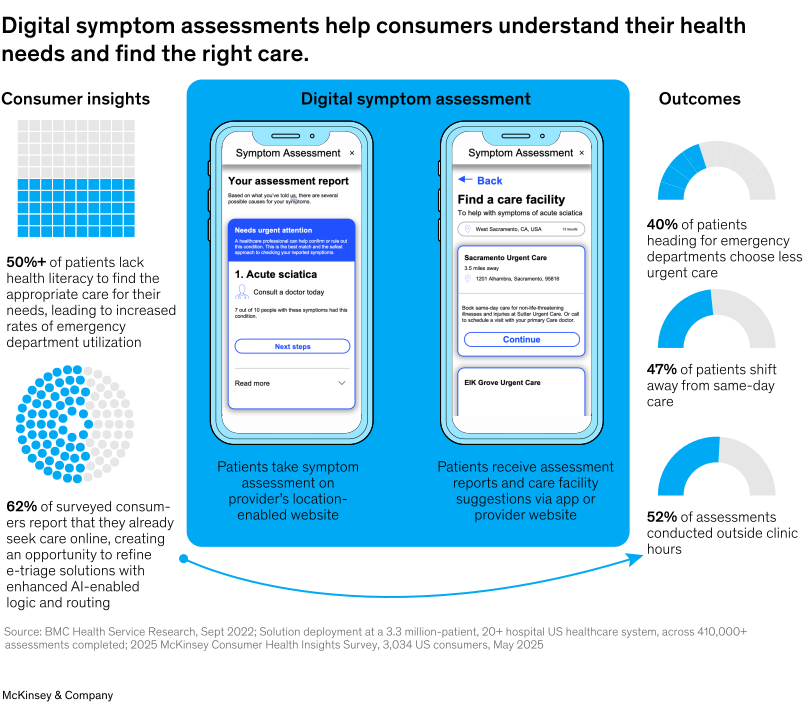
The rise of AI is unlocking new strategies that can help improve consumer journeys and address long-standing pain points. These are no longer theoretical but beginning to be implemented and scaled in practice. The following examples from across the industry illustrate how AI is beginning to enhance key moments along the consumer health journey (Exhibit 6).
AI-supported scheduling is helping consumers navigate the complexities of getting an appointment with a doctor, with one survey respondent noting, “I’ve been lucky to find a good primary care physician; however, it’s near impossible to get an appointment.” AI assistance has the potential to reduce the frictions of finding, scheduling, and managing appointments. It can craft messages in a conversational tone, offer personalized appointment reminders, and help with rescheduling in real time, which can reduce wait times and missed appointments.
AI-enabled symptom checkers can support improved care navigation by reducing the confusion that many consumers associate with existing channels, with one consumer respondent saying, “I feel anxious calling or getting online, because I always end up more confused.” Digital symptom assessments can help consumers understand their health needs and find the right care. AI can assist with triaging symptoms, guiding consumers to appropriate care settings, and reducing unnecessary visits to help people feel more confident and informed early in their journey.
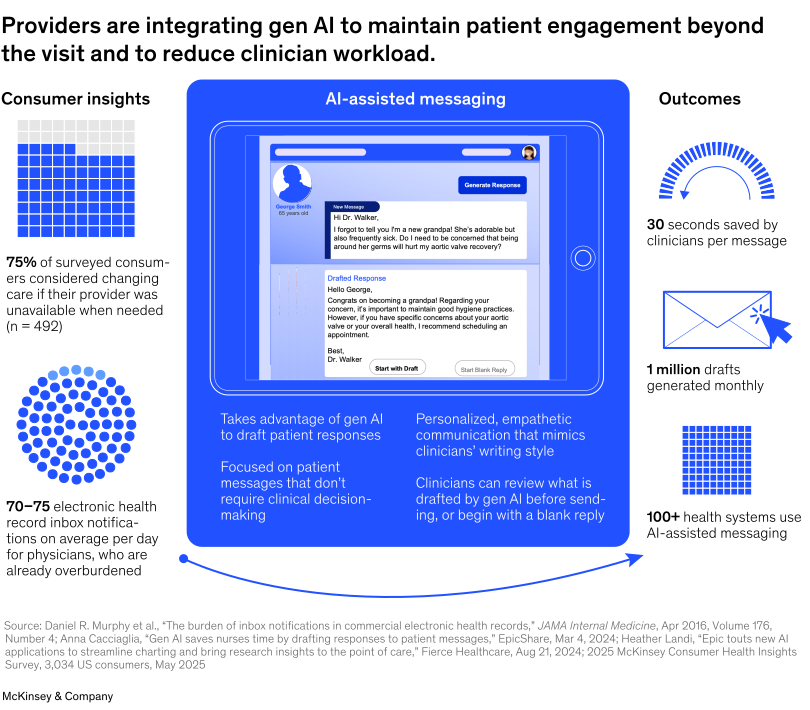
AI-assisted messaging can give care teams the opportunity to engage with consumers more efficiently by supporting personalized and timely communication while preserving care team capacity. One consumer respondent explains, “Digital tools can make healthcare affordable, accessible, and fair; improve communication; support prevention and mental health; and protect privacy.” By prioritizing messages, drafting responses with empathy that clinicians can review, and routing requests, AI can help ensure consumers receive timely, relevant communication without overwhelming care teams.
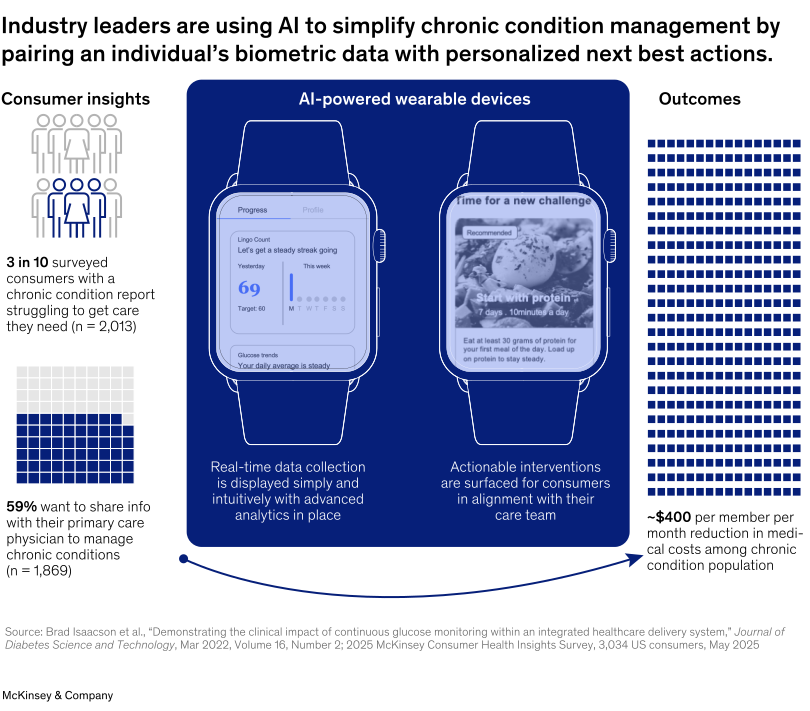
AI-powered wearable integrations have the potential to spark more holistic healthcare engagement, with one consumer respondent pointing out, “I like how the system is all linked together so information can be shared more readily than before.” Wearable devices use personal health data to support real-time, personalized care. AI can synthesize continuous data from multiple devices to surface meaningful insights, flag risks earlier, and trigger proactive, personalized interventions.
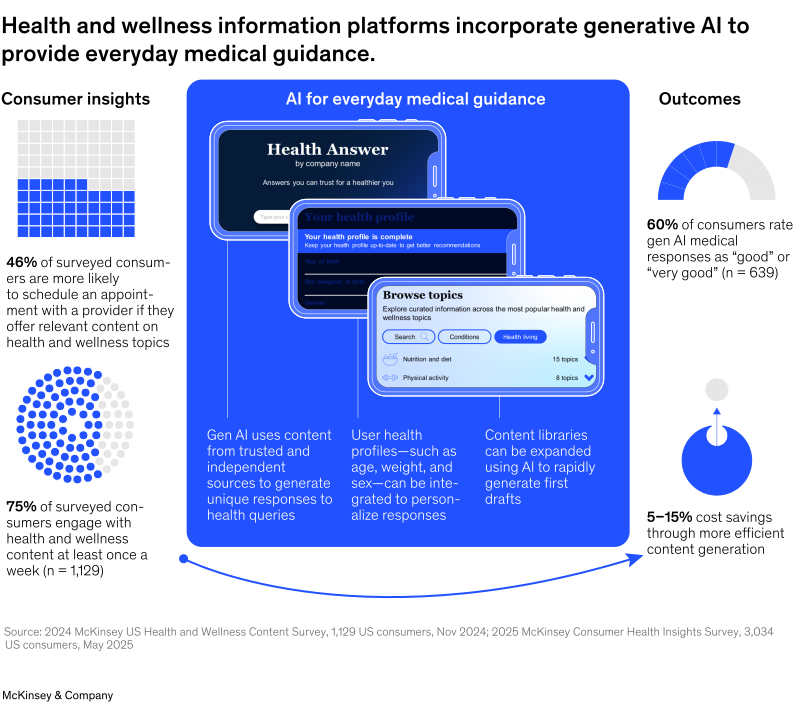
Gen AI can help curate and create relevant health insights, with one consumer respondent stating, “It’s not just an advertisement. It’s actually providing you some benefit by telling you which [health solution] is better.” Gen AI can rapidly generate personalized health content that meets consumers’ needs, empowering them to achieve their healthcare goals with information from a trusted source, which in turn strengthens brand credibility and deepens trust and loyalty. As consumers increasingly turn to conversational AI to find information, delivering relevant content is critical to generative AI engine optimization (GEO) to ensure visibility in AI-generated responses. The ability to rapidly create, tailor, and publish personalized content at scale is becoming the new standard.
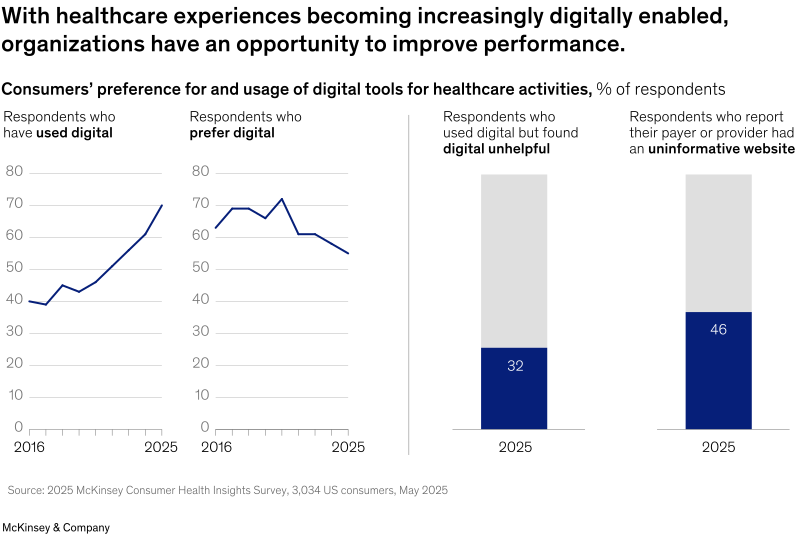
However, implementing technology solutions needs to be thoughtful and respectful of consumer expectations. Consumers are growing wary of broken digital experiences, AI tools that threaten the privacy of their data, and misinformation created by gen AI and AI chatbots. They are increasingly rejecting experiences that don’t live up to their expectations. Over the past decade of conducting annual surveys, we’ve observed that more consumer respondents are now using digital healthcare tools than actually prefer them, signaling that today’s tools aren’t meeting consumers’ needs (Exhibit 7). One in three consumer respondents say the digital tools they use aren’t helpful, and nearly half of those who have visited websites for their health plan or health system find those websites uninformative. This data highlights how healthcare organizations have a major opportunity to better meet the needs of consumers through digital offerings that are more aligned with their experiences outside healthcare.
And while consumers remain keen on using AI, their trust in AI-enabled healthcare experiences also slipped, with 18 percent of respondents saying their trust has decreased over time (Exhibit 8). AI solutions must be designed and governed in a way that actively ensures that information provided to consumers is accurate, evidence-based, and appropriately validated.
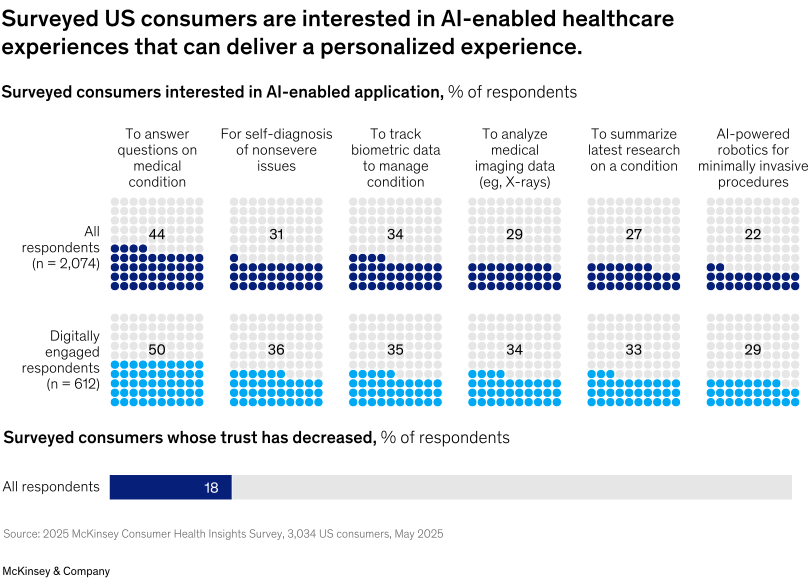
When done right, AI and other digital technologies can unlock substantial value. For providers, high-quality consumer experiences reduce no-shows and improve retention. Highly satisfied consumer respondents are 35 percent less likely to cancel or miss appointments, three times more likely to get timely care, and seven times more likely to return to the same provider. For payers, better relationships go hand in hand with improved engagement and cost control. Consumer respondents who are highly satisfied with their health plans are 88 percent more likely to say they’ve received all the care they needed in the past 12 months, 73 percent more likely to regularly engage with health content, and seven times less likely to have switched plans in the past year.
Restoring consumer confidence in healthcare demands meaningful personalization, affordability, and empathy at scale—all of which AI can help catalyze. Today, consumers’ perception of healthcare is poor, and the industry continues to fall short on what matters most to consumers: accessibility, costs, insurance coverage, and ease of experience. With consumer satisfaction lagging behind expectations (especially with digital solutions), there is an urgent need to realign innovation to deliver consumer value. As AI capabilities advance, healthcare organizations have an opportunity to rebuild trust by using technology to simplify access, improve transparency, and tailor experiences to individual needs. Those that combine data-driven insights with human-centered design can transform care delivery from fragmented to frictionless. In doing so, they will not only strengthen their brands but also reestablish healthcare as an ecosystem that truly serves the people it exists to help.