Moving from crisis response to prevention
For years, young people across the United States have faced worsening behavioral health outcomes, including rising rates of anxiety, depression, trauma, and behavioral crises. Systems across the country, largely designed to respond after emergencies occur, often struggle to provide consistent, preventive support, resulting in many children not receiving the help they need.
To address this challenge in California, the Children and Youth Behavioral Health Initiative (CYBHI) was introduced by Governor Gavin Newsom as part of a Master Plan for Kids’ Mental Health. Backed by more than $4 billion in state investment, CYBHI set out to fundamentally reshape how behavioral health supports are delivered to children, youth, and families across California. The ambition was clear: shift the system toward prevention and early intervention, and connect services across education, healthcare, and community organizations, rather than allowing them to operate in isolation.
The CYBHI included more than 20 workstreams across five departments, including the Department of Health Care Services (DHCS).
To help translate that ambition into action, DHCS worked with McKinsey to design and implement new programs, bringing support directly to children and youth where they already spend their time—at school, at home, in digital spaces, and in their communities.
Building a connected, youth-centered system
California’s leaders recognized that incremental fixes would not be enough. What was needed was a new operating model—one capable of turning a bold vision into sustained, statewide impact. McKinsey supported DHCS across multiple workstreams within CYBHI, helping to build the structures required to deliver care at scale.
The work focused on creating sustainable funding for behavioral health services; expanding access by meeting young people in schools, homes, digital spaces, and communities; and ensuring equity so that services reach the most at-risk youth across every county in the state.
Working together, we designed the mechanisms schools need to access sustainable healthcare funding—so they could strengthen services, reach more kids, and avoid disruptions typical with short-term grant-based funding


1. At school: Expanding access to free services
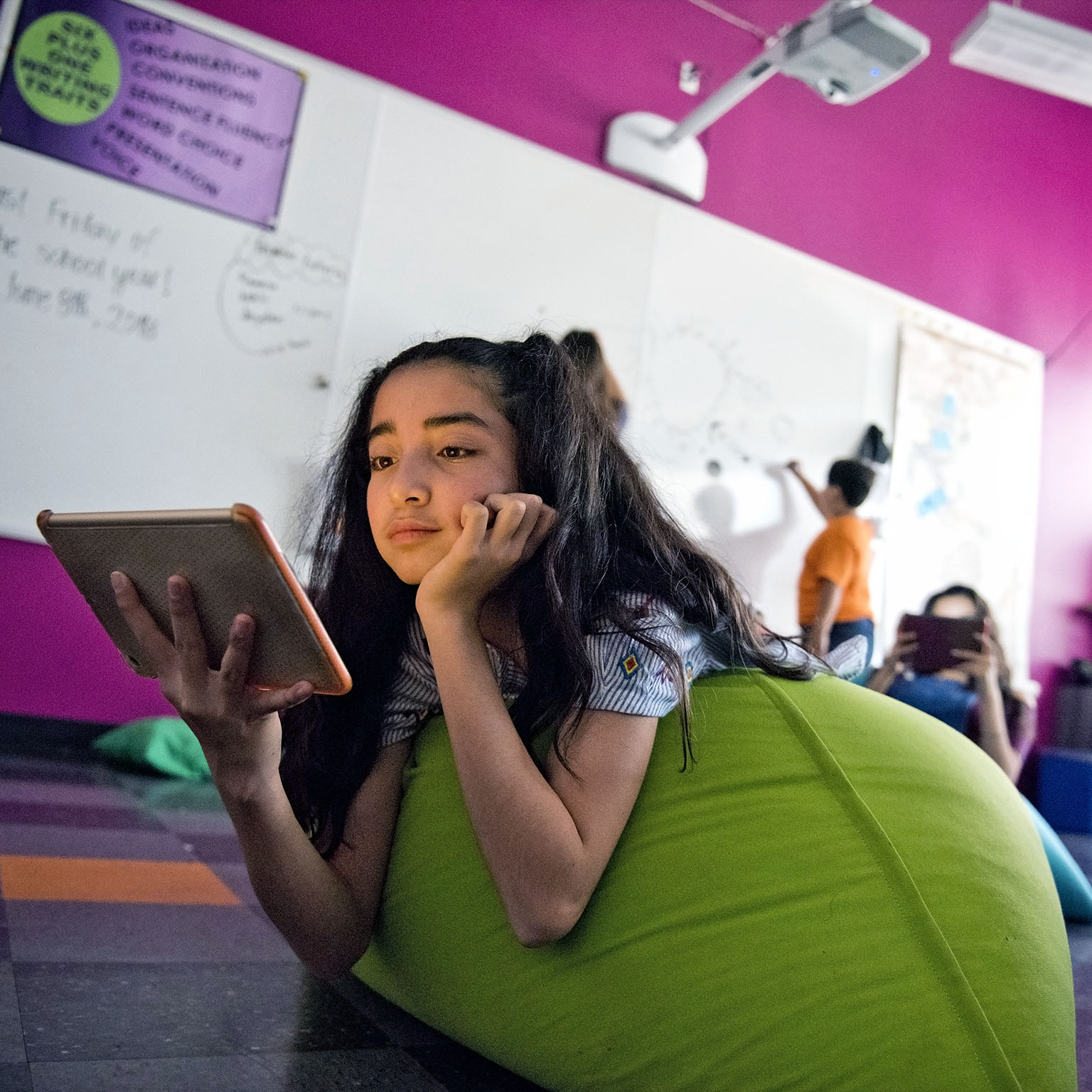
California schools have long played a frontline role in supporting student well-being, often through school counselors and other on-campus resources. Yet expanding and sustaining access to these services has been a persistent challenge. To address this, McKinsey supported DHCS in designing and implementing the CYBHI Fee Schedule program, a first-of-its-kind reimbursement model that aims to expand access to youth-centered, equitable, prevention-oriented services at no cost to children, youth, or families. This new program requires California health plans, including commercial plans, Medi-Cal Managed Care plans, disability insurers, and Medi-Cal Fee-for-Service to reimburse public schools (K-12), colleges, and universities for providing outpatient behavioral health services to youth under 26.
To design and operationalize this program, DHCS partnered with McKinsey to engage a broad set of stakeholders and build the necessary infrastructure for educational entities to receive reimbursement from insurance companies. This included a focus on easing the administrative burden for schools and universities through state-funded support and expanding the types of practitioners eligible for reimbursement for school-based behavioral health services.
“Working together, we designed the mechanisms schools need to access sustainable healthcare funding—so they could strengthen services, reach more kids, and avoid disruptions typical with short-term grant-based funding,” says McKinsey Partner Ramya Parthasarathy.
2. At home: Launching virtual behavioral health services platforms
To extend support beyond the classroom, DHCS, with McKinsey’s expert input, set out to design a digital experience shaped directly by young people themselves. The team gathered input from hundreds of children and young adults to understand what resources they wanted online and how they preferred to access them. They also hosted multiple forums, conducted surveys and focus groups, and even held a bake-off event.
The result was the adoption of two age-appropriate, culturally accessible platforms, with separate experiences for users aged 12 and under and those aged 13 to 25. “Developing Soluna and BrightLife Kids, with input from young people—and prospective users—has ensured we are delivering a behavioral health experience that is tailored to what young people told us they want and need from a digital behavioral health tool,” says Autumn Boylan, deputy director of DHCS. “Youth and young adults, as well as parents and caregivers, made it clear that they wanted a platform that empowers them to take control of their journey, makes them feel safe, and is easily accessible and culturally responsive.” This is what California is delivering through its CYBHI digital behavioral health services and support tools—which can be used when, where, and how they need it most.
BrightLife Kids and Soluna offer free one-on-one coaching, a multimedia resource library, and moderated peer communities supported by highly trained and uniquely qualified behavioral health professionals. “We deeply understood the need for children and youth in the state to receive care in settings like home and school,” says McKinsey Partner Ashka Dave. “From there we developed a strategy and identified the partners who could help bring this vision to life.”
CYBHI also built mechanisms to track effectiveness using proven behavioral health metrics drawn from evidence-based and community-defined services. As of January 2026, the BrightLife Kids and Soluna platforms have registered more than 500,000 children and youth.
3. In the community: Investing in evidence-based care
Another key area of focus for CYBHI was expanding access to evidence-based practices (EBP) and community-defined evidence-based practices (CDEP) across local communities. To help build capacity where needs are greatest, $305 million in grant funding was allocated to community-based organizations, schools and school districts, faith-based organizations, childcare centers, providers, hospitals, and clinics.
This effort began with a series of working sessions focused on understanding the specific needs of California’s diverse youth populations. Those insights shaped a comprehensive grant strategy designed to strengthen prevention, early intervention, and resiliency and recovery services, particularly for vulnerable groups.
In addition to administering this grant program, DHCS understood the importance of promoting long-term sustainability for delivering EBPs and CDEPs. As a result, DHCS created a draft resource guide on how grantees can continue to deliver and expand access to these critical practices. The guide highlights Medi-Cal billing options for EBPs and CDEPs supported by the CYBHI, Family First Prevention Services Act (FFPSA), and Behavioral Health Community-Based Organized Networks of Equitable Care and Treatment (BH-CONNECT) Initiative.
It also offers strategies for how organizations implementing EBPs and CDEPs can leverage existing Medi-Cal authorities to receive reimbursement.
Meeting youth where they need it most
The early results of California’s effort to expand and strengthen behavioral health services for children and youth are already visible across schools, homes, and communities. Since CYBHI launched in 2021, more than 1,600 organizations have received $2.1 billion to expand behavioral health programs.
In schools, an estimated 3.6 million students have enrolled across participating school sites in 98 percent of counties statewide, with more than 700 local educational agencies and public institutions of higher education participating in the CYBHI Fee Schedule Program. These partnerships are creating a durable funding stream that ties reimbursement directly to care delivery.
At home, DHCS’s digital behavioral health services and platforms have enabled more than 500,000 children, young people, and caregivers to access support, including over 100,000 coaching sessions. More than half of participants come from underserved communities and half of them say they would not have accessed services had it not been for the platforms, underscoring their reach beyond traditional care settings.
Across the state, $305 million in CYBHI evidence-based grants have energized parent and caregiver support programs, trauma-informed services, and youth-driven initiatives. Through this program, over 450 grantees are now advancing care in every California county, with a particular focus on serving BIPOC, LGBTQIA+, rural, and other high-need populations.
California’s work is still unfolding, but it already demonstrates what is possible when vision, data, and compassion come together at scale. The collaboration between DHCS and McKinsey helped support the state in achieving the ambitious vision it set out for children and youth. It also shows how best practices can be scaled and amplified, tech can deliver services to people who would never have them, and innovative approaches to sustainably reimbursing critical services can be successfully deployed.
THE TEAM

Hrishika Vuppala
Senior PartnerSouthern California
Tolian Gjika
PartnerSouthern California

Ramya Parthasarathy
PartnerNew York

Ashka Dave
PartnerDetroit

Emily Lurie
Associate PartnerNew York
Related Case Studies
Scaling mental health where life happens: Helping Santiago thrive across the lifespan

Preparing the next generation of confident communicators in an AI-driven economy