Europe’s private banks have performed well over the past three years, but a number of trends point to challenging times ahead. As margins erode, AI reshapes the value chain, and Europe loses share in global wealth creation, the tried-and-true playbook is losing relevance. To sustain momentum and achieve sustainably higher profitability, banks can move beyond incremental improvements and embrace fundamental change. What is needed is not optimization, but a reimagining of commercial strategy. Furthermore, the industry has more than doubled in size over 20 years, yet cost-to-income ratios have barely budged. Private banks therefore also need a breakthrough to achieve true scalability. In this report, we outline the critical CEO-level levers required to navigate the challenges and capture a potential profitability opportunity that is 25 to 35 percent higher than current levels.1
I. An illusion of strength?
Strong recent performance has positioned Europe’s private banks at a critical juncture. Judging by their own budgets and plans, banks have high expectations for the coming years. Capital markets also foresee a bright future: 11 percent annual earnings growth for listed European wealth managers until 2028,2 driving substantial return-on-equity expansion. In our view, these expectations overlook the fact that the operating landscape is growing more challenging, and that many banks will struggle to maintain momentum.
Propelled by the rebound of global equity markets following the bear market of 2022, as well as an increase in interest rates, Europe’s wealth managers delivered robust results between 2023 and 2025, with profit pools growing at 10 percent annually to an all-time high of €29.2 billion, according to the annual McKinsey Private Banking Survey (Exhibit 1).
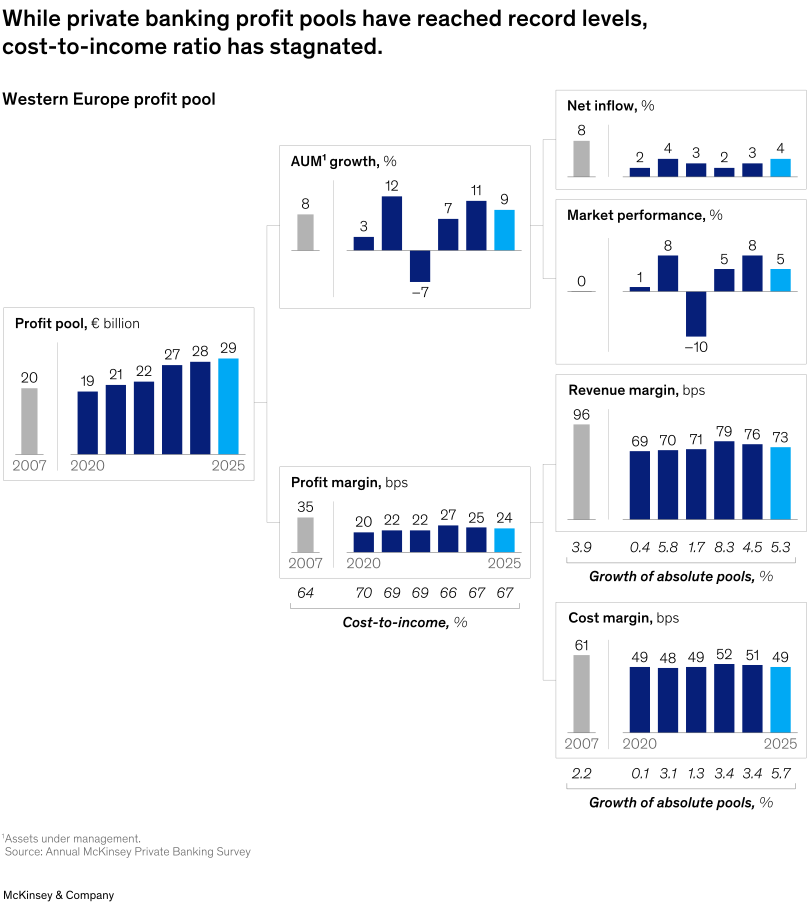
However, this headline performance masks a slowdown in profit growth during the period. The biggest gains came in 2023 (up 22 percent)—driven by net interest income tailwinds from rate hikes—but profit growth declined to single-digit levels in 2024 and 2025 (4 percent and 6 percent, respectively) as interest margins and income fell while costs continued to increase.3
Private banks’ cost-to-income ratios continue to stay in the high 60s. And in 2025, revenue margins declined to 73 bps of assets under management (AUM) (compared to 76 bps in 2024), resulting in a 1-bp reduction in profit margin to 24 bps.
So while the top-line numbers describe an industry in fair health, the details paint a more mixed picture. And as private banks look to the future, strong headwinds will further test their ability to chart a sustainable path.
II: Three forces creating uncertainty
Three forces are complicating the operating landscape for Europe’s private banks. Each demands a concerted and well-planned response; lack of action will result in a loss of both competitiveness and potential profit growth.
Europe is not creating enough wealth
The 6.5 percent CAGR growth in global personal financial assets (PFA) through 2030 projected by McKinsey’s Global Wealth Pools is a robust number and good news for wealth managers globally. Asia‒Pacific (APAC)—forecast to grow 7.7 percent annually until 2030—is leading the charge, fueled by rapid economic development. Europe, however, faces a more moderate outlook of 4.8 percent, putting its wealth managers at a relative disadvantage.4
Next to market performance, regional PFA growth rates are driven by new wealth creation. Given its maturity levels and subdued structural growth, Europe will create new liquid wealth by means of GDP growth and savings at an average rate of 2.1 percent per year until 2030, in our estimate, leading to 1.4 million new millionaires. APAC, again, is now solidly the epicenter of wealth creation: We expect the region to outpace Europe by posting new wealth at 3.3 percent CAGR and welcome more than 4.0 million new millionaires by 2030, led by China, India, and Southeast Asia.
The offshore view is also mixed for Europe’s private banks. According to McKinsey’s Global Wealth Pools, roughly 17 percent (€2.4 trillion) of European PFA are held offshore—€1.6 trillion in the continent’s offshore centers, and €0.8 trillion outside of Europe. At the same time, European offshore hubs remain a major destination for private wealth from other continents: €1.4 trillion from the Middle East and Africa, €0.7 trillion from APAC, €0.3 trillion from Latin America, and €0.2 trillion from North America are currently booked in the region.
However, competition is intensifying from offshore wealth hubs located closer to the regions where new wealth is being created. Hong Kong, Singapore, and Dubai are increasingly challenging established centers such as Switzerland, Luxembourg, the United Kingdom, and the Channel Islands. These emerging booking centers have attracted strong asset inflows over recent years and have already accumulated substantial personal financial assets (Exhibit 2). For example, Singapore’s personal financial assets grew by 7.5 percent annually between 2020 and 2025, surpassing €1.2 billion, while the number of single-family offices increased from fewer than 100 a decade ago to more than 1,100 today.5
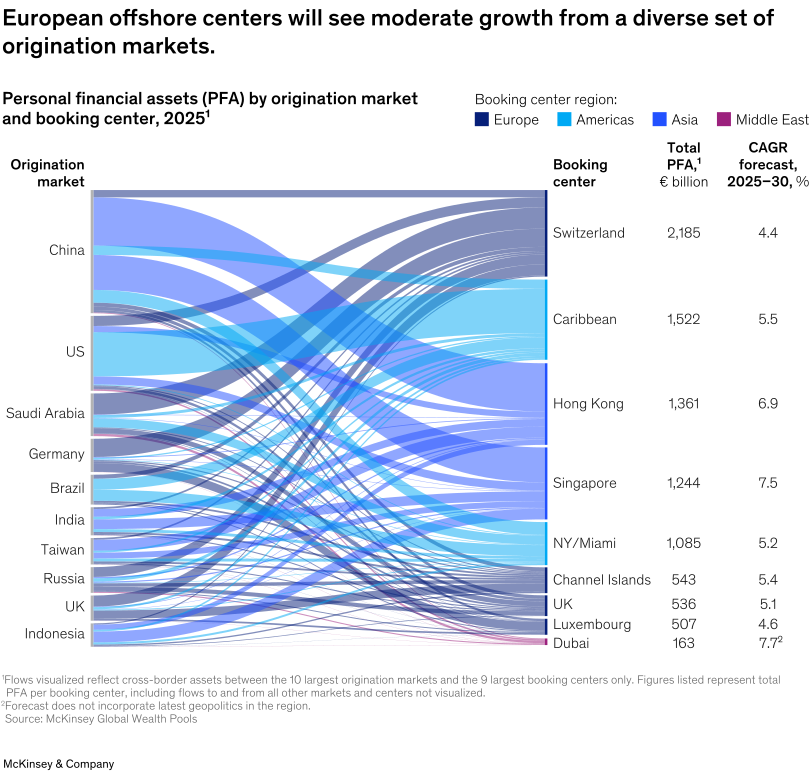
Despite this rapid growth, Asian offshore centers remain less diversified than more mature hubs such as Switzerland and the United Kingdom. In particular, they rely heavily on offshore wealth originating in China, exposing them to shifts in geopolitical dynamics, regional economic conditions, and cross-border capital flows. As a result, while these centers are gaining market share, their growth profiles may be more sensitive to macro developments than those of established offshore wealth hubs.
Meanwhile, clients’ rationale for booking in European offshore hubs (political and economic stability, currency diversification, and sophisticated private banking services) remains intact—in particular for clients with European, Middle Eastern, or African domiciles. However, given the concentration of new wealth creation in Asia, offshore centers in the region will likely attract a significant share of global wealth over the next five years.
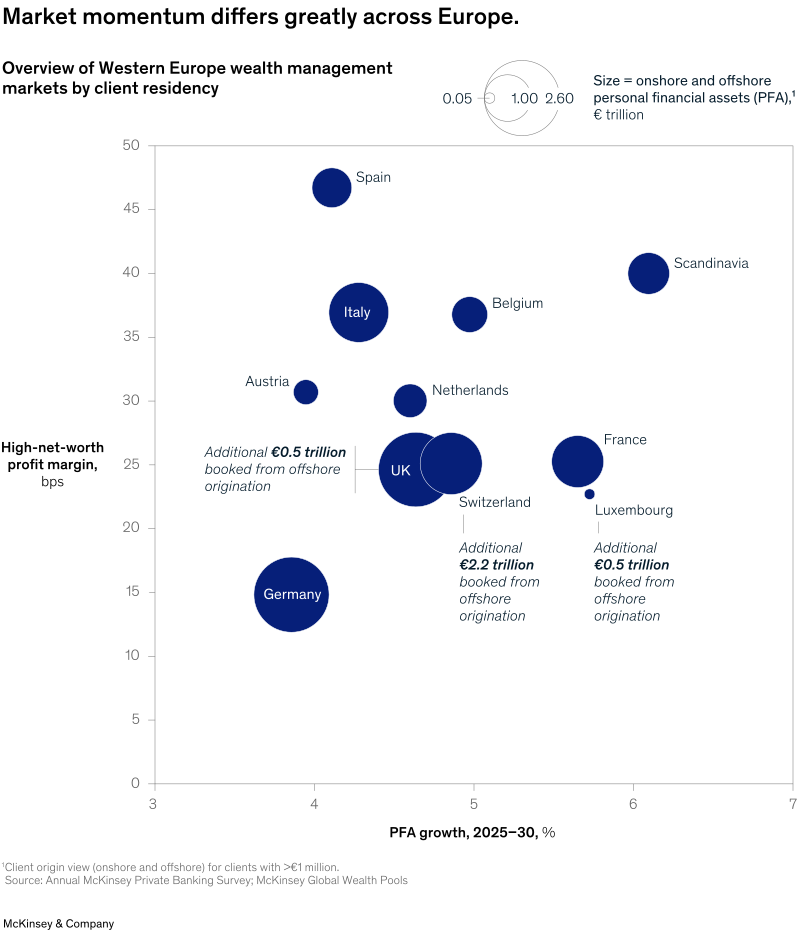
On the whole, European private banks face a structural growth disadvantage compared to non-European peers, with only some markets growing almost as fast as those in Asia. They need to generate more revenue from a relatively stagnant client pool. And while growth momentum and profitability differ sharply by country in Europe (Exhibit 3), on balance the region’s private banks will need to revitalize how they target and serve clients.
Generational transfer is an earnings risk, not just a client retention issue
Demographics are reshaping the European wealth landscape. Today, €4.9 trillion in European PFA—more than a third of total AUM—is held by individuals over aged 75. Roughly €2.4 trillion in PFA—or close to 20 percent of the region’s total—is projected to transition by 2030.6 And as intergenerational transfers pick up momentum, women are emerging as a dominant wealth segment, set to control 40 percent of Europe’s total financial wealth by 2030, up from a third today, according to our estimates.
Given the specific needs and demands of younger investors and women, demographic transition will reshape expectations for advice, service, and engagement, forcing wealth managers to adapt or, more effectively, redesign their business models.
While it creates opportunities, generational wealth transfer also poses a significant earnings risk for European wealth managers, one that we believe is underappreciated by stakeholders. Inheritance events often trigger asset outflows (for example, taxes, consumption, real estate shifts, deleveraging), changes to client relationships, and margin pressure from pricing and product mix shifts. With the aforementioned €2.4 trillion set to transfer by 2030, a typical midsize wealth manager could see 10 to 15 percent of pretax profits at risk, roughly equating to a 2 to 3 percent annual profit headwind through 2030.7
The stakes in the AI race are increasing, and only a few will win
The 2026 McKinsey Affluent and Wealth Management Customers’ Insights Survey, which included approximately 5,500 respondents across Western Europe, finds that 26 percent of high-net-worth individuals (HNWIs) are comfortable using AI, compared to 13 percent of affluent clients. This means that HNWIs are more comfortable using AI than the average pooled service person in a private bank. Clients use AI to find information on products, compare prices, and seek personalized financial advice. When asked which areas of investment advice AI will improve, clients in all segments identified more timely advice as the top benefit, followed by improved explainability and enhanced personalization.
Despite their clients’ growing comfort with the technology, most private banks are still focused on using AI for basic use cases like retrieving internal knowledge or drafting documents. The risk for these banks is in missing the moment. Those that apply AI in a haphazard or incremental way will lose ground to those that take an integrated approach. Banks should concentrate their investments in three or four AI platforms that support and enable the entire bank, not hundreds of disconnected pilots. Several front-running banks are piloting the use of agentic AI (multiple agents applied in combination) to execute end-to-end workflows, reengineering entire core domains (investment advisory, lending, client life cycle, operations, and IT) and the full operating model along with them. The prize is a structural advantage that compounds, resulting in platform infrastructure that reduces the marginal cost of every subsequent deployment; proprietary data that improves model accuracy with each interaction; and organizational learning that accelerates execution speed over time. Banks that invest early and build multiple platforms simultaneously will take a lead that laggards cannot close by simply spending more, because the returns are path-dependent.
Private banks can gain this competitive advantage through proprietary AI developments, partnerships, or acquisitions of AI capabilities. However, even front-running private banks will face consistent threats over the next three to five years from neobanks and digital platforms that continue to dominate in the AI intelligence layer that supports efficiency in the mid- and back-office and empowers relationship managers (RMs) and client interfaces.
Europe’s share of the global wealth wallet is shrinking; generational wealth transfer will create persistent earnings headwinds, and banks must invest in and leverage AI in deeper, more holistic ways. These three forces create uncertainty for the future of private banking profit pools and raise the risk of missed profit expectations. Supporting profit growth in uncertain times will require a more fundamental rethinking of banks’ commercial effectiveness, as well as higher scalability in the operating model.
III: Starting a commercial revolution in private banking
To stay competitive in the midst of multiple challenges, European private banks can move beyond incremental fixes and redesign their commercial strategies. Three priority areas stand out: unlocking organic growth, boosting RM productivity, and leveraging AI and other technologies. The combined effect could contribute as much as €10 billion8 in additional profits by 2030, compensating for adverse profit pressure.
Unlock the full potential of the client book
Existing clients are likely the largest untapped source of quality earnings for European private banks, particularly as PFA growth moderates. According to our annual Private Banking Survey, which covers more than 100 European private banking booking centers, organic net new money (NNM) from current clients or RMs results in proportionally higher profit growth than NNM through hired RMs. But banks have work to do to access this value. In our experience, the current client book at most banks is characterized by:
- high commercial contribution from a small proportion of clients and RMs
- wide variability in product penetration and realized margins
- a decline in relationship growth and activity levels three to five years after onboarding
- limited institutional transparency of actual revenue potential
These shortcomings underscore that private banks are well behind other industries, such as retail and media, in the intensity of their efforts to engage and activate existing clients. Furthermore, systematic use of data to anticipate commercial actions, and centralized management and support, are still rare.
To unlock the full revenue potential of the existing book, banks need to expand margins and gather new inflows. By leveraging client data to recommend personalized products—such as bespoke investment portfolios or advisory services—firms can establish a premium service and achieve premium pricing without alienating clients. A more need-based product penetration for clients under contractual advice will help improve margins. Through disciplined pricing and effective cross-selling, this approach can boost revenue margins on advisory solutions by a potential 10 to 15 percent.9
Net inflows, meanwhile, are propelled by retention/winback tactics and new-to-bank client acquisition. Proactive engagement using predictive analytics to identify at-risk clients, and tailored winback campaigns (for example, customized incentives), can boost retention. Targeting high-potential prospects through referrals, disciplined lead generation by RMs, and digitally enabled onboarding can bolster client acquisition, enabling sustainable AUM growth amid volatile markets.
To support these efforts, some private banking arms of universal banks and a few boutiques have created central analytics data hubs with opportunity “engines” that ensure robust data collection and modeling for actionable insights. Frontline tools and workbenches deliver automated activity recommendations and price guidance to RMs and specialists, and streamlined processes maximize client-facing time.
Banks can strengthen commercial practices from an organizational angle as well, by giving teams and market heads a stronger commercial role over RMs and optimizing the interplay between different frontline roles and the RM. Overall revenue management needs to be a strategic focus, and incentives and KPIs should guide frontline roles.
Unlocking profitability in the client book through these measures could lead to additional annual investment revenue growth of 1 to 2 percent consistently over the next five years, and total cumulative profit growth of €4 billion.10
Build RM capabilities for a new era
Private banking RMs face a raft of pressures: the consistent expectation of net new money, the increasing complexity of advice for nontraditional products, hybrid client engagement models, and a high burden of administrative and service tasks (Exhibit 4). At the same time, growth in AUM per RM is flattening, resulting in lower productivity.
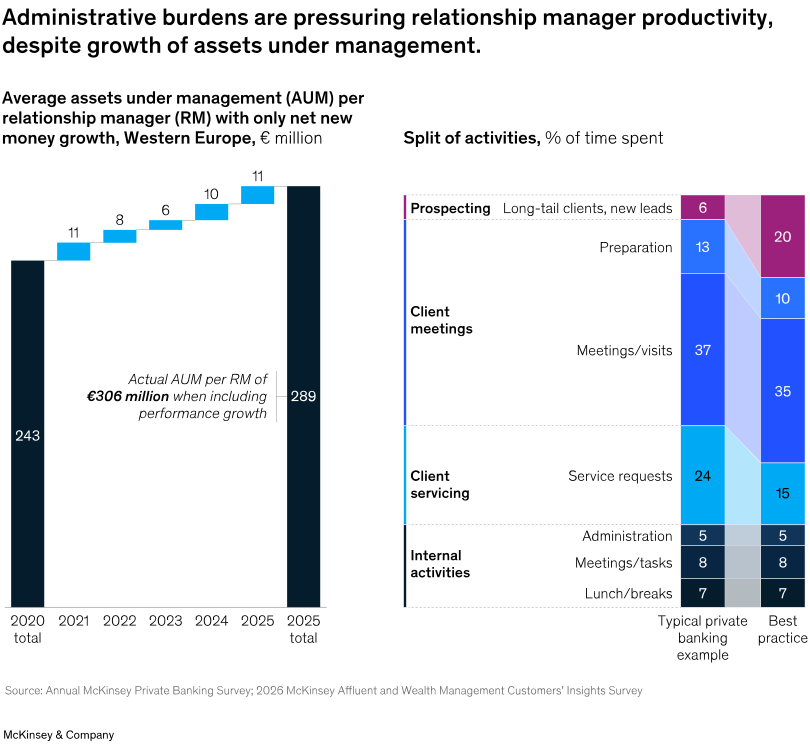
To support organic NNM growth, RMs will need to shift from client service to client acquisition. For existing clients, RMs must transition from being a single source of information and advice to serving as client relationship orchestrators who interact with investment advisors and specialists. Future RMs will require less breadth in product expertise, but will need to manage client relationships beyond the beneficiary owner and engage the next generation, transitioning into “life coaches” or “family coaches.”
They will also need to master AI-enabled tools to monitor and proactively manage the client book. Future RMs will need to adopt emerging new tools and adapt how they work on a day-to-day basis. They will invest more time on high-value deals, serve more individual clients (for example, due to book consolidation from retiring RMs and higher organic growth rates), and spend less time on administration and servicing, as they are no longer needed for every client interaction.
To support the development of the future RM model, banks can do the following:
- Rebuild and reinforce the talent pipeline with in-house academies and structured programs, training new RMs to provide complex, future-oriented client advice and reducing reliance on lateral hiring.
- Reskill RMs for higher commercial effectiveness and the use of AI through multidisciplinary learning journeys, using a learn (classroom teaching), grow (coaching on the job), and apply (self-driven practice via e-learning) framework.
- Align expertise to client complexity, pairing RMs with advisors, specialists, and planners, with RMs orchestrating the client team.
- Harmonize RM processes by developing a workbench that supports advisory, life cycle, and transactions—freeing up RM time for client acquisition (harmonized processes will also help enable future AI integration).
- Train RMs to manage client potential using data- and trigger-based approaches, driving tool adoption, adherence to alerts and standards, and KPI-based performance management.
Building advisor capabilities and helping RMs manage the client book more efficiently can lead to an incremental three percentage points of NNM, resulting in an annual profit increase of 2 to 3 percent through 2030, or a cumulative profit opportunity of €3 billion to €4 billion by 2030.11
Make technology work for the client, not just the back office
Private banks often apply technology to workflow improvements and discrete analytical use cases rather than broader commercial transformation. This focus puts them at risk of missing out on the benefits of AI. This is partly a result of investment priorities. According to our survey, roughly 13 percent of private banking revenue goes to tech/AI spend,12 and most is absorbed by legacy infrastructure and regulatory compliance.13 Delivery is also inefficient, with fragmented ownership, piecemeal investments, limited replanning, waterfall methods of software development, and siloed teams, with little agile or AI-enabled development.
To truly move the needle, banks need to step back and craft a multiyear aspiration for wealth management domains underpinned by a technology- and AI-enabled wealth operating system.
This aspiration should include five reimagined domains:
- Advisory: Hypercontextualized product recommendations oriented to life objectives and delivered via proactive RM outreach
- Portfolio management: Efficient, timely, and well-documented investment decisions at single portfolio level with automated portfolio update notes
- Client life cycle management: Less time-consuming workflows with auto prefill, differentiation by client risk, and more effective controls; client and RM interactions with a commercial logic inspired by loyalty programs
- Transactions (payments and trading) and services: Embedded and conversational trade and payment instructions, with RMs playing a supervisory role rather than entering orders
- Investment operations and technology: Highly automated development and delivery with human in the loop for requirements and testing
These changes will augment, not replace, humans in private banking. Firms that position AI as a substitute for roles such as RMs will likely fall behind those that deploy it as an intelligence layer supporting those roles. According to our analysis, AI could boost RM productivity by up to 45 percent, scale portfolio managers from roughly €400 million to €1 billion AUM, and cut compliance effort by up to 50 percent.
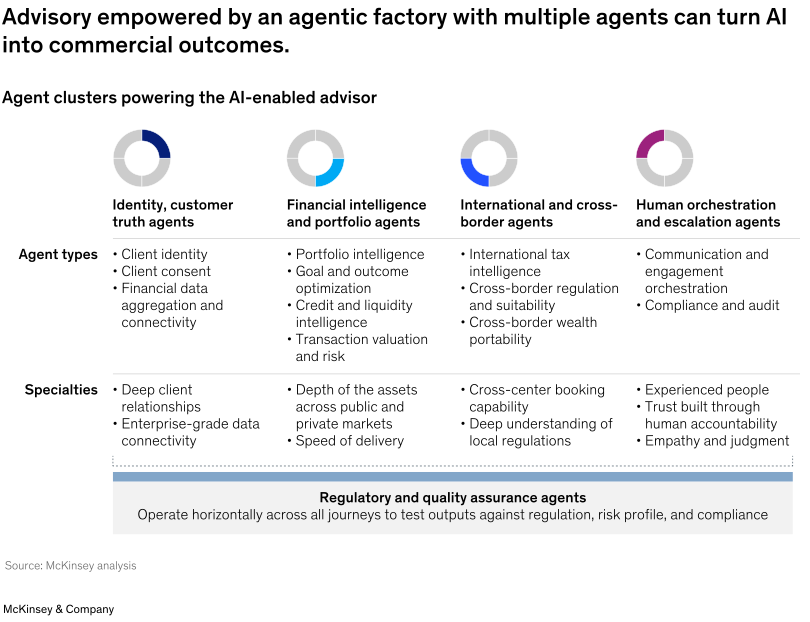
Achieving these targets will require a leap of reimagination regarding a bank’s commercial approach. Advisory, for example, cannot be transformed through isolated AI tools alone; it requires an agentic factory that orchestrates multiple specialized agents—across client identity, financial intelligence, cross-border rules, portfolio optimization, communication, human escalation, and compliance QA—to equip RMs to engage in tailored, high-quality client interactions (Exhibit 5). The value comes from redesigning the advisory engine end to end, with AI as the intelligence layer and RMs as the trusted human interface.
Know your customer (KYC) is another example where reimagination can lead to step-change improvement. KYC is a high-friction, control-heavy process that touches the full value chain. AI can support nearly every step in this process, from initial profiling and document checks to screening, source-of-wealth/funds analysis, plausibility assessment, KYC memo drafting, governance documentation, transaction-monitoring support, and suspicious activity report preparation. But the full value will not come from task automation alone; it will emerge from a redesigned operating model with centralized first-line ownership, clear second-line oversight, standardized policies, stronger quality assurance, and modular AI governance. The decisive limitation is adoption—that is, whether frontline, operations, compliance, and risk teams trust AI outputs enough to change how decisions are prepared, reviewed, and approved.
For international private banks, the reimagination of wealth management domains will require a global AI logic that allows for local regulatory adaptation. Clients will expect control over their data, preferences, and delegation, which will require highly customizable systems. This approach also necessitates a redesigned operating model (organization and processes) and updated business and risk policies to support the effective use of AI.
As they redesign their delivery capability for AI, banks will face five requirements:
- smart AI infrastructure with model access, security, and identity management
- programmatic access of AI to existing bank systems and data
- orchestration of outcomes through quality gates and workflow tools
- institutionalization of processes and standards as a foundation for AI
- coordinated, AI-enabled channels for interaction (such as videoconferencing/chat tools and email)
The value at stake is substantial. Reimagining major wealth management domains through AI, combined with a broad-based productivity uplift across the private banking workforce, could lead to a profit uplift of €4 billion to €5 billion—largely by deriving more value from the existing book and making RMs more productive.14 This will also support efforts to achieve true scale (see next section) and help private banks update the risk of churn created from digital platforms.
While the foregoing imperatives will have a positive impact on private banking profitability, they will not be enough on their own to truly move the needle. Future winners in European private banking will be those institutions that successfully tackle the challenge of scale.
IV: Reduce complexity to unlock scale
Beyond reimagining commercial levers, leaders in private banking will outpace laggards based on their ability to scale. This is the only way to generate long-term profitability. In essence, scalability describes a bank’s ability to handle new business at marginal cost. While there is broad acknowledgment of the concept, company disclosures and survey data show little evidence of true scale in European private banking. Revenues continue to grow in line with AUM growth, with costs also growing at a similar pace.
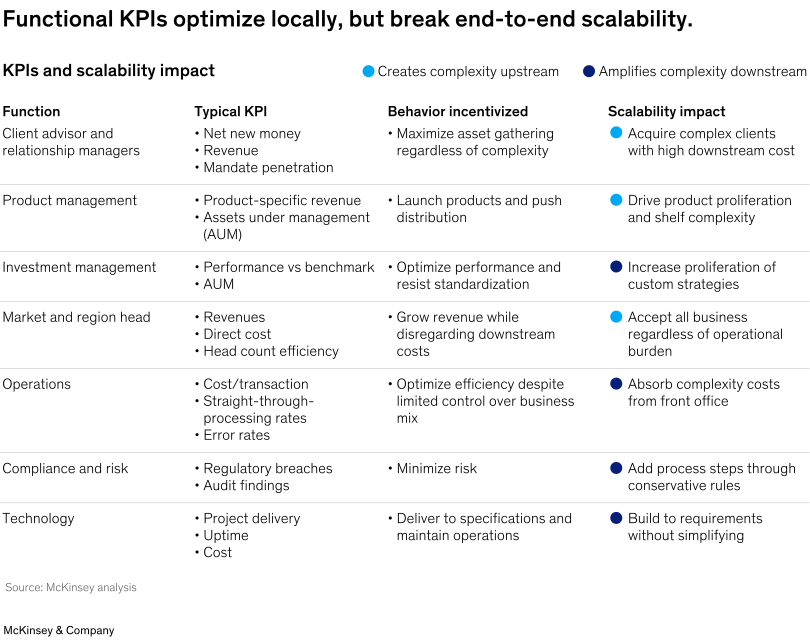
The challenge begins with measurement: Established yardsticks for scale such as AUM per advisor or operating leverage—the gap between revenue and cost growth—are highly sensitive to external factors such as market performance, which often mask underlying developments. So while the measurement may point to a semblance of scale, true scalability is much harder to achieve, especially for a bank with multiple booking centers. While elements of the business can be improved, the broader system is often misaligned, diluting the economic benefits on a consolidated level. For example, direct cost savings in operations may lead to more nonclient work for client advisors, biting into revenues. Exhibit 6 provides an overview of how siloed KPIs challenge scalability.
Key dimensions for scalability
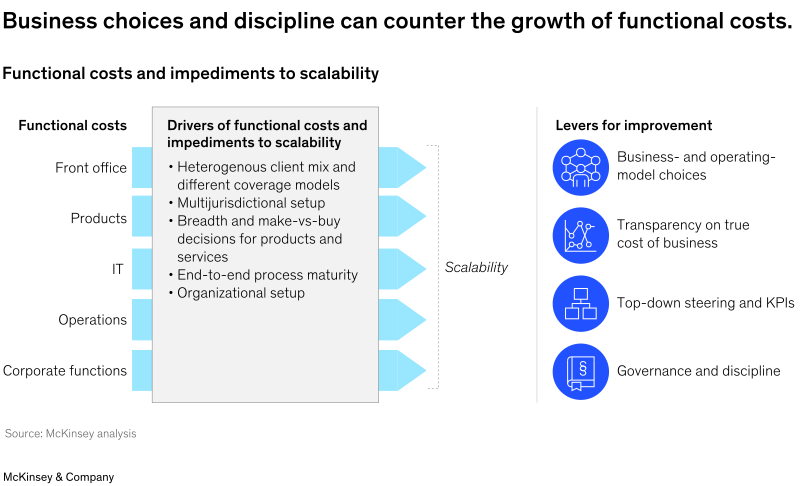
Five dimensions have significant impact on the ability to scale: client composition and service model, geographic presence, end-to-end domains and processes, product and solution offerings, and organizational setup and culture. For each, addressing key questions can jump-start the process of building true scale (Exhibit 7).
Client composition and service model
Private banks typically bucket clients into segments that carry particular expectations and complexities. Key questions for leaders to ask include:
- To what degree can the business be “industrialized” through standardization?
- What is the level of service a customer in a particular segment receives, and is pricing aligned with this level?
- How can we manage the trade-off between frontline productivity and growth opportunities?
- How can the front line write business that doesn’t lead to complexity for mid- and back-office areas?
Private banking clients tend to expect some level of customized treatment and readily available advisor access once they have €1 million to €2 million AUM with a bank. As much as some banks would like to raise this level, it is defined by the competitive environment, and many small banks and external asset managers offer customized treatment for these clients.
Geographic presence
Banks that operate across jurisdictions with localized regulation face levels of complexity that make scaling a challenge. Turning a new market profitable is fraught with difficulties. IT systems and local offerings are often inferior to those available in the home market. Onboarding clients, generating revenue growth, and winning market share are frequently prioritized over front-to-back scalability considerations. To begin to address these issues, management teams should consider the following questions:
- How can we ensure the chosen/targeted geographic footprint is truly value accretive?
- Should we cover the international market through booking centers or advisory offices?
- What client type is targeted in a specific market to avoid undue complexities?
- How many clients and AUM are needed for an international business to be sustainably profitable?
Profitability in international expansion is a key factor in achieving quality growth. Without it, regional endeavors can turn into a collection of structurally subscale units diluting the truly profitable parts of the business.
End-to-end domains and processes
While back-office processes have high straight-through-processing rates, there is often significant manual work and breaks in front- and mid-office processes. Structural improvements are hindered by high degrees of freedom at the RM/client interface, lack of end-to-end process ownership, inconsistent funding of improvements over time, and a missing link between operations and IT. To address these shortcomings, leaders can start by debating the following questions:
- Which core domains and processes require improvement?
- How can we maximize the share of low-complexity activities?
- What process flows can be reimagined and enabled by agentic AI?
- Do we have an integrated road map with multiple optimization levers and longer-term funding?
The overall objective is to add growth-driven volumes of tasks to a process with low to zero marginal cost. This requires the simplification of process flows and triaging between low- and high-complexity tasks. Low-complexity tasks should be shifted from manual to automated processing. Automation is enabled by consolidating activities into a single or few units (for example, only one activity—such as onboarding—once in an organization) and by digital or AI enablement. Across the range of complexity, banks need simple KPI dashboards for transparency, tracking, and improvement.
Product and solution offerings
Comprehensive product and solution portfolios are important for competitiveness and gross margins, but the resulting complexity is one of the single-largest scalability challenges. In our estimate, roughly 20 percent of products cause 80 percent of operational complexity, while likely accounting for only one-third of revenues. Notably, the marginal costs of issuing a new product may be small for the product and solutions team, but the cost of complexity across the value chain can be multifold. Critical questions include the following:
- To what degree is product customization a key success factor in our business?
- Which products are scalable platform plays, and which have too high a degree of customization?
- Does adding new products improve economics enough to justify the complexity?
- What are the benefits of focused insourcing of products from external providers?
Managing scalability in the product and solution dimension requires a top-down approach to the trade-off between revenue generation and front-to-back cost considerations. Rigorous product rationalization should not be delayed due to potential short-term revenue and net new money considerations.
Organizational setup and culture
Organizational setup and culture can be one of the most prominent impediments to scalability, yet it typically attracts the least attention. A bank’s goal should be to clarify responsibilities and create alignment between functions and the business. In our experience, improvement projects frequently fail to succeed or are watered down due to ineffective structures, misaligned incentives, and organizational complexity. Leaders should debate the following questions:
- What degree of flexibility should market leaders have in defining their own frontline model, including support functions?
- Are capabilities such as client analytics spread across divisions (markets, products, COO or finance), duplicating costs and diluting scalability?
- Is the level of centralization of corporate functions effective or are functions growing excessively, as evidenced by structurally rising and complex cost allocations?
- Are we fostering a joint end-to-end focus, or are incentives scattered and overweighting shorter-term performance?
Making operating model and organizational choices to align functions and the business is critical to enable any of the other dimensions, as well as to create structural efficiencies.
Building blocks to achieving scalability
The path to improving scalability differs depending on the archetype of the wealth manager, but there are some general building blocks:
- Establish a functioning and recurring front-to-back transparency framework. Based on simple transparency of cost along the value chain, a transparency framework is the foundation for effective management of growth-versus-cost trade-offs and impactful strategic decision-making.
- Create a holistic, company-specific view. The analysis of the five dimensions of scalability is an important component for assessing where the bank stands. This analysis should be complemented by a review of IT as a key enabler of a scalable bank.
- Initiate improvement measures in three areas. First, tackle the key impediments to scalability. Second, improve actual scalability through, for instance, reducing the product shelf or closing a subscale market. Third, establish scalability as a prominent consideration in the company’s decision-making process, with consistent financial transparency.
- Align the KPI framework to foster a strong front-to-back orientation. Next to incentivizing the front line to consider the implications of client complexity for mid-/back-office functions, a KPI set should anchor front-to-back metrics in steering and measuring the business going forward.
- Ensure tight governance and discipline in the investment process. Scattered investment budgets with too many stakeholders can prevent progress on scalability. Overcoming this challenge requires discipline and potentially the sacrifice of short-term P&L to improve structural earnings power. Listed private banks should also consider communicating the needed investment budgets—and expected return expectations—to the capital markets.
Delivering on the foregoing five building blocks has the potential to flatten cost growth from a three-year annual average of 3.5 percent by about one-third, or one percentage point. Reducing cost growth over the next five years has a cumulative profit potential of €3 billion to €4 billion by 2030.15
V: A tangible start to building resilience
European private banks stand at a strategic crossroads. In one direction, they stick to the recipes of the past and slide into shrinking margins and stalled growth. In the other, they reinvent themselves for the new era of client expectations, wealth flows, and industry shifts.
Building strategic resilience goes beyond tweaks or cost programs. It requires a reimagination of how to steer and manage private banking: data-backed, human-centered, digitally amplified, and relentlessly focused on unlocking value.
This focus will require the following shifts in performance steering:
- From headline NNM to quality-adjusted inflows. One billion euros in new assets at 20 bps revenue yield and high operational complexity is not the same as €1 billion at 60 bps in discretionary mandates. Banks should report revenue-per-relationship alongside notional flows.
- From cost-to-income ratio management to structural scalability metrics. Instead of managing the ratio through short-term cost cuts in response to cyclical revenue swings, banks should track marginal cost-to-income on incremental volumes—the true test of whether the platform is scaling.
- From AUM growth to client depth. The number of solutions per client, mandate penetration rates, and share-of-wallet trends predict future revenue durability far better than aggregate asset levels.
- From business expansion to risk-adjusted growth. As banks push into complex lending, structured products, and ultra-high-net-worth and family office segments, capital consumption rises. Tracking revenue and pretax profit per unit of risk-weighted assets ensures growth does not quietly erode returns.
Success will demand transparency, clear direction, and the courage to invest even at the expense of short-term metrics. Those that take bold action today—unlocking dormant potential, mastering technology and AI, reimagining the front line, and resetting scalability—could strengthen their long-term competitive position and capture a potential profit opportunity of 25 to 35 percent, or up to €10 billion, by 2030, and set the pace for the next era of European private banking.16