The wealth management industry has long operated on a foundational assumption: that its core value proposition lies in generating superior investment returns. But in Europe, a new paradigm is taking hold. According to results from the 2026 McKinsey Affluent and Wealth Management Customers’ Insights Survey, which included approximately 5,500 respondents across Europe, client preferences are evolving—and evolving quickly (see sidebar, “About the research”).
Compared with our 2024 research, the newest survey suggests that clients are not simply seeking better portfolios to manage their wealth. Rather, they are looking for advisors who can navigate ongoing uncertainty, earn and sustain their trust, tailor service models to meet their unique needs, and support the full complexity of their financial lives at all stages—including caregiving, housing, and wealth transfers as they age. Wealth management is no longer about managing money alone. It’s about managing uncertainty, trust, and major life decisions.
The disruptions we identify in this article, and the strategic imperatives they present, reflect measurable changes in client preferences and behaviors since 2024. For companies in the wealth management industry, now is the time to fundamentally rethink their operating models and the role they play in their clients’ lives—or risk being disrupted by those that will.
Disruption one: A more cautious approach to investing
The most striking shift we see in 2026 is the broad-based decline in risk appetite across all client segments (Exhibit 1). These changes represent a fundamental recalibration in how European investors relate to risk, not merely a marginal adjustment.

Among affluent clients,1 24 percent describe themselves as risk-takers—down from 29 percent in the previous survey. Private clients report a similar decline,2 while high-net-worth individuals3 (HNWIs) report the most dramatic decline: from 40 percent to 31 percent.
This growing caution is also reflected in customers’ processes for evaluating specific products. The survey suggests that all wealth management clients have become more deliberate, with growing shares citing expected performance as the most important factor in choosing investment products. Among affluent clients, a larger share of respondents also note the importance of risk profiles in their decision-making.
The strategic implication: In the current environment, Europe’s wealth managers serve clients who are simultaneously more risk averse and more selective. Delivering for today’s clients requires a far more sophisticated understanding of individuals’ risk tolerance, time horizons, and product expectations than the industry has historically provided.
Disruption two: A new trust paradigm for the AI era
Trust has always been the bedrock of wealth management. But in 2026, the contours of trust are being fundamentally redrawn—and in nuanced ways.
Overall and across segments, customers’ distrust of robo-advisory services has declined since the previous survey (Exhibit 2)—most often because respondents believe that digital algorithms will not deliver truly personalized investment advice. While distrust also decreased among affluent respondents, this group remains the least trusting of digital algorithms across the three segments.
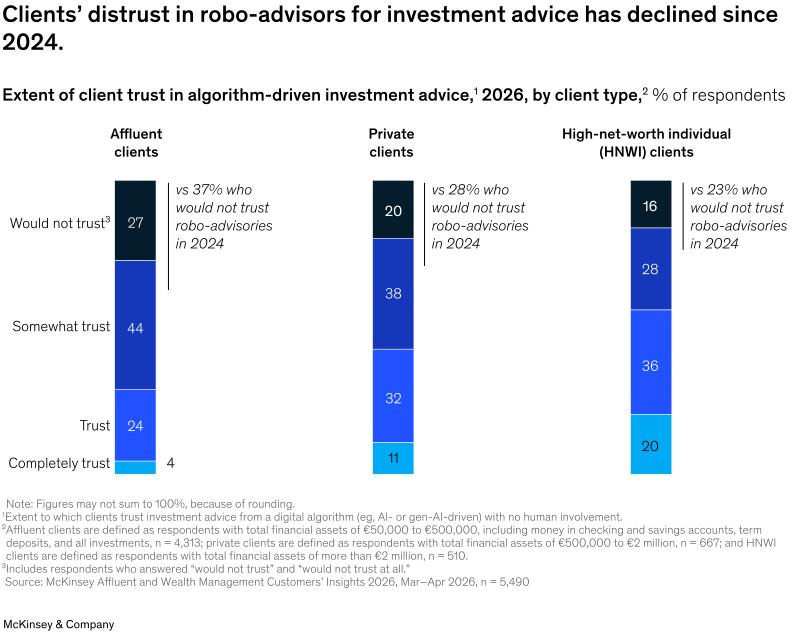
This divergence is critical: The affluent clients who are most likely to be served at scale through digital channels are the most skeptical of purely algorithmic advice. Affluent clients also express lower levels of overall investment awareness and confidence than wealthier segments, suggesting that distrust is not solely a technological concern. Among the respondents who distrust robo-advisories, only 17 percent of affluent clients report high confidence in investment matters, compared with 30 percent of private clients and 42 percent of HNWIs. This finding seems to reflect a capability gap: Clients with less financial confidence may be less comfortable delegating decisions to automated systems.
At the same time, other data show growing confidence in AI’s potential. When asked which areas of investment advice gen AI will improve, clients across all segments identified more timely advice as the top benefit, followed by improved explainability and enhanced personalization. What’s more, between 33 and 45 percent of respondents believe that recent advances in AI will enable more effective automated investment advice.
For all investors, the primary use case for AI is generating personalized financial advice—though all segments see value in a human advisor who’s supported by gen AI. Only 17 percent of affluent clients, 22 percent of private clients, and 36 percent of HNWI clients feel comfortable using fully digital platforms without assistance, with smaller shares in each segment saying they feel comfortable using AI in digital investment platforms.
The strategic implication: Trust is not moving from humans to digital and AI tools; rather, it is being redistributed. Clients want AI to make their human advisors better, not replace them. The winning model will be augmented advisory, not automated advisory. Firms that position AI as a substitute for the relationship manager are likely to lose; those that deploy it as an intelligence layer behind the advisor are best positioned to win.
Disruption three: A call to cover the full life cycle
Perhaps the most strategically significant results from this year’s survey are clients’ expectations of the advisory’s role. Many of today’s consumers believe that wealth management should extend well beyond investment selection and include comprehensive life cycle planning.
Interest in longevity-related financial solutions remains robust, as it was in the 2024 survey. This year, between 33 and 37 percent of respondents expressed interest in long-term care insurance or health-related protection, while 32 to 41 percent expressed interest in lifetime income products, such as annuities and guaranteed income solutions.
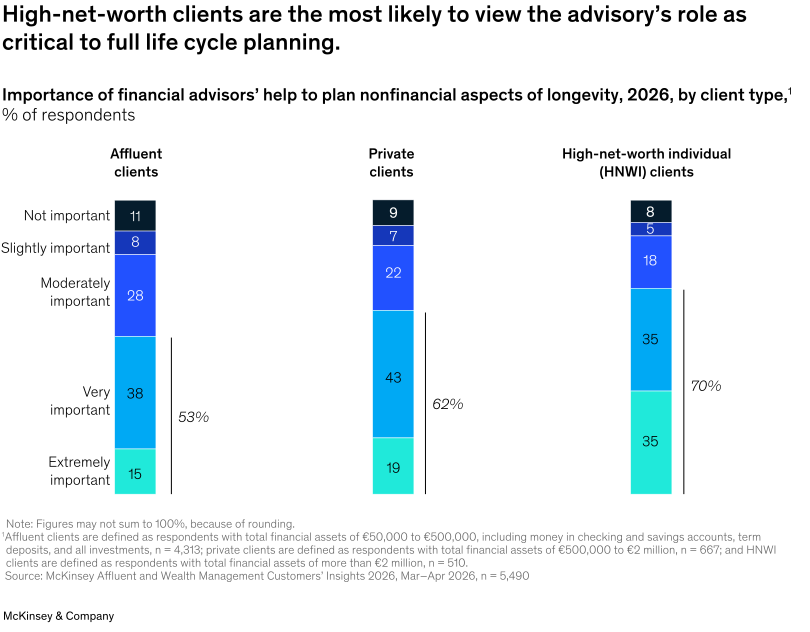
Across segments, consumers also view the advisory as a critical part of their planning for the nonfinancial aspects of longevity—for example, housing choices, caregiving arrangements, and lifestyle transitions. Seventy percent of HNWI respondents said it’s very or extremely important that their financial advisors play this role, with most private and affluent respondents saying the same (Exhibit 3). This is a remarkable finding: A clear majority of all respondents, especially in the wealthiest segment, want their financial advisors to expand their remit beyond a traditional investment-focused role.
Among HNWIs, investment strategy preferences reflect this emphasis on the full life cycle. Given the prospect of longer life expectancy—and that these clients have more resources than other segments to invest in longevity—HNWIs prefer their advisors to focus on income-generating assets, such as dividends and bonds, over time. By contrast, affluent and private clients tend to favor a balanced risk approach to their investment strategies, regardless of age.
The strategic implication: The advisory value chain is lengthening. Wealth managers that limit their value proposition to portfolios will cede ground to those that integrate financial planning with considerations such as health, caregiving, and estate planning. The competitive landscape is shifting from firms with investment expertise to those with a broader, life-cycle-wide approach.
Disruption four: The end of standardized service models
Our 2026 data dispel any remaining case for a one-size-fits-all approach to wealth management.
With product allocation, for example, respondents across segments report distinct approaches. HNWIs report holding an average of 55 percent of their financial assets in managed products (such as mutual funds, mandates, insurance, and securities), which make up just 37 percent of the assets for affluent customers. Relative to other clients, HNWIs also have a larger share of holdings in equities, suggesting that their risk and speculation profiles are very different.
Investors’ channel preferences diverge just as sharply (Exhibit 4). While affluent clients’ favored channel for updating their investment portfolios is online self-service, HNWIs tend to prefer making in-person changes with advisors. HNWI respondents are also more likely than others to say they use both online and phone-based advisory, and their frequency of engagement differs markedly. Fifty-nine percent of HNWIs say they seek financial advice more than once per month, compared with just 29 percent of affluent respondents.

The three segments also have different comfort levels with making financial decisions: 64 percent of affluent clients, versus 83 percent of HNWIs, say they feel comfortable doing so. This gap, along with different preferences for the overall customer experience—affluent clients are most likely to prioritize simple, easy-to-understand offerings, while HNWIs more often prioritize a unique range of products—has direct implications for advisory model design.
The strategic implication: For wealth managers, gaps in portfolio allocations, preferences, and needs mean that a single advisory model cannot serve every segment effectively. Affluent respondents want simplified, digitally enabled solutions and cost transparency. The HNWI segment, on the other hand, wants a bespoke, high-frequency, and multichannel advisory. Attempting to serve every group with the same approach and infrastructure may result in underserving all of them.
Disruption five: Pressure on economic models and client relationships
As the macroeconomic landscape continues to change, wealth management clients are responding. Four in ten affluent clients are prioritizing increased exposure to inflation- and interest-rate-linked assets over the next three years, while similar shares of private clients and HNWIs are increasing the sustainability levels of their respective portfolios. These are not marginal tweaks to portfolios but rather a fundamental shift in preferences and reallocation of client assets. Likewise, the traditional economic model—which was built upon asset-based fees, periodic reviews, and reactive client engagement—is under pressure to evolve in turn. Taken together, the demand for more from banks is unambiguous.
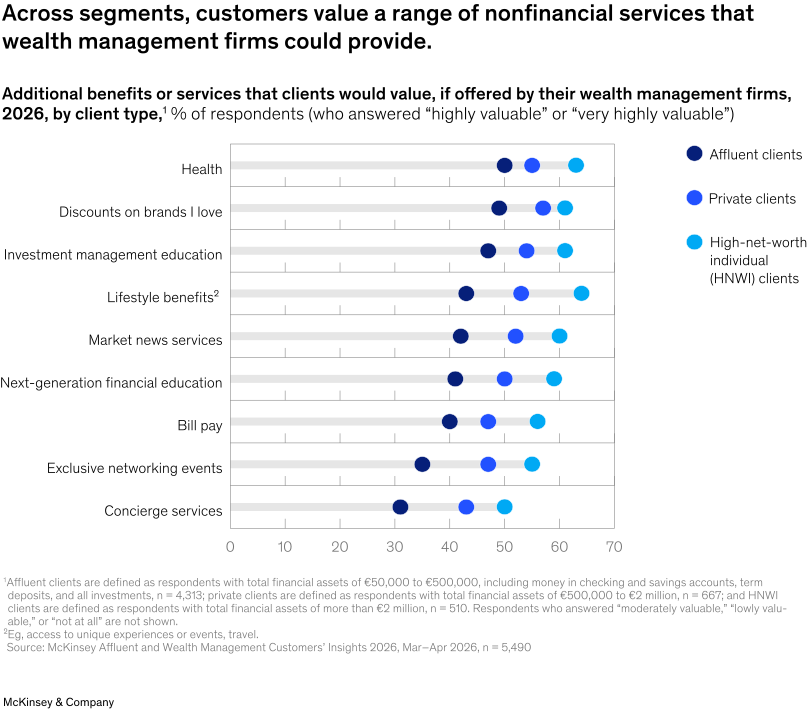
What, specifically, do clients now want from their wealth management institutions? For one, a more personal touch. When asked what could improve the advice their current banks provide, all clients want more frequent tailored investment proposals, as well as more integrated digital services, faster execution, and better financial planning. More than 40 percent of investors also value nonfinancial services, from health-related offerings to lifestyle benefits and next-generation financial education (Exhibit 5).
At the same time, just over half of affluent respondents report that competitor banks have reached out with the tailored proposals they value—while 49 percent say their primary banks have not contacted them in response to the current geopolitical situation. This gap in proactive engagement could potentially threaten customer retention. Thirty-six percent of HNWIs indicate that they may change their primary bank within the next 12 months, with loss of trust cited as the number one reason clients across segments say they leave their institutions.
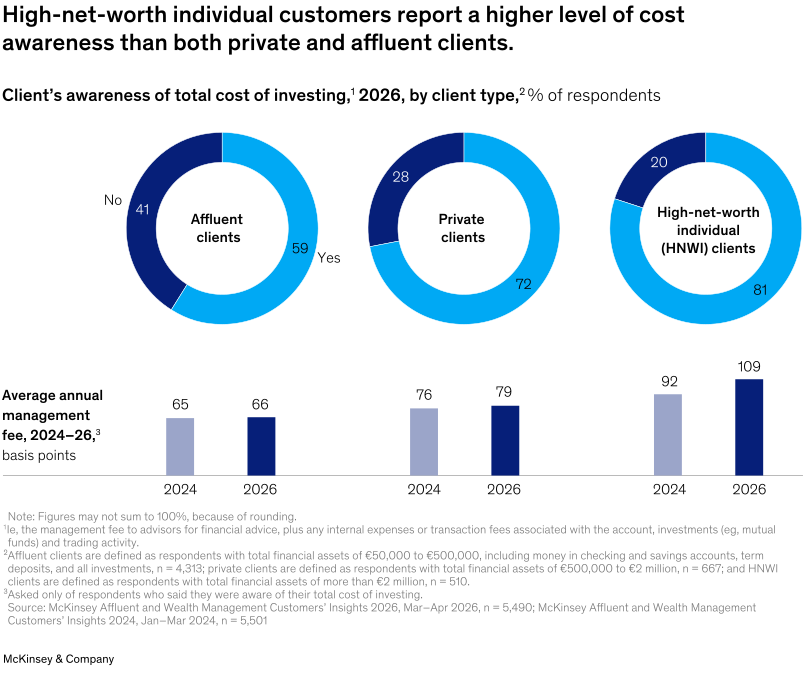
The survey suggests that clients also want a more flexible, value-based pricing model, as the tension between service expectations and cost pressures is intensifying. Even HNWIs are more cost aware than in the previous survey (Exhibit 6), and they tend to prefer variable, performance-linked fee structures over fixed fees, as do private clients—a clear signal that these investors want alignment between what they pay and what they receive. Similarly, 71 percent of affluent clients are willing to pay separately for financial planning, and 68 percent are willing to pay for enhanced reporting, suggesting that unbundled, value-based pricing may be more sustainable than current opaque, asset-based models.
The strategic implication: The current wealth management model is caught between clients who want more personalization and firms that are structured for scale through more standardized offerings and pricing models. Performance-based pricing, proactive engagement, and service expansion are not optional enhancements; they are requirements in an industry in which client preferences and needs are evolving rapidly.
The path forward: Strategic implications for Europe’s wealth managers
The five disruptions identified in our 2026 survey represent more than a set of independent trends or even a cyclical shift. Clients’ expectations for advice that is continuous, tech enabled, and increasingly personalized require a fundamental reimagining of how wealth management operates in Europe.
In this context, success will require a structural reset rather than incremental adaptation—and five strategic imperatives stand out:
- Redefine the advisory’s value proposition. With clients’ risk appetite declining and their life cycle needs growing, the advisor’s value extends beyond stock picking or asset allocation. Clients want their advisors to help manage complexity, navigate uncertainty, and plan for their well-being—financial and otherwise—across various stages of life. The firms that maintain a returns-first approach will likely lose relevance.
- Build hybrid human–AI advisory models. The data are clear: Clients trust AI to augment their advisors’ capabilities (by enhancing personalization and providing more timely advice, for example), not to replace their advisors altogether.
- Extend into longevity and nonfinancial planning. With 70 percent of HNWIs wanting their financial advisors to address nonfinancial aspects of their lives, this service is not a “nice to have.” It is an explicit client expectation that represents an opportunity for firms to both differentiate themselves from competitors and retain clients over the long term.
- Move from one-size-fits-all to tailor-made services. The affluent clients who seek simplicity and HNWIs who want bespoke, multichannel, high-frequency engagement cannot be served through the same model. Distinct operating models are now a prerequisite and will require different channel strategies, product architectures, and engagement frequencies for different segments.
- Revamp economics and client engagement. With 66 to 76 percent of clients preferring variable, performance-linked fee structures and growing cost awareness among HNWIs, the industry must move from opaque, asset-based fee structures toward pricing models where advisors’ incentives are clearly aligned with their clients’ outcomes. And with ongoing geopolitical upheaval and quickly evolving client preferences, it’s critical that firms engage proactively—not reactively—with their clients. In an environment where loss of trust is the top reason clients leave their firms, silence can be destructive.
Europe’s wealth management industry stands at an inflection point. The clients surveyed are signaling a fundamental shift in what they expect, how they want to be served, and what they are willing to pay for. Firms that act decisively to meet clients’ needs will define the industry’s next era, while those that treat these signals as noise will likely fall behind.