After a decade of challenges ranging from the COVID-19 pandemic to accelerating inflation, rising joblessness, and weak economic growth, Latin America’s grocery retailers are consolidating recent gains. Our 2025 study found them finally on firm ground again1; this year, there’s even more clarity. A new kind of consumer has emerged, driven by the desire to make purchasing decisions that balance what they can afford to spend with what they truly value. For retailers and consumer packaged goods (CPG) companies alike, the evolution of these “intentional shoppers” presents clear opportunities—provided players are willing to take the bold steps necessary to capture this emerging market.
Stronger purchasing power drives volume growth
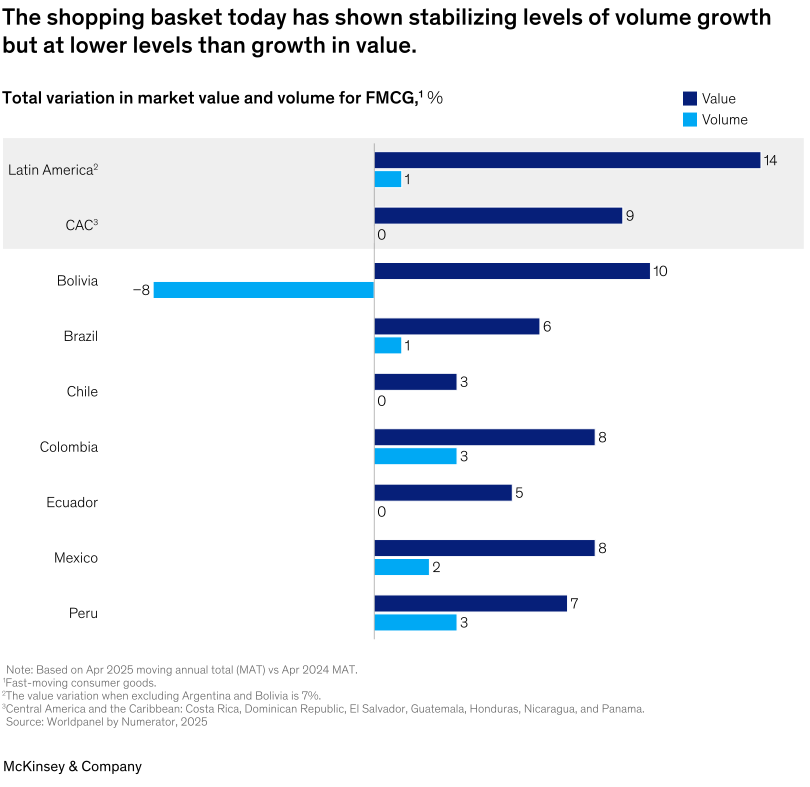
There are signs of recovery in the purchasing power of the Latin America consumer. The region’s unemployment rate and GDP growth have remained steady for the past year at an average of around 6 percent and 2 percent, respectively, while inflation has declined significantly.2 Its fall from an average of about 17 percent in 2024 to 7 percent by April 2025 has strengthened purchasing power, helping maintain momentum that has resulted in the fast-moving consumer goods (FMCG) market showing consistent positive volume growth since mid-2022.3
Our latest research finds while shopping basket volumes across the region have stabilized (Exhibit 1), four of the eight Latin American countries studied recorded almost no volume increase (Chile and Ecuador) or negative volumes (Bolivia). In all countries, the increase in average prices was higher than the increase in volume. And while the ongoing prioritization of value by consumers across the region that our last study revealed persists,4 we now find that behavior has evolved into a new mindset.
The emergence of the ‘intentional shopper’
As Latin America recovered from the economic shock of the COVID-19 pandemic, consumers became increasingly value conscious. With purchasing power for consumer goods across the region declining by around 25 percent between 2020 and 2025,5 shoppers have explored different channels seeking cheaper products and smaller presentations. Our latest study finds this mindset has evolved, resulting in the emergence of what we’re calling the “intentional shopper.”
Who is an intentional shopper? Someone who defines value beyond price alone to encompass what they truly want and need. They have a changed mindset, splitting spending between multiple channels and tiers of products and making rational and planned purchasing decisions. And they are a shopper with new capabilities, using knowledge and information about products, channels, and practices that can generate greater value for money. Here are the five distinctive behaviors of the intentional shopper.
1. Increases the number of channels used and decreases store visits
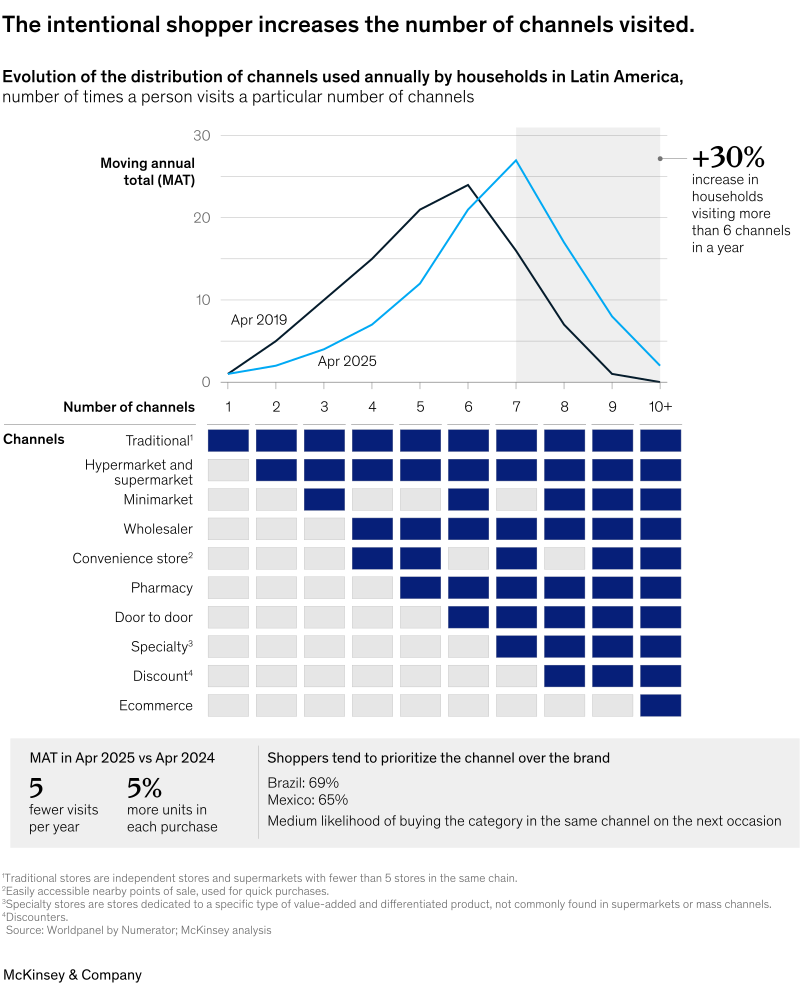
In the past year, the average Latin American shopper has visited five fewer stores but increased the number of units in each purchase by 5 percent. In short, they’re reducing the frequency of visits but buying more when they shop, having increased the number of channels they use (Exhibit 2). In fact, consumers across the region have increased the average number of channels used by 7.0 percent since our last study, with shoppers in Bolivia and Ecuador increasing the number of channels by 15.1 percent and 16.0 percent, respectively, while shoppers in Argentina showed no channel growth.6
2. Focuses purchases on planned ‘stock-up missions’
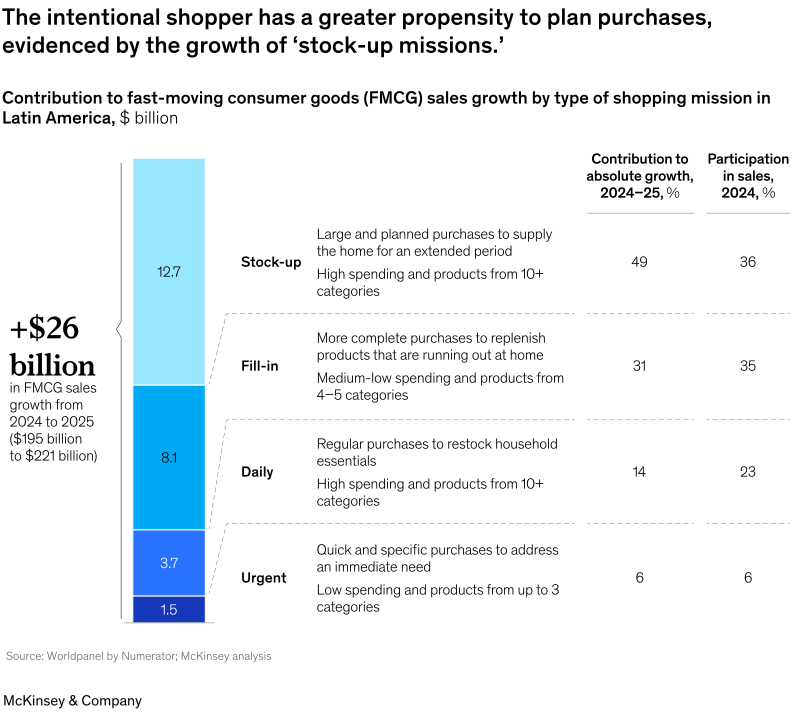
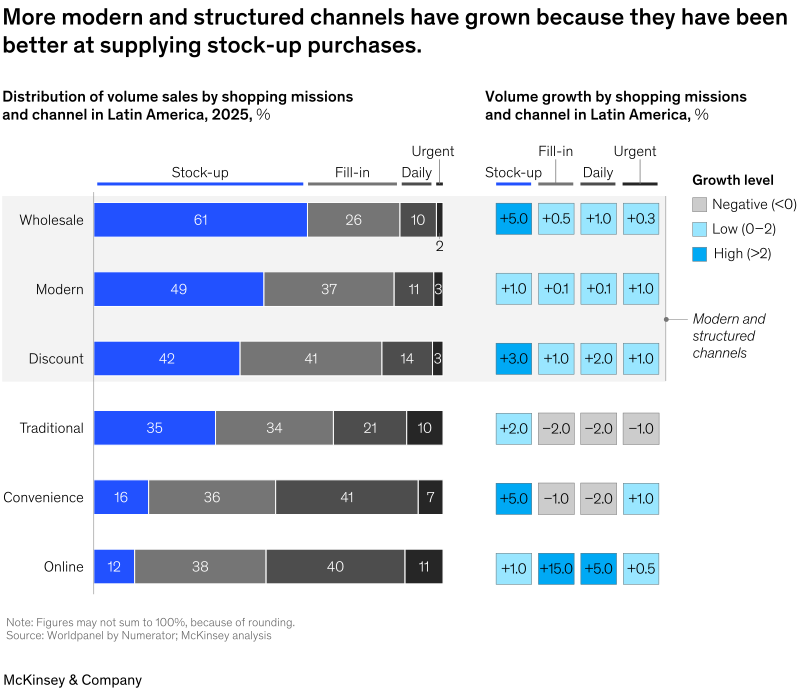
Shopping behavior continues to address a variety of needs, from quick and specific purchases to address immediate needs to regularly buying household essentials. Yet intentional shoppers have driven the biggest growth in FMCG sales across Latin America by making large, planned purchases that meet their needs for an extended period (Exhibit 3). These “stock-up missions” allow them to lower the average cost of their shopping occasions by taking advantage of volume discounts and reducing associated costs, such as transportation.
3. Adjusts spending by perceived value
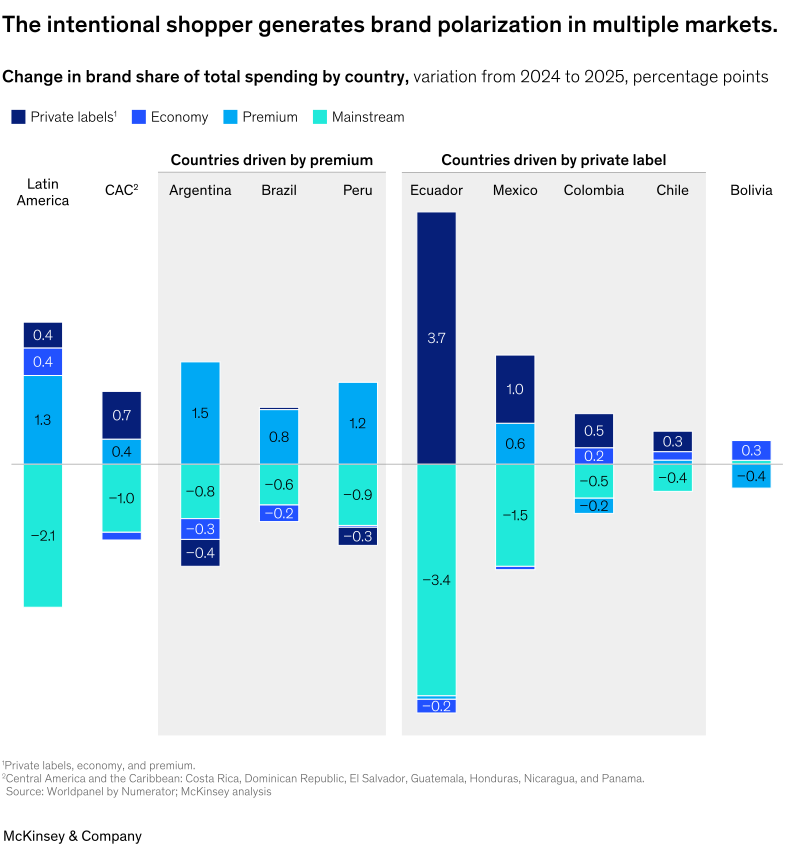
Because intentional shoppers prioritize perceived value—balancing price with utility—their approach is generating brand polarization in multiple markets. That is, there is an emerging split between consumers at the premium end of the market and those at the private label end, with brands at both extremes claiming market share from those operating in the middle (Exhibit 4). In all studied countries except Bolivia, polar brands grabbed market share from the mainstream, with Argentina, Brazil, and Peru driven by premium brands and Colombia, Ecuador, and Mexico by private labels.
4. Uses more modern channels with a defined value proposition
Intentional shoppers are somewhat channel agnostic; what they care about is getting exactly what they want from the most convenient, logical source. Stock-up missions are driving sales in all channels, but especially in formal channels such as wholesale, modern, and discount (Exhibit 5). Online channels dominate for replenishment and daily missions, and the overarching structure of the retail sector in Latin America is moving toward channels with modern dynamics. While the channel distribution of FMCG sales varies by country, on average, more than 50 percent of FMCG sales in the region are now made through modern, wholesale, and discount channels.7 For their part, intentional shoppers tend to seek private labels in discount stores and premium brands in modern and convenience channels.
5. Experiments with e-commerce and technology to optimize purchases
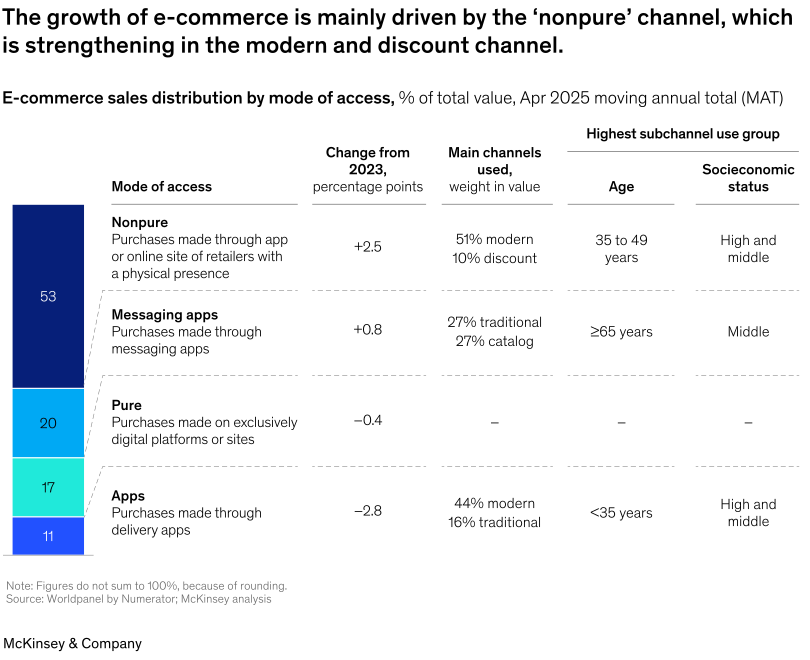
While online sales remain dwarfed by other channels across Latin America, our study found 34 percent of the region’s population now make FMCG purchases though e-commerce—up from 25 percent in 2023.8 E-commerce is contributing 4.9 percent of FMCG growth by basket despite holding market share of just 1.6 percent, with growth in online sales mainly driven by the “nonpure” channel—that is, through apps or websites of retailers that also have a physical presence (Exhibit 6). This growth is strengthening the modern and discount channels, although interestingly, middle-class consumers aged 65 or older are significant purchasers through conversational channels.9 While growth in pure digital channels fell in our latest study, these channels remain popular with consumers aged 34 or younger. When it comes to product categories being bought online, personal and home care dominate, followed by food, dairy, and beverages.
Big moves to capture growth
While the emergence of intentional shoppers has been shaped partly by changes CPG companies and retailers have made, capturing the opportunity they present demands additional action. As detailed above, these consumers are using more channels, planning shopping missions, seeking brands offering value, increasingly using modernized channels, and accelerating the adoption of e-commerce. CPG and retail players can generate competitive advantage by building capabilities to serve shoppers in a hypergranular manner, which requires a deep understanding of shoppers across every purchase point. Failing to move quickly risks falling behind.
Critical actions for retailers
Winning intentional shoppers requires retailers act across the product portfolio, channel strategy, and revenue management. For example, a Spanish retailer implemented a product development model based on continuous innovation with input from customers and suppliers, creating a feedback loop that allows the retailer to hear what customers want and to work collaboratively to develop products in response. The company has long-term agreements with suppliers to support this effort, which is fueled by co-innovation centers across Spain and Portugal.
The benefits are worth the effort. We’ve found that individualized, omnichannel personalization at scale holds the promise of 20 to 30 percent increases in customer loyalty, 2 to 5 percent in revenue growth, and cost savings of 10 to 20 percent.10 In addition, agentic AI that quickly analyzes merchandising data could accelerate decision-making by three to five times, saving 50 to 80 percent of the time currently required on analyses and trading meetings.11
Here are actions retailers can consider to win intentional shoppers:
- Product portfolio. Retailers can introduce private labels across multiple tiers, including premium, with capabilities that bring innovation closer to the needs of the buyer. They can optimize their portfolios through smart decisions, satisfying multiple microneeds and occasions of purchase and maximizing performance. And retailers can expand into new adjacent services driven by granular knowledge of customer needs and unique assets of the retailer.
- Channel strategy. Retailers can undertake format transformation to respond to each purchasing mission and scale digital personalization across the purchasing journey (for example, channels, products, and offers).
- Revenue management. Agentic AI can power the merchandising function to drive granular decision-making in an automated way.
Realizing CPG’s growth potential
CPG manufacturers also have an opportunity to capitalize on the emergence of intentional shoppers. The keys to this opportunity will be developing product portfolios with clear value propositions tied to consumer preferences; focusing on channels, missions, and relevant brands by format; and continuously adapting product portfolios according to needs. Gen AI can play a role by lowering costs and driving innovation that’s faster and better quality, while state-of-the-art machine learning–enabled modeling can identify cross-selling opportunities and drive revenue growth.
Here are actions CPG manufacturers can consider:
- Product portfolio. Manufacturers can consider powering the product innovation process with a deep understanding of granular consumer needs and accelerated by gen AI, by leveraging buyer polarization to drive premiumization and trade-up of the portfolio, and by leveraging AI to decode purchasing occasions, including size preferences.
- Channel strategy. Manufacturers can undertake microsegmentation of sales channels to hyperpersonalize their go-to-market strategies.
- Revenue management. Manufacturers can implement advanced, data-driven revenue growth management as a strategy to enhance the effectiveness and agility of their product portfolio, pricing, and promotions to anticipate consumer needs and maintain competitiveness.
The state of Latin America’s grocery sector has been in flux for years, buffeted first by the COVID-19 pandemic and then by economic volatility. If our 2024 study found retailers had an opportunity to catch their breath, our latest provides even greater certainty and clarity. A new kind of consumer has emerged, seeking value and determined to find it. The spoils will flow to the players able to leverage data to be more granular and stay close to customer needs.