Geopolitical and structural shifts are reshaping global trade, and the auto component industry has been heavily affected. India is increasingly well positioned in this realignment, supported by cost competitiveness, a skilled workforce, and a large domestic market, say McKinsey’s Brajesh Chhibber, Rajat Dhawan, Shivanshu Gupta, Shubham Singhal, and coauthors. Electrification and connectivity are accelerating this transition. Global electric-vehicle (EV) adoption is expected to rise sharply by 2030, with India’s EV sales projected to grow at about a 35 percent CAGR. As EVs gain traction, batteries, semiconductors, and other nontraditional components now account for 40 to 50 percent of an EV, while connected-car technologies are redefining mobility. India’s auto component sector is poised to be a critical node as automakers diversify supply chains and is projected to reach $200 billion by 2030.
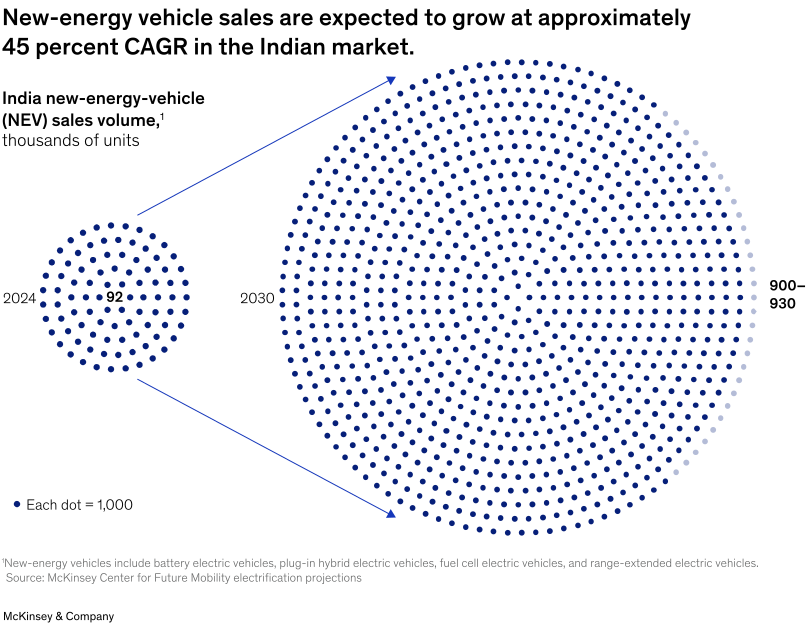
Image description.
A dot chart visualizes the projected growth in India’s new energy vehicle (NEV) sales volume, comparing 2024 with 2030. On the left, a smaller dotted circle represents the 2024 sales volume at 92,000 units. To the right, a much larger circle composed of significantly more dots illustrates the projected 2030 sales volume, estimated between 900,000 and 930,000 units. The large gap in scale between the circles conveys the rapid expansion expected, with the annotation above highlighting an approximate compound annual growth rate (CAGR) of 45 percent over this period. An explanatory footnote clarifies that NEVs include battery electric vehicles, plug-in hybrid electric vehicles, fuel cell electric vehicles, and range-extended electric vehicles.
This image description was completed with the assistance of Writer, a gen AI tool.
Source: McKInsey Center of Future Mobility electrification projections
End of image description.
To read the article, see “Shaping the future of India’s auto component industry amid global trade shifts,” November 12, 2025.