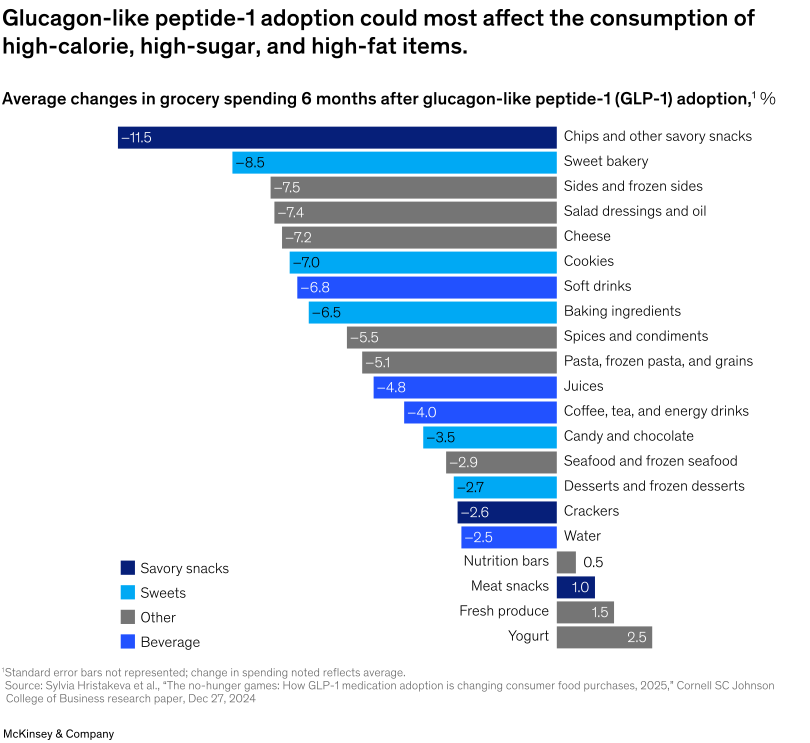
The past few years have been a stress test for food and beverage (F&B) companies. Every day, consumers have been making small but consequential choices that are slowly eroding the growth model that built modern F&B giants. Taste, price, and quality remain the factors consumers prioritize most when making a purchase. Healthiness, however, is the fastest-rising consideration. Early data show that active users of glucagon-like peptide-1 (GLP-1) drugs are cutting back in categories such as snacks and soft drinks. GLP-1 adoption could materially alter what people buy, how much they eat, and what they prioritize, say McKinsey’s Duncan Miller, Frank Sänger, Jessica Moulton, Jordan Bar Am, Konstantin Habernoll, and René Schmutzler.
Image description:
A horizontal bar chart displays the average changes in grocery spending 6 months after consumers’ adoption of GLP-1 medications. The largest declines are in chips and other savory snacks (–11.5%), sweet bakery items (–8.5%), sides and frozen sides (–7.5%), salad dressings and oil (–7.4%), cheese (–7.2%), cookies (–7.0%), soft drinks (–6.8%), and baking ingredients (–6.5%). Additional declines include spices and condiments (–5.5%); pasta, frozen pasta, and grains (–5.1%); juices (–4.8%); coffee, tea, and energy drinks (–4.0%); candy and chocolate (–3.5%); seafood and frozen seafood (–2.9%); desserts and frozen desserts (–2.7%); crackers (–2.6%); and water (–2.5%). Small increases are shown for nutrition bars (0.5%), meat snacks (1.0%), fresh produce (1.5%), and yogurt (2.5%).
Note: This image description was completed with the assistance of Writer, a gen AI tool.
Source: Sylvia Hristakeva et al., “The no-hunger games: How GLP-1 medication adoption is changing consumer food purchases, 2025,” Cornell SC Johnson College of Business research paper, Dec 27, 2024.
End of image description.