Despite ongoing tariff and trade restrictions, global trade agreements have continued to accumulate, with one-on-one deals growing faster since 2000 than multilateral agreements. McKinsey’s Cindy Levy, Matt Watters, Sarah Zaidi, Shubham Singhal, and coauthors find that overall regional trade agreements increased fivefold from 2000 to May 2025. Bilateral trade agreements have been growing three percentage points per year faster since 2000, at 7 percent annually. As bilateral and regional trade agreements continue to evolve, businesses may find opportunities to access new markets beyond those covered by global trade regimes.
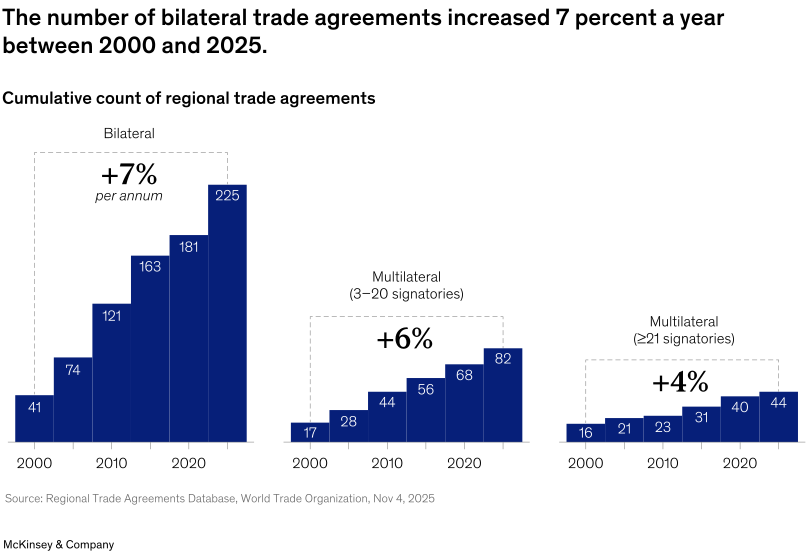
Image description:
A set of 3 stepped bar charts illustrates the cumulative count of regional trade agreements—divided into bilateral, multilateral with 3–20 signatories, and multilateral with 21 or more signatories—from 2000 to 2025. The leftmost chart shows that bilateral agreements had the fastest growth, from 41 in 2000 to 225 in 2025, representing an average annual increase of 7%, with notable step-ups in each decade (74 in 2005, 121 in 2010, 163 in 2015, and 181 in 2020). The middle chart tracks multilateral agreements with 3–20 signatories, increasing from 17 in 2000 to 82 by 2025, growing at an average rate of 6% annually (with intermediate values of 28 in 2005, 44 in 2010, 56 in 2015, and 68 in 2020). The rightmost chart represents the largest multilateral agreements, with 21 or more signatories, growing more modestly from 16 agreements in 2000 to 44 in 2025—an average annual growth of 4% and showing increments at each 5-year interval (21 in 2005, 23 in 2010, 31 in 2015, and 40 in 2020).
Note: This image description was completed with the assistance of Writer, a gen AI tool.
Source: Regional Trade Agreements Database, World Trade Organization, November 4, 2025.
End of image description.
To read the article, see “Beyond the headlines: How trade agreements are reshaping business,” December 10, 2025.