In this edition of Author Talks, McKinsey Global Publishing’s Emily Adeyanju chats with Therese Huston about Sharp: 14 Simple Ways to Improve Your Life with Brain Science (Mayo Clinic Press, April 2025). Huston shares her research on strategies to improve concentration, performance, and productivity at work and in life. By dispelling myths and sharing the neuroscience behind the research, Huston offers practical and actionable tips for better mental and emotional well-being at any age and stage. An edited version of the conversation follows.
Is age the biggest predictor of cognitive decline?
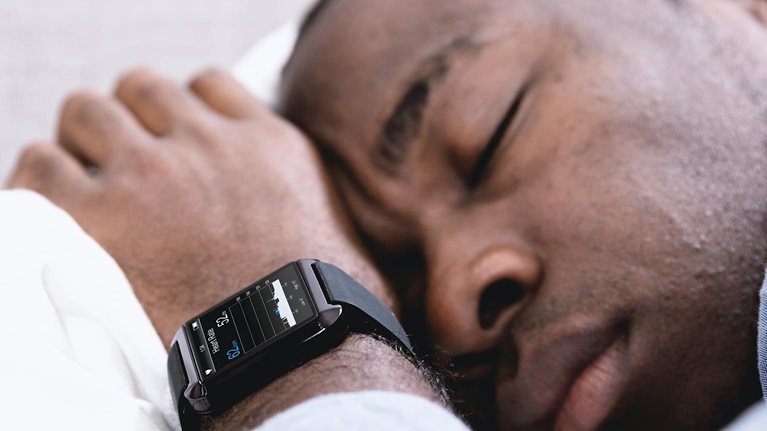
It’s easy to think that age is the biggest influence on distraction and cognitive decline, but it’s not. Sleep quality is likely the number-one issue that affects distraction, ability to focus, and cognitive decline.
If you’re not sleeping, you will be distracted at any age, and over time, you will experience cumulative cognitive decline. Specific issues affect either focus or cognitive decline.
Focus
You will feel more focused in relation to tasks you’re interested in and motivated to complete, rather than things you don’t care about. Multitasking reduces your ability to focus, so it’s best to avoid doing so whenever possible. Since people who multitask a lot find it harder to delve deeply into a project, single-tasking is key.
Cognitive decline
In addition to sleep quality, consider two other significant issues: physical activity and diet.
If you’re physically active at 60, you can have a sharper brain than if you’re inactive at 40. Likewise, diet is key. People who follow a Mediterranean diet often have much sharper mental abilities than someone who has a traditional Western diet. Consider ways to incorporate olive oil in your life, perhaps more fish, and green tea, which offers a tremendous benefit to your brain. Think about exercising, getting better sleep, and single-tasking.
It’s easy to think that age is the biggest influence on distraction and cognitive decline, but it’s not. Sleep quality is likely the number-one issue that affects distraction, ability to focus, and cognitive decline.
Is it a myth that coffee consumption can aid focus?
Actually it’s not. The caffeine in coffee improves focus. Decaf coffee won’t really help you focus, unfortunately. But caffeine can help you focus since it blocks a neurotransmitter called adenosine.
Adenosine makes you drowsy. Since caffeine blocks adenosine, it can give you a feeling of alertness. The downside to caffeine is that it can make you feel jittery or anxious. Also, you may experience a crash once the caffeine wears off. The adenosine can rush into your receptors, and suddenly you feel very tired, especially if you didn’t sleep well the night before.
Actually, tea is even better than coffee. In addition to caffeine, regular tea contains an amino acid called L-theanine. L-theanine combined with caffeine will actually give you better focus, a calm focus. L-theanine affects the brain, particularly the default mode network, which allows you to have calm focus. That focus is especially important for creative tasks or anything where you need concentration all day.
The good news is that all types of tea contain L-theanine in different amounts, so there are a variety of options: black tea, green or white tea, or oolong. And if you don’t enjoy tea, you can consume L-theanine as a supplement. Aim for a supplement that contains roughly 60 to 100 milligrams of L-theanine. Being a tea drinker has so many different benefits, including a much-needed calm focus. Plus, the L-theanine prevents the adenosine crash that comes after coffee consumption. So coffee is good, but tea is better.
What is BDNF, and why is it so integral to memory and to overall health?
BDNF stands for brain-derived neurotrophic factor. BDNF is like Miracle-Gro for your brain. In the same way that Miracle-Gro helps plants sprout in your garden, BDNF helps connections sprout in your brain.
This is important for memory because if you have increased BDNF, you will be able to move things more easily from short-term memory to long-term memory. You’ll be able to acquire skills faster. This happens because you’re building more connections and can even grow new neurons in the hippocampus, a region of your brain that’s crucial for memory.
How do you get more BDNF? Your brain produces it. Research shows one of the best ways to stimulate BDNF production is through exercise and moderate physical activity. Examples include running, cycling, or taking an aerobics class.
How can one stave off memory loss?
All of us should be concerned about memory loss because certain parts of the brain shrink as we age. There is 5 percent shrinkage about every decade after the age 40. We start losing brain matter in our hippocampus, which is crucial for memory. But there are strategies to counter that. If you’re young, start doing aerobic exercise. You can actually add neurons that way. It is crucial to start when you’re young, because you can actually build up your brain so that you have more reserve. When decline starts, you will have plenty of neurons, so it’s OK that you lose some. But you can also gain some.
What if you’re an older adult who’s thinking, “Running won’t work for me. What are my other options?” A great strategy is to take a dance class. Research shows that when adults over the age of 60 take six months of dance class, it can also help rebuild neurons in the hippocampus. Dance provides a social and physical component. Taking dance lessons also engages memory, since you also have to remember the steps. So it’s a great trifecta.
Taking dance classes is key but again, so is drinking green tea. It’s an acquired taste, but there are so many chemicals in green tea that are beneficial. Research indicates that older adults who drink green tea have much better memory function than those who don’t. Incidentally, three cups seems to be the key for memory preservation. So you might need to build up your enjoyment of green tea.
All of us should be concerned about memory loss because certain parts of the brain shrink as we age. There is 5 percent shrinkage about every decade after the age 40.
During performance review season, how can one move from a fixed mindset to a growth mindset?
We all want a growth mindset, especially in review season, when it comes to either giving or receiving feedback. What’s a growth mindset, and what’s a fixed mindset? A fixed mindset is the belief that your abilities are set or that someone else’s abilities are set.
If you’re a manager, you might have a fixed mindset about one of the people who works on your team. A growth mindset is the belief that with effort, you can change. You can grow and learn how to do new things. We need to have a growth mindset when it comes to feedback, whether you’re a manager who’s giving feedback or the employee receiving feedback, because it really affects the experience.
When managers have a fixed mindset about their employees, employees may feel like they’ve been “written off.” Employees who have a fixed mindset about their own abilities won’t try as hard and are not as motivated. That makes it hard for them to receive feedback because they may think, “What’s the point? I can’t change.”
If you do have a fixed mindset, how do you move into a growth mindset? Research indicates learning that the brain can rewire itself and change with experience is crucial to developing a growth mindset. To do this, you can also practice a “saying-is-believing exercise.” Try to convince someone else of your ability to overcome a particular challenge. You can do this through posts on social media or via other methods.
A sample statement could be, “It’s hard to grow in terms of feedback that I received from my manager. But I’m working on it. Here are things you can do to be more open to feedback.” Even if it seems counterintuitive and you don’t believe it, by posting similar affirmations, you’ll increase the chances of moving toward a growth mindset. The idea is it will change your own mind.
Research indicates learning that the brain can rewire itself and change with experience is crucial to developing a growth mindset.
Why would a negative tendency such as bias stimulate the reward centers of the brain?
When we deal with bias, we’re either leaning toward something or leaning away from something, and perhaps both. For example, perhaps you have a soft drink bias toward Coke versus Pepsi. That’s pretty harmless.
Yet bias toward or away from people can be very problematic. We tend to think that when people have a bias, it’s because they have a negative belief about a group, and so they’re leaning away from that group. Yet research actually indicates something different. When we have a bias, especially at work, we are not so much leaning away from a group we don’t like or have a negative belief about that group as we are showing “in-group favoritism.” We’re really leaning toward the people who are like us, someone who’s the same age, race, gender, or who is an alumnus of our school. These would be areas where you’d show in-group favoritism.
Neuroscientists find that when we help someone who’s part of our in-group, an area of the brain called the ventral striatum lights up. That area is associated with feeling rewarded. So when you help someone who looks like you or went to the same college that you did, you feel immediately rewarded, whereas when you help someone who’s part of your out-group, those reward centers aren’t activated.
This means you have to fight that automatic bias to help only those people who are like you, because it will feel like the right thing, as opposed to the ideal of treating everyone equally. The ventral striatum makes it tricky to turn off in-group bias, so you need conscious strategies to counter it.
First, identify who would be in your in-group versus who would be in your out-group. Do you tend to favor people of the same race, same age?
Develop a strategy to treat everyone equally. For example, you’re a manager, there’s a big deadline coming up, and you anticipate requests for extensions. Think carefully about your policy for giving extensions so that you give them uniformly. You wouldn’t want to grant an extension to Emily because Emily is the same race and gender that you are, yet be less likely to give Juan one, because he is a different race and gender. Instead, you could say, “I will give everyone an extension who met the last deadline or turned things in early.” By developing that strategy, you guard against feeling good by helping the people who are like you.
Explain the power of both placebo and nocebo effects.
Placebo effects get a bad rap, but they are quite powerful. A placebo effect happens when you expect a good outcome, and you therefore receive one. A nocebo effect occurs when you have an expectation for a negative outcome. As a result, you achieve a negative outcome.
We often talk about placebo effects in terms of medicine: If you take a particular medication or receive acupuncture, and you feel better.
Increasingly, research indicates that part of what’s happening is that your body, your brain in particular, is anticipating a benefit, so you get one. Yet that doesn’t mean the benefit is not helpful. The benefit illustrates the power of your brain to improve your body’s response to events. It can reduce pain. There are placebo effects for conditions like irritable bowel syndrome or for children with autism, and more. So placebo effects are very powerful.
Nocebo effects are also very powerful, because when you anticipate that a drug will have a negative side effect, you’re more likely to experience that effect. Typically, when we fill a prescription, there’s a long list of complications. It’s better not to read all of those side effects before you take the medication, because it can actually increase the chance that you’ll experience one of them.
Does gender have an impact on how we respond to anxiety and stress?
Yes, gender can affect how the body responds to stress. Cortisol is a hormone that your adrenal glands produce in response to stress. In short bursts and for short duration, cortisol is wonderful. It provides more focus. It gives you the energy to get up and act.
Cortisol levels are problematic if they remain elevated for long periods of time. Elevated cortisol can create problems with inflammation. It interferes with sleep and will reduce your memory as well. So long-term cortisol is harmful. Men’s bodies respond better to stress in that they have a huge spike in cortisol just as a stressful event happens, but it resolves quickly.
Unfortunately, women’s bodies respond differently to stress. Women don’t have that initial spike as much as men do, and overall, cortisol stays in women’s systems longer. So they have a more damaging, elevated, prolonged response to cortisol.
Given women’s bodily response to stress, they need more stress reduction techniques. We see that in the workplace, where women experience more burnout and stress than men do.
With so many stressors out there, particularly the major ones, what can we do to prepare for them and to overcome them?
We all face big stressors in life. Something at work, like a big presentation, or something at home, like a parent who’s having health problems, could be very stressful for you.
How can we prepare or respond to these stressors? Physical activity—exercise—can help. Often, when we’re very stressed, we feel we don’t have time for exercise. Exercise is important because it helps your body cope with stress. It can help your body clear cortisol. Also, there’s another activity that’s really surprising: affectionate touch, especially right before a stressful event. If you have a presentation later in the day, get some affection that morning. Research actually indicates a 20-second hug from a partner or someone in your family will reduce cortisol levels later. The stressful event won’t be as hard on your body. And if you don’t have someone to hug in the mornings, self-affection also works. Try holding your shoulders and lightly rubbing for 20 seconds. Self-affection results in the same reduction in cortisol as a hug from someone else.
Physical activity and affection offer huge benefits, and meditation does, too. A ten-minute mindfulness meditation can be an incredibly helpful stress reliever.
What problem were you trying to solve by writing this book?
I wrote this book to solve the problem of wellness overwhelm. We live in a wonderful time when there is so much wellness advice available on podcasts, social media, and in books about what we should be doing to be healthier. Yet it could become a part-time job just figuring out what you can do to improve your mental abilities, stress—your life.
I wanted to reduce that sense of wellness overwhelm and to make the approach to wellness simple and actionable. I conducted a lot of research to determine the best strategies and to provide the brain science. I also wanted to make the process motivating. If you’re someone who’s always been intending to start but you’ve never gotten there, I want you to realize: “It is worth figuring out how to work this into my life.”

Visit Author Talks to see the full series.
Related Articles

Thriving workplaces: How employers can improve productivity and change lives