This interview is part of the Leading Asia series, which features in-depth conversations with some of the region’s most value-creating leaders on what it takes to realize bold ambitions and take them further.
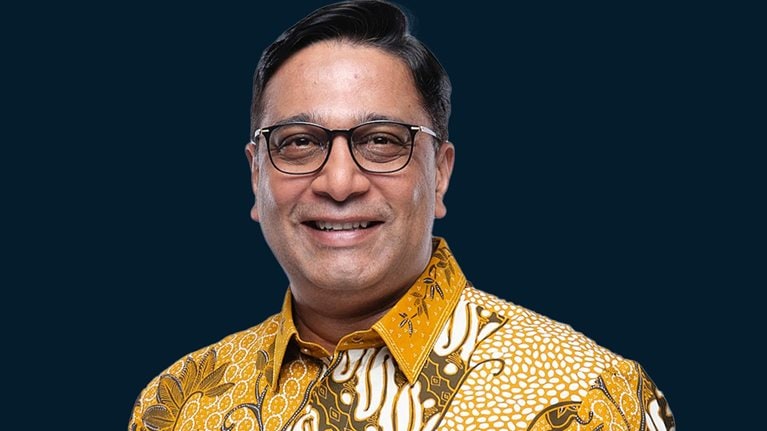
In this Leading Asia interview, Anand Mahindra talks to McKinsey’s Alok Kshirsagar and Gautam Kumra about his leadership style and the group’s federated model. Mahindra is a globally respected business leader, recognized for encouraging alternative thinking in a collaborative, value-driven business environment. He studied filmmaking at Harvard College in the early 1970s, followed by an MBA from Harvard Business School. This unique blend of creativity and business understanding led to a distinctive leadership style that is at once ambitious and empathetic, disruptive and philosophical.
An edited transcript of the conversation follows.
Gautam Kumra: Welcome, Anand. In this interview series, we focus on leaders behind some of Asia’s most transformative companies. Can you tell us how Mahindra’s purpose has evolved?
Anand Mahindra: In 1945, my grandfather and granduncle started a steel trading company with a friend. They called it Mahindra & Mohammed, and it was founded with a mission to contribute to India’s economic development. In the last decade, I’ve noticed many companies have become “purpose-driven,” trying to graft a purpose onto what they do. Purpose is not a marketing device; it’s a lens for decision-making. The moment it becomes performative, people see through it.
I thought I didn’t have time for vision during the first years of “hard yards” after I came to the company in 1991. But when I became vice chairman, people started asking: “What’s the way forward?” I started looking at mission, vision, and purpose, and to be honest I found the differentiation confusing. But then I realized I was lucky; I inherited a company that was created with a purpose. When I wanted to create a purpose statement in 1999, I didn’t need to look far. I found the very first advertisement from November 1945. It didn’t talk about products at all—it talked about principles and, albeit a business, how the company was “imbued with a national purpose and a new outlook.” It said the company was “a cooperative effort to secure for India that industrial development so indispensable to the full realization of her future dreams.” That felt like a Back-to-the-Future moment.
I once read a Havard Business Review article, which said that the core purpose of your company could be found by asking employees what they would miss if they left. Their answers would reflect your company’s true purpose—what motivates people to come to work, beyond money or survival. With Mahindra, I wanted to prove that Indians were second to none at building the best-quality products and services. That became our first core purpose. Our employees loved it and were galvanized.
“Together We Rise” was all about that challenger mentality and driving change in our global communities—for only when others rise, will we rise.
Alok Kshirsagar: By 2007, you had become a multinational enterprise. How did that affect your vision?
Anand Mahindra: We realized we had to rethink our purpose. We asked ourselves what the phrase “India is second to none” really meant. It was not about ultranationalism; it was about being a challenger. Our group manifesto of “Together We Rise” was all about that challenger mentality and driving change in our global communities—for only when others rise, will we rise. There was already a desire among our people to believe in something larger; all I did was harness that spirit and express it in a way that resonated across a very diverse group of businesses. When we launched Rise, there were skeptics who thought it was just another corporate campaign. But then we started seeing truck drivers and factory workers wearing Rise badges with pride. That’s when I knew it had become real; it wasn’t top-down anymore.
For me, Rise isn’t about Mahindra rising—it’s about enabling others to rise. Whether it’s a farmer whose tractor helps him double his yield or a woman who gets her first bank loan, that’s the measure of success. That one word, Rise, gives them a sense that they could be more. I think Rise helped everyone have an overarching banner, a sense of identity. It’s a purpose-driven articulation that has survived the test of time because it’s aspirational but grounded.

Leading Asia
Gautam Kumra: You’ve taken some notable risks in your career—how do you approach those high-stakes decisions?
Anand Mahindra: I wish I could tell you I have a risk-and-reward algorithm! Individual personalities matter, so all I can talk about is what determines my own attitude.
When I was young, I hated people saying that I was born with a silver spoon in my mouth. Maybe that's why I took a risk studying something so different. When I graduated summa cum laude from film school, I felt a sense of release: I had succeeded at something where my father couldn't help me. It didn't just give me confidence, it gave me the feeling that, if I went into business, I could still be creative. Film school taught me to see patterns—to tell stories and to empathize with characters. Leadership isn’t that different; you’re trying to understand motives, build a narrative, and inspire your cast. I don’t ever want to lose that side of me.
So, when evaluating risk at Mahindra, I was able to apply these lessons, insights, and creativity. For example, when we brought out the Mahindra Scorpio SUV in 2002, that was a huge risk. We had to spend a lot of money, and everybody thought I’d bet the company. What they didn’t know was that I’d talked to some large business families beforehand, making sure I had a hedge if we needed to back out and sell. I may take risks, but I’ll never bet the company. When we invested in electric vehicles over a decade ago, people thought we were crazy. But it wasn’t a financial bet—it was a bet on the future. Even if it didn’t pay off immediately, it pushed us to learn ahead of the curve.
There’s a difference between being bold and being reckless. I’ve always believed in asymmetric risk-taking—where your downside is limited but your upside is transformational. Our purpose is to help the country succeed, and going bankrupt won’t help anyone. You have to know what hill you’re willing to die on, and which ones you can simply walk around. That sense of proportion is what keeps you alive as a leader. We also had over 100,000 people in the group at that time, and I was brought up with a sense of responsibility to them.
Alok Kshirsagar: You’ve got a reputation for looking after your employees. What is your talent strategy?
Anand Mahindra: I think that if you can develop leaders internally, you're better off—and therefore, you need to create a system that has very strong interventions and training. Initially, this created a very strong trajectory for fast-tracking talented people, a process that Anish Shah [the group CEO and managing director] has fine-tuned.
There should also be no rigidity. You should be willing to push people off their fixed tracks and into early challenges. For example, when we decided to go into South Africa, everyone thought I was nuts when I chose Veejay Nakra, an executive assistant in his early 30s, to take the lead position. Today, we are the fastest growing auto company in South Africa. That would never have happened if we’d been rigid in our structures. Some of our best leaders didn’t start in the corner office. People stay when they grow. It’s not about perks or pay; it’s about whether they feel they’re becoming better versions of themselves here.
I also relied on creative interventions. Drew Faust, a former Harvard president, once said to me: “My job is to provoke and facilitate conversations.” I realized we could be more like a university, encouraging the free flow of ideas and allowing voices to be heard. So, we started the week-long Mahindra University executive development program at Harvard Business School every spring, to develop renaissance leaders and demonstrate our global sensibility. I insisted that half the classes should be about business and case studies and the other half about art, music, Roman history, and all kinds of fascinating subjects to make people think. Mahindra University is about creating polymaths, not specialists. The future belongs to people who can connect dots across disciplines.
Culture is built conversation by conversation.
Gautam Kumra: In your experience, what’s important when building leadership teams, and to what extent do you get involved in the process?
Anand Mahindra: When you're growing as fast as we were, you have to look outside for talent as well as internally. My favorite part of hiring was the 90-minute, unstructured conversation with anyone we were considering for a top position. I wasn’t testing them; I was looking for curiosity. When someone’s eyes lit up while talking about what they had learned, I knew they belonged here.
Culture is built conversation by conversation. You can’t outsource it or impose it—it’s what happens when people see how leaders behave when no one’s watching. That showed me how they handled uncharted territory: what was important to them, what they chose to discuss first, what unexpected questions rattled them. I wanted to find people who saw Mahindra as an opportunity to stretch themselves.
Gautam Kumra: What has been your approach to the process of transformation?
Anand Mahindra: Over time, I’ve developed a custom process of transformation, which I think of in four stages: ESEE. The first step is to Envision a clear future for the company. The second is to create an appropriate Structure aligned to that future; we wanted to be part of India's broad industrial and agricultural rehabilitation, operating across multiple areas, which is why we adopted a federation structure. Third, you Enable the structure by putting the right leaders in place and empowering them to act. Finally, you Energize the team. Transformation isn’t linear; it’s continual, and the leader’s role is to sustain momentum and belief across the system.
Alok Kshirsagar: What are some of the habits that have served you well, and how do you keep your energy levels up?
Anand Mahindra: What kept my personal energy up was curiosity, the fact that I did not want to give up the opportunity to be creative simply because I had moved from film to business. The transformation of a business is basically your script and the story you create. Once you give autonomy, you're also giving room for creativity. I would always encourage creativity in our war rooms and say, “What can we do differently, disruptively?” That was fun for me.
People often ask me what I want my legacy to be, and it’s simple: I don’t believe in personal legacies. The idea of one person’s statue in the town square feels outdated. Legacy should be institutional—the values, not the person. The epitaph on my tombstone should say, “He built a company in which people were the best that they could ever be.”