The outbreak of COVID-19 in China has irrevocably changed the domestic retail landscape. Nowhere is this more apparent than in the market for groceries, the essential foods and products that consumers need to sustain their daily lives. That definition might seem unnecessary, but it serves to recall the pivotal role China’s grocery stores played in keeping the country on its feet, or rather off its feet and safe at home, during the height of the COVID-19 crisis. Amid widespread closures of shops and workplaces, China’s grocery ecosystems emerged as beacons of resilience, their lights on and deliveries running through otherwise silent cities.
In the following article, we identify six trends underpinning the growth of grocery retail in China, explore how leading players adapted to the challenge of COVID-19, and offer a view on what companies can do to win the future of the market in China.
Six structural trends propelling China’s grocery retail market
Below, we pick out several important trends driving the growth and development of China’s grocery market, and where relevant explain how they have been affected by the outbreak of COVID-19:
1. Online grocery retail will grow significantly as demand is unlocked in lower tier cities
Online grocery retail has been growing at more than 30 percent annually in recent years, helping online penetration reach 10 percent of the market in 2019. More than half of Chinese consumers already buy packaged food online, while more than a third do so for fresh food. According to our COVID-19: China grocery consumer survey, conducted in March 2020, the pandemic has accelerated the overall frequency of online purchases by more than 70 percent, with the shift most pronounced in tier 3 and 4 cities, where demand from both first-timers and infrequent users has been further unlocked (Exhibit 1). These lower tier cities will continue to be a battleground for fresh grocery ecommerce
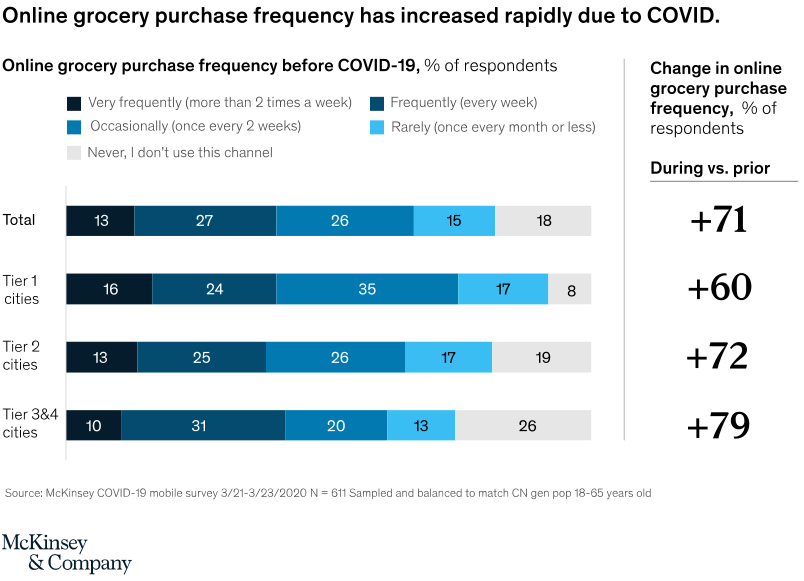
retailers, all of whom are aggressively expanding their coverage while working to resolve logistics and supply chain issues.
2. Consumers expect convenience and ultra-fast fulfillment for fresh food
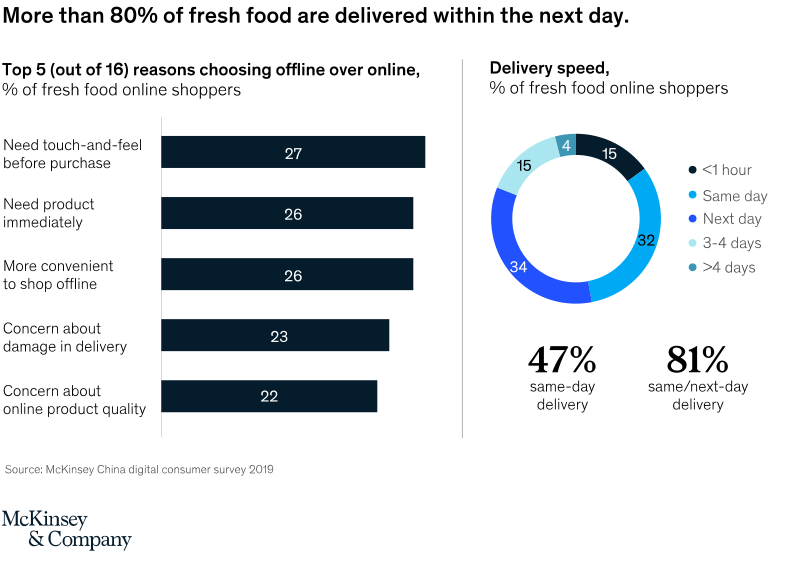
Four out of five Chinese consumers receive their online orders of fresh food the day after order at the latest, while almost half (47 percent) do so on the same day, and 15 percent enjoy delivery within an hour, according to our research (Exhibit 2).
The sophistication of China’s ecommerce infrastructure and digital savviness of Generation Z Chinese consumers, or those under the age of 25, are primary drivers of these patterns. According to the McKinsey 2019 Gen Z Asia Survey, 40 percent of Chinese Gen Z respondents rarely visit an offline supermarket, far fewer than older generations in China and their counterparts in other Asian countries. Instead, they source ingredients for home-cooked dinners from online grocery platforms offering ultra-fast delivery, while turning to general ecommerce retailers to stock up on non- perishables, and only visiting offline convenience stores (CVS) for last-minute or impulse purchases.
This convenience-seeking behavior has encouraged openings of neighborhood fresh food marts, which are expected to lift sales at such small formats by more than 20 percent annually. Unless hypermarkets take significant remedial action, they are set to lose market share as a result of shifting consumer habits and a sub-optimal category mix.
3. Omnichannel services are more widely accepted, but in-store digitization has yet to take hold
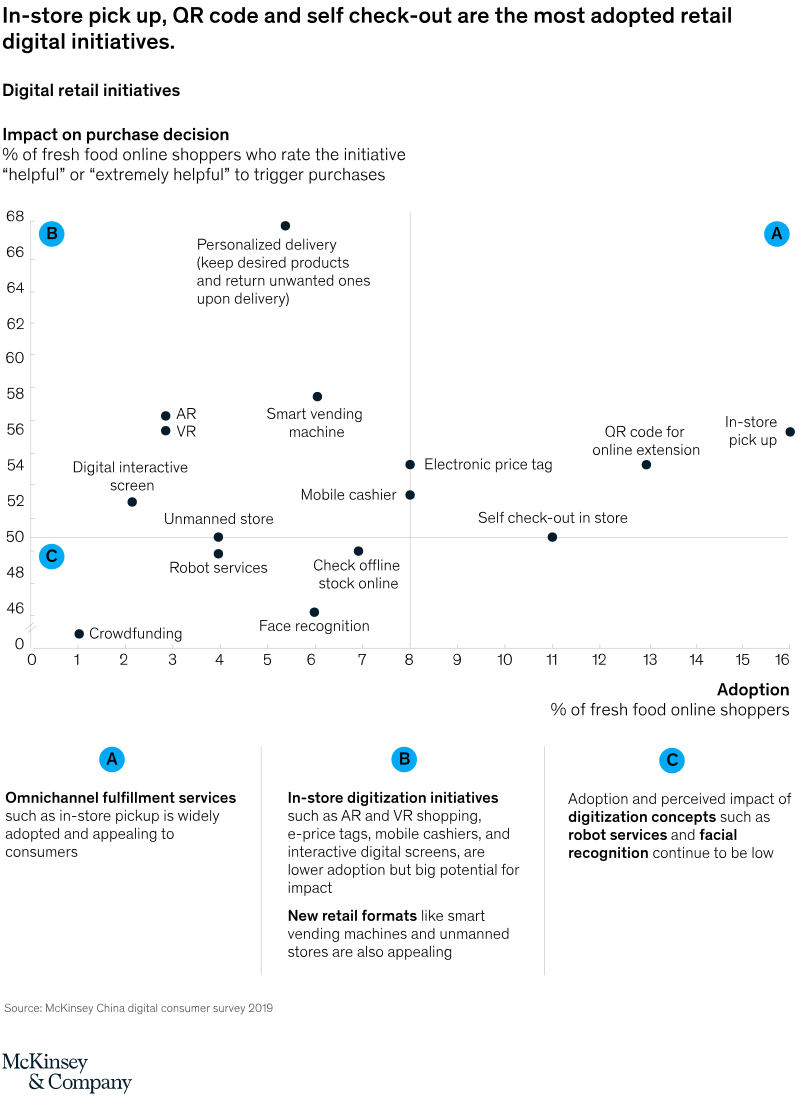
Omnichannel services such as in-store pick-up of online orders, QR code scanning of products to reveal more information, and self-check-out are the most widely adopted digital retail concepts in China, while robot services and facial recognition have yet to be widely commercialized (Exhibit 3).
In-store digitization initiatives including augmented and virtual reality have high potential, as do smart vending machines and electronic price-tagging, as they are strongly appreciated by online shoppers in the limited cases where they have been deployed, according to McKinsey’s China digital consumer trends report.
Meanwhile, community group-buying start-ups have rapidly formed a 29 billion RMB market. Leading players such as Xingsheng Selected leverage WeChat-hosted buying platforms to offer attractively-priced products, benefitting from efficient community referral models, and a scalable supply chain. These factors have enabled Xingsheng Selected to rapidly penetrate lower tier cities, and achieve close to break-even economics. Founded in 2017, the platform has already reached gross merchandizing volume of 10 billion RMB, serving 2.5 million monthly active users across 40,000 pickup points in China.
4. Consumers increasingly value quality, health, and safety for both fresh and packaged food
Chinese consumers most value high quality and safe ingredients in the fresh and packaged foods they buy, while COVID-19 has reinforced the importance of deploying easy methods for tracing food back to its origin. Retailers are meeting this expectation by directly purchasing food from farms, and improving supply chain technologies to reassure customers about the provenance of products.
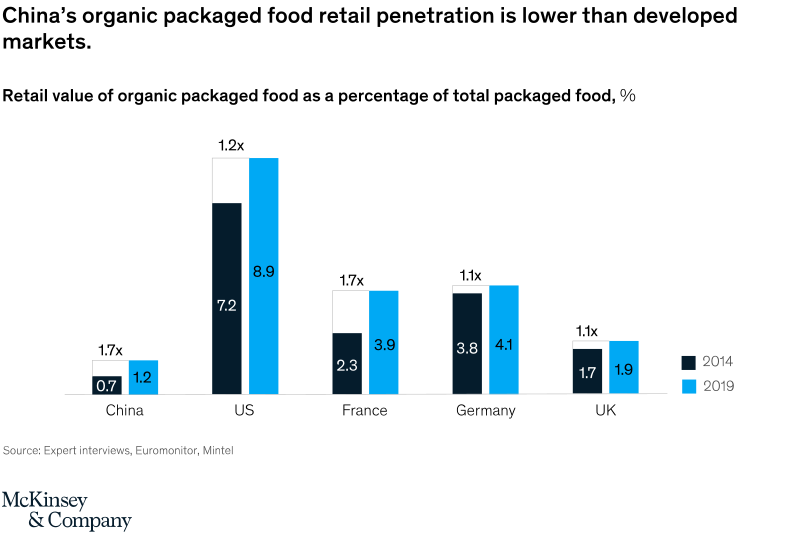
There is room for catch up growth in organic foods, in part because China still lags behind other developed markets in terms of the retail value of organic packaged food as a proportion of total packaged food. The COVID-19 crisis will also likely accelerate consumer appreciation of products they can confidently trace from farm to table.
In the meantime, China’s grocery market is notable for a considerable gap between claimed intent to purchase organic foods and actual spending: about a third of consumers say they prefer organic but only 1 percent actually purchase (Exhibit 4). For Chinese consumers, perceptions of quality and safety extend beyond the origin of food to include packaging and design; fruit wrapped in plastic being a prominent example.
5. The role of private labels is increasing, albeit from a low base
China traditionally has had a low proportion of private label products versus developed markets. However, leading grocery players with strong branding are spearheading an increase in private label penetration, especially Alibaba Group’s Freshippo, which is investing ambitiously to reshape the market. In order for the private label market to take-off, consumers must perceive private labels as “high quality, value for money” rather than as cut-price alternatives to established brands. Private labels can also help alleviate margin pressure due to intensifying competition.
6. Grocery retailers are revamping foodservice models
In order to attract footfall to offline stores, grocery retailers have introduced foodservice to their outlets, but only a few have succeeded. Freshippo helped reinvent the “Grocery + foodservice” model and attract diners to stores by offering high-end ingredients with high perceived value. Key success factors of foodservice models include strategic partnerships with food service brands, innovative menu concepts, and synergies between food service and fresh grocery operations to reduce fresh food shrinkage.
COVID-19 is accelerating these structural trends, particularly the shift to online ordering, and consumers’ growing preference for quality, healthy, and safe products. Grocery retailers should adapt by investing in online and omnichannel initiatives, particularly those that help reassure consumers about the integrity and health benefits of the products they buy.
Scanning the future: What will China’s grocery retail market look like in 2022?
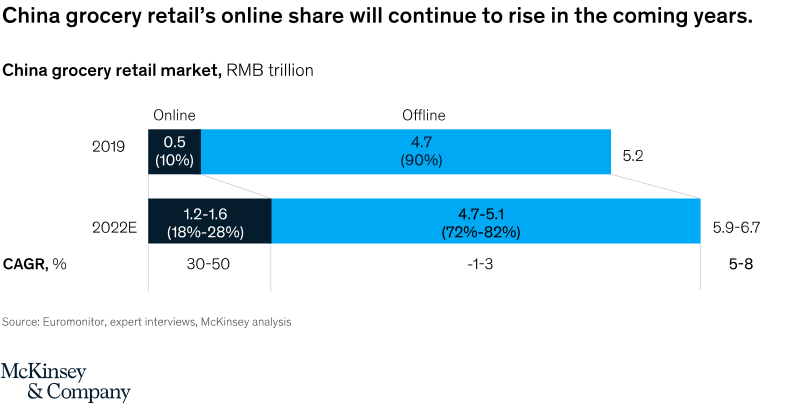
In order to assist grocery retail executives in understanding ongoing shifts in competitive dynamics, we developed a robust framework to forecast how China’s grocery market, and the different players involved, might evolve by 2022. Our proprietary model leveraged consensus forecasts for the economy, as well as estimates of the size of the overall grocery market, and of channel and category growth. Our core takeaway is that, consistent with most expectations, offline grocery retail will continue to account for the bulk of sales, even as online drives almost the entirety of market growth. We estimate that the total value of grocery retail sales will grow in the mid-single digits annually, in line with GDP growth, to reach up to 6.7 trillion RMB in 2022. During that time, online will likely increase its share of total grocery sales from about 10 percent to 18-28 percent, growing at a CAGR of 30-50 percent (Exhibit 5). This expansion will be driven by higher basket sizes due to wider and more premium online assortments, as well as continued investments in consumer acquisition and retention by online players.
We believe there is a potential 400 billion RMB opportunity for offline grocery retailers that can adjust their formats in line with shifting consumer behavior. We expect modern grocery retailers, which account for around 50 percent of the market, to claim the bulk of this potential market by rejuvenating their formats, with early experimentation involving smaller stores covering wider consumer segments, for example focusing primarily on packed or unpacked fresh foods, offering strong potential. New retail players, including omnichannel players, neighborhood food marts, and tech-enabled convenience stores, which currently account for less than 5 percent of the total market but are forecast to grow at 30 percent annually, could also capture share with innovative business models. Other offline formats such as wet markets, which account for 30 percent of the market, will lose share to modern offline and online channels.
Established ecommerce players will likely continue to lead online sales, and are forecast to double their market share to reach 10 percent in the next two to three years. We see Alibaba and JD.com driving growth by expanding in both fresh and non-fresh categories. Alibaba would fulfill Tmall orders via regional and chilled distribution centres, using third- party platforms like Ele.me for last-mile delivery, while JD.com would scale up its supply chain, and succeed in reassuring customers over the quality of its fresh produce.
New retail players, alongside fresh food ecommerce and community group purchase start-ups, are expected to capture the highest rate of market growth. Starting from a low base, we expect new retail players to grow at around 40 percent per year by expanding into lower tier cities with profitable smaller formats, once they achieve sustainable economics by improving productivity per store, as well as focusing on rational marketing spending and consolidation.
The extent to which offline retailers enjoy their fair share of online growth and become truly omnichannel largely depends on whether they successfully rethink digitization and form the right partnerships, as we detail below.
Deep dive on offline incumbents: Modern grocery retailers must rethink digitization and partnerships to compete
As consumers increasingly seek online and omnichannel fulfilment, a long tail of smaller players will likely struggle to adapt. Offline incumbents, especially the regional or provincial players, thrive because of their vertically integrated supply chains in fresh food, and dense store networks in comparison with national players. However, China’s grocery market landscape is so fragmented that the top 10 supermarket chains only account for 4 percent of the market. Small players with less than 100 stores will find it difficult to attract digital talent, access capital for online traffic acquisition, or manage digital transformation, leaving them reliant on third-party delivery platforms or social platforms to keep pace. For smaller players, accessing online traffic through third-party platforms has few downsides.
Large national offline incumbents face a strategic choice between digitizing through partnerships or doing it themselves. Aside from hosting their banners on delivery platforms as a quick and light way of going online, leading players have chosen to either deepen their partnerships with ecommerce giants, allowing them to develop their online and omnichannel offerings, or digitize their own businesses.
Deepening strategic partnerships with platform players: Walmart’s tie-up with JD.com and RT Mart’s alliance with Alibaba are salient examples of these win-win partnerships, which allow the offline partner to build out improved digital capabilities across customer relationship management (CRM) and last mile delivery, while leveraging their own procurement strength to improve merchandizing and supply chain management.
Creating self-built digitized operations: Meanwhile, several offline incumbents or tech- savvy convenience stores have evolved viable business models, centered around both in-store digital solutions and back-end digital infrastructure.
Wumart’s Dmall has potential to transform its forays in this space into tangible business impacts, while Yonghui is developing its own digitized operations to enable both offline and online channels. Several convenience stores could achieve rapid growth by perfecting their use of automation and artificial intelligence to optimize operational efficiency, allowing them to compete in economic terms with mature players. A lean procurement model, strong branding, and improved profitability might also allow players such as QianDama to leverage investor support to expand nationally under a franchise model.
Other imperatives for the offline incumbents to further strengthen their omnichannel position in the coming years include:
1. Leveraging third-party delivery platforms: This is a win-win for both parties. Offline retailers can take advantage of low-cost consumer traffic and mature last-mile delivery operations from delivery platform partners to unlock online business opportunities. Delivery platforms can diversify away from restaurant delivery while expanding their user base.
2. Strengthening fresh food: The key differentiating factor between incumbent fresh retailers and ecommerce challengers is the former’s core competencies in procurement, supply chain, and logistics. This advantage should enable them to aggressively expand and optimize fresh assortments based on consumer insights.
3. Overcoming internal organizational challenges: This is often an overlooked but important issue to address. Adjust existing organizational structures for growth and new capabilities, for example by establishing a dedicated unit for online business, while shifting mindsets and hiring new talent to drive successful transformation.
The majority of growth in the next few years will likely come from leading modern players who re-invent themselves in the digital era, ecommerce players, and new retail challengers. The profit pool will shift from incumbents to this set of players after accounting for cannibalization and improvement in online profitability.
Conclusion
While the post-COVID-19 outlook is still uncertain, the changes the virus has wrought on China’s grocery market are already in train. Consumers increasingly want convenience, whether online or in-store, combined with the option to buy healthy, fresh, and safe products. A battle for the future of the market is already underway, with incumbent offline retailers vying for relevance with the new entrants. Whatever comes next, China’s grocery market will continue to develop in dynamic and exciting ways as some of the world’s most innovative retail companies compete to deliver daily necessities in the world’s second-largest consumer market.