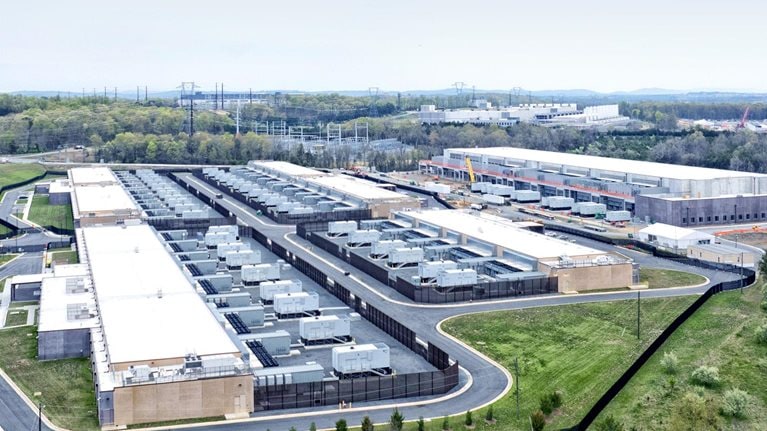
By 2030, we estimate that global data centers will need roughly $7 trillion in capital. This estimate includes $1.7 trillion to $1.9 trillion in construction costs, which is the second-largest cost segment after servers. Finance teams at hyperscalers, colocation operators, energy providers, private-capital sponsors, and other players in the data center value chain must make complex decisions under intense time pressure. This article explores how data center leaders have responded to these pressures by adopting approaches to enhance speed, efficiency, and cost control that can be instructive for leaders of other large capital projects.
Of approaches that accelerate time to market, one of the most compelling is generative scheduling. Generative scheduling is an AI-enabled optimization approach to automatically generate and evaluate millions of feasible project schedules based on the project scope, logic rules, constraints, and resource availability. It then identifies the schedules that best meet a chosen objective (including shortest duration, lowest cost, or most efficient resource use) and supports rapid what-if scenario testing to mitigate the impact of disruptions or explore acceleration options. The result is a fully resource-loaded schedule that planners can review and refine.
Another important approach, which helps drive down costs, is should-cost modeling. This is a bottom-up cost estimation model that defines what a project should cost based on its underlying components, inputs, and design assumptions. Unlike traditional budgeting approaches, which often rely on historical spend, supplier quotes, or what similar projects have cost at peer companies, it starts from first principles to build costs up from the ground.
Used together, these approaches—along with other strategies that reduce time to market—help finance teams manage capital more efficiently. According to our analysis, in the data center industry alone, trimming capital spending by even 10 percent could yield roughly $170 billion to $190 billion in potential savings by 2030, while speeding up the process could reduce time from breaking ground to ready for service by 10 to 15 percent.
The intensity of the current data center buildout is new, but the underlying challenges are familiar to any organization delivering large capital projects. This article explores how CFOs, finance teams, and other executives can improve ROI and capital productivity by using generative scheduling and other methods to accelerate delivery, and by applying should-cost modeling to strengthen financial oversight. While the examples focus on data center builds, the lessons apply to any finance leader guiding a large-scale capital project.
Five ways to accelerate time to market
Generative scheduling is a critical capability for accelerating time to market because it replaces fixed plans with continuously optimized execution paths. Beyond generative scheduling, data center leaders rely on complementary strategies to shorten delivery timelines and improve predictability. When applied in coordination with generative scheduling, these approaches enable finance teams to speed project delivery, anticipate schedule risks, evaluate different execution choices, protect cash flow, and make faster, more informed decisions.
Generative scheduling for comprehensive and optimal planning
Traditionally, capital project planning relies on static schedules built around assumed task sequences, durations, and resource availability, which makes it difficult to adapt quickly when conditions change and delays begin to cascade. Generative scheduling provides an alternative planning system that considers all resource and sequence options and continuously updates as conditions change. Given the scale and pace of current data center development, we expect generative scheduling to become standard practice across the data center industry over the next several years.
Building this capability requires more than deploying new software. Organizations must invest in skills and training and develop the ability to work with large, complex data sets. They must also translate engineering and construction inputs into simplified, decision-ready outputs that leaders can act on quickly. When embedded effectively, generative scheduling becomes a repeatable and scalable planning approach. It delivers value across projects of very different sizes, from small, few-megawatt facilities to multi-gigawatt campus developments.
One data center operator used generative scheduling while developing a 20-megawatt facility. The team set out to identify the steps on the critical construction path, test what-if scenarios to see how different choices would affect delivery, and design a construction sequence that could be repeated on future projects. Generative scheduling helped the operator reorganize the order of construction tasks. By resequencing how the core and shell were built and how the data halls were fitted out, the team shifted work out of the set of tasks that determined the project’s finish date. The change meant delays in those activities would no longer slow down the overall project, allowing the build to move about 10 percent faster than originally planned.
Generative scheduling provides high-quality, scenario-ready project data that CFOs and other finance professionals can translate into financial insights. Finance teams do not manipulate schedules directly but rather use generative scheduling outputs, including critical paths, task sequences, and alternative scenarios, to inform budgeting, capital allocation, and risk planning. For example, if a schedule change accelerates a particular task, the finance team can quantify the resulting impact on cash flow, material costs, or milestone payments. Conversely, if there’s a delay, finance leaders can determine additional financing needs, potential penalties, or lost revenue. Dashboards, scenario analyses, and reporting that highlight the cost and ROI implications of scheduling decisions make it easier to align project execution with financial objectives and overall capital efficiency.
By helping project managers and other stakeholders understand the trade-offs between speed, cost, and resource allocation, finance leaders can demonstrate the value of generative scheduling. This gives stakeholders a clear reason to use the capability consistently. Similar approaches have already been adopted in advanced manufacturing sectors such as semiconductor fabrication.
Four additional approaches for speed and efficiency
-
Early site selection and preparation: Early site selection, feasibility studies, and land banking ensure that schedules rest on realistic assumptions about economics, location, and power availability (crucial for data centers but also for other large capital projects).
Early investment in site readiness matters to finance teams because it can prevent costly delays later and reduce the risk of extended financing or missed revenue milestones. By evaluating the capital implications of early site actions, prioritizing funding for the highest-value locations, and tracking how early preparation mitigates project risk, finance teams help ensure that these initial investments deliver measurable financial benefit.
-
Standardizing designs and modular construction: Design standardization has become a core enabler of speed and capital efficiency in large-scale data center development. Leading owners deploy repeatable designs across portfolios that span core and shell, mechanical and electrical systems, process systems, and execution sequences. High levels of standardization reduce variation, shorten critical-path timelines, improve predictability, enable bulk equipment sourcing, and support consistent execution and commissioning. For finance teams, these benefits translate into more stable costs per megawatt, faster realization of scale economies, and greater confidence in schedule-driven cash-flow forecasts.
Modular and prefabricated construction extends these advantages by shifting work off-site and compressing on-site fit-out timelines, particularly for mechanical, electrical, and plumbing systems. Today, most projects rely on skidded and micromodular approaches rather than fully modular data halls, improving quality and reducing labor risk while accelerating delivery.
While standardization is critical to capital discipline, it is increasingly challenged by evolving requirements, such as higher densities and AI-driven workloads. Finance teams play a critical role in managing this tension by quantifying the cost and ROI impact of design changes, setting guardrails around deviations from standards, and ensuring that flexibility is applied selectively (namely, where it creates value and doesn’t erode capital discipline).
-
Forward buying and strategic procurement: Critical equipment such as generators, transformers, and switchgear can have lead times of 12 to 24 months or longer. Preordering and inventorying these supply-constrained components requires earlier deployment of capital, which may be warranted to offset bottlenecks and prevent cascading delays during construction.
Finance teams can evaluate the trade-offs between early capital deployment and risk mitigation, ensuring budgets reflect the timing of strategic purchases.
-
Innovating contracting models: Leading data center developers are rethinking how they contract with general contractors and key partners to reduce time to market. Rather than treating each project as a stand-alone transaction, they form long-term partnerships with a small set of preferred contractors, engage them early in the design process, and align incentives around schedule acceleration and execution reliability, sharing both risk and reward across the delivery team. These models often include multiproject agreements, early contractor involvement, and incentive structures tied to milestone completion or early delivery.
For finance teams, contracting innovation improves delivery speed by increasing predictability across portfolios and shifting behavior on-site. Clear incentives and shared accountability encourage faster decision-making, better sequencing, and earlier identification of execution risks. By structuring contracts that reward timely delivery and coordinated execution across multiple projects, finance leaders help ensure that capital translates into capacity on the ground as quickly as possible.
Optimizing spending with should-cost modeling
Controlling capital spending is as critical to CFOs and their teams as accelerating delivery. One of the most important metrics of financial discipline in the data center industry is cost per megawatt. Reducing this metric requires designing facilities that meet essential requirements without unnecessary complexity, managing equipment spend, and improving project execution.
Should-cost modeling is a structured method used to estimate what a project, product, or component will cost. It breaks down total costs (such as for mechanical, electrical, and plumbing; core and shell; and utilities) into their fundamental elements, including materials, labor, equipment, and overhead. This method can help CFOs and their teams identify opportunities to self-manage contracts, renegotiate supplier terms, and make informed trade-offs, ultimately reducing costs while maintaining quality and performance.
Finance professionals need to understand where costs originate, how assumptions affect budgets, and what levers they can influence. Their responsibilities include validating project inputs; integrating market intelligence such as labor rates, material prices, and inflation projections; and interpreting model outputs to inform decision-making. They monitor key cost drivers, identify potential overruns, and prioritize areas where savings are most achievable. Their engagement ensures not only accurate budgeting and predictable ROI but also stronger negotiating positions with suppliers.
Based on McKinsey’s work with data center operators, should-cost modeling shows savings potential of up to 20 percent in the best cases, though most projects can realistically expect to capture between 5 and 10 percent. For example, an international data center operator recently used should-cost modeling to develop a large-scale facility. By refining design specifications, renegotiating supplier terms, and validating spending through external benchmarks, the company identified a 7 to 12 percent reduction in total costs. Beyond the financial upside, the CFO gained a clearer understanding of the factors contributing to project costs. That insight improved the operator’s budgeting accuracy and strengthened its negotiating position with suppliers.
Data center finance teams are tasked with managing complexity with speed and precision. The approaches data center finance teams are utilizing to accelerate timelines and control costs can help executives across sectors run large capital programs more efficiently. Leaders who master these approaches will set the next standard for capital expenditure excellence.