Artificial intelligence has become the most pressing topic in boardrooms. Companies are learning how to quickly redesign workflows to include AI and convert technical progress into greater economic value.
In Central Europe, the stakes are particularly high. AI could help uncover €280 billion to €700 billion in economic value across the region, equivalent to 6 to 15 percent of the region’s total net turnover. The urgency is sharpened by two realities. First, adoption is widespread, but impact is not: 88 percent of companies globally have deployed AI in at least one function, but 94 percent have not achieved a significant impact on EBIT.1 A long list of pilots may signal that companies are making progress, but these small efforts rarely change end-to-end performance. Second, Central Europe trails Western Europe in enterprise AI adoption by 16 percent, and approximately 60 percent of Central Europe’s economy is tied to sectors where scaling AI is the most difficult.
Much of the value of AI will come from embedding AI into physical operations rather than layering it onto digital channels. In industries such as manufacturing, engineering and construction, consumer goods, and retail, AI can optimize production planning to improve factory utilization, refine input materials to reduce yield loss, and increase sales conversion rates through faster, more personalized interactions. Companies can gain advantages by changing how factories, projects, service centers, and commercial functions run, rather than simply using AI as an augmenting tool.
Central European leaders must contend with a big question: Will the region’s core industries be reshaped by the companies that operate them today or by competitors that moved faster? By being intentional about AI adoption, Central Europe can catch up to other parts of the world—and integrate these tools in a way that captures maximum value right away.
The compounding advantage of AI
AI advancements have outpaced traditional planning cycles. Between 2019 and 2022, leading large language models from OpenAI, Google, and Anthropic advanced at roughly two index points per year on the Artificial Analysis Intelligence Index, a composite benchmark spanning reasoning, knowledge, mathematics, and programming.2 From 2024 onward, gains have exceeded 20 points per year and keep accelerating—a tenfold increase since the introduction of ChatGPT in late 2022. Overall capability is now doubling about every 12 months (Exhibit 1).
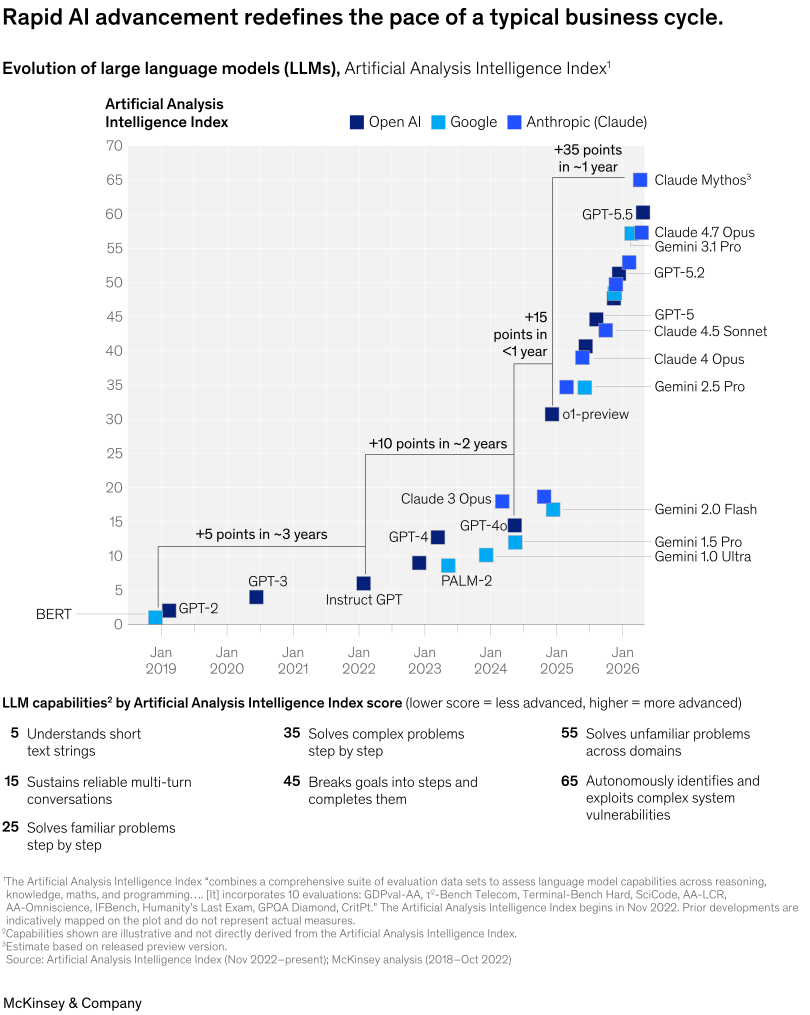
The pace at which AI has been advancing outstrips typical business cycles. Strategy, capital allocation, and operating model redesigns are usually planned over multiple years. When core technology improves materially within a single year, assumptions embedded in those plans can lose relevance quickly, and the competitive consequences compound.
Early movers in AI adoption learn where models fail and where they can be trusted, build proprietary data flows to train models, redesign decisions around human–machine interactions, and develop institutional routines to rapidly adjust workflows. Delaying adoption for the sake of optionality will only set companies back: They will learn more slowly than competitors while capability continues to improve, widening not only a technology gap but also capability and talent gaps. The goal now should be to build operating models that continuously capture AI value.
A shift in the nature of human work
As recently as 2019, AI was effective only at narrow, well-defined tasks, such as image classification, basic language processing, translation, and speech recognition. It fell short in multitask understanding, advanced mathematics, and cross-modal reasoning. Within six years, those boundaries had dissolved.3 Tasks that previously required specialized human expertise, such as routine analysis, document processing, and structured decision-making, are now within reach for AI systems, shrinking the set of activities in which human involvement is essential.
For white-collar functions—for example, finance, legal, procurement, and customer service—specialized AI agents will handle the bulk of structured work while people’s roles shift to handle orchestration, judgment, and exception management. In effect, a smaller number of people can produce substantially better outcomes. This pattern mirrors what happened in radiology around 2016, when computer vision became able to provide quality diagnostics. Smaller teams, supported by AI, could read more scans with greater accuracy and faster turnaround times than larger teams did without this technology. The same dynamic is emerging across knowledge industries: Leaner teams are achieving higher throughput with fewer errors.
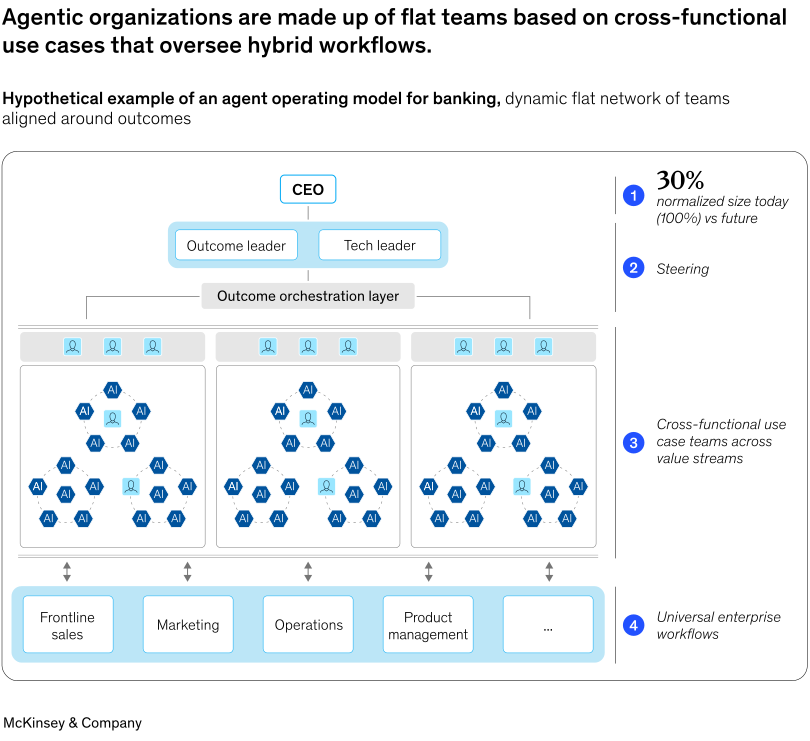
The next practical step is the agentic enterprise. Rather than operating as stand-alone assistants, AI systems are moving into human-supervised workflows as specialized agents. For example, in banking, groups of agents collaborate in squads. One squad handles document ingestion and insight extraction, while another generates credit memos drawing on financial, sector, income, collateral, and transaction analysis. Other squads manage document checking, customer contract creation, policy and compliance validation, internal orchestration, and client communications. Human credit managers and workflow specialists oversee the flow and intervene where judgment is required (Exhibit 2).
Adopting AI tools is not the same as changing how work gets done. In software development—one of the most digitally advanced fields—our experience shows that approximately 90 percent of developers now use AI coding tools, but only 20 to 30 percent of that total have changed how they work as a result. This means that overall productivity improvement has been less than 15 percent, signaling shortcomings in implementation rather than in the technology itself.
Moving from pilots to systematic integration
Most organizations deploy AI in fragmented ways that don’t support end-to-end economics. Most companies, 88 percent, have deployed AI in at least one function, but 94 percent have not achieved a full enterprise-scale deployment that has significant impact on EBIT.4 Leaders report early qualitative benefits in innovation, customer satisfaction, and competitive differentiation, but their income statements barely move (Exhibit 3).
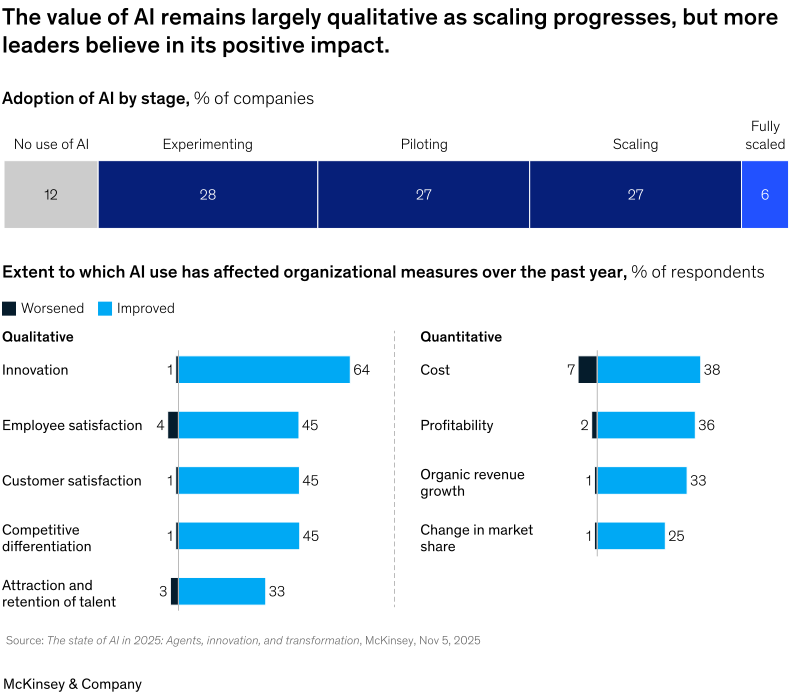
Closing the gap between deployment and profit requires two moves: setting the correct scope and rewiring the organization. Starting with AI adoption in domains often provides the correct scope. Business domains such as sales, customer operations, supply chain, engineering, or claims are large enough to matter financially, coherent enough to redesign end to end, and can complete a full AI integration within six months.
From there, rewiring ways of working is essential to uphold adoption. Transforming a domain means redesigning processes end to end, integrating agentic AI into core activities, and aligning incentives toward measurable outcomes. Leaders should set a clear vision for how the domain will operate with AI and commit to transforming it comprehensively. These conditions create tangible financial impact, and this approach is materially different from launching a portfolio of disconnected pilots.
A more than €280 billion prize—and the distinctive path to capture it
According to McKinsey analysis, AI could unlock more than €700 billion of value across the region (with more than €280 billion attributable to automation) by improving how work is done, including by streamlining processes, raising productivity, and accelerating the digitalization of core operations. Industries will find value from AI in two main ways. First, AI automates, augments, and robotizes existing work, which reduces the effort and cost required for current operations. In this way, industries could improve value by 6 to 9 percent. Second, AI enables better products, higher output, faster innovation, personalization, new services, and business-model upside beyond efficiency. These capabilities could improve value by 3 to 6 percent. Using AI in both ways is essential to reap the highest possible value. The largest potential gains are in advanced manufacturing, consumer goods and retail, and technology, with financial services, engineering and construction, energy, and logistics also contributing materially (Exhibit 4).
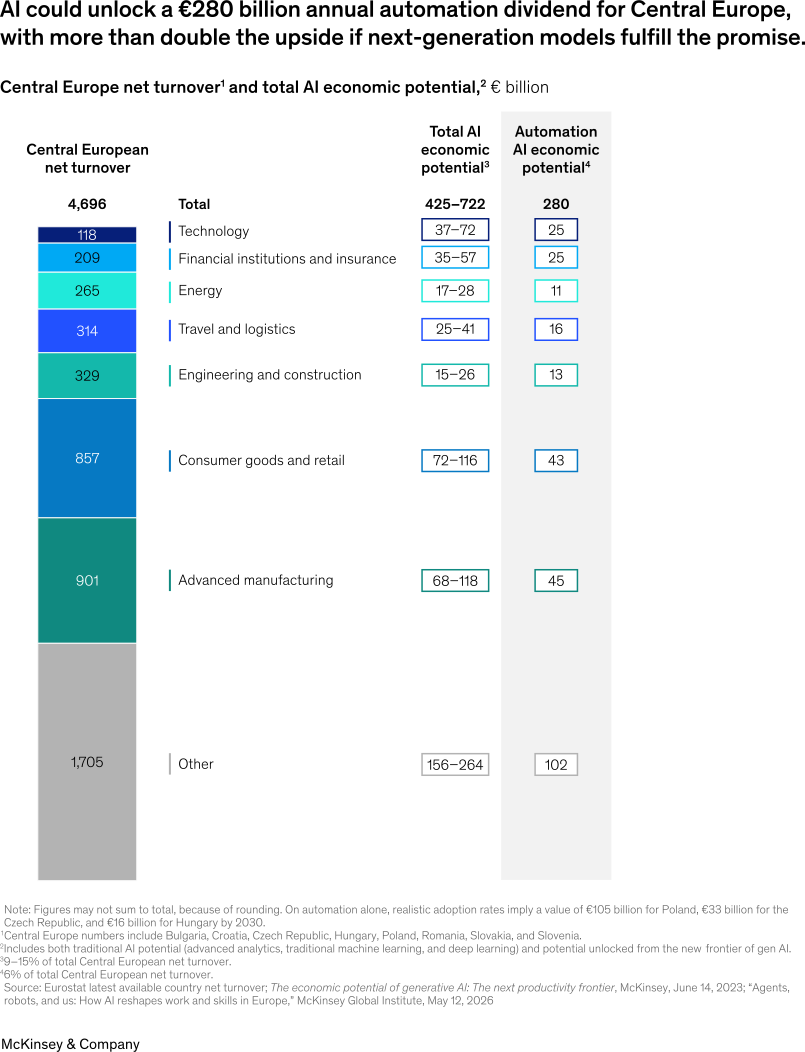
The potential value from AI does not sit in a narrow digital enclave; it is spread across the sectors that already shape Central Europe’s productive core. At the same time, sectors that are comparatively smaller in the region’s economic structure also exhibit high AI intensity. The technology sector, for example, accounts for roughly 10 percent of total AI value potential, indicating that gains will extend beyond the most dominant industries.
The industry determines how quickly it can reap value
The speed at which industries can scale AI varies widely. Digitally mature sectors, such as technology, media, and telecommunications, will move fastest, benefiting from richer data, higher margins, and greater standardization. Asset-heavy, operationally complex sectors, such as manufacturing, construction, and consumer goods, will scale more gradually.
Central Europe is disproportionately exposed to the latter. Approximately 60 percent of the region’s net turnover is in industries where just 17 to 18 percent of AI adoption is at the scaling phase. These are not marginal industries—they employ the most people, generate the most export revenue, and define the region’s competitive position (Exhibit 5).
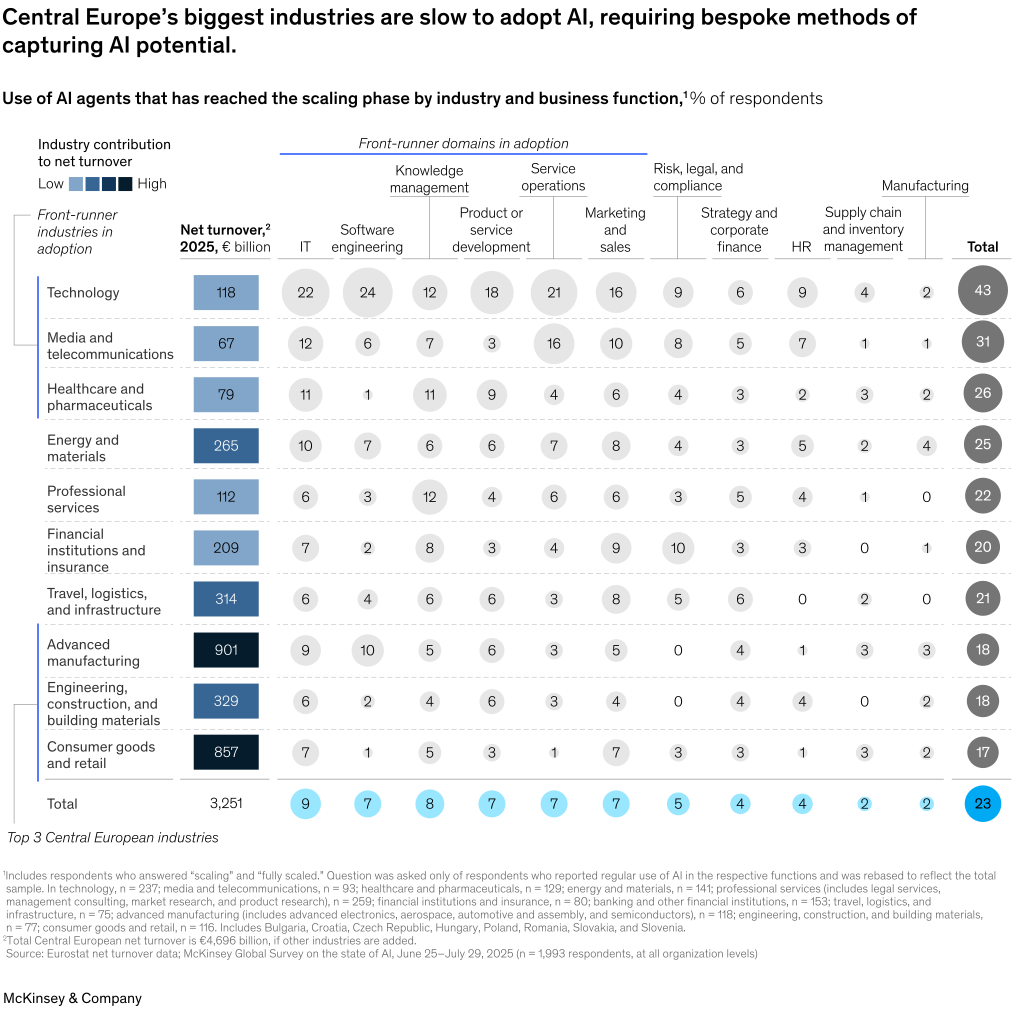
Closing this gap requires stronger digital foundations, clear prioritization of high-value use cases, and targeted capability building.
Where operational AI provides the most value
IT and knowledge management industries are leading adoption globally, with technology, media and telecommunications, and healthcare and pharmaceuticals scaling solutions fastest. These industries have digitally mature operations, rich structured data, and service-heavy revenue models that translate easily into agent-ready workflows. Technology industries are leaders in adoption, with media and telecommunications and healthcare following closely behind. These sectors built integrated data platforms and standardized processes long before generative AI gained traction, giving them a foundation to deploy vertical agents faster and cheaper and making these tools easier to govern.
Based on our experience, the domains in which AI can provide the most value are IT, knowledge management, marketing and sales, service operations, software engineering, and product development. These functions share structured workflows and have well-codified data, which provides visibility into the connection between agent action and productivity gain.
The most valuable use cases for these domains are agentic service desks in IT, deep-research agents in knowledge management, code generation in software engineering, content and campaign personalization in marketing, and end-to-end contact-center automation in service operations. Based on our experience with clients, software engineering alone can achieve cost reductions of 10 to 20 percent. Across these use cases, impact comes from embedding agents directly into the workflow, rather than layering them on top of traditional ways of working.
Maximizing the value from integrating AI into Central Europe’s dominant industries requires a distinct approach: It must meet industries where they are and ensure that operational AI addresses the specific complexities of manufacturing floors, construction sites, and retail supply chains.
Three moves that distinguish leaders
By now, we know AI works. Now the question is, “Where can it be scaled fastest?” Leaders follow three distinct steps: Identify the largest AI opportunities, build workflow-embedded solutions tied to measurable outcomes, and redesign the enterprise around scale.
Move one: Identify the largest AI opportunities
At the start of the AI journey, the hardest work is strategic. Leaders must take an enterprise-wide view to identify a small number of transformative bets—areas in which AI can redesign end-to-end processes, sharpen decision quality, and materially move the needle on growth, cost, risk, or customer experience. That discipline, applied early, is what separates organizations that scale AI successfully from organizations that simply accumulate pilots (see sidebar “Two case studies: Identifying opportunities”).
Most organizations lack the visibility to choose AI opportunities well. Ideas bubble up from technology enthusiasts, use cases go unevaluated, and leaders are left to compare opportunities without a shared fact base to guide the conversation. Companies routinely misjudge their own readiness, overestimating what their data infrastructure can support or underestimating the organizational lift required to operationalize AI at scale. Moreover, the relentless pace of AI development makes it difficult to distinguish what is possible today from what will be feasible in even two years.
Breaking through the noise requires strategic clarity at the top of the organization. That means giving senior leaders a grounded, example-rich view of what AI can realistically deliver. It means creating a common language across business, technology, and risk stakeholders so that use case prioritization is a shared act rather than a mandate from IT. And it means rigorously evaluating both the impact and the feasibility of each opportunity, so the organization emerges with a focused pipeline it can execute, rather than a wish list that stalls before it starts.
Move two: Build AI solutions
In the build phase, the hardest work is in execution. Leaders must deliver AI at scale with clear accountability for results, requiring a holistic delivery approach, not scattered pilots. AI use cases must be embedded into real workflows, tested against measurable outcomes, and iterated on rapidly enough to keep pace with technology advancements (see sidebar “Two case studies: Building solutions”).
In our experience, most organizations stall at this point. Promising ideas remain unrealized because no one owns the transition from concept to working product. Companies with departments that are too siloed or that have rigid hierarchical decision-making processes have a difficult time prioritizing use cases across business units. In these situations, leadership attention tends to drift to the next strategic priority before the first one delivers, and goals and aspirations diverge across stakeholders. For example, technology teams focus on technical elegance, business sponsors push for speed, and risk functions raise objections that no one is empowered to resolve. The wider the scope, the more complex the dependencies, and the harder it becomes to show tangible progress.
To build AI solutions effectively, organizations need to treat AI integrations as product development initiatives rather than project management. Leaders can start with quick wins and improve visibility around them. These projects should be focused enough to deliver quick returns and credible enough to build organizational conviction. Each prioritized idea needs a clear minimum viable product (MVP) definition and scope with explicit success metrics, so that progress is measurable from day one. Critically, rather than layering AI onto existing workflows, leaders must redesign organizational processes around the new tools and systems. In our experience, skipping this step is the single most common reason that technically sound solutions fail to deliver business impact. MVPs should be built inside real workflows using representative data and real users, and then tested and iterated on rapidly to validate impact, usability, and technical feasibility. In addition, governance must ensure clear accountability and offer a single source of truth, so that decisions are made once and accepted across committees.
Move three: Redesign the enterprise around scale
Early wins build conviction and show which strategies work, but they cannot scale automatically. The next stage is to transform AI from a set of local improvements to an integral part of how the business operates. Rewiring the organization around AI allows companies to achieve sustainable enterprise-wide impact, rather than plateauing after the first wave of use cases.
The barriers at this stage are structural, not technical. Many organizations attempt to deploy advanced models while keeping legacy governance structures, siloed data sets, fragmented technology stacks, and traditional role definitions. In these circumstances, AI improves individual tasks but fails to materially change performance. Business units pursue fragmented approaches with no coordinated scaling, technology architecture lacks the modularity and data foundations required for cross-domain reuse, and change management is chronically underinvested. As a result, solutions are launched but never truly adopted because roles, incentives, and daily routines remain unchanged.
Sustained value requires a coordinated rewiring across three stages, built on the six enablers of McKinsey’s Rewired framework: strategy, talent, operating model, technology, data, and change management.5 These six elements form an integrated system. Weakness in any one area will constrain the others. Organizations that rethink all six will be able to build the capacity needed to continually embed new AI advancements into their systems and translate these tools into sustainable performance gains (see sidebar “Two case studies: Redesigning the organization”).
Stage 1: Strategic alignment. AI cannot be a side project owned by IT departments alone. Senior leadership must define a sequenced, realistic strategy built around priority domains and backed by explicit value targets. Without clear ownership and accountability at the top, initiatives fragment, momentum dissipates, and the gap between ambition and profit impact widens.
Stage 2: Building the right internal capabilities. Organizations working toward an AI-focused redesign must also have the right internal capabilities across talent (the people who can design, deploy, and manage AI-enabled workflows), operating model (shorter development cycles that match the pace of AI iteration), technology (the architecture and vendor ecosystem that can support rapid experimentation, modular deployment, and scaling across domains), and data (foundations that are governed, high-quality, and enterprise-grade).
Stage 3: Change management and adoption. Scaling AI requires companies to redesign roles, build new capabilities, and actively manage risk and compliance. Structured capability-building programs, reinforcement mechanisms, and transformation governance—including KPI tracking, escalation mechanisms, and progressive handover to business owners—are essential to turn a transformation program into a permanent organizational capability.
The case for moving now
The market prices companies very differently depending on whether or not they adapt. Consider two trajectories. Duolingo, a profitable, well-managed business, lost nearly 80 percent of its market value after investors concluded that AI-native alternatives could replicate its offering faster and cheaper.6 Over the same period, Palantir, which had spent years building its operating model around AI-driven decision-making and data integration, saw its stock rise more than tenfold, with revenue growing 70 percent year over year.7 The difference between these two outcomes was whether AI was built into the operating model or bolted on too late.
For Central European enterprises in manufacturing, financial services, or retail, the risk is different. Rather than a sudden collapse, they could face a slow erosion of competitiveness that becomes apparent only when the gap is too wide to close.
Central Europe has navigated structural transitions before—for example, market liberalization, its countries’ integration into the European Union, and the shift to global supply chains. In each case, organizations that moved decisively captured disproportionate value. Those that waited paid a far greater price to catch up. The AI transition follows the same pattern but on a compressed timeline.
The conditions to act are better now than ever. AI solutions are more mature. Delivery models are proven. Local talent pools are deeper. The region has a substantial industrial base, a €700 billion potential, and a clear route to capture it. The window is open, but it will not stay open indefinitely.