The tech industry around the world is in transition, with AI reshaping both organizations and the very nature of tech work. For Europe, the implications extend beyond productivity and innovation and touch economic growth, competitiveness, and inclusion. McKinsey analysis estimates that sovereign AI could add more than €480 billion in annual value to Europe’s economy by 2030. Yet the region continues to trail the United States, which is defining the pace and scale of global AI innovation.1
For Europe, this transformation is a test not only of technological capability but of talent strategy. As AI redistributes value toward more advanced, hybrid roles, the region faces a pivotal choice: whether to allow existing gender gaps to widen or to see women as a critical lever in building the next generation of AI leadership.
Today, women could play a decisive role in strengthening Europe’s tech talent base, yet they face a triple threat from AI. First, they are underrepresented in tech: In our previous report on women in tech, we found that women accounted for 22 percent of employees in core tech roles.2 Today, according to McKinsey analysis, that share has fallen to 19 percent—an indication that efforts to address the persistent lack of representation have failed to make progress (see sidebar “About the research”). Second, many of the tech layoffs attributed to AI to date have been in roles disproportionately held by women (such as product and design), suggesting that without interventions, the share will drop even further. Finally, these developments come as the women who remain in tech are bumping up against a glass ceiling and contemplating leaving the industry altogether, with significant drops at the management and senior management levels (in software alone, the share of women falls 15 percentage points from the entry level to the C-level).
But AI also creates an opportunity to tap into underutilized segments of the workforce—including women. As the number of entry-level roles in tech declines, demand is emerging for mid- and senior-level leaders who combine technical depth with strategic judgment and ethical oversight to design, deploy, and govern AI systems responsibly. With targeted reskilling and deliberate advancement pathways, women could capture many of these adjacent and fast-growing roles.
How can Europe redesign its tech talent model for the AI era while expanding opportunity and competitiveness? Accelerating women into these future-critical roles is not a side agenda; it is one of Europe’s most tangible levers to build the leadership AI now demands and to strengthen innovation, governance, and competitiveness across the region. To that end, we outline three solutions to closing both the gender and capability gaps in tech.
Three dynamics widening Europe’s gender gap in tech and AI
As AI reshapes roles and value creation in tech, existing gender gaps could widen without deliberate action.
EU women are already underrepresented across tech—a trend that appears to be getting worse
In our previous report on women in tech,3 we highlighted two main drop-off points for women: from high school graduation to university enrollment, and from university graduation to jobs in tech roles. These points are still pivotal, and overall prospects for women in tech have not improved.
The share of women graduating from European tech degree programs has seen a small uptick since 2022, according to McKinsey analysis, rising to 33 percent of bachelor’s degrees and 39 percent of PhD graduates (Exhibit 1). However, the pipeline from graduate school to the tech workforce fell by 20 percentage points, with the share of women in tech roles falling to 19 percent. The gap continues to widen as women move up the ladder in the organization, with just 13 percent of women across management roles in tech and only 8 percent in senior management roles (such as director and C-level).
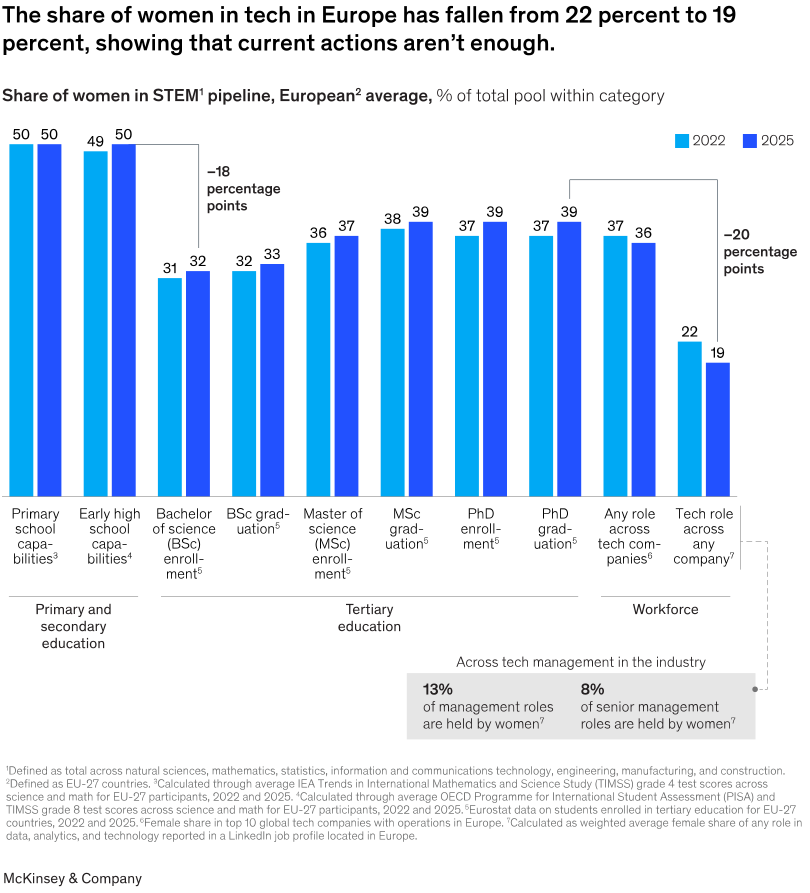
The widening gap is reflected in not only the data but also the lived experience of women in European tech. Many senior leaders we interviewed said that the environment has worsened over the past few years, with gender parity slipping down the priority list for most organizations. As one senior leader put it, “Diversity goals fade the moment the hiring photo is taken.”
Women are overrepresented in entry-level roles, which are shrinking in the age of AI
As AI has automated core tasks, demand for most entry-level tech roles has fallen. Our research shows that women in entry-level jobs in product development and software engineering saw the largest declines from 2024 to 2025, at 17 and 13 percent, respectively. AI, data, and analytics is the sole job family with rising entry-level demand (up 11 percent for men and 7 percent for women). However, men capture a larger share of this growth, limiting women’s participation in the one expanding early-career pathway. One senior leader we interviewed explained, “We used to tell women, ‘Come to tech—it’s full of opportunity.’ Now, I’m not sure that’s true.”
Gender equality doesn’t guarantee tech representation
Countries with a proven track record of championing women in society might expect to have success in achieving gender diversity in tech, but our analysis found that no such link exists. For example, the Nordics score highly on gender equality compared with all EU countries, with Finland (0.88) and Sweden (0.82) at the upper range (exhibit). But these countries still have low female representation in tech roles—36 percent and 23 percent, respectively.
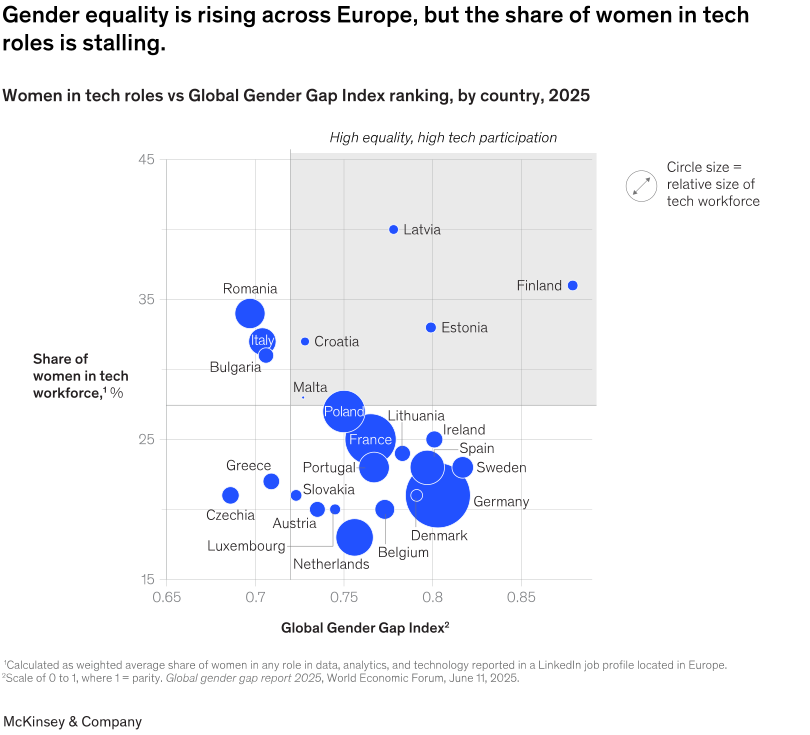
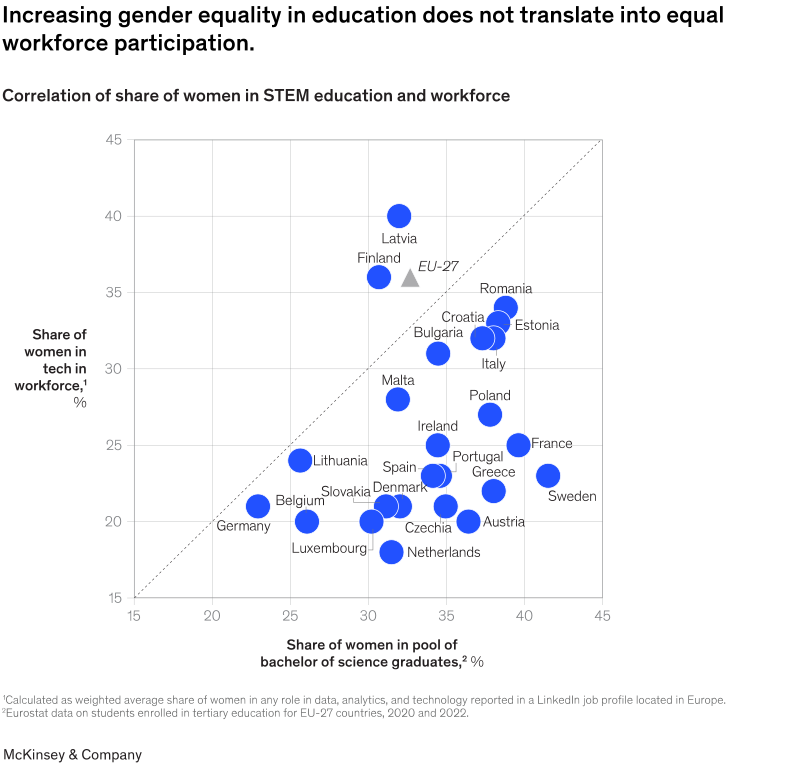
Education no longer offers a reliable path for women into the tech workforce, and STEM graduates are struggling to secure tech roles: Our analysis finds that overarching demand has declined by 2 to 3 percent across all tech families, further weakening the link between education and employment. Further, a look at women’s share of STEM graduation rates by country found no link to their representation in the workforce (Exhibit 2). This disconnect becomes even more stark when comparing 2022 and 2025 numbers. Women’s STEM graduation rates are rising, but their share in tech roles continues to fall. More broadly, gender equity is not correlated with higher numbers of women in tech (see sidebar “Gender equality doesn’t guarantee tech representation”).
The glass ceiling holds women back from senior roles
Across European tech, women’s representation declines sharply with seniority across all five major job families (Exhibit 3). While women account for meaningful numbers in some entry-level roles—they hold more than half of such roles in design and have strong representation in product management—their share drops at every subsequent career step. The steepest losses occur early: Between entry-level and first managerial roles, women’s representation falls by seven to 18 percentage points, depending on job family.
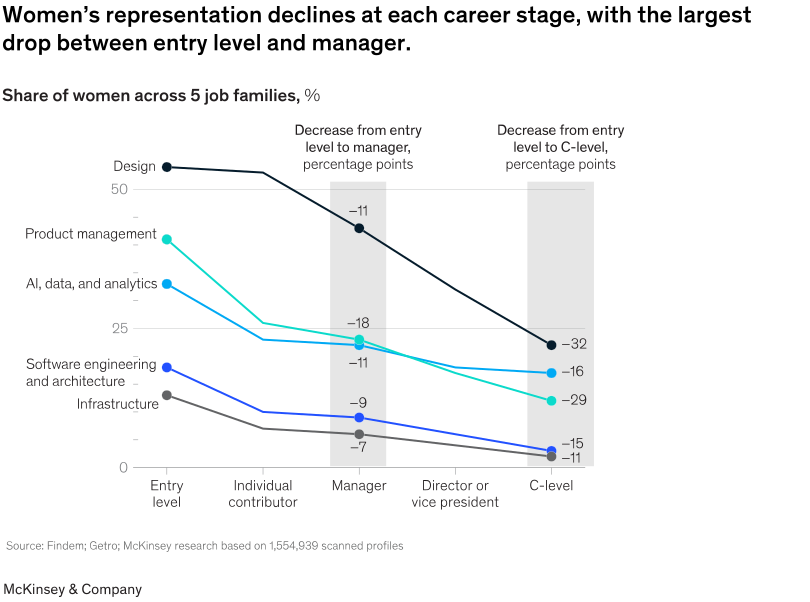
These early losses compound the gender gap at the leadership level. In product and design, women see their representation drop by 29 to 32 percentage points from entry level to C-suite. In technical tracks such as software engineering and infrastructure, women start with lower representation and experience cumulative declines of 11 to 15 percentage points by senior leadership. Even in AI, data, and analytics—the only job family showing entry-level growth—representation drops by 16 percentage points between entry and C-level, with a particularly sharp drop at midcareer leadership transitions.
In the AI era, this attrition is especially concerning. Leadership roles in data, product, and engineering increasingly shape how AI systems are built and governed. When women exit early from these pathways—and from the sector altogether—the result is a narrowing of perspectives at precisely the levels at which bias, accountability, and societal impact must be addressed.
A pattern that emerged clearly in our interviews is that the visible presence of female senior leaders materially improves retention and advancement. As one leader noted, “I joined a major DevSecOps [development, security, and operations] company because another woman encouraged me to apply; she later became my mentor.” Retaining and promoting women in senior roles is therefore not only an equity imperative but also a prerequisite for building inclusive, high-performing AI-driven organizations.
Structural causes of underrepresentation
Our analysis examined the underlying obstacles contributing to female underrepresentation in tech and found several patterns.
Women are overrepresented in low-influence tech roles most affected by AI
Female employees make up 39 percent of product management roles and 53 percent of design roles. At first glance, this looks like strong representation (Exhibit 4). But these positions are not typically common in the C-suite, with far fewer chief product or chief design officers compared with chief technology or chief information officers. In addition, product and design account for just 10 and 5 percent of the tech workforce, respectively. As a result, women have less influence over the direction, governance, and design of the broader AI and tech space.
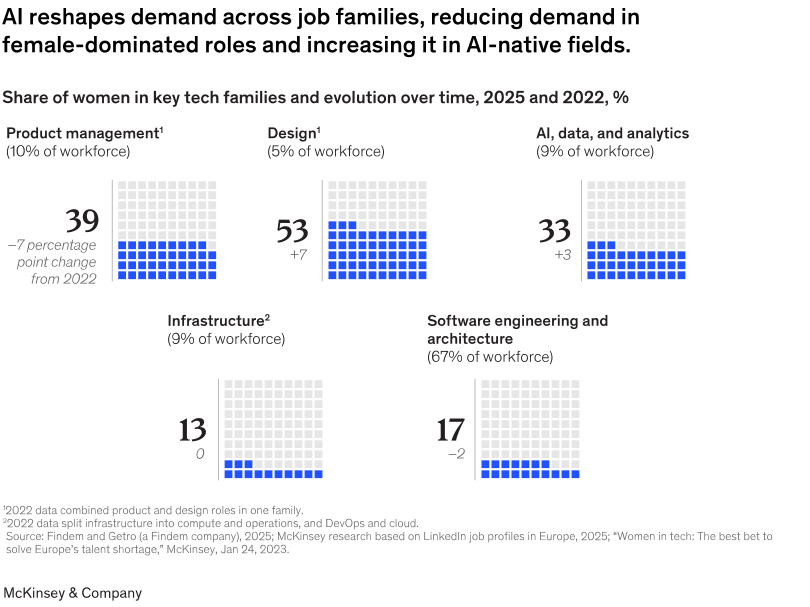
Product and design jobs are also among the most at risk in the age of AI as core tasks are increasingly automated and role expectations shift. From 2024 to 2025, overall demand declined for roles in product (2 percent) and design (3 percent), especially at the entry level (17 percent and 11 percent, respectively). Meanwhile, women remain significantly underrepresented in high-impact, fast-growing areas such as AI and data, infrastructure, and software engineering. As AI capabilities accelerate, these imbalances could reinforce existing gender disparities and concentrate women in roles with declining demand and limited strategic influence.
Corporate culture can hinder advancement for women in tech
Choosing to have children is often cited as a primary obstacle to career advancement for female professionals.4 However, McKinsey research suggests that microaggressions and workplace culture present even larger obstacles to women in tech. Our Women in Tech survey found that 49 percent of women experienced sexism or bias in the past year (though this number was down two percentage points from the previous year), and 82 percent said they must prove themselves more than men.5 As one of our interviewees said, “If I speak up too often, I’m labeled difficult. If I don’t, I’m invisible.” Subtle exclusionary cues (for example, jokes or team rituals) can further deter women from entering or staying in tech, even when qualified.
Women in tech frequently feel isolated, which causes additional stress.6 One interviewee noted, “You’re often the first and only woman in the room,” while another said, “Being the ‘only one’ means every word feels weighted.”
In addition, women frequently act as the “social glue” of teams, performing essential but unrewarded work culture tasks. Women receive 44 percent more requests to volunteer for tasks—such as resolving conflicts or coordinating events—that are not recognized in reviews.7 Compared with male counterparts, the average woman employee spends an additional 200 hours a year on tasks that don’t contribute to career advancement—more than a month’s worth of “office housework.”8 One female tech leader in a major DevSecOps company noted, “I mentor four people unofficially; it’s invisible work.”
Hybrid schedules and flexibility have a larger impact on women
Previous McKinsey research highlighted that professional women face particular challenges in balancing work and family. Company efforts to accommodate working mothers can have hidden trade-offs: Even in inclusive cultures, taking advantage of flexible work schedules can slow career advancement. In our interviews, women returning to work after maternity leave reported lost momentum and reduced client visibility. But the reverse can also hold true: Some interview subjects at companies with fully remote or hybrid working models—for everyone, not just new parents—cited flexible schedules as the biggest accelerator of career progression. “The system now all of a sudden rewards ability and not who joins the after-work drinks and doesn’t have to leave at 5 p.m. sharp to pick up the kids,” as one interviewee put it. Companies that encourage their entire workforce to adopt flexible schedules can see a positive impact across the board without penalizing women for taking advantage of such programs.
Tech companies are not prioritizing sponsorship
Some organizations have scaled back their diversity, equity, and inclusion (DEI) efforts. The leaders we interviewed expressed fatigue, because DEI efforts rely on individual goodwill rather than embedded accountability. But even before this shift, many companies that prioritized DEI initiatives reported that they did not achieve sustained, tangible results. Progress depends on allies, not systems: Many women have a mentor, but they are less likely to have a sponsor than men.9 This matters, because sponsored women are 200 percent more likely to see their ideas implemented.10
Closing Europe’s gender and talent gap in tech
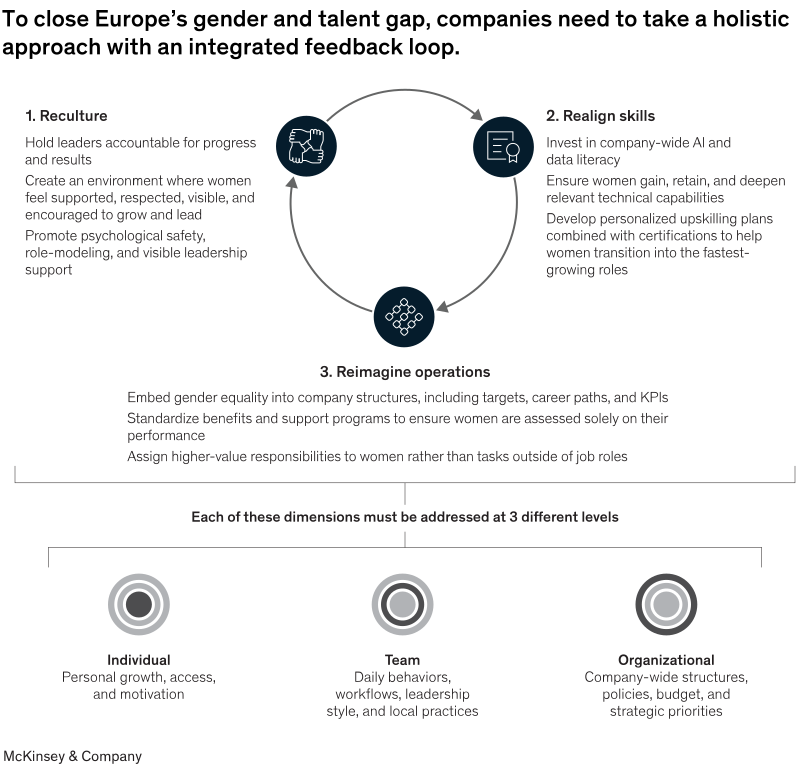
While the current situation appears bleak, the AI disruption reshaping every part of the tech industry offers a unique opportunity to accelerate female representation in European tech. Companies should be prepared to implement a holistic, enterprise-wide program that integrates culture, skills, and operating-model initiatives tailored to women’s existing capabilities as well as organizational needs and priorities. To ensure sustained impact, companies can embed a continuous feedback loop by linking actions to KPIs and cultural metrics for ongoing measurement, iteration, and refinement.
A focused set of actions across three areas could raise female representation, close critical skill mismatches, and strengthen both women’s long-term career prospects and Europe’s AI competitiveness. These actions encompass distinct levels—organizations, teams, and individual support systems—enabling companies to focus on areas where change has the greatest impact (Exhibit 5).
1. Reculture
Culture is the strongest predictor of whether women stay in tech and advance. Companies that implement a range of tangible actions across the organization could enhance the work environment for women.
On an organizational level, holding leaders accountable has proved effective. Approaches include providing more transparency into representation goals for women in technical and leadership roles, reviewing progress quarterly, and tying outcomes to executive KPIs. Redesigning performance systems to focus on impact could also help level the playing field. One female executive at a company with a fully remote workforce noted that performance reviews assessed employees on outputs rather than visibility or work style, an emphasis she felt contributed to her promotions.
A positive day-to-day experience can also have an impact. What happens in meetings often determines whether women stay. Structured rituals—round-robin input, rotating facilitation, written decisions—reduce bias and make contributions visible. Ensuring equitable access to project assignments is also essential, and the presence of female leaders can have an immediate impact. One female tech leader said, “Even at university, a professor’s gender makes a significant difference in who signs up for their courses. If a female STEM professor offers a course, usually 30 to 40 percent of students are women. For male professors, that number is about 10 percent.”
Women as a group do not lack ambition or confidence, but they frequently lack sponsors who actively open doors to high-visibility assignments that could accelerate their advancement. Pairing midcareer women with senior sponsors who commit to concrete advocacy actions and providing transparent career paths and role models materially improve retention and progression. One interview subject noted, “We have a female CTO who is extremely good: professional and capable. Role-modeling is so important.”
Culture is the structural backbone that determines whether women thrive in tech. Organizations that embed fairness, inclusive team practices, and sponsorship into how they operate—not as side programs but as core routines—create the conditions for women to succeed and for Europe to compete in an AI-driven future.
2. Realign skills
AI will transform the labor force in the coming years. McKinsey Global Institute analysis indicates that 17 percent of skills are likely to become largely AI-led, 72 percent of skills will support work done by a combination of people and AI, and 11 percent are likely to be for people-led work.11 The transition toward skills for AI-led work will lead to a shift in roles: In these areas, people will step back from hands-on work to focus on design, validation of results, and exception handling—making sure AI agents and robots run properly as they operate mostly on their own. These roles could open new entry routes for women.12
Europe has an opportunity to turn disruption into inclusion by investing in AI-driven reskilling as a new on-ramp for women in tech. One way to bring more women into tech could be to enable women to transition directly into the roles of the future, bypassing the shrinking entry-level layer. In tandem, companies could seek to build on AI-threatened tech roles that are currently held by women, such as in product and design. These roles could have adjacent career paths that enable women, with proper training, to assume leadership roles in the broader business, as all areas of the business become tech-centric. The pace of innovation and change is so rapid that consistent, timely training will be crucial. We are already seeing organizations mobilize. To implement an effective reskilling effort, companies can focus on a few actions.
First, company-wide AI and data literacy programs can equip all employees with baseline capabilities while preparing women for transitions into midlevel roles. Return-to-tech learning tracks—structured training in modern tools, cloud engineering, and AI practices—can support reentry for the substantial pool of women currently outside the workforce. Our analysis suggests that as many as 140,000 to 200,000 women with STEM backgrounds could return to tech through these programs.
Second, recurring hands-on sprints, knowledge-sharing sessions (for example, the latest AI developments and tools as well as the most useful prompts), and applied learning rituals give women technical practice in areas such as AI-assisted development, orchestration, or data governance. Pairing training programs and peer learning can further accelerate skill acquisition for women and promote the right mindset for reskilling. One female employee highlighted this mindset: “It’s OK to struggle. Tech is about trying, failing, and trying again.”
Last, core technical tasks, such as coding, testing, and integration in software development, will increasingly be handled by AI and automation. We can already see AI shaping what matters in tech. With AI reducing the time spent on coding, testing, and data prep, tech roles increasingly emphasize human-centric and judgment-based skills. Women score well on these capabilities, positioning them for roles in AI product ownership, human–AI design, explainability, and oversight—if they receive the proper training. Transparent, personalized upskilling plans combined with funded certifications in AI, cloud, and data could help women transition into the fastest-growing roles.
Taken together, these interventions create practical pathways for women to enter and grow into the tech roles of the future—shifting the focus from traditional STEM pipelines to AI-native career routes that match the needs of a rapidly changing industry.
3. Reimagine operations
Cultural intentions and skill-building efforts must be combined with operating models that support women’s advancement. A more inclusive operating model should seek to embed fairness, transparency, and accountability directly into how tech organizations run—alleviating friction points that disproportionately affect women.
To remove obstacles to career progression, companies could adjust benefits and support programs to ensure that employees are assessed based solely on their performance. Similarly, by enhancing parental leave and standardizing return-to-work frameworks for all employees—phased return, shared parental leave, and structured reentry plans—organizations can avoid penalizing women accessing these benefits. This consistency is essential, given that 42 percent of women who voluntarily leave the workforce cite care responsibilities as their reason for not returning.13 Paternity leave models are also important. As one tech executive noted, “True equality exists as soon as men take as much care time off as women.”
On the team level, transparent career pathways and reintegration road maps clarify expectations, reduce ambiguity, and help returning women reenter roles with real momentum. When team leaders intentionally assign higher-value responsibilities rather than tasks outside of job roles, the progression of women accelerates.
As previously noted, every midcareer woman should have a senior sponsor who can advocate for her regarding promotions, nominations, and stretch roles. This sponsorship is not optional—it is a core operating mechanism for career acceleration.
A redesigned operating model creates the scaffolding for sustained advancement. In companies that get this right, women would no longer depend on individual managers or informal networks to advance. Instead, career progression becomes the predictable output of transparent systems, fair policies, and leadership accountability. Embedding inclusion into how tech companies operate is not just about fairness. It unlocks talent, reduces attrition, and strengthens the leadership pipeline required for Europe to compete in an AI-driven future.
The existing approach to achieving more equitable representation in tech is clearly not working. Now is the time to recode. Companies that take a holistic approach to embedding gender-inclusive strategies and tangible actions at the team, individual, and organizational levels can address the AI talent shortage and the diversity gap simultaneously. Success could accelerate the advancement of women in tech roles and provide Europe with the momentum to keep pace with leading countries.