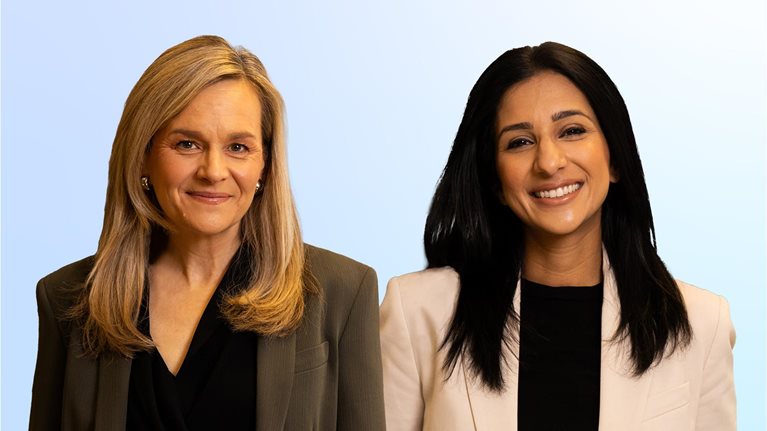
This is part of a series of interviews with leaders and participants of the Advancing Women Executives (AWE) Canada program. AWE Canada’s mission is to increase the number of women in CEO roles across the country and to maximize their impact.
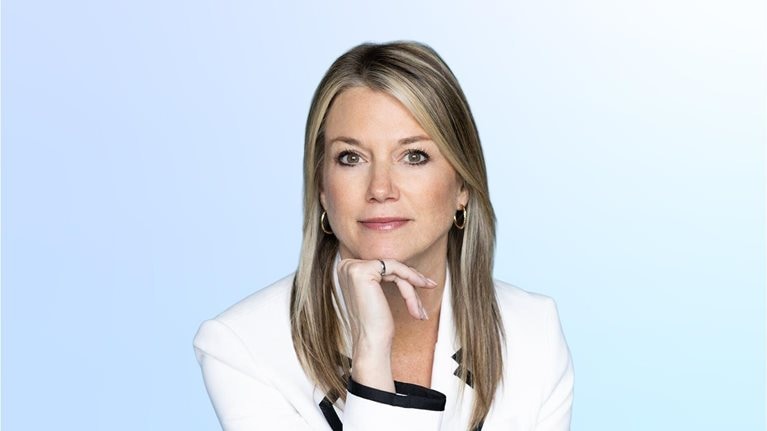
Over the course of a varied and successful career, Lorraine Mitchelmore has repeatedly demonstrated her ability to carve out space in traditionally male-dominated industries. Her more than 30 years in the international oil and gas industry included stints as both President and Canada Country Chair for Shell Canada and Executive Vice President (Americas Heavy Oil) for Royal Dutch Shell. She has also served as President and CEO of Enlighten Innovations, mentored many early-stage energy transition companies, and chaired the Resources of the Future Economic Strategy Table for the Canadian federal government.
However, it is her work with AWE—she joined the board in 2022—that she cites as the most rewarding thing she has ever done. She sat down with McKinsey Partner Johanne Lavoie to discuss her key career learnings, the importance of peer networks, and the potentially transformative impact of AWE for both individual participants and the country as a whole.
The below interview has been edited for length and clarity.
McKinsey: Why is it important to have women in executive roles?
Lorraine Mitchelmore: At the beginning of my journey, I had curiosity, which meant I immediately got broad exposure across roles and issues. That curiosity helped breed competence, confidence, and courage. But I also experienced a lot of frustration. It’s hugely important to be able to look up and see a leader that you admire. I didn’t always have that, but it was amazing when I did.
Part of the issue was a lack of leadership diversity. In today’s increasingly complex world, we need that diversity—both in the profile of our leaders and in leadership style—more than ever. I’m not just talking about the need for more female leaders, but of course that’s part of it. Women have always juggled a lot, which positions them well to lead within the current context.
AWE has a real role to play here. The network is growing, and we’re creating a community. It gives me real hope that we’re finally going to crack this nut and get the female leaders that this country needs and deserves.
McKinsey: What surprised you during your early involvement with AWE?
Lorraine Mitchelmore: I remember the very first meeting we had in AWE. I’ve been a part of so many women’s networks, and I wasn’t quite sure what this one was all about. It’s about trying to facilitate women finding themselves, finding their own voice, finding their own competency, and finding what they really want to do in life.
There are two sides, right? There’s the hard side, first of all, which is what McKinsey brings to the program: the training, the development, CEO excellence, the finance component, AI, and what it takes to be a leader. Then there is the softer side, where these women are further developed through this incredible sisterhood of women who are helping each other find their voice.
A problem with other leadership programs is that women often hold themselves back in these forums—they’re used to being in the minority in rooms full of leaders, and many may not feel comfortable being immediately assertive. But AWE takes the time to invest in its participants. The program runs for two years, which gives everyone time to find their voice and zoom in on what motivates and excites them.
McKinsey: What impact does AWE have on participants?
Lorraine Mitchelmore: Over the course of the program, the women executives learn a lot. There are hard and soft skills, of course, but there are also some deeper learnings, including realizing they really do belong in the roles to which they aspire. At some point, society or other forces convinced many women that they don’t belong in those roles or helped to build other inhibitions that now hold them back. AWE continues to be very successful at pinpointing and removing those self-limiting beliefs.
The benefits of this go beyond each individual participant. The presence of female leaders—and broader leadership diversity—is a vital element in continuing to elevate the best potential talent from around the country. If you can’t see yourself in the leaders who surround you, there’s a greater chance that you’re going to opt out. A promising woman once said to me that she didn’t want to be the type of CEO that she saw around her, so she wasn’t going to be a CEO. Solving that problem is a key aim of AWE. We need all ambitious would-be leaders, including younger women, to understand that they can and should aim to become the type of CEO that they would admire.
McKinsey: How important is having a peer network?
Lorraine Mitchelmore: Networks are absolutely critical right from day one. But they’re even more so as you become more senior, because it gets lonelier and lonelier and more complex. The days are up and down, and problems come at you from every different direction. With AWE, we’ve created a trusting network from day one, so when you have those days, you have a sounding board. I would have loved to have this earlier in my career, because I needed that sounding board. I needed that trusting network that you don’t usually have, especially if you’re a woman.
What I see happening in the program is women finding themselves, finding their voice, and finding their own gem inside themselves. Then the network grows, and that creates a movement. That gives me hope and excitement that we are finally going to elevate the talent. Because that’s what it’s all about: talent management and elevating talent that was previously left behind. It’s about getting the best talent in society. Seeing that is the best reward for me—because I wouldn’t still be an advisory member if we weren’t making progress.
We need different types of leaders and even better leaders. This program is starting to bring that out. And for me, for Canada, if we can contribute to that, we’ll have great leadership in this country.
McKinsey: Can you talk a bit about the importance of all individuals finding their authentic leadership style?
Lorraine Mitchelmore: Authenticity significantly increases an individual’s ability to build relationships and influence others, and it also makes these high-pressure jobs more sustainable in the long term. Showing up as our full self can make us feel vulnerable, but AWE is a great space in which to practice doing exactly that. There are network effects here too: If one person shows up as their true self, it can help others to do likewise.
Over the course of your career, someone is always giving you feedback. While I do agree that feedback is a gift, it can also leave the receiver with the sense that they need to be—or behave in a way that is—different. A difficult and very important skill is learning how to respond to feedback while sticking to the core of who you are. That’s something I’ve seen AWE cohorts make huge progress on collectively.
McKinsey: What advice would you give women on the path to be a CEO?
Lorraine Mitchelmore: My advice to those women is that they need to understand what it takes to be a CEO and whether they really want the role. It’s a job in which you can have a huge impact, but it’s also tough. Any individual—not just a woman—needs to figure out if the CEO role will be the one that best fits their skills and passions. If they decide that’s what they do want, they have to really go for it. They have to figure out what they need to know, experience, and demonstrate to get there—and then make that happen.