Then & Now: A century of retail transformation
Created to mark 100 years of McKinsey, Then and Now explores defining client impact through moments that matter—from early innovations that reshaped sectors to what that looks like today. We start with retail, where in the 1930s, Marshall Field’s navigated a marketplace in flux at a time of major scaling. Today, retail and consumer leaders face a different—but equally consequential—inflection point, as technology and AI reshape the industry once again.
Then: When intuition was no longer enough
Nearly a century ago, Marshall Field’s, which was acquired by Macy’s in 2005, stood at the height of American retail. Its reach extended from Chicago storefronts to wholesale networks and manufacturers across the country. The business was vertically integrated, commercially ambitious, and scaling at levels not seen before. Beneath the surface, Marshall Field’s was straining under a structural mismatch: a modern retail enterprise trying to run on managerial habits designed for a simpler age.
Decisions that had worked when the business was smaller—pricing negotiated in the field, merchandising driven by the judgment of powerful buyers, financial reports compiled after the fact—were no longer keeping pace with reality. Leaders sensed inefficiencies and inconsistencies, but they struggled to say precisely where value was being created, where it was leaking away, and who was accountable for what.
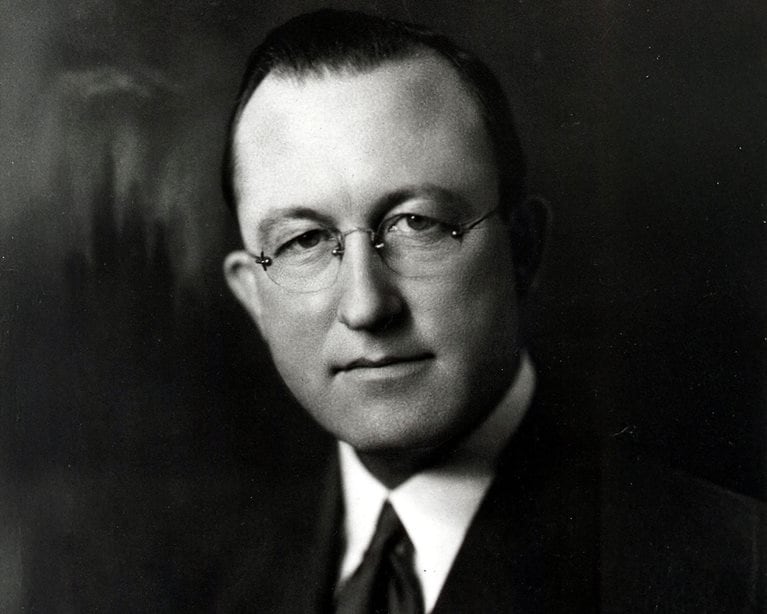
In 1935, James O. McKinsey and our firm were invited into this tension to find solutions. What he encountered was not a question of cost-cutting or incremental improvement, but something more fundamental and unsettling for its time: Could business management be systematized and deliberately designed, measured, and improved?
At a moment when leadership authority rested largely on experience, precedent, and personal judgment, this was a radical proposition.
James O. McKinsey left his firm behind and went to work for Marshall Field’s to implement this vision—an extraordinary move that underscored both the stakes and the novelty of what was being attempted.
The work targeted the core of how the Marshall Field’s enterprise functioned. Financial information was reframed from a historical record into a management tool, capable of illuminating the true performance of products, customers, and channels. Organizational roles were clarified so that authority and accountability no longer overlapped ambiguously. Decision rights—over pricing, merchandising, and controls—were made explicit rather than assumed.
The Marshall Field’s engagement sits at the very beginning of McKinsey’s story, but it already contains the firm’s defining idea—that management itself can be designed, disciplined, and improved.
When Marshall Field’s emerged, it was not simply more efficient. It was more intelligible to itself. Financial rigor, organizational clarity, and fact-based decision-making had become enduring capabilities rather than episodic interventions.
With hindsight, these ideas can seem obvious. At the time, they were anything but. The Marshall Field’s engagement helped pave the way for modern management: disciplined management systems could scale judgment itself—and become a durable source of competitive advantage.
“James O. McKinsey’s work with Marshall Field’s demonstrated that clear organization, rigorous financial insight, and fact-based decisions could become a lasting source of advantage. That belief has shaped McKinsey’s work ever since,” Paul Lasewicz, McKinsey firm archivist.
Now: The same problem, solved at the speed of the customer
Nearly a century later, retail complexity has multiplied. Digital channels, omnichannel fulfillment, and dynamic pricing operate simultaneously. Customer behavior shifts in real time. Margins remain tight. Decisions still need to be made at scale and at speed—but now the window for action is measured in seconds, not months.
Yet the core question is unchanged: how do leaders see what is happening—and act in time to shape outcomes?
Retail’s future will in many ways be defined by how effectively its leaders embrace technologies and ways of working that turn complexity into clarity at lightning speed.
McKinsey’s work across retail and consumer increasingly centers on this shift, from retrospective management to real-time, customer-level decision-making. The firm works across global industrial players, consumer brands, and experience-led retailers, helping leaders turn speed and complexity into sources of advantage rather than risk.
At Toshiba Tec, McKinsey has partnered with leaders navigating how advanced analytics and AI can transform enterprise decision-making at scale. Through collaborations with Toshiba Tec and its software subsidiary Gyainamics, McKinsey helped turn billions of point-of-sale transactions into actionable intelligence—moving data from back-office reporting into the flow of operations. The result is not simply better analytics, but a fundamentally different operating model, one in which decisions are embedded at the moment of customer interaction and retailers can respond dynamically as behavior unfolds.

In a more consumer-facing context, McKinsey supported Karaca, a global homeware and kitchenware company, in applying AI to personalize digital engagement and streamline service. The emphasis was pragmatic rather than experimental: increasing conversion, lowering service costs, and building organizational confidence in AI so innovation could be sustained over time—not confined to a single use case.
McKinsey’s work also extends beyond technology into the design of the retail experience itself. With Starbucks, the firm partnered to rethink store design through an Inclusive Spaces Framework—helping the company create environments that better serve customers with disabilities while improving navigation, comfort, and engagement for all. The effort reflects a broader truth shaping modern retail: growth increasingly comes from designing experiences that are both human-centered and operationally sound.
Underpinning these client engagements is McKinsey’s research into consumer behavior and industry dynamics. Through ConsumerWise, State of the Consumer, and retail-specific insights, the firm helps leaders anticipate how preferences, channels, and value perceptions are shifting—and translate those signals into concrete actions across pricing, merchandising, supply chains, and experience design. For example, recent research on agentic AI in retail merchandising highlights how autonomous decision engines can free up to 40 percent of merchants’ time for more strategic priorities, and our latest thinking around agentic commerce delineates six levels of automation that are redefining the shopping experience.
What unites this work is a consistent principle: insight only matters when it changes decisions. Just as Marshall Field’s needed financial clarity to manage scale, today’s leaders need systems that continuously convert data and insight into action—at the speed of the customer.
Next: Staying ahead in a living system
Retail and consumer management is entering its next phase. Transformation is no longer episodic. Management systems are becoming adaptive—learning, updating, and acting continuously.
McKinsey’s role in this evolution is to help leaders move beyond one-time transformations toward enduring advantage: aligning strategy, technology, talent, and governance so organizations can sense change early and respond decisively.
“Just as disciplined management once helped retailers like Marshall Field’s outperform its competitors,” says McKinsey Senior Partner Steve Begley, “today’s winners will embed dynamic analytics and insights into their operations and operating models, so they can learn, adapt, and act in real time as customer needs and behaviors continually evolve at an unprecedented pace.”