Voices on Procurement Analytics
Watch this on-demand session to see how manufacturers use advanced analytics and AI to uncover hidden opportunities in production spend, strengthen supplier resilience, and make more informed procurement decisions.
Complete a short registration to watch the full session.
Procurement functions in manufacturing organizations operating in an increasingly volatile environment. Commodity and energy prices continue to fluctuate, supplier networks are growing more complex, and product portfolios keep expanding. Together, these dynamics make it harder for procurement teams to know whether today's price is fair, rather than simply how it compares with what they paid in the past. Procurement teams are also under growing pressure to respond quickly to market changes while managing cost and supply risk.
In our work with manufacturers, the challenge is rarely a lack of data. It is turning fragmented information into actionable insights. Spend, supplier, and material data often sit across multiple ERP systems, plants, and material masters, making it difficult to see what is really driving supplier pricing or where savings opportunities exist.
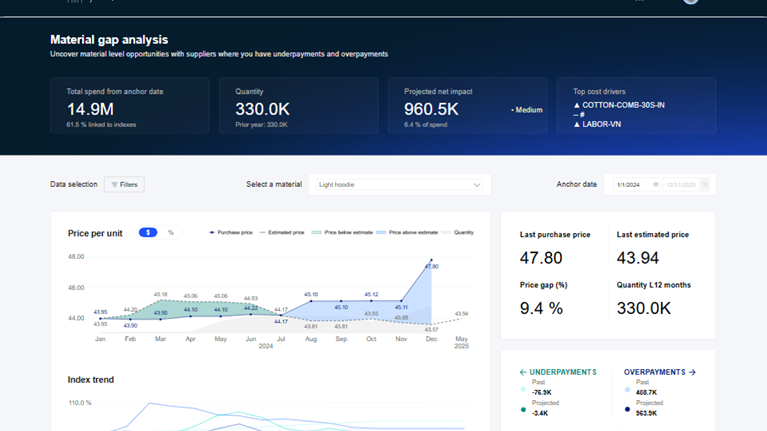
Analytics and AI can connect data at scale: structuring material master data, flagging duplicate or comparable parts, extracting specifications from unstructured product descriptions, and linking cost drivers to external indicators such as commodity prices, energy costs, and raw material indices.
This shifts procurement’s role away from preparing data and toward evaluating supplier performance, understanding cost movements, and entering negotiations with objective evidence. With that, teams can move from retrospective reporting toward more proactive decisions.
One global manufacturer preparing supplier negotiations, needed clearer visibility into how shifting input costs were affecting supplier pricing across a complex supplier base of thousands of SKUs.
Combining spend analytics, dynamic cost models, and external market intelligence, the analysis covered 65 supplier deep dives. It confirmed approximately €4 million in negotiation impact and identified a further €9 million in potential opportunities. In several cases, supplier prices had risen even as relevant raw material and energy costs fell, giving the negotiation team evidence grounded in verified market data.
Organizations do not need perfect data to get started. Spend data, product descriptions, purchase history, and historical pricing information can provide a strong starting point. Data quality can then improve iteratively, with effort focused where greater transparency is likely to create the most value.
Watch Uncovering hidden opportunities and increasing resilience in production spend to see how manufacturers use advanced analytics and AI to strengthen supplier resilience and better prepare for supplier negotiations. Through a practical case example and a live solution demonstration, discover how procurement teams can turn fragmented data into actionable intelligence and measurable value.