Then & Now: How manufacturing transformation has evolved from Lean to AI
There was a time when improving manufacturing performance meant standing on the factory floor, sleeves rolled up, figuring it out in real time.
In the 1940s, McKinsey teams helped companies convert production on the fly—turning a baby food plant into a factory producing parts for wartime military gliders, working with a stove company in Michigan to build amphibious tanks, and setting up new lines for everything from submarine batteries to precision instruments. The work was hands on: redesigning layouts, sourcing materials, training supervisors, and doing whatever it took to get production moving.
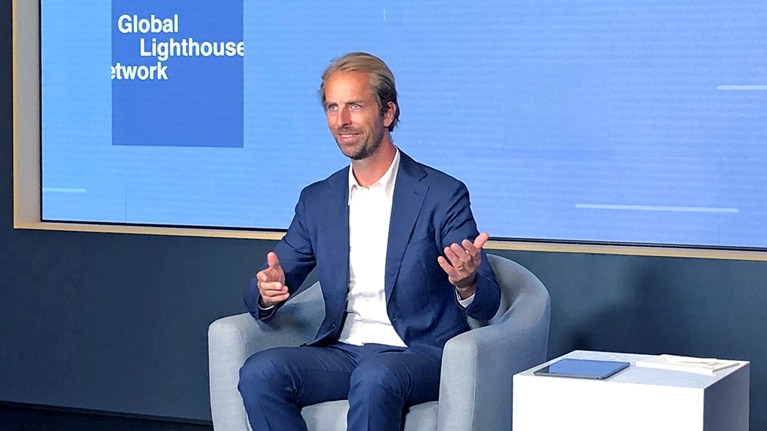
What set this work apart was the approach. Even then, McKinsey focused on the full operating system—linking layout, workflow, management, and performance tracking into a coordinated whole. Instead of solving isolated problems, teams built integrated systems that could scale output quickly and reliably.
That foundation still shapes how manufacturing transformation happens, and turning new ideas into real performance on the ground remains the core challenge. But, over the decades, the context, tools, and pace have changed dramatically.
That shift can be seen clearly through the work of Enno de Boer, a senior partner at McKinsey and a leader in digital manufacturing, whose career spans the evolution from Lean systems to AI-enabled operations.
Lean era: Process was the solution
In the early 2000s, manufacturing transformation was dominated by Lean, a management approach focused on maximizing value by eliminating waste, streamlining processes, and continuously improving how work gets done. At the time, Enno’s work focused on turning Lean into something systematic.
What had been a philosophy became a codified production system, replicable across plants, regions, and companies. The results were significant. Product development timelines were cut nearly in half, and operations became far more predictable.
But for nearly a decade, progress came almost entirely from process—and the model had limits. “The innovation back then was Lean,” Enno says. “We had a decade of almost zero technological change in manufacturing.”
By the late 2000s, Lean had scaled—and plateaued.
Capability shift: Scaling through learning
As Lean matured, the challenge wasn’t identifying improvements but embedding them fast enough. Factories couldn’t scale because they couldn’t train. McKinsey made learning more effective and scalable by building capability infrastructure—launching the first model factories in 2007, in collaboration with the Technical University of Darmstadt, where leaders could learn by doing.
“We realized the real unlock for productivity wasn’t the process—it was learning and upskilling,” Enno explains. “The model factory created a space for teams to take part in experiential learning outside of the production line, which saw learning retention rates of 90 percent.”
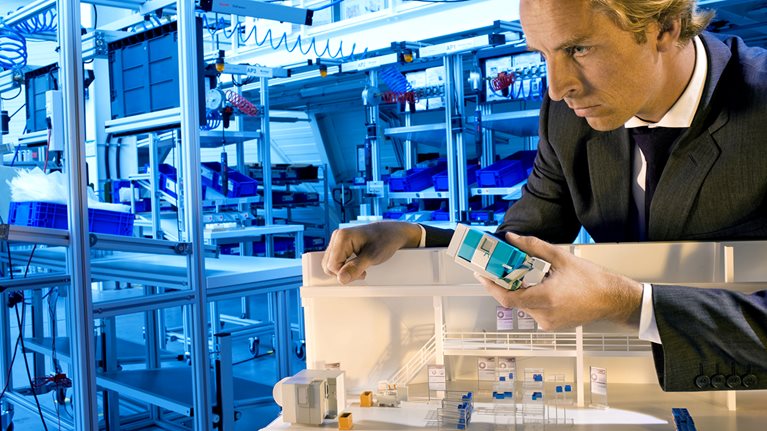
These centers became a global engine for transformation. Tens of thousands of leaders passed through them each year, and the Lean model spread across industries—from automotive to banking to mining. This was a fundamental shift. Transformation was no longer limited by individual teams of engineers going through change one at a time, but cohorts of Lean engineers and leaders trained at scale with the latest experiential, adult-learning principles.
This approach is now delivered through a global network of Innovation and Learning Centers, used by organizations across industries.
Digital waiting in the wings
At the same time, the seeds of digital manufacturing were already there—but far ahead of what existing technology was able to deliver. Enno had worked on early digital manufacturing concepts in the late 1990s, including tracking and optimization systems, but the environment couldn’t support them.
“We were ahead of our time. We founded a manufacturing software company with a client that optimized manufacturing flow based on real-time shop-floor data retrieved by radio-frequency identification. The ideas were right, but it was ahead of its time—the technology was not ready yet,” he says.
There was no infrastructure: limited connectivity, no smartphones, and weak data systems—often not even factory-wide Wi-Fi. The result was a period of stagnation.
Beyond Lean, there were few viable new levers for step-change improvement. “There were no real ideas out there,” Enno recalls. The industry was waiting for technology to catch up.
Industry 4.0: Technology reaches scale
That inflection point came in the mid-2010s. Digital manufacturing became viable with the rise of cloud computing, connectivity, and the Internet of Things in place (connected sensors embedded in equipment). With performance improvements now driven by data and connectivity, the role of advisers in operations evolved again.
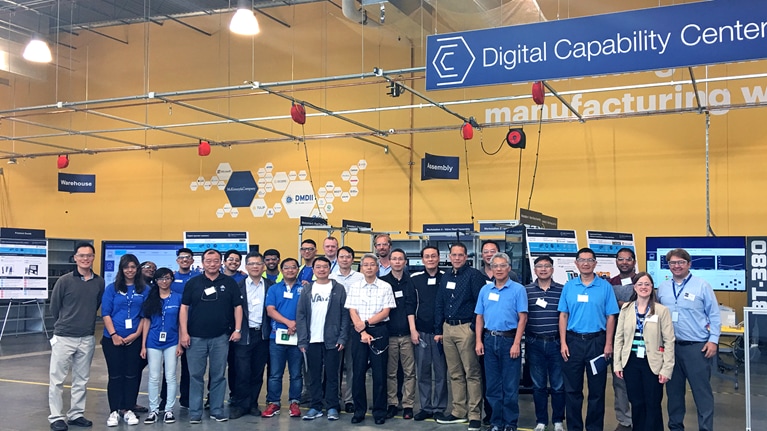
The firm extended its model factory concept into digital—creating environments where companies could see use cases in action and understand how to scale them.
“You have to see it to believe it,” Enno says. “That’s what changed everything.”
This marked the next phase: from capability building to technology-enabled transformation at scale.
From firm-level to industry-wide change
As digital matured, organizations struggled to move from pilot to scale. Seeing the need for shared learning, Enno took the lead at McKinsey to initiate a collaboration with the World Economic Forum, establishing the Global Lighthouse Network,1 a platform to identify and share leading examples of digital manufacturing.
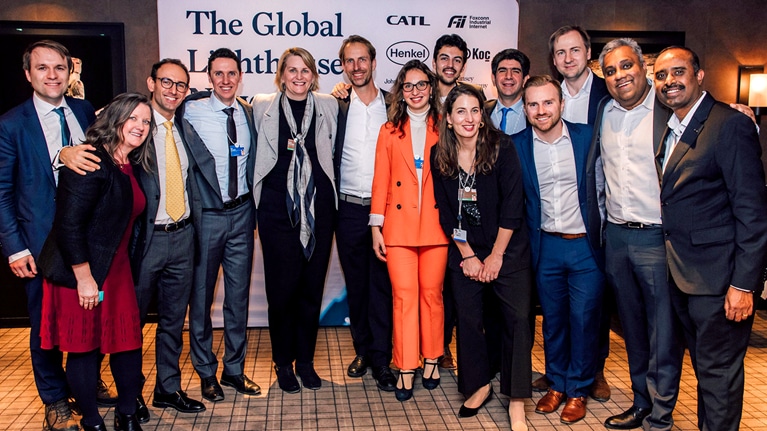
The idea challenged conventional thinking. “At first, companies didn’t want to share,” Enno says. “They thought it was their competitive advantage.”
But the logic shifted. The opportunity was too large, and the learning curve too steep, for isolated progress. The Global Lighthouse Network enabled companies to benchmark, learn, and accelerate adoption based on proven results.
This led to a surge in innovation. Hundreds of use cases and over 200 WEF Global Lighthouses emerged across industries, moving digital manufacturing from isolated success stories to a broadly scalable system.
AI: A new paradigm, a familiar constraint
Today, manufacturing is entering its next phase with AI. Unlike previous waves, the infrastructure—cloud, data, and connectivity—is already in place. What’s changing now is how operations are designed and run.

“AI isn’t just another tool—it’s a general-purpose technology like electricity that requires us to reimagine our production systems,” Enno says.
The pace is also different. While the Fourth Industrial Revolution took almost a decade, the AI Revolution is expected to unfold in a fraction of that time.
And yet, the constraint looks familiar. “The toolbox is there,” Enno notes. “But people don’t yet know how to use it.” Once again, the limiting factor is not the technology—it’s the ability to adopt and scale it.
Looking ahead
The next phase won’t be defined by access to tools but by the speed and depth of adoption. The winners will be those that combine innovation with continuous learning. As we move toward the Fifth Industrial revolution, defined by collaborative partnership between humans and AI, agents will take over all indirect functions leading to agile, self-improving flat hierarchies, hyperlocal and personalized manufacturing, and continuous innovation—all at record speed.
“For the first time, we can remove waste and blockers almost entirely,” says Enno, "and focus on a level of value add we’ve never seen before."
1. The Global Lighthouse Network is a World Economic Forum initiative. The initiative was cofounded with McKinsey & Company and is counseled by an advisory board of industry leaders who are working together to shape the future of global manufacturing. The advisory board includes Foxconn Industrial Internet, Koç Holding, McKinsey & Company, Schneider Electric, Siemens, and Aramco. Sites and value chains that join the network are designated by an independent panel of experts.
.png?cq=50&mw=767&car=16:9&cpy=Center)