As sports become an even bigger engine of economic growth, the defining challenge isn’t identifying tomorrow’s fans; it’s recognizing that many of them are already filling stadiums, attending World Cup watch parties, and participating in digital communities. On this episode of The McKinsey Podcast, McKinsey Senior Partner Lucy Pérez joins Editorial Director Roberta Fusaro to reflect on McKinsey’s recent research about the growing influence of Latino fans, the brand opportunities for personalized engagement, and the investments that strengthen fandom—from youth sports all the way through lifelong participation.
The McKinsey Podcast is cohosted by Lucia Rahilly and Roberta Fusaro.
The following transcript has been edited for clarity and length.
The sports economy surge
Roberta Fusaro: Before we start, I have to ask you, who are you rooting for in this World Cup?
Lucy Pérez: It’s always La Roja, the Spanish national team. My parents are from Spain, so from a very young age I’ve been trained to love that team.
Roberta Fusaro: You’ve also spent years studying Latino consumers and communities. When you look at these crowds at the World Cup watch parties and listen to the conversations around the games, what feels different from even a few years ago when you were starting some of that initial reporting and research?
Lucy Pérez: If I think back to when I moved to New York for my postdoctorate over 20 years ago, there were watch parties, but they were more the international community getting together to watch games. When I compare that with this year, it’s as if everyone’s watching these games. It’s a real positive to see so many people appreciating different cultures.
I think in general, we’re just seeing the sports economy booming. Our data predicts the sports economy will nearly double over the next ten years. That is incredible growth, going from about $165 billion to over $320 billion. And what’s really interesting is that a third of that growth is attributed to Latinos.
It shows up in how Latinos tend to consume more sports. They tend to spend more money when they’re watching and participating in sports. It really speaks to this thing that sports are much more than just the game for Latinos. It’s such a community experience.
The economic power of community
Roberta Fusaro: I want to hammer on that a little bit because one of the themes in your work is that sports are much more than the sport itself. What does an event like the World Cup tell us about identity, community, and belonging in America today?
Lucy Pérez: I love that you use those three words: identity, community, and belonging. It is creating the space for so many to be seen and to feel represented on this global stage, and with such a positive message of athleticism, teamwork, resilience, and grit. When you take a look at what people still watch on TV, sports are at the top of that list. It is content that appeals to so many of us.
The World Cup is creating the space for so many to be seen and to feel represented on this global stage.
Roberta Fusaro: Great point. As brands activate around these matches, what do you see the smartest companies doing well, and what are some companies still not doing?
Lucy Pérez: It starts with authenticity. Consumers are smart. They can tell what moments are authentic and true to different cultures and communities. What you see with brands now is that those that are doing better really understand that end consumer. And, for example, they recognize that Latinos are not a monolith. There are definitely a lot of things that unite Latinos, but there are also a lot of things that are different, even in their sports preferences. I grew up in Puerto Rico. There, like many of the other islands of the Caribbean, we tend to skew more toward baseball. When you start heading toward some of the countries in South America, there’s a much stronger affinity for soccer.
One interesting finding is that Latinos consume much more digital-native content than other groups. On one hand, that is not too surprising because it’s a demographic that skews younger and prefers more digital-first experiences. These are people who value that omnichannel experience, such as watching the TV while keeping track of another game on their phones.
Latinos consume much more digital-native content than other groups.
Some of them prefer getting their content in English, some in Spanish. For others, like me, it’s Spanglish at the end of the day. So leaders need to recognize that and think about how they’re creating content to resonate with their audience.
How AI can reveal the individual
Roberta Fusaro: How can companies better figure out how to meet these customers where they are?
Lucy Pérez: What has been really interesting is that we’ve been spending a lot of time talking to teams or brands and realizing we need a much more granular understanding. Now, with technology and increasing access to data, we’re seeing an increasing use of more sophisticated analytical models that allow you to really personalize your engagement to the “n of 1.”
A lot of our conversations are about how to use technology to allow you to drive that greater personalization and create unique experiences that reflect the needs of individual consumers.
Want to subscribe to The McKinsey Podcast?
It has been really fascinating working with teams to try to understand the demographics of their own communities and neighboring towns. They’ll say, “We’re in a city that’s 20 percent Latino, yet who’s coming to our games? It’s only 10 percent Latino. Help us understand the mismatch here. What are we not doing that we should be doing?”
By the same token, in other places it’s the opposite. They’ll say, “This is great. How can we do more to engage this community?” Because, for example, their data shows them this is a more actively engaged fan who is bringing the entire family along, someone who is really thinking of this as so much more than a sporting event. It is, again, that experience of family and community.
Roberta Fusaro: Is there a role for AI in this quest for personalization?
Lucy Pérez: There’s certainly a role for AI in personalization, but very importantly, and like we see across the board, it cannot be AI without a human in the loop. We have plenty of stories of poorly thought-out campaigns. Those that were considered Latino friendly but didn’t use any words that resonated with Latinos, for example.
This also speaks to the idea of representation. When you look at some of these leagues, in particular Major League Soccer, that’s where you see about a third of fans being Latino. In Major League Baseball, about 20 percent of fans are Latino.
But when you look at the representation of Latinos in the leadership of these organizations, it’s only 6 to 10 percent.
Our research consistently shows that when you have less diverse leadership teams, you may not be as effective at reaching the diversity of your customers.
When you have less diverse leadership teams, you may not be as effective at reaching the diversity of your customers.
We have to stay aware that models can get it wrong. We need the right inputs and the right understanding of who we’re trying to engage to ensure the actions we’re taking and the content we’re creating resonate with the audience. Otherwise, it will truly backfire, and it takes a long time to rebuild the trust when it’s not done right.
Youth forging the future of sports fandom
Roberta Fusaro: I love that point, Lucy. It’s not about AI models. It’s about role modeling. It’s about that representation. As you’re talking with executives and clients right now, are there certain lessons they can take in that might tell them where sports, media, and consumer behavior are heading next?
Lucy Pérez: Youth sports account for 15 percent of the sports economy. And as we did our research, one of the things that really struck us was how much parents told us they value who’s sponsoring their kids’ games, who’s putting in the resources to support those youth leagues.
That informs a lot of their consumer choices. So the journey toward being that avid sports fan starts early. There are a lot of opportunities for brands to think about the consumer’s journey and the opportunities that exist, starting with youth sports, as well as engagement and getting to know the different communities.
Roberta Fusaro: So getting in early is very important.
Lucy Pérez: Yes. Those are the little sparks that create in children the idea of participating and thinking about the benefits of sports that go beyond athletic skills. And I don’t think we fully recognize how many skills sports teach you. Whether we’re talking about teamwork or resilience, the data is very clear that those who play sports are less likely to experience violence and have higher educational attainment rates. All of these are compounding the positive effects of playing sports.
Roberta Fusaro: Are there brands or other private–public partnerships that are helping to facilitate either youth sports or greater participation of women?
Lucy Pérez: It has been really exciting to see what the professional sports leagues are trying to do to increase access and really bring in different communities to play sports. For example, creating more opportunities for female athletes to play flag football.
The National Hockey League is very invested in bringing hockey to more communities that have historically not considered it. In our work, we look at five of the major leagues around basketball, soccer, baseball, football, and hockey. And in each of these, you can see the examples of that journey, that recognition. These groups are making the investments to get more kids to play and develop that love of the sport.
The numbers don’t lie
Roberta Fusaro: When this tournament ends, what’s the one takeaway you hope leaders remember about the role that Latino fans are playing in the future of American sports?
Lucy Pérez: For me, what’s critical is to understand this is not a niche opportunity. This is not a niche market segment. The sports fan of the future is already here today. It’s critical to understand that fan, and the needs and the opportunities they represent, because they’re the future. Latinos represent a third of growth in sports fandom.
Latinos represent a third of growth in sports fandom.
Roberta Fusaro: What’s amazing to me is the number of people who have been turning out not just for the games but for the watch parties and other events. Can you talk about that a little bit?
Lucy Pérez: I was at a board meeting this morning, and people were talking about the Scotland–Morocco game in Boston, and the level of energy and excitement that people are having for the World Cup is just fascinating. I think we’re going to see lasting impact from the enthusiasm of those who didn’t make it into the stadium but were there to soak up the energy and all that is happening around the stadium.
Roberta Fusaro: Just before you joined, Lucy, the producers and I were talking about the run on Ranch dressing. Apparently, that became very popular with visitors from Scotland. It’s been net-net positive. Everyone seems to be in a good mood. To your point about community, I think that will have a lasting impact.
At the time of this recording, Spain will be playing Uruguay in a few days. What do you think the score will be? Give me a prediction.
Lucy Pérez: I think it’s going to be close, but Spain is going to win. I’d go so far as to say I don’t think they’ll need to go to the penalty round.
Roberta Fusaro: Ooh, nice. Lucy, you’re a true blue—or a true red—fan.
Lucy Pérez: True red for sure.
Related Articles
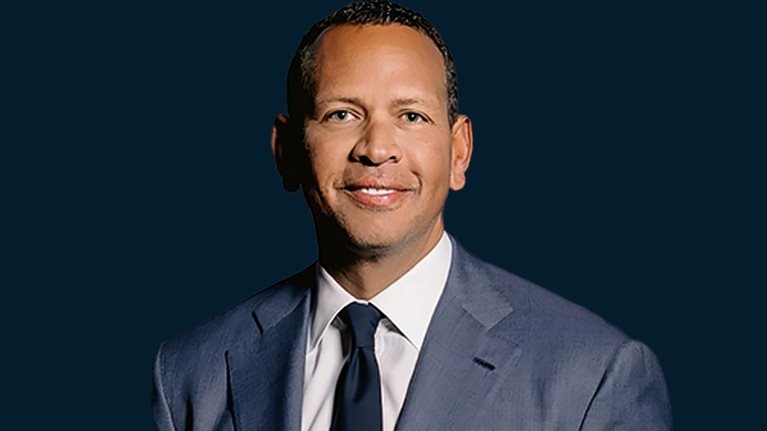
Alex Rodriguez on expanding Latino opportunity and representation in sports