In the future, your favorite restaurant might know your cravings before you do. That’s the vision at Flynn Group, the world’s largest restaurant franchise operator, which today generates more than $5 billion in annual sales across more than 2,900 restaurants. By investing in AI-powered consumer insights that create personalized digital menus and mobile app experiences, the company aims to help its restaurant franchisors—namely Applebee’s, Taco Bell, Panera Bread, Arby’s, Wendy’s, and Pizza Hut—predict when and what diners will order.
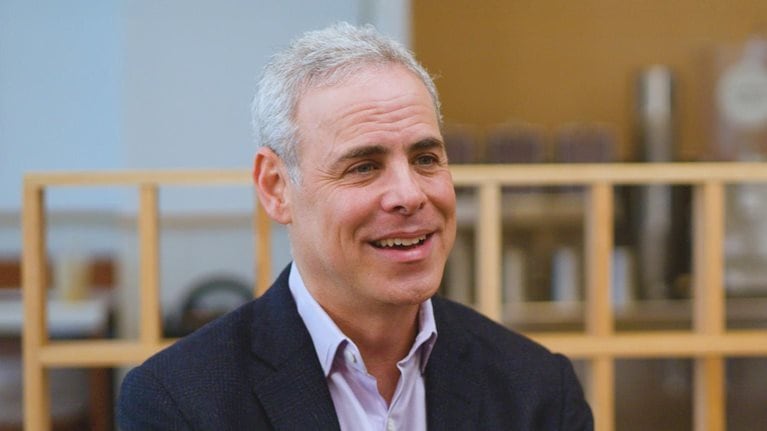
“Being able to anticipate what customers want, when they want it, will hopefully lead to better customer engagement with the brand,” says Ashley Fenn, Flynn Group’s vice president of business insights and marketing. Fenn, who has a doctorate in neuroscience and joined Flynn Group in 2021 after four years at McKinsey, oversees analytics across Flynn’s diverse portfolio.
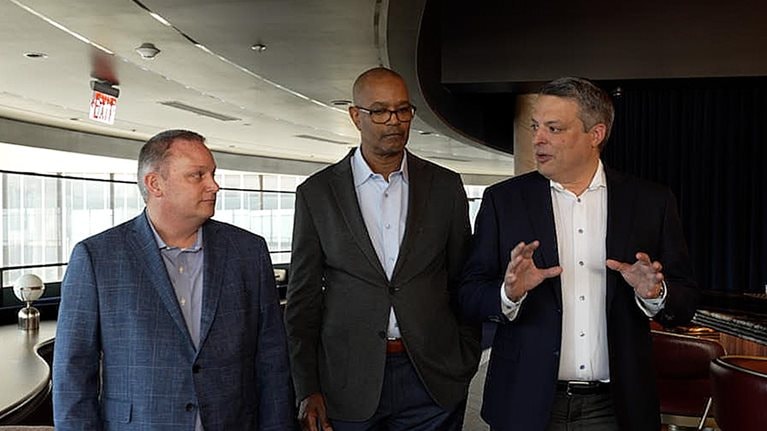
In August, McKinsey partner Prabh Gill sat down with Fenn and veteran restaurant executive Jeremy Biser, who has held leadership roles at Starbucks, Dunkin’ Brands, and Roy Rogers Restaurants and is now Flynn Group’s Pizza Hut brand president. They discussed how AI and robotics are reshaping both the guest experience and restaurant operations, why cross-brand insights are critical to staying ahead of shifting consumer preferences, and their vision for the industry’s future.
This interview has been edited for length and clarity.
Prabh Gill: It’s a tough time for restaurants, with many consumers concerned about inflation and choosing to eat at home to save money. In this promotion-heavy, price-sensitive market, how do you leverage analytical modeling to balance competitive pricing and profitability?
Ashley Fenn: It’s a vastly complex environment. Margins are compressed like never before, and consumers are frustrated with inflation. It’s always a balance: trying to attract consumers with exciting, aggressive offers while ensuring transactions are profitable overall. But we’ve built a very sophisticated pricing engine that we’ve been honing for several years.
It starts with having a close relationship with our franchisor and understanding what, as a brand, we’re trying to accomplish: “What are the goals of upcoming campaigns? Are we going after transactions, profitability, or building brand love?” Each goal requires different tactics.
Then, we approach price and menu architecture so it makes sense both for guests and restaurant economics. We consider how to balance factors such as a customer’s willingness to pay, excitement around new products, and the competitive landscape across price points.
Pricing used to be people in a room saying, “Should product X go up 20 cents? Product Y should go up 30 cents. But let’s not touch product Z because I’ve heard three customers say it’s overpriced.” Now, we deploy holistic models that control for all kinds of factors including weather, promotions, operational challenges, and even construction affecting access to restaurants.
We also factor in typical business pressures like wage increases and commodity costs. After considering those different layers, we adjust menu pricing accordingly. Helping franchisors understand these pressures and ensure brand strategy meets bottom-line needs—all while competing in a value-driven marketplace—is critical.
Jeremy Biser: Sometimes you also need to ask, “Is your brand relevant right now? Are consumers talking about you?” In the past, we’ve worked with brands to launch aggressive offers, like Pizza Hut’s $2 Personal Pan Tuesdays. That generated tremendous buzz and traffic, higher than even Super Bowl days, which historically were our busiest days of the year. Are you making money on $2 pizzas? No. But you’re attracting new guests, recapturing lapsed ones, and if you convert them to loyalty members, the lifetime value of those customers makes it worthwhile.
So, in addition to long-term pricing strategies, we work closely on short-term tactics to keep the brand relevant and attract customers.
AI and robotics upgrades
Prabh Gill: Analytics already plays a big role in your pricing strategies. How do you think the use of analytics and AI will change the restaurant industry in the next five years? For example, how do you foresee using analytics and AI tools to be more attuned to what customers want?
Ashley Fenn: What I see is a brave new world. If somebody comes to my insights team with a question, the team digs into haystacks looking for the needle that’s going to lead us to the outcome we need to go after, so that we can then actually spend time strategizing.
For example, one of our brand presidents said, “There’s a store that has lost considerable volume. We think that it’s price related. Would you take a look?” We thought that was a bit strange because that store is in a tier with multiple other stores that weren’t losing volume.
The insights team dug into different factors. It turns out the store had a new manager and staff turnover accelerated, which had an impact on customer service. In addition, their credit card reader had been shutting off every other day for six months. And when you can’t take credit card payments, obviously you are frustrating a lot of your guests. We ended up finding five different challenges with this store, none of which were centered around price.
What I’m excited about in the future is being able to ask, in natural language, “Why is my store down?” and having a system say, “Here are three places you should start looking.” Right now, we spend so much time figuring out what the problem is that we’re not giving ourselves enough time to solve the problem before another problem arises.

The future of restaurants: Precision in the kitchen, connection at the table
AI is also going to be critical to how our restaurants engage with consumers. Personalization will become an expected part of the customer experience. Imagine a future state where you pull up your apps, and we know that you always order Pizza Hut on Tuesdays. A pop-up appears: “Hey, it’s Tuesday. Would you like us to place this order for you? We know you want it ready at 6:00 p.m.” Being able to anticipate what customers want, when they want it, will hopefully lead to better customer engagement with the brand. Additionally, in the future, we can curate a personalized digital menu. Imagine walking into a QSR [quick-service restaurant] and the digital menu board knows you, greets you by name, highlights the items that you like, and makes promotional offers that are customized for you.
Jeremy Biser: Across all our brands, we consistently hear that two of the things that are most important to guests are food quality and order accuracy. So we’re finding ways to leverage technology and AI to help us with, for example, visual inspections that can happen through camera systems in the store—ensuring that each product meets our quality standards and that we’re packaging items so that customers are getting everything they’ve paid for.
Prabh Gill: What other front-of-house and back-of-house AI use cases are you excited about or using already?
Jeremy Biser: There’s a lot of technology within stores today, but it’s not all connected to each other. It’s very difficult to monitor five different applications to figure out what’s happening within the store. So, we’re excited about leveraging AI to monitor all the different inputs within a store, and then—when there’s a problem detected, say, in a piece of equipment—being able to proactively alert the franchisee or area or store manager to take action right away.
We’ve recently rolled out a new tool within the stores that analyzes customer feedback across multiple channels. It’s relatively new for store managers to have access to this much data. It’s challenging for them to have enough time to dig through data to find root causes or common themes where they could improve efficiency or guest experience. So, this new tool does some of that analysis for them and then automatically pops up recommended training behaviors they can incorporate into their day to address some of the more common themes.
We’re also rolling out new tools to help with hiring and coaching. For example, managers can role play coaching sessions with an AI tool that responds to them and gives feedback on how to coach better.
Some other ways I can anticipate AI helping restaurants are through core back-of-house operating systems like scheduling and inventory. How do you schedule the right people at the right time to meet the store’s needs week to week? What’s the ideal number of days-on-hand inventory for a particular store, based on its volume rather than an across-the-board standard? An AI-assisted forecast engine—one that considers both historical data and hundreds of variables that the manager could never anticipate—can answer those types of questions and dramatically increase productivity. When you’re looking at driving profitable top-line sales, your two biggest expenses are always labor and food, so optimizing food variants and proactively managing labor really benefits stores and franchisees.
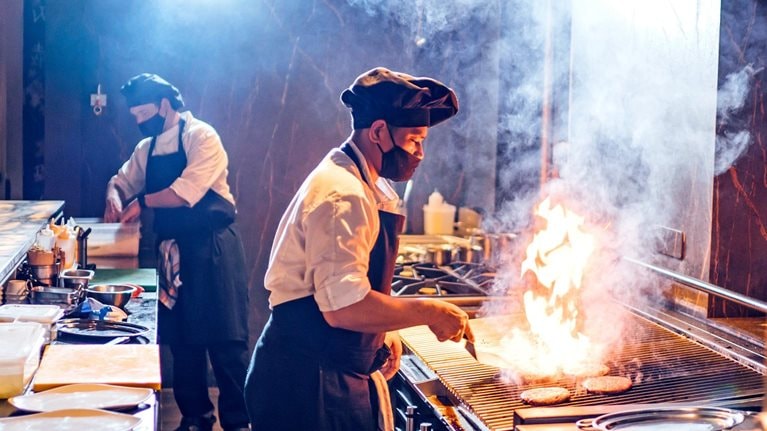
Ashley Fenn: And while it’s not strictly AI, we also have high hopes for robotics, whether that’s robotics for dishwashing, a fry station, burger flipping or line making.1 What excites me about that is the effect it will have on customer experience. Every human touchpoint with the guest is going to matter more in the future, because so much will be digital. Rather than a team member spending time washing dishes, they can spend time engaging with the guest, thinking through the customer experience, coaching team members, and developing them into future leaders.
The value of cross-brand insights
Prabh Gill: You have a diverse set of brands. How do you tailor your strategy so that each brand focuses on the consumer insights most relevant to that particular brand?
Ashley Fenn: We have a wide spectrum of restaurants—QSRs, fast casual, casual dining, international—so when it comes to where the industry is headed, the spectrum of what we can see is quite vast. Single brands see only the space in which they operate, whereas we see across the industry. As we continue to diversify, we’re going to see even more. We always respect the confidentiality of our brands, but we can say to our franchisors, “Here are the latest trends we’re seeing across the industry. Let’s get ahead of them.”
There are certain cues we tend to look at frequently across brands. For example: Is the overall mix shifting more toward value? Are consumers leaning toward innovative products or toward premium items and experiences?
As we see these patterns shift across brands, we can say, “This is something important we should take note of.” Value is one [trend] that is top of mind today. We work hand in hand with franchisors to ask, “What does value mean for this brand? How do we bring it to life for our consumer base?” Another area that we look at is what sparks the most consumer dissatisfaction? Is it quality? Is it slow service? Is it lack of friendliness? Is it inaccuracy?
Jeremy Biser: An example we’ve applied at Flynn is putting a cross-brand collaborative team together to address the rise of aggregator business2 in the last few years. We’ve worked together to develop best practices on minimizing missing or incorrect items, ensuring great quality scores from aggregator channels, and partnering with aggregators to enhance guest experience. For some brands, this is the first time they’re doing delivery. With Pizza Hut, delivery is core, but now it happens both with our own drivers and third-party drivers. We want both to be outstanding, so sharing best practices across our internal teams has been very beneficial for us.
Prabh Gill: Flynn is expanding its presence in New Zealand and Australia, specifically with Wendy’s and Pizza Hut restaurants. What learnings from the US market translate to the Australian market, if any?
Ashley Fenn: The Australia launch of Wendy’s was an exciting opportunity—it felt like building a brand almost from scratch. Before going international, we looked at who’s succeeding in the United States and what competitors are thriving. Some key learnings: Have a phenomenal, standout chicken product. Keep a simplified menu—do a few things really well and build a fandom, a kind of cult following, around those products. We also knew we would need to punch above our weight on social media, because when you have one Wendy’s store in an entire country, you don’t get millions of marketing dollars to engage the consumer base.
Another key question was: What do we want the brand persona to be? In the United States, Dave Thomas3 is iconic; in Australia, no one knows who Dave Thomas is. So instead, we leaned hard into the Wendy persona that we know has worked in the United States: the snarky, sassy, strong female trendsetter.
There are a number of successful American brands in Australia, so we knew there was appetite. And even though we “Australia-ized” the brand—we offer hand-breaded chicken tenders there, for example—it’s still Wendy’s. The Single Combo, the Baconator (we call it the Baconmator there), and the Frosty still looks and tastes like Wendy’s products in the United States.
Jeremy Biser: International expansion lets us test new things abroad and bring back learnings, menu items, or experiences to the US market. After we found success with the hand-breaded chicken tenders in the Wendy’s Australia market, we shared our strategy with the global brand and championed the “Tendy’s” rollout in the United States. It’s also teaching us how to work effectively with franchisees. In Australia, with Pizza Hut, we’re the primary franchisee—so most of the stores are owned and operated by smaller franchisees. That experience helps us strengthen our relationships with franchisors in the United States, too.
Predictions for 2030
Prabh Gill: How do you see fast-food and fast-casual restaurants evolving over the next five years?
Jeremy Biser: The fundamental things that customers want—like variety, quality, and convenience—are still going to be critical in the future. Delivery is going to become a more prevalent requirement for guests. But they still want to have great experiences and connect with each other, so the in-store environment is still going to be key.
Ashley Fenn: As we think about the landscape over the next five years, we’d be remiss not to talk about how we’ll be reaching customers from a media buying standpoint. It used to be that we would simply figure out what campaign we wanted to run, choose when to run it on broadcast TV, and just make sure we bought enough ad spots to make it hit. Now, with the number of streaming platforms and loyalty programs out there, it’s not just the marketing campaigns that matter, but it’s all the ways that restaurants need to show up in the lives of the audiences we’re trying to reach. It’s a matter of showing up in the spaces where they live and where they hang out. We’ll need to be integrated into the landscapes where they are experiencing food and friends.
That means customer relationship management—understanding how customers prefer to engage with brands and which activations drive the most excitement—will become more important over time. One customer may be more excited about a merch drop, for instance, while another might prefer to be alerted when they can get their favorite side as part of a buy-one-get-one deal. We also believe local marketing—showing up in guests’ communities and being part of their big moments, including after-game celebrations or graduation ceremonies—will play a bigger role.
Balancing agility and authenticity
Prabh Gill: What is the one piece of advice you would give to other restaurant marketing leaders to help them navigate the future?
Ashley Fenn: Lean into change, since the pace of change will only accelerate. At the same time, don’t lose what’s ownable and equitable for your brand. Remember why people loved the brand in the first place and evolve it in a way that’s authentic.
That all requires a different kind of talent. It’s not necessarily talent that knows the ins and outs of one business component or one technical piece or one facet of the brand. Rather, it’s talent that’s intellectually curious, excited about change, and understands what makes something special. Today’s landscape demands technical fluency in algorithm-driven tools, strong analytics to reach diverse audiences without bigger budgets, cultural agility in a world where trends spark in hours, and financial discipline, as marketing is increasingly tied to long-term value positioning. There’s no one place we will source talent from, but at Flynn we are committed to investing in the growth and development of the future leaders of our organization.
Jeremy Biser: I agree it’s important to embrace change. At the same time, if you change too fast—whether that’s in your marketing approach or your media mix or other aspects of the brand—you risk alienating your core customers.
It should be an evolution, not a light-switch type of strategy. If you automatically decide, “We’re moving completely out of TV into all digital and streaming,” that probably won’t work.