Can a luxury brand double its size without diluting its value? That’s the aspiration behind Mandarin Oriental Hotel Group’s strategic reset, two years in the making under the leadership of CEO Laurent Kleitman.
In a sector dominated by giants, Mandarin Oriental is still relatively small—just over 40 hotels, a dozen branded residences, and a growing collection of “exceptional homes” in destinations ranging from Bali to Umbria. But in a recent take-private deal with parent company Jardine Matheson, the brand was valued at $4.2 billion, and its reputation rivals players many times its size. Kleitman’s goal is to double the portfolio by 2033 while maintaining what he calls the brand’s “extreme empathy.”
Kleitman recently spoke with McKinsey Senior Partner Alex Sawaya at the Mandarin Oriental Lutetia in Paris, discussing the hotel group’s global expansion, the role of talent in sustaining service excellence, and what today’s luxury travelers value.
This interview has been edited for length and clarity.
Alex Sawaya: When you joined Mandarin Oriental two years ago, you set out an ambitious new strategy for the group. How did your vision differ from what was already in place for the hotels?
Laurent Kleitman: When I became CEO, Mandarin Oriental was already a formidable brand with strong fundamentals and financials. But we focused on reestablishing the strength of the brand’s desirability, awareness, and reputation, and each of those points are core elements of the new strategy. We also needed to be totally guest-centric, where all guests’ needs are addressed. Being brand-led and guest-centric is the starting point of the strategy.
From there, we decided to double the size of the company—reaching new destinations while building our existing portfolio of branded residences and “exceptional homes”.1 Together, this would accelerate the physical presence of the brand around the world.
Innovation was also at the heart of the strategy. We asked ourselves, “How can we ensure that we address the latest trends in food and beverage, wellness, and so on?” A key element of being able to innovate comes from increasing our operational efficiency. That meant building a more resilient foundation to support the brand, one that gives us the freedom to invest in people, craft, and long-term desirability. We strengthened pricing and demand forecasting, delivering double-digit RevPAR [revenue per available room] growth across all regions. On costs, we accelerated our asset-light strategy, while retaining long-term management contracts. This allows us to reinvest capital in high-impact areas like digital capability and portfolio enhancement. As a result, we’ve maintained strong EBITDA growth and operational resilience, even in a volatile global environment.
Scaling the brand while protecting service
Alex Sawaya: How did you know that the Mandarin Oriental brand was already a strong brand when you joined the company?
Laurent Kleitman: I knew it long before I joined the company, because I experienced it as a guest. About 20 years ago, I was having dinner with my family at Mandarin Oriental, Bangkok. During the meal, my young son stained his shirt with ketchup and we placed it over the back of a chair. Without a word, a colleague discreetly removed it. By the end of dinner, it was returned to us, cleaned and pressed. That moment stayed with me. It was pure attentiveness, delivered with humility and care.
When I later looked at the brand more formally, the data simply confirmed what that experience had already told me. Our reputation and awareness were on par with brands many times our size. People were often surprised to learn how focused our portfolio was, because the brand already carried global recognition and trust. Our responsibility now is to leverage that awareness and reputation to grow our footprint, while honoring the emotional connection that makes Mandarin Oriental so special in the first place.
Alex Sawaya: We’re speaking today at the Mandarin Oriental Lutetia in Paris, which is celebrating its 115th anniversary. How does this property reflect Mandarin Oriental’s vision for luxury hospitality?
Laurent Kleitman: Lutetia is an iconic part of the culture and history of Paris. It was built to echo [French department store] Le Bon Marché, which is just in front of the hotel. World War II plays an important role in the history of this building,2 and in the postwar era, Lutetia became an icon of the renewal of artistic life in Paris. It is also the only palace on the Left Bank of Paris, and it represents what hospitality looks like at Mandarin Oriental—a place that is well rooted in the surrounding community and where you can experience extraordinary, exceptional service.
Alex Sawaya: When you look across the luxury hospitality space, everyone is trying to deliver higher-quality service and experiences. What makes Mandarin Oriental’s value proposition distinct from other luxury hotel groups?
Laurent Kleitman: Our “dual Asian” origin makes us extremely special in the hospitality landscape. On one hand, we opened The Mandarin, our first hotel, in Hong Kong in 1963. At the time, it was the tallest building in Hong Kong, had the fastest elevators in Hong Kong, and was the first to have bathtubs in every guest room. On the other hand, we had The Oriental in Bangkok—celebrating its 150th anniversary this year—which rooted us authentically in Thai culture, with an emphasis on graceful, empathetic service. Both sides—innovation from Hong Kong and grace from Thailand—are what define us. In each of our hotels today, we strive to find this balance.
Service, which to us is human, emotional, and intuitive, is the living craft. Design, architecture, and art create the stage on which that craft comes to life. At our Qianmen property in Beijing, we completely restored not just one building, but the entire hutong3 area of the city, which included about 50 buildings, while still preserving 90 percent of the original structures. You experience the community there: You open the door of your hutong and you’re in the streets with your neighbors next to you. To blend the experience of a luxury hotel and the life of a neighborhood is extremely rare in luxury hospitality.
At one of our newest projects in Mexico, which is expected to open in 2028, the Mexican sculptor Bosco Sodi will be the curator of the property. Rather than thinking of hotel art as an afterthought, we are creating an environment where art will be naturally present throughout the property, which brings the luxury experience to life. This is one of the key pillars of the brand.
Alex Sawaya: You’ve set a goal of doubling your footprint to 100 hotels worldwide. How will you maintain the luxury experience as you scale?
Laurent Kleitman: If you think about our size, we are fewer than 10,000 keys.4 Even if we were to double our size, we’d still remain a relatively small player in terms of the number of keys and the number of destinations where our guests travel.
Our expansion addresses holes we had on our global map, where we weren’t in capital cities, for example. In the next few years, we are going to enter Rome. In 2025, we opened in Vienna. We are going to become more present in North America. These are obvious destinations we need to be in.
As we grow, our strategy remains uncompromisingly brand-led and guest-centric. Expansion never comes at the expense of attentiveness. Preserving our legendary service and craftsmanship that define Mandarin Oriental is a personal obsession for me. It can only be sustained through the caliber of our people, and also by how we recruit, nurture, and invest in those who bring the brand to life every day.
The talent imperative
Alex Sawaya: Talent, as you noted, is critical to sustaining that level of service. How are you attracting, developing, and retaining Mandarin Oriental employees?
Laurent Kleitman: Our Rising Fan management training program, which is designed for emerging talent and early-career colleagues, is probably one of the best in the business. Frankly, if I could qualify to do it today, I would. As part of this program, you spend 18 months working in all the professions found in a hotel, be it in food and beverage, room service, the front desk, and so on. It’s very helpful for the young graduates who join the program to discover the breadth and the complexity of hotel operations, while also familiarizing themselves with the brand at every single touchpoint.
The program is highly selective and attracts a remarkable level of interest. But more importantly, it’s formative. While graduates do not become hotel managers immediately, they gain the essential grounding that allows them to step into leadership roles with credibility when the time is right.
Talent and securing the best colleagues—whether they come from hospitality schools, another school, or our Rising Fan program—is the number one priority, since ensuring services are delivered well is the number one issue we all face in the hospitality profession. To be honest, hospitality has not been very innovative in the way it attracts, retains, and grows talent. We want to address flexible scheduling, mental health issues, and all issues related to professional growth and creating a career path. There is more work to be done to secure the best talent, which is why it’s the top priority for me as CEO.
Innovation initiatives
Alex Sawaya: In what other ways can luxury hotels do more to innovate? Does the hospitality playbook need to be reimagined?
Laurent Kleitman: It looks like a playbook but is not a playbook. We pride ourselves on our authentic, human service style. It looks easy, but it is probably the most difficult element to replicate property to property.
Because of this difficulty, the way we approach service is unique. We empower teams to do whatever it takes to satisfy guests, and we promote what we call “unscripted moments”—gestures that cannot be lifted from a playbook. We, of course, have standards of service. But what matters most is how those standards are delivered: with extreme empathy and genuine attention. That balance is what transforms a stay into an experience and, over time, turns guests into genuine fans of the brand.
This is what happened to me 20 years ago. I was on the Chao Phraya River in Thailand with my family at a Mandarin Oriental for the first time. I wasn’t even a guest at the hotel; we were just having dinner on the terrace. But the care that my family and I experienced that evening stayed with me. That was not something outlined in a guest service playbook, and this is what we believe luxury hospitality is. For me, these are the touchpoints that our teams are addressing every day, and what creates the strength of and attachment to a brand.
Alex Sawaya: Marquee food-and-beverage programs and curated spas are among the top offerings luxury hotel travelers seek out. In what ways is Mandarin Oriental improving its offerings in these areas?
Laurent Kleitman: Product delivery—whether that’s in food and beverage or wellness experiences—is due for innovation and in some cases, disruption. Think about The Pizza Bar on 38th, in our Tokyo hotel. You might not connect pizza with Tokyo, but our pizza has been voted as the best pizza in Asia and the second-best pizza in the world for several years in a row now. We took what makes pizza attractive and blended it with an incredible omakase experience, which is rooted in Japanese culture. So, there is a lot of room for innovation in food and beverage.
The same goes for wellness. We invented the modern hotel wellness program in 1993 with the first-ever hotel spa in a luxury hotel in Bangkok. Since then, we have continued innovating so that wellness covers more than just the spa, focusing on holistic well-being and reaching areas like longevity, for example. Our approach to wellness is made up of three core pillars: physical, spiritual (which includes mindfulness and restorative rituals to support emotional resilience and mental clarity), and medical-aligned wellness (science-informed, preventative-health elements).
But it’s also about breaking codes. We pioneered fine dining in Bangkok in the ’50s and the jazz bar concept in Thailand in the ’60s. There is always a need, when it comes to luxury travel, to push the boundaries and to innovate.
Alex Sawaya: What role do you see AI playing in luxury hospitality?
Laurent Kleitman: I see technology and AI as an opportunity, though it is a bit paradoxical: The more technology we use, the more we can free up time for human interaction. By allowing AI and automation to address the routine elements of travel, we free our teams to focus on what truly adds value: one-on-one human interaction. There’s far more meaning in a conversation about what to discover around the Lutetia than there is in confirming your [taxi] pickup time, for example.
The launch of our mobile app in 2025 is another way we are using technology to improve the guest experience. The app, which has been downloaded more than 50,000 times since launch, gives all guests a tool to preplan their trip, to use during their travel, and then to use again post-travel. For example, guests continue using the app between stays to stay connected with the brand, especially for restaurants, bars, and spa visits, which now count toward their Fans of M.O. recognition status.
Alex Sawaya: Many hospitality groups are branching into cruises, jets, or private clubs. Do those trends fit into your growth strategy?
Laurent Kleitman: We are looking carefully at these extensions, but our conviction remains with the core of hospitality. There is still enormous potential in hotels, resorts, and branded residences, particularly as more guests want to live within—not just stay at—a Mandarin Oriental. Our exceptional homes offering responds to another powerful shift: privacy as a form of luxury. It allows us to deliver our service culture with complete discretion, in homes and villas around the world.
Alex Sawaya: You’ve touched on an interesting point about the evolving needs of your core customers. How do you balance the needs of your long-standing, older guests with those of emerging luxury travelers, who may have new or differing expectations?
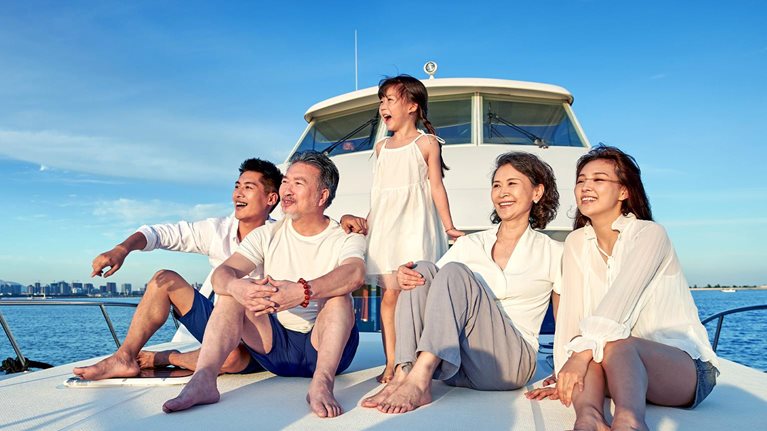
Laurent Kleitman: Today, multigenerational travel is increasingly common, with families often spanning three generations, sometimes more, choosing to travel together. This requires us to think differently about space and experience. How do we create enough diversity of experiences and ensure service expectations are met for both younger and older generations? How do we create the right entertainment program in our resorts? We do that by focusing on curating products. In our Emirates Palace resort in Abu Dhabi and our Costa Navarino resort in Greece, for example, we’ve improved our kids’ club concepts for small children through teenagers. Equally important is how we connect families to the destination itself, through culture, food, and experiences that can be shared across generations.
Lessons from a luxury leader
Alex Sawaya: Before you joined Mandarin Oriental, you were the CEO of Parfums Christian Dior at LVMH. Given your unique vantage point, where do you think luxury goods and experiences are heading? What learnings can luxury hospitality draw from the luxury goods market?
Laurent Kleitman: There seems to be a shift in consumer demand from goods to experiences. Luxury goods aren’t over, but it’s true that when you have 15 handbags already, the 16th handbag probably provides a lesser thrill than the first 15. It’s not the same with luxury hospitality, however, because what we sell is time. We never have enough time with our loved ones, so creating moments where you can engage with them is almost a never-ending need for our target audience. The future of luxury hospitality is bright, because we can address the scarcity of time through exceptional experiences for our guests. They are the same people who buy luxury goods, of course, but increasingly, their appetite for goods is slightly less than their appetite for experiences.
Alex Sawaya: Has there been a moment in your career so far that has shaped your leadership style?
Laurent Kleitman: I have worked and lived across several countries, which taught me to respect different perspectives and engage with people and cultures in meaningful ways. It shaped how I lead and make decisions. I have also learned from my mistakes; each one offered a different lesson. Over time, I have come to believe that being open about failure is just as important as celebrating success. It is less comfortable, but it is essential to learning, and something I continue to value deeply.